A boost pedal enhances a guitar’s signal strength, making the sound louder and more vibrant while preserving the original tone. Guitarists utilize a boost effect to ensure their solos are prominent during live performances and to achieve clearer recordings. Many beginners mistakenly believe that a boost pedal will instantly replicate a famous artist’s sound, but proper setup is essential. Some may not be aware that the placement of the pedal—whether pre or post—can significantly affect the overall sound. Musontek offers O poder da merda, a revolutionary boost pedal that delivers a powerful sound with user-friendly controls.
-
Beginners often think a boost pedal works right away.
-
Some do not know how where you put the pedal changes the boost.
-
Many think the boost will copy any famous sound without considering their own gear.
Principais conclusões
-
A boost pedal makes your guitar louder but does not change its sound. This helps solos be heard better when you play live.
-
Where you put the boost pedal in your setup changes the sound. Put it before overdrive for more power. Put it after for a louder but clean sound.
-
Try different boost settings to find what works for you. Start with low boost to keep your sound clear.
-
A buffered boost pedal keeps your sound strong with long cables. This stops your tone from getting weak.
-
Test different boost pedals to see which one you like best. Some give a clean sound, and some change your tone a bit.
How a Boost Pedal Works

Signal Amplification Basics
A boost pedal makes a guitar’s signal stronger. It raises the sound level, so the music gets louder and more lively. The pedal works like a tiny amplifier. It takes the weak signal from the guitar and boosts it before sending it to other pedals or the amp. This can change all parts of the sound or just some, depending on how the pedal is built.
Musontek’s The Shit Power boost pedal has one knob. Players can turn the knob to pick how much boost they want. The pedal can add up to 21 decibels of clean boost. This means the sound gets much louder but does not change the tone. The pedal has high headroom, so the sound stays clear and lively even when it is loud. Good parts inside the pedal help keep the sound strong and clean.
When the boost pedal makes the signal stronger, it can cause saturation or distortion if the volume is too high. This happens because the output voltage can get too big for the power supply, which causes clipping. Some guitarists like this effect because it adds something special to their sound.
Tip: Use low boost settings first to keep your sound clean. Turn up the boost slowly until you find what works for you.
Boost Pedal in the Signal Chain
Where you put a boost pedal in the signal chain changes the sound. If you put the boost pedal before an overdrive pedal, it gives the overdrive more gain. This keeps the tone the same but makes it stronger. If you put the boost pedal after the overdrive, it just makes the sound louder. It does not add more gain or distortion.
Guitarists try different places for the boost pedal to get the sound they like best. The right spot depends on what the player wants.
|
Colocação |
Result |
|---|---|
|
Before Overdrive |
More gain, same tone |
|
After Overdrive |
Clean volume boost |
Main Uses of a Boost Pedal
Increasing Volume
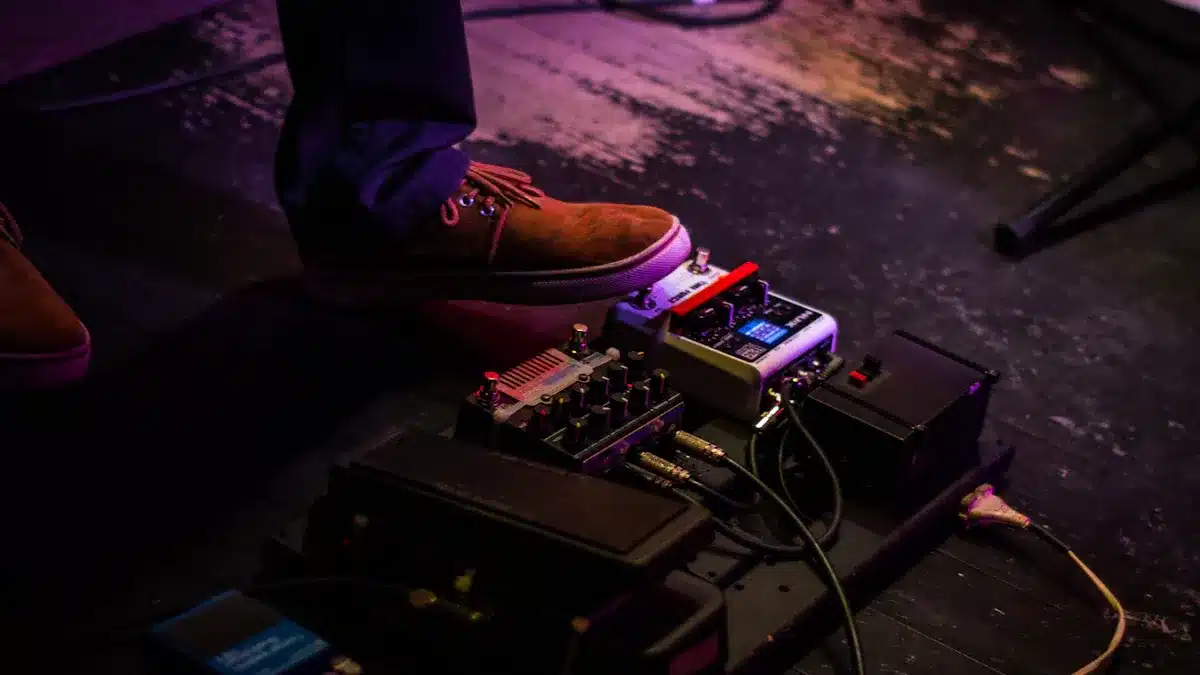
Guitarists use a boost pedal to make their guitar louder. It does not change the original sound. This helps them stand out when playing live or recording music. Many players use a boost pedal to make solos easy to hear. The lead guitar can be heard better in the mix. Some musicians change the volume for rhythm parts to keep things balanced. The pedal lets them turn up the volume fast during solos or big moments.
-
Guitarists use boost pedals to be heard better on stage.
-
Players make solos louder so the lead guitar stands out.
-
Musicians change volume for rhythm parts to keep balance.
-
The pedal lets them boost volume quickly for solos.
Most boost pedals can make the sound 3 to 4 decibels louder. This is usually enough for solos to be noticed. Sometimes, players need up to 10 decibels, depending on the band and song. For dirty tones, less than 3 decibels may be enough. Without a Tube Screamer, about 5 decibels works well. For clean boosts, up to 10 decibels may be needed. Musontek’s The Shit Power can boost up to 21 decibels. This gives guitarists lots of room for any need.
Enhancing Guitar Tone
A boost pedal does more than make the guitar louder. It can make the sound clearer and stronger. Clean boost pedals help the guitar and amp sound their best. They add more volume, clarity, and presence to the music. This lets guitarists play with more feeling and style, especially in solos.
Professional guitarists say modern boost and preamp pedals do more than just improve tone. These pedals often have buffer, compression, EQ/filter, harmonics, headroom, and power features. All these things help make the sound better and give more control. Musontek’s The Shit Power has buffer modes and high headroom. Players can shape their sound and get a strong, expressive tone.
Tip: Try a clean boost pedal to make your sound clear and punchy. It will not change your main tone.
Driving Amp Overdrive
A boost pedal helps push an amp into overdrive. This makes a crunchy sound but keeps the guitar’s tone. Many guitarists like this because it feels natural and reacts to how they play.
Boost pedals are a simple way to get crunch. They help you get a natural sound without changing your guitar’s tone. This works best with a tube amp.
Boost pedals do not have clipping circuits. They do not add overdrive by themselves. They just make the signal from your guitar stronger. But if you turn up the gain, the amp will go into overdrive.
Boost and preamp pedals can also push other pedals that add gain or dirt. This changes how those pedals sound and react. Guitarists can control their tone and change their sound for different music styles.
|
Amplifier Type |
Response to Boost Pedal |
|---|---|
|
Tube Amplifier |
Makes natural overdrive and crunch, especially with Marshall® plexi amps |
|
Solid-State Amplifier |
Gets louder, but may not sound as warm or crunchy |
Boost and preamp pedals work with many amps, but tube amps sound best with gain boost. Players can use the pedal’s gain knob to push the sound. They can change bass and treble for the sound they want.
Different Types of Boost Pedal
Impulso limpo
A clean boost pedal makes the guitar louder. It does not change the tone. Players use clean boost to make solos stand out. It can push the amp for more overdrive. It also gives extra volume to other pedals. The sound stays clear and pure. Many guitarists pick clean boost to keep their own tone.
-
Make solos louder so they are easy to hear.
-
Push the amp for more overdrive but keep the same tone.
-
Boost the volume of other pedals and keep the sound the same.
-
Push an overdrive pedal harder without making it louder.
Blues and classic rock players like clean boost pedals. They want a natural sound with more presence. Some good choices are the MXR M293 Booster Mini Pedal and the Xotic EP Booster.
Buffered Boost
Buffered boost pedals keep the signal strong over long cables. They change high-impedance signals to low-impedance. This helps the sound stay clear and bright. Buffered boost stops signal loss and keeps the guitar’s sparkle.
|
Descrição das provas |
Explicação |
|---|---|
|
Changes high-impedance signals to low-impedance |
Stops signal loss and keeps sound strong over long cables. |
|
Buffer pedals use unity gain design |
Keeps the signal level the same and saves the tone. |
|
Sends strong, low-impedance signals to the amp |
Fights signal loss and keeps the original sound. |
|
Stops high-frequency loss from long cables |
Keeps treble and detail in the guitar’s sound. |
Buffered boost pedals are good for big pedalboards or long cables. They help musicians who play live and need a strong signal.
Vintage vs. Modern Modes
Some boost pedals have different modes you can pick. Vintage mode gives a warm and rich sound. Modern mode makes the boost clean and tight. The pedal’s parts and how it works with the amp make the difference.
-
Modern amps use new power supply filters.
-
Modern boost pedals have more gain stages, which changes the sound.
-
Vintage amps react differently to boosted signals and change the focus.
-
In the 1980s, high-gain amps like Boogie Mark Series changed pedal designs.
-
Modern pedals focus on clear, tight, and strong sounds.
Players who want old blues or British rock sounds pick vintage modes. Metal and modern rock players like modern modes for tight and strong sounds. Treble boosters like the Dallas Rangemaster Reissue and Analog Man Beano Boost are good for British blues. The ThroBak Strange Master adds bite for heavy music.
Tip: Try different boost pedals to find the sound that matches your style and gear.
Practical Tips for Using a Boost Pedal
Setting Levels
Guitarists often start by setting up their guitar and amplifier before using any preamp pedal. They make sure the basic sound feels right. Many players use these steps to set the best levels for their boost:
-
Set up the guitar and amp. Begin with all controls at zero. Adjust until the tone sounds good.
-
Find unity gain. Match the pedal’s output volume to the input volume when the pedal is on.
-
Shape the tone. Decide what each preamp pedal does. Use reference sounds and experiment with pedal order.
-
Set the volume level for each pedal. Make sure clean and affected sounds have equal volume.
-
Write down settings. This helps keep the sound consistent for future shows.
If a player sets the levels wrong, the sound can drop by 18dB or more. Some users notice a boost of about 4dB in the FX loop, which means they must adjust each preamp pedal to avoid unwanted jumps in volume. Using the FX loop block correctly stops volume drops and keeps the sound strong.
Combining with Other Effects
The order of pedals in the signal chain changes the final sound. Many guitarists use this order for their preamp pedal and boost setup:
-
Place fuzz and treble boosters first. These shape the tone before other pedals.
-
Add dynamics pedals like compressors next. They even out the volume.
-
Use filter pedals such as wah-wah after dynamics. These change the frequency content.
-
Put distortion pedals after filters. This shapes the tone further.
-
Add modulation pedals like chorus and flanger next. These give depth.
-
Finish with time-based effects such as delay and reverb. These add ambience.
Players often experiment with the order of preamp pedals and boost to find their favorite sound. Each change in the chain can make the guitar sound brighter, warmer, or more powerful.
Avoiding Tone Loss
Long cables and many pedals can cause tone loss. Buffered preamp pedals help keep the signal strong. Musontek’s The Shit Power uses high-quality parts and a low-noise design. This keeps the sound clear, even with many pedals or long cables. The table below shows how different pedals compare in noise levels:
|
Modelo de pedal |
RMS |
PEAK |
|---|---|---|
|
Dunlop Crybaby BB535 |
-73.0 |
-62.5 |
|
Eventide H90 |
-72.1 |
-62.3 |
|
TC Electronic Flashback X4II |
-77.1 |
-67.2 |
|
Boss EQ-200 |
-75.3 |
-64.7 |
|
Boss DD-8 |
-72.7 |
-62.2 |
|
Boss ES-5 |
-80.1 |
-69.6 |
|
Axe FX III |
-75.5 |
-64.8 |
|
Line 6 Helix |
-71.4 |
-60.4 |
Musontek’s preamp pedal stands out for its extremely low noise. Players who want a clean, powerful sound should look for preamp pedals with high headroom and buffer modes. These features help avoid tone loss and keep the music sounding great.
Tip: Use a preamp pedal with a buffer to keep your sound clear and strong, especially on big pedalboards.
Guitarists use boost pedals for many reasons. These pedals make the guitar louder, improve the sound, and give more options. The table below lists what boost pedals do:
|
Purpose |
Descrição |
|---|---|
|
Aumento de volume |
Makes solos and riffs easier to hear. |
|
Gain Addition |
Makes the sound thicker and more full. |
|
Signal Buffering |
Keeps the signal strong with long cables and big pedalboards. |
|
Amplifier Interaction |
Helps tube amps make warm overdrive sounds. |
|
Impulso limpo |
Keeps the guitar’s real sound the same. |
|
Colored Boost |
Changes certain parts of the sound for a special feel. |
Players pick boost pedals based on their music style and gear. Musontek’s The Shit Power gives both clean and colored boost choices. This helps musicians get clear sound or change their tone. Testing different boost settings lets each guitarist find what works best.
Musicians should try boost pedals to see what fits their style and gear.
FAQ
What does a boost pedal do for a guitar player?
A boost pedal raises the guitar’s signal strength. It helps solos stand out and makes the sound more dynamic. Players use it to get louder without changing their basic tone.
Where should someone place a boost pedal in the signal chain?
Most guitarists put the boost pedal before overdrive pedals for more gain. Placing it after overdrive pedals increases volume. Each position creates a different effect on the sound.
Can a boost pedal change the guitar’s tone?
A boost pedal can make the sound clearer and more present. Some models offer buffer modes or tone-shaping features. Players choose settings to match their style and gear.
What are the differences between boost and preamp pedals?
Boost pedals increase signal strength and volume. Preamp pedals shape the tone and add gain. Preamp pedals often include EQ controls, while boost pedals focus on clean amplification.
Does a boost pedal work with all types of amplifiers?
A boost pedal works with tube and solid-state amplifiers. Tube amps respond with natural overdrive. Solid-state amps get louder but may not sound as warm.