If you’ve ever experienced a loud hum or persistent buzz coming through your speakers during a live performance or in a home studio, you’ve likely encountered a ground loop.
While often dismissed as a minor audio issue, ground loops can degrade signal quality, introduce unwanted noise, and in some cases contribute to equipment stress or malfunction.
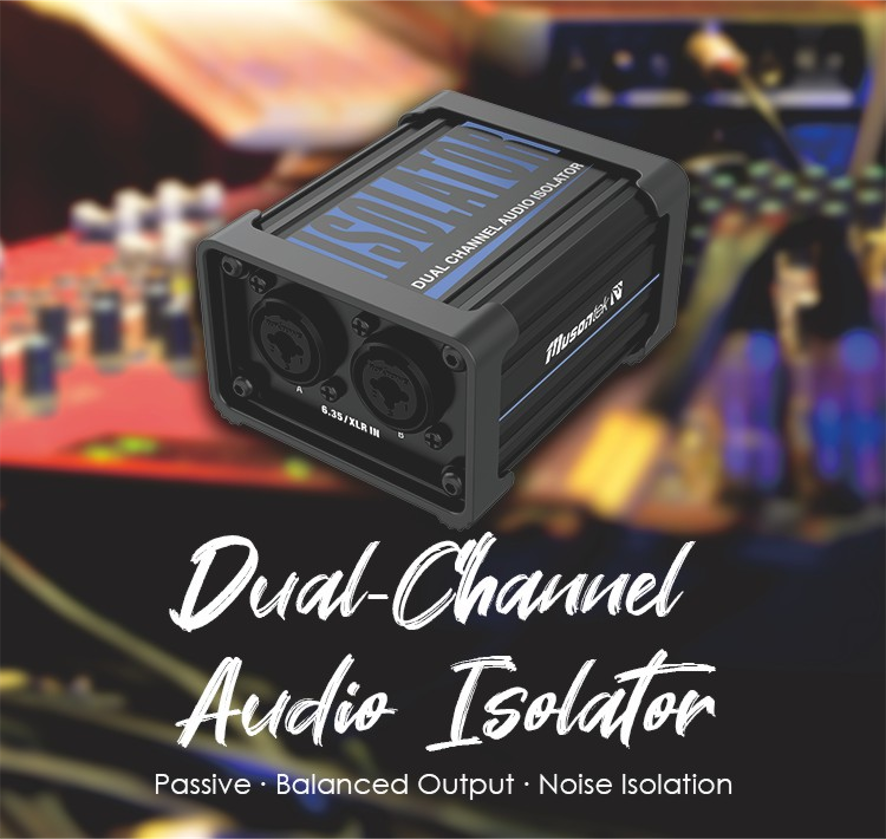
Ground loops occur for specific electrical reasons, and understanding them is the first step to preventing and eliminating the problem in audio and video systems. In many setups, tools like a ground loop audio isolator are also used to break unwanted electrical interference and restore clean signal flow.
主要收获
- Ground loops cause annoying hum, buzz, and signal degradation in audio and video systems
- They can lead to equipment damage and life-threatening safety hazards including electric shocks and fires
- Single-point grounding eliminates voltage differences between devices to prevent ground loops
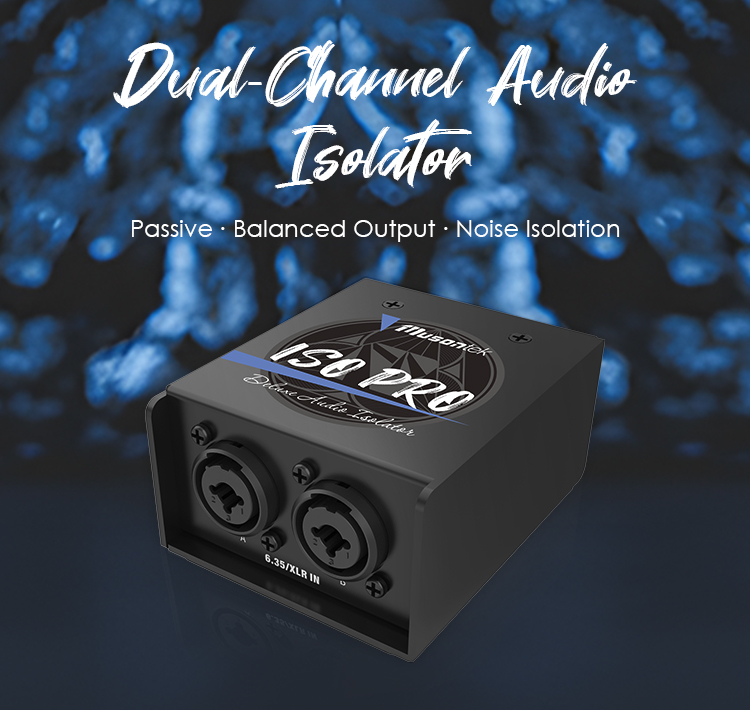
- Audio isolators like the Musontek ISO2C break ground loops without affecting sound quality
- Proper cable management and regular maintenance prevent most ground loop issues
Why You Must Avoid Ground Loops
Audio and Video Interference
The most obvious problem with ground loops is the noise they create. The classic ground loop hum is a steady, low-frequency 50/60Hz tone that matches the frequency of your electrical power supply. You may also hear chirping, buzzing, or static sounds.
In video systems, ground loops cause rolling horizontal lines, flickering, or distorted images. These issues are especially problematic in:
- Recording studios, where noise can ruin entire takes
- Live performances, where hum distracts audiences and performers
- Home theaters, where interference ruins the viewing experience
Microphone-level signals are particularly vulnerable to ground loop noise because they require high gain, which amplifies both the desired signal and the unwanted hum.
Equipment Malfunction and Damage
Beyond poor sound quality, ground loops can cause serious damage to your equipment. When devices are connected to different ground points, unwanted circulating currents flow through signal cables. These currents can overload sensitive electronic components, leading to:
- Burned-out circuit boards and control panels
- Blown fuses and transformers
- Damaged input/output ports
- Complete system failure
In extreme cases, ground loops can amplify power surges from lightning strikes or grid fluctuations, destroying entire racks of equipment in seconds.
Critical Safety Hazards
This is the most important reason to avoid ground loops. Ground loops can disable the ground fault protection systems that are designed to keep you safe.
When a ground loop exists, fault currents may take unintended paths through signal cables instead of the safety ground. This can:
- Prevent GFCI (Ground Fault Circuit Interrupter) outlets from tripping
- Cause electric shocks when touching connected equipment
- Create overheating conditions that lead to electrical fires
Critical Safety Warning: Never use a ground lift plug to “fix” a ground loop. While it may stop the hum, it completely removes the safety ground connection, putting you at risk of fatal electric shock. Always use an audio isolator instead.
What Are Ground Loops and What Causes Them?
How Ground Loops Form
A ground loop occurs when two or more devices are connected to different electrical ground points. This creates a difference in electrical potential (voltage) between the devices.
The voltage difference causes an unwanted current to circulate through the signal cables that connect the devices. This current interferes with the audio or video signal, creating the characteristic hum and noise.
Ground loops also act like antennas, picking up electromagnetic interference from nearby power lines, transformers, and other electronics. This adds even more noise to your system.
Common Causes of Ground Loops
In both home and professional audio systems, many factors can cause ground loops. The table below lists the main causes and their descriptions:
| Cause | 说明 |
|---|---|
| Multiple Grounding Points | Connecting equipment to different wall outlets on separate circuits |
| Mismatched Impedance | Differences in electrical resistance between devices create voltage differentials |
| Shared Ground Conductors | Using the same ground wire for both power and signal circuits |
| Long Cable Runs | Long signal cables have higher resistance and act as better antennas for interference |
| External Electromagnetic Fields | Nearby power lines, motors, or wireless devices induce currents in grounding conductors |
How to Prevent and Fix Ground Loops

Use Single-Point Grounding
The most effective way to prevent ground loops is to connect all your equipment to a single ground point. This ensures that all devices are at the same electrical potential, eliminating the voltage differences that cause circulating currents.
Best practices for single-point grounding:
- Plug all audio/video equipment into the same power strip or surge protector
- Use a dedicated power circuit for your audio system
- Keep analog and digital grounds separate, connecting them only at one point
- Avoid daisy-chaining power strips
Proper Cable Management
Good cable management can significantly reduce ground loop noise:
- Keep signal cables away from power cables and transformers
- Use short, high-quality shielded cables
- Avoid running signal cables parallel to power cables
- Use cable ties to organize cables and prevent loops
Use an Audio Isolator
If single-point grounding is not possible, an audio isolator is the safest and most effective solution. Audio isolators use transformers to break the electrical connection between devices while allowing the audio signal to pass through.
The Musontek ISO2C is a professional-grade audio isolator designed to completely eliminate ground loop noise without sacrificing sound quality.
| 规格 | Details |
|---|---|
| Isolation Technology | Studio-grade toroidal transformers |
| Ground Mode | Self-lifting automatic ground isolation |
| Frequency Response | ±0.3dB from 20Hz to 20kHz (full audio range) |
| Dynamic Range | >130dB |
| Maximum Input Level | +21dBu |
| Power Requirement | Passive – no external power needed |
| 兼容性 | Works with both balanced and unbalanced signals |
Unlike cheap isolators that distort sound, the ISO2C preserves the full frequency range and dynamic range of your audio. Its passive design makes it perfect for portable setups, live performances, and studio installations.
Conclusion
Ground loops are one of the most common and most dangerous problems in audio and video systems. What starts as an annoying hum can quickly lead to expensive equipment damage and even life-threatening safety hazards.
The good news is that ground loops are completely preventable. By following proper grounding practices, managing your cables correctly, and using high-quality audio isolators like the Musontek ISO2C, you can enjoy clean, clear audio and protect yourself and your equipment.
Don’t let ground loops ruin your recordings, performances, or safety. Invest in the right solutions and eliminate ground loop noise for good.
常见问题
What is a ground loop?
A ground loop is an unwanted electrical current that flows between two or more devices connected to different ground points. It causes hum, buzz, and interference in audio and video systems.
How can I tell if I have a ground loop?
The most common sign is a steady, low-frequency hum in your speakers or headphones. Video systems may show rolling horizontal lines or flickering. The noise usually gets louder when you turn up the volume.
Can the Musontek ISO2C fix ground loop problems?
Yes. The Musontek ISO2C uses studio-grade isolation transformers to break the ground loop path. It completely removes hum and noise while preserving the original sound quality.
Is a ground loop dangerous?
Yes. Ground loops can damage equipment and disable safety ground systems, increasing the risk of electric shock and fire. They should never be ignored.
Can I use a ground lift plug to fix a ground loop?
No. Ground lift plugs remove the safety ground connection, putting you at risk of fatal electric shock. Always use an audio isolator like the Musontek ISO2C instead—it breaks the ground loop while maintaining full safety protection.