The Source Audio EQ2 is the best bass equalizer pedal for most people. It offers powerful tone control and works flawlessly every time. Bassists love equalizer pedals because they offer more effective control over the sound than amplifiers. These pedals allow you to quickly change the tone during live performances. You can easily lower or boost certain tones. Equalizer pedals adjust the signal before it goes into the amplifier, giving you more options for stage performances or studio recordings. The Musontek Remeowdel is also a good choice. It uses an analog design and controls the bass, midrange, and treble separately. This gives musicians more ways to change the tone while maintaining a natural feel.
主要收获
- The Source Audio EQ2 is the best choice for bassists. It offers advanced tone control. You can save up to 128 presets for quick tone changes.
- The 10-band graphic equalizer allows you to adjust frequencies from 31Hz to 16kHz. This helps to make your bass tone crisp and powerful.
- The Musontek Remeowdel offers a warm analog tone. It features three control knobs for bass, midrange, and treble, making it ideal for creating a natural tone.
- When choosing a bass equalizer pedal, consider features such as analog or digital tone and ease of use. Determine the number of equalization bands you need.
- Lower-priced pedals can also provide good sound quality. Choose a durable and feature-rich pedal.
Top Choice: Source Audio EQ2 Bass EQ Pedal
Key Features and Benefits
The Source Audio EQ2 bass equalizer pedal excels in its advanced tone control and flexibility. Players can save up to 128 presets, meaning they can save a variety of different tones for quick recall. The pedal features a 10-band graphic equalizer, allowing users to adjust the frequency range from 31Hz to 16kHz. Each band offers up to 18dB of gain or attenuation. This wide frequency range helps bassists adjust the tone for different styles and venues.
The pedal also includes a parametric equalizer. This feature allows musicians to adjust frequency positioning and Q value, with the Q value controlling the degree of influence of each frequency band on the sound. The simple single-knob control panel makes it easy to operate, even in live performances. The built-in chromatic tuner helps musicians maintain pitch without the need for additional equipment. The pedal supports stereo input and output, making it compatible with a wide range of devices.
The following table lists the main features:
| 特点 | 说明 |
| Onboard Presets | 4/8/128 presets for editing and saving |
| 10 Band Graphic EQ | Adjustable from 31Hz to 16kHz, 18dB boost/cut per band |
| Parametric EQ | Change frequency position and Q with onboard controls or software |
| Control Panel | Simple 1-Knob operation |
| Chromatic Tuner | Built-in tuner for quick tuning |
| MIDI Presets | 128 factory presets via MIDI controller |
| Inputs/Outputs | Stereo inputs and outputs |
| Dimensions | 4.5 in. x 2.75 in. x 2 in. |
| Power Supply | 9v DC (300mA, Negative Tip) |
| Power Consumption | 180mA |
| USB Port | For firmware updates and editing software |
Why It’s the Best for Bassists
Source Audio EQ2 The bass EQ pedal provides bassists with more control than most other pedals. Players can fine-tune the tone to suit any mix. The 10-band EQ covers all the important frequencies of the bass. This helps the instrument produce a clear and powerful sound, whether on stage or in the studio. The parametric EQ offers even more options for shaping the tone.
Bassists often need to switch quickly between different tones. The EQ2’s numerous presets make switching easy and convenient. Players can save their favorite settings and recall them with a single press. This pedal is also perfectly compatible with MIDI controllers, making it ideal for advanced configurations. The built-in tuner saves pedal space, making setups more streamlined.
User Experience and Reliability
Many users praise the Source Audio EQ2 for its easy-to-use design and reliable performance. This pedal has a solid feel and excellent build quality. The controls are responsive and allow players to make adjustments easily and quickly. The clear display makes settings easy to see even on a dimly lit stage.
The pedal’s USB interface supports firmware updates and connection to editing software. This means musicians can update the pedals at any time and customize them more deeply. The power adapter is standard, so it’s compatible with most effects boards without any modifications.
Tip: For musicians who want a bass EQ pedal that can adapt to various situations, the EQ2 is undoubtedly a wise choice. Its features help beginners and professionals alike achieve optimal tone.
Musontek Remeowdel: Can This Guitar EQ Pedal Work for Bass?
Features and Analog Circuitry
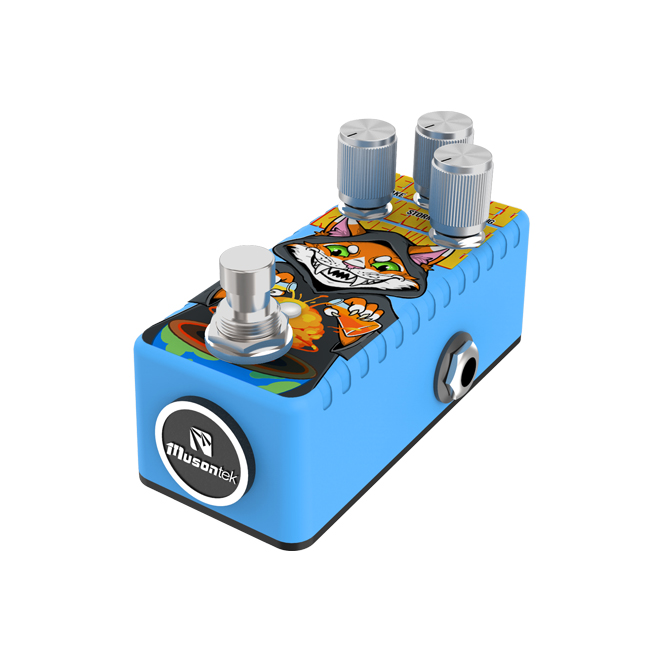
The Musontek Remeowdel offers bassists a multitude of features. Its analog circuitry delivers a warm, natural tone. Players will find the circuitry makes bass sound full and clear. This effect boosts low frequencies, thus increasing volume. It features three control knobs for bass, midrange, and treble, allowing players to easily adjust the tone. True bypass ensures a clean signal when the effect is off. Greater dynamic headroom allows the effect to perform exceptionally well at high volumes.
The table below lists the main features and their benefits to bassists:
| 特点 | Benefit for Bass Players |
| Analog Circuitry | Gives a rich, natural sound and makes low notes better. |
| Generous Boost Range | Lets players change low sounds and adds warmth. |
| 3-Band Control | Lets players adjust lows, mids, and highs for their sound. |
| True Bypass | Keeps the signal clear when the pedal is not used. |
| Extra Headroom | Stops distortion and keeps sound clear at high volumes. |
Analog design allows musicians to experiment with different settings, thus altering the bass’s position in the mix. Many musicians find analog effects make instruments sound more realistic.
Pros and Cons for Bass Players
Bass players using the Musontek Remeowdel can reap many benefits. This effect uses an analog equalizer for a natural sound. It can boost each frequency band by up to +15dB, helping to shape the tone and make notes clearer. This effect supports 9-18V power, making it suitable for a variety of setups. Musicians use it for both live performances and studio work.
| Advantages |
| Uses analog EQ for a natural bass sound |
| Has three EQ bands for fine-tuning |
| Each band can boost up to +15dB |
| Helps shape tone and clarity of notes |
| Works with 9-18V power for flexibility |
| Makes bass sound better in live shows and studios |
Note: This effect is typically chosen by musicians who want easy control over their bass tone.
How It Compares to Dedicated Bass EQ Pedals
The Musontek Remeowdel’s unique feature lies in its analog tone. Digital effects pedals offer crisp, precise tones, but some musicians find them lacking in realism. Analog effects like the Remeowdel offer a warmer, more natural tone. Here’s a comparison:
The Remeowdel helps bassists shape their sound. It works well as a bass EQ pedal for players who want a natural tone and simple controls.
Comparing the Best Bass EQ Pedals

Empress Effects Bass ParaEQ Deluxe
The Empress Effects Bass ParaEQ Deluxe allows musicians precise control over tone. It features three parametric EQ bands, each with up to 30 dB of gain or attenuation. Additionally, this effect comes with high-pass and low-pass filters, and the Q value of each band is individually adjustable. Many professional musicians choose this effect because of its versatility and clean tone.
Strengths:
- Precise tonal control
- Versatile with adjustable EQ settings
- Small form factor parametric EQ
- Low/high pass and Q adjustments
Weaknesses:
- More suitable for experienced users
- Higher price point
- Not for beginners
Boss GEB-7
The Boss GEB-7 is known for its powerful performance and simple operation. It boasts seven bands from 50Hz to 800Hz, sufficient for most bass music styles. Many people trust Boss effects because of their durability. The GEB-7 is ideal for live performances, robust and easy to adjust on stage. Some musicians have even used this effect for years.
- Boss effects pedals are robust and durable.
- Many people report that their Boss EQ pedals are still working perfectly after 25 years.
Tech 21 QStrip and Other Top Picks
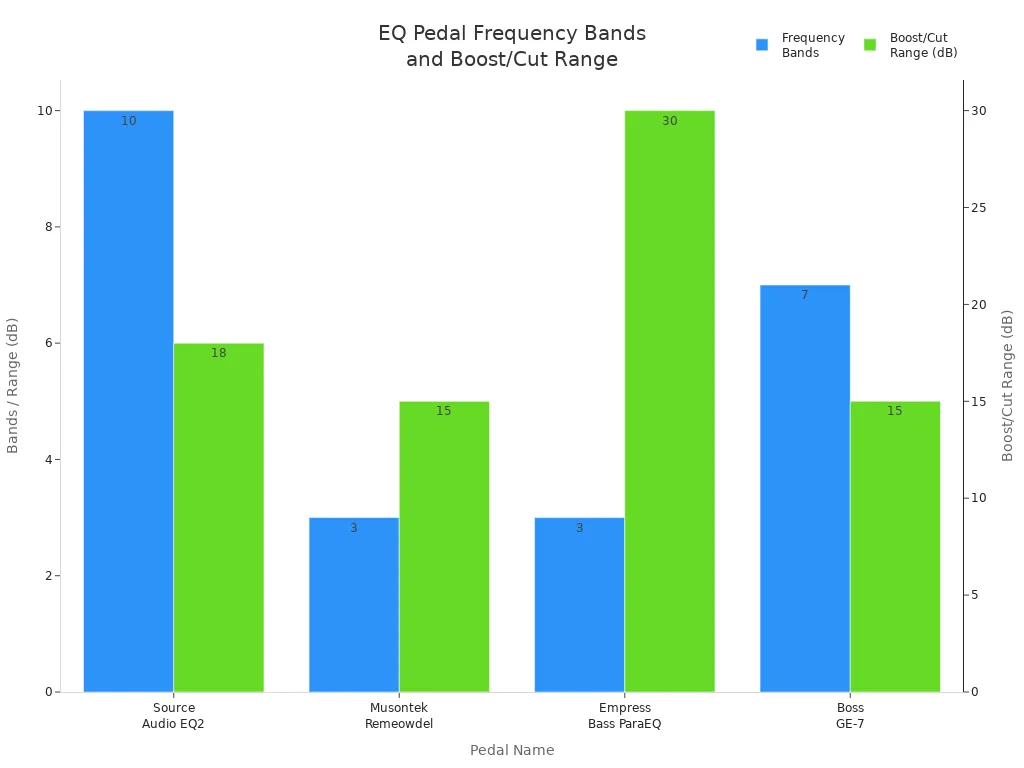
The Tech 21 QStrip is a stompbox pedal that provides studio-quality EQ. It features four half-parametric EQ bands, as well as high-pass and low-pass filters. This pedal helps musicians adjust the tone for live performances or recordings. Other good options include the Source Audio EQ2 and the Musontek Remeowdel. The EQ2 has ten bands and supports MIDI. The Musontek Remeowdel uses analog components for a realistic and natural tone.
| 踏板名称 | Frequency Bands | Boost/Cut Range | Additional Features |
| Source Audio EQ2 | 10 | ±18 dB | MIDI support, stereo ins/outs, Neuro Editor |
| Musontek Remeowdel | 3 | +15 dB | True bypass, compact design |
| Empress Effects Bass ParaEQ Deluxe | 3 | ±30 dB | 27 volts headroom, true bypass |
| Boss GE-7 | 7 | ±15 dB | Legendary reliability |
Tip: If you want the most comprehensive control, try the Source Audio EQ2 or Empress Effects Bass ParaEQ Deluxe. If you want a simple yet powerful effect, choose the Boss GE-7. The Musontek Remeowdel is suitable for musicians who prefer analog tones and easy control.
How to Choose the Right Bass EQ Pedal
Essential Features for Bassists
Bass players should pay attention to the following points when choosing an equalizer pedal. The type of equalizer is important. Analog pedals offer a warm tone, while digital pedals provide more precise tone control. Some pedals feature control knobs for quick and easy setting adjustments. You might find pedals with preset, MIDI, or expression controls. Some pedals also include gain circuitry or DI outputs for greater versatility. Pedal size is also important. Smaller pedals are easier to use on effects boards with limited space, while larger pedals offer more tonal adjustments. Choosing a pedal that matches the bass tone you want and the response you’ll be playing is crucial.
| 特点 | 说明 |
| Types of EQ | Analog or digital, affecting sound and control |
| 控制选项 | Presets, MIDI, expression for live performance |
| Additional Features | Boost circuits, drive, DI outputs |
| Size and Complexity | Compact for small boards, larger for more control |
| Specific Tone Needs | Brighten tone, cut frequencies, add color |
| 动态响应 | Some EQs adapt to playing style |
| Utility Beyond EQ | Extra effects for versatility |
Tip: Choose a pedal whose features match your musical style and playing style.
Ease of Use and Versatility
The number of frequency bands on a pedal determines the operations you can perform. More bands allow for better tone shaping. Graphical equalizers are simple and easy to use, suitable for beginners. Parametric equalizers are better suited for users who need more control. Beginners prefer easy-to-use pedals. Advanced users use pedals with more setting options to achieve special tones.
| Player Type | Pedal Complexity |
| Beginners | More suitable, easier to use |
| Advanced Players | Often complex, requiring more skill to utilize |
A versatile pedal can help you play different styles of music. You can boost or attenuate the tone depending on the band’s needs. Some pedals also come with additional effects, so you can use them in multiple ways.
Budget and Value Considerations
Your budget will determine which pedal you buy. Lower-priced pedals can help more people try new tones. Many pedals are compatible with different musical styles and other effects. Even low-priced pedals can perform well and are durable.
When looking for a pedal that offers good value for money, consider the following:
- Sound Quality: The pedal should have a clear, noise-free tone.
- Versatility: It should be able to produce a variety of different tones.
- Durability: It should be robust and durable.
- Ease of Use: The controls should be simple and easy to understand.
- Price: It should offer good value for money and last for many years.
Note: Choose a pedal that matches your budget and playing style. You can use various equalizer techniques to alter the tone, such as: 20-40Hz high-pass filtering, 40-80Hz notch filtering, 100Hz boost, 300-400Hz attenuation, 4-6kHz boost, and attenuation above 7kHz.
The Source Audio EQ2 is the top bass EQ pedal for most players. It has many helpful features:
| 特点 | 说明 |
| Powerful Tone Machine | Covers lots of sounds in a small size. |
| User-Friendly Design | The screen shows settings clearly. |
| Parametric EQ | Lets you control frequencies for many instruments. |
| 内存预置 | Saves up to four favorite sounds. |
| Stereo In/Out | Gives flexible connections and custom EQ. |
| Clean Sound Quality | Boosts or cuts sounds with clear results. |
The Musontek Remeowdel effects pedal offers a warm analog tone and convenient control. However, experts point out that it sacrifices some bass and adds some distortion, which can affect the overall tone.
Online communities share experiences to help musicians choose effects pedals. Some discuss how effects pedals alter tone, others emphasize the importance of clean dynamic headroom, and still others recommend models with good performance.
Musicians should consider their own needs. They can refer to buying guides and try different effects pedals to find the one that best suits them.
常见问题
What is the purpose of a bass equalizer pedal?
A bass equalizer pedal allows musicians to alter the tone of their instrument. They can boost or attenuate certain frequencies, which helps the bass blend better into the mix and sound clearer.
Can guitar equalizer pedals be used on the bass?
Some guitar equalizer pedals, such as the Musontek Remeowdel, work well on the bass. They control low, mid, and high frequencies. Musicians can shape the tone and improve clarity.
How many equalizer bands should a bass pedal have?
Most bassists use pedals with three to ten bands. More bands provide more control; fewer bands make the pedal easier to use. The best choice depends on the musician’s needs.
What are the tonal differences between analog and digital equalizer pedals?
Analog equalizer pedals generally have a warmer, more natural tone. Digital equalizer pedals offer more precise control and more features. Musicians choose based on their preferred tone and equipment configuration.