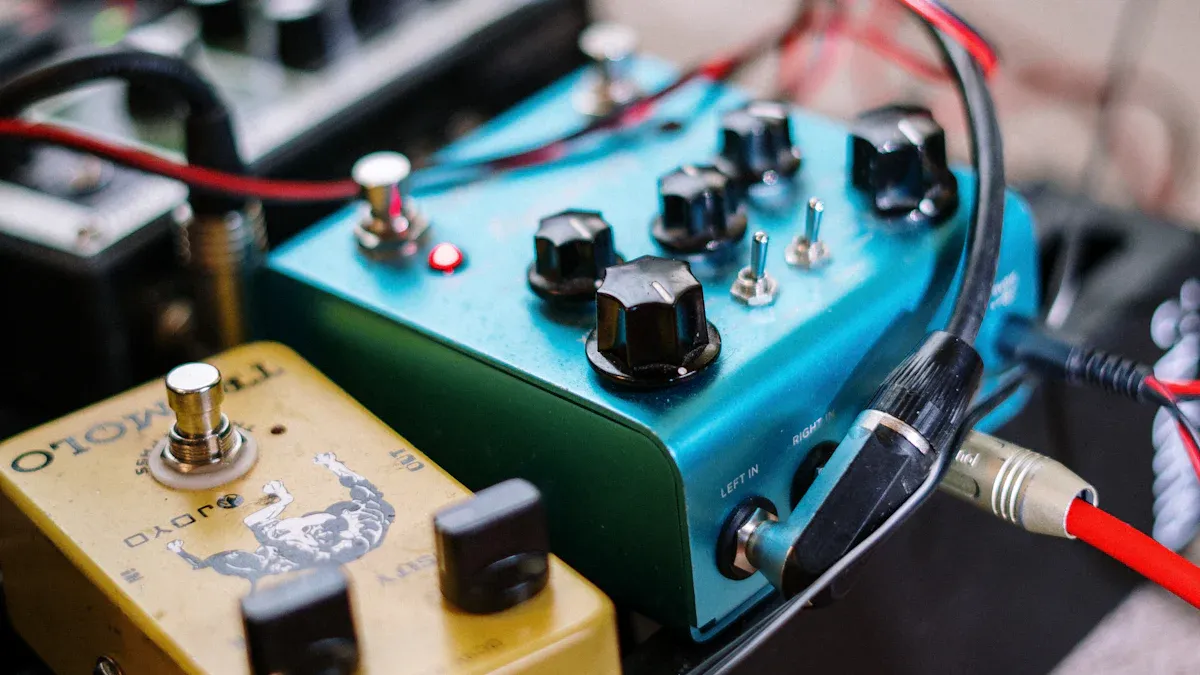
A player uses a FUZZ pedal by plugging it into the guitar. They set it up and change the fuzz controls. Players try different sounds with it. Many people pick fuzz pedals because they sound special. FUZZ pedals have famous tones and can do many things. The MusonTek F2309 FUR FUR fuzz pedal is known for high quality. It also has many choices for sound.
-
Why do beginners like fuzz pedals?
-
They have a special sound and feel.
-
They make famous sounds in music.
-
They let you try new things.
-
|
益处 |
说明 |
|---|---|
|
Versatile Sound Options |
It has three settings for old or new fuzz sounds. |
|
Boutique Quality |
It is strong and lasts a long time. |
|
适应性 |
You can use it for any music style. It works as a 增压效果踏板 or fuzz pedal. |
Players often feel happy and sure when they use the fuzz furfur.
主要收获
-
Place the fuzz pedal first in your signal chain for the best sound. This keeps the fuzz tones strong and clear.
-
Experiment with different pedal orders and settings to find your unique fuzz sound. Each change can create new tones.
-
Use high-quality cables and a reliable power supply to minimize noise and ensure a clean fuzz effect.
Fuzz Pedal Setup
Signal Chain Placement
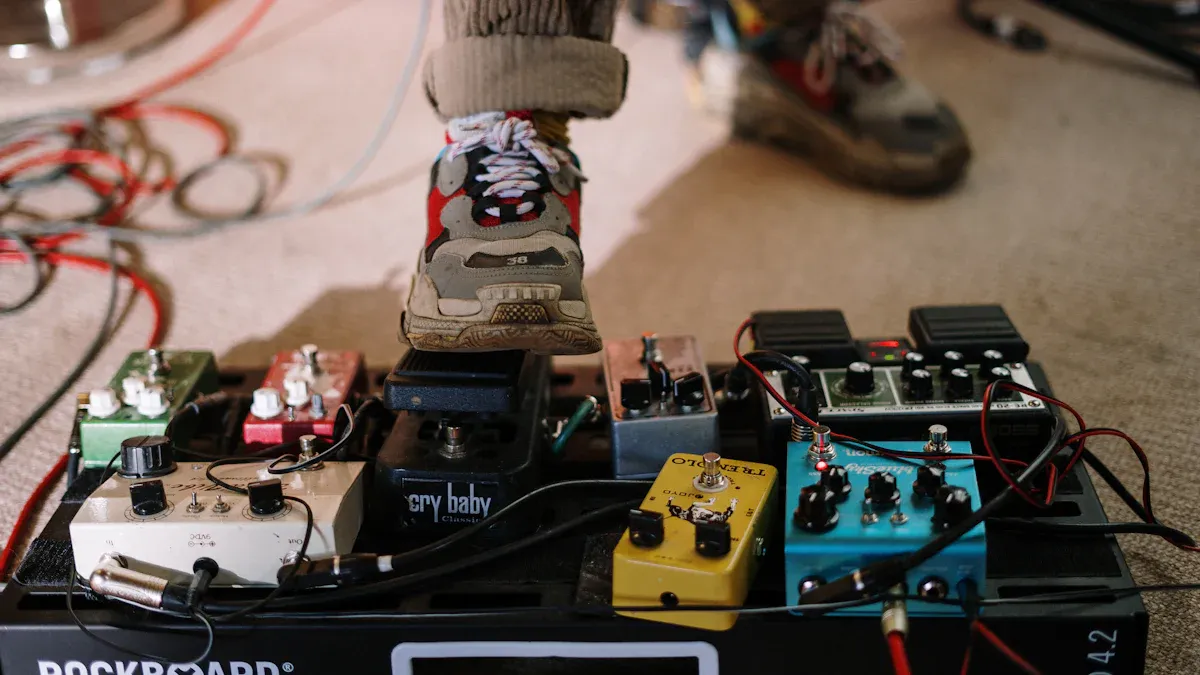
Getting the right sound from a fuzz box starts with where you put it in your pedal chain. Most players place the fuzz pedal first, right after the guitar. This spot helps the fuzz box react best to your playing and keeps the sound clear. Fuzz pedals do not like buffered pedals in front of them. Buffers can change the way the fuzz works and make the tone less exciting. Even a simple tuner with a buffer can make the fuzz box sound weak or thin.
-
Fuzz pedals work best at the start of the chain.
-
Buffers and other pedals before the fuzz can hurt the sound.
-
Placing the fuzz box first keeps the fuzz tones strong and full.
The MusonTek F2309 FUR FUR Fuzz Pedal stands out because it keeps its clarity even when you push it hard. Its strong build means it can handle any setup, whether you play at home or on stage. This fuzz box works well with many other guitar effect pedals, so you can try different sounds without worry.
Tip: Try running your fuzz box into an overdrive pedal. This can smooth out harsh fuzz and give you a thick, lead sound. Overdrive after fuzz acts like an EQ, shaping the fuzz and making it easier to control.
Some players like to experiment with pedal order. For example, putting an octave pedal before the fuzz box can make the octave effect less clear. Moving it after the fuzz pedal gives a stronger, more noticeable octave sound. Finding the right fuzz setup is all about trying new things and listening to what works best for your music.
Connecting to Guitar and Amp
Setting up a fuzz box is simple, but a few steps help you get the best sound. Here is a quick guide:
-
Place the fuzz pedal first in your signal chain, right after your guitar.
-
Use high-quality patch cables to connect the fuzz box to other pedals.
-
Connect your guitar to the input of the fuzz pedal.
-
Run a cable from the output of the fuzz pedal to your amp.
-
Power the fuzz box with a reliable supply. Isolated power supplies help prevent noise and hum.
-
Test your setup by playing and adjusting the fuzz pedal controls.
The MusonTek F2309 FUR FUR Fuzz Pedal works with many power options. You can use 9V, 12V, or 18V power supplies. Each voltage gives the fuzz box a unique character. Here is a quick look:
|
Voltage Level |
说明 |
|---|---|
|
9V |
Classic, warm fuzz tones |
|
12V |
More headroom, tighter fuzz |
|
18V |
Extra clarity and punch |
Note: Always check the power needs of your fuzz pedal. Using the wrong voltage can damage the pedal.
For best results, use a power supply with isolated outputs. This keeps your fuzz box quiet and free from unwanted noise. Make sure the power supply matches the voltage and polarity the pedal needs. If you plan to add more pedals later, choose a power supply that can handle extra current.
Keeping your fuzz pedal in good shape is easy. Place it close to your guitar in the chain to avoid crackling. Clean the pedal now and then to keep dust away. Check the grounding if you hear extra noise.
|
Maintenance Tip |
说明 |
|---|---|
|
Signal Chain Setup |
Keep the fuzz pedal close to the guitar to avoid crackling sounds. |
|
Grounding Check |
Use a multimeter to make sure the pedal is grounded properly. |
|
Regular Cleaning |
Wipe the pedal to keep dust and dirt from building up. |
A fuzz box like the MusonTek F2309 FUR FUR Fuzz Pedal is built to last. Its tough design means you can take it anywhere. It works with many different guitars and amps, so you can use it in any setup. Players love how this fuzz pedal keeps its sound clear, even with lots of distortion.
Remember: The best way to learn is to experiment. Try different pedal orders, cables, and power supplies. Listen to how each change affects your fuzz tones. Every player finds their own favorite fuzz box setup.
Fuzz Pedal Controls
Knobs and Switches
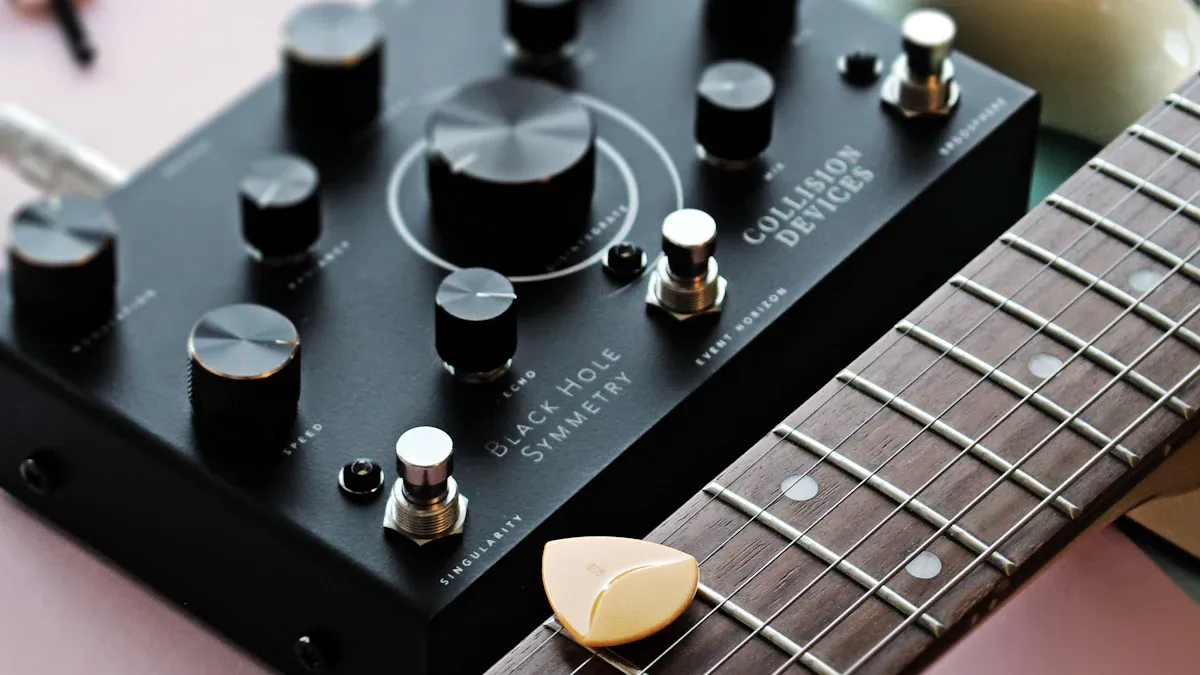
Every fuzz pedal has a set of controls that shape the sound. The MusonTek F2309 FUR FUR Fuzz Pedal gives players a lot of options. They can use the volume knob to set the output level. The fuzz knob changes how much fuzz is in the signal. Turning it down lowers the output and makes the sound darker or muddier. Turning it up brings out thick, saturated fuzz. The tone knob lets players adjust the EQ. They can make the fuzz brighter or warmer. The pedal also has three frequency settings. These settings help players switch between vintage fuzz and modern distortion.
-
The fuzz knob acts like a volume control. Lower settings reduce output and change the tone.
-
The volume knob balances the pedal with the rest of the rig.
-
The tone knob shapes the EQ, making the fuzz sound brighter or darker.
-
The frequency switch lets players pick between smooth, classic fuzz or aggressive, modern fuzz.
Players find that vintage-style fuzz pedals respond well to changes in guitar volume. Rolling back the guitar’s volume cleans up the fuzz. Turning it up brings out full fuzz tones.
Dialing in Tones
Players can create many fuzz sounds with the MusonTek F2309 FUR FUR Fuzz Pedal. They start by setting the volume and fuzz knobs. For classic fuzz, they keep the fuzz knob at a medium setting and use the vintage frequency switch. This gives a warm, smooth fuzz sound. For modern fuzz, they turn up the fuzz knob and use the high-frequency setting. This makes the fuzz sound tight and punchy.
|
Parameter |
说明 |
|---|---|
|
卷数 |
Controls the output level of the pedal, balancing it with the rest of your rig. |
|
Gain/Sustain |
Adjusts the amount of fuzz; higher settings yield more saturation and sustain. |
|
音调 |
Shapes the EQ, affecting high-end or mid frequencies based on the pedal. |
|
失真 |
Controls the amount of distortion; increasing it thickens the tone. |
|
Filter |
Adjusts the tone; higher settings yield a brighter sound, while lower settings produce a darker tone. |
|
级别 |
Controls the output level of the pedal, increasing the fuzz sound volume. |
|
高通滤波器 |
Filters out low-end frequencies for a brighter tone, ideal for faster parts. |
|
Mix |
Blends dry and fuzz signals; increasing it enhances fuzz presence. |
Players can experiment with the mix knob to blend dry and fuzz signals. This helps them find the right fuzz for their style. Some players use the high pass filter for fast riffs. It makes the fuzz sound clear and sharp.
Tip: Players often use their guitar’s volume knob to control the fuzz. Rolling it back cleans up the sound. Turning it up brings out heavy fuzz.
Troubleshooting
Sometimes fuzz pedals make unwanted noise or sound muddy. Players can fix these problems with a few steps.
-
Ensure proper grounding and use a power conditioner. This helps remove noise from the electrical circuit.
-
Organize and inspect cables. High-quality patch cables and short cable runs reduce noise.
-
Add a noise gate pedal. This silences unwanted noise when the signal drops.
|
Common Issue |
Resolution |
|---|---|
|
Hiss |
Filter specific frequency bands to remove noise; dampen high end and compensate in other ways. |
|
Oscillation |
Adjust feedback resistor values and use capacitors to reduce oscillation; find the sweet spot with a pot. |
|
RF Interference |
Similar to oscillation, adjust input gain and use capacitors to mitigate RF interference. |
“Keep power and signal cables as separate as possible to minimize electromagnetic interference. This can be achieved by using cable ties or clips to keep them apart. Additionally, minimizing cable lengths can significantly reduce noise in your setup.”
Unwanted feedback happens when the output gain is too high. Players can lower the gain or move away from the amp to stop feedback.
Creative Uses
Players use fuzz pedals in many creative ways. They stack fuzz pedals with other effects to shape their sound. The order of pedals changes the tone. For example, putting a Tube Screamer before a Plexi Drive changes the EQ and clipping. Increasing the volume on the first pedal boosts the gain in the second pedal. Adding an EQ pedal after the fuzz box helps sculpt the tone. Stacking dirt pedals into a distorted amp creates rich fuzz tones.
-
Stack fuzz pedals with overdrive or distortion for new sounds.
-
Use an EQ pedal after the fuzz box to fine-tune the fuzz.
-
Try running the fuzz box into a distorted amp for deep saturation.
Players also use fuzz pedals in different genres. Rock, metal, indie rock, psychedelic rock, and electronic music all use fuzz for creative sound design. Blues and punk bands use fuzz pedals for gritty, raw tones.
|
类型 |
Example Bands |
说明 |
|---|---|---|
|
Heavy Metal |
Black Sabbath |
Used fuzz for a heavy, distorted sound. |
|
Punk |
The Stooges |
Enhanced raw, aggressive sound with fuzz. |
|
Indie Rock |
The White Stripes |
Added gritty, lo-fi quality to their music. |
|
Psychedelic Rock |
Various Artists |
Employed fuzz for experimental soundscapes. |
|
电子设备 |
Various Artists |
Incorporated fuzz for unique electronic textures. |
Professional guitarists use fuzz pedals in studio recordings. They record clean signals through a fuzz pedal before amplification. This gives them control over the fuzz effect. They combine fuzz with reverb or delay for rich textures. Some run guitars through a fuzz pedal directly into an audio interface for unique tones. The MusonTek F2309 FUR FUR Fuzz Pedal lets players switch from clean to thick fuzz with the sub into fuzz switch.
Players enjoy finding the right fuzz for their style. They experiment with pedal order, knob settings, and genre. The fuzz box helps them create new sounds and explore music.
-
Set up the fuzz pedal first in the chain.
-
Use a noise gate and good power supply for clean fuzz.
-
Adjust distortion, filter, and mix for different fuzz tones.
-
Try new pedal orders and settings.
Every player finds their own fuzz sound by exploring and having fun with fuzz.
常见问题
How does someone clean a fuzz pedal?
They wipe the fuzz pedal with a dry cloth. They keep dust away. They check the jacks for dirt. Clean fuzz sounds better.
Can a fuzz pedal work with any guitar?
Yes, players use fuzz with electric guitars, bass guitars, and even synths. Fuzz changes the sound and works with many setups.
Why does fuzz sound different with each amp?
Every amp reacts to fuzz in its own way. Tube amps make fuzz warm. Solid-state amps give fuzz a sharper edge.