Ground loop isolators have become essential tools in modern audio systems, addressing persistent noise issues that plague recording studios, home theaters, and professional installations. This comprehensive guide explores the effectiveness of ground loop isolators, their practical applications, and how to choose the right isolation solution for your specific needs. We’ll examine real-world scenarios, technical specifications, and provide expert insights on maximizing their performance in various audio environments.
Understanding Ground Loops and Audio Interference
Ground loop interference represents one of the most persistent challenges in audio system design and implementation. Statistics indicate that nearly 30% of audio interference issues in home theater setups can be traced back to ground loops, making understanding this phenomenon crucial for both professionals and enthusiasts.
A ground loop occurs when multiple pieces of equipment share different electrical ground potentials, creating an unwanted current flow through the audio signal path. This results in the characteristic hum, buzz, or whine that can plague audio systems. The severity of ground loop problems varies significantly based on factors such as:
- Electrical infrastructure quality and grounding practices
- Distance between interconnected equipment
- Number of devices in the signal chain
- Quality of power supplies and filtering
- Environmental electromagnetic interference
Modern audio environments, particularly in urban settings with dense electrical infrastructure, face increasing challenges from ground-related noise. Recording studios, broadcast facilities, and even high-end home theaters must contend with these issues to maintain signal integrity and professional sound quality.
How Ground Loop Isolators Actually Work
Ground loop isolators function by physically breaking the electrical connection between input and output grounds while maintaining audio signal continuity. The core technology relies on isolation transformers that use electromagnetic coupling to transfer the audio signal without creating a direct electrical path.
The isolation process involves several key components:
| 组件 | 功能 | Impact on Signal |
|---|---|---|
| Isolation Transformer | Electromagnetic signal transfer | Maintains signal integrity while breaking ground connection |
| Core Material | Magnetic field generation | Determines frequency response and distortion characteristics |
| Shielding | External interference rejection | Prevents additional noise introduction |
| Input/Output Circuitry | Signal conditioning | Maintains proper impedance matching |
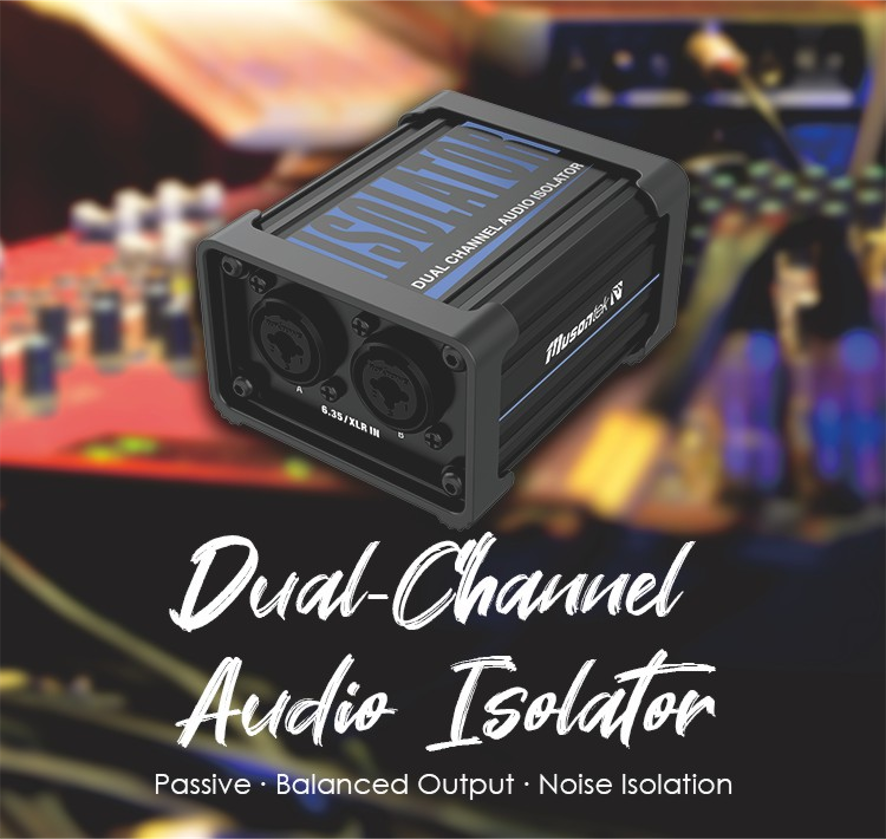
Professional-grade isolation devices, such as the dual-channel audio isolators designed for studio applications, incorporate studio-grade isolation transformers that maintain exceptional signal quality while providing complete galvanic isolation. These devices typically feature specifications that rival direct connections, with total harmonic distortion as low as 0.001% and dynamic ranges exceeding 135dB.
Effectiveness in Real-World Applications
The practical effectiveness of ground loop isolators varies significantly based on application context and implementation quality. In experience, the majority of the time, they can eliminate or significantly reduce engine whine or AC hum, though systems with complex grounding schemes may present additional challenges.
Real-world effectiveness depends on several critical factors:
工作室和专业应用
Recording studios and broadcast facilities represent the most demanding environments for isolation technology. Professional installations require isolators that maintain transparent signal transmission while providing reliable ground loop elimination. Modern studio-grade isolators, including advanced dual-channel solutions, offer plug-and-play operation without compromising audio quality.
Professional applications benefit from features such as:
- Balanced and unbalanced signal compatibility
- Wide frequency response (20Hz-20kHz ±0.3dB)
- High maximum input levels (+21dBu)
- Self-lifting ground modes for versatile installation
- Robust construction for touring and permanent installations
家庭影院和消费系统
Consumer applications often present unique challenges due to varying equipment quality and electrical infrastructure. Home theaters, gaming setups, and residential audio systems frequently benefit from isolation solutions, particularly when integrating multiple source devices or when dealing with older electrical wiring.
Common scenarios where isolators prove highly effective include:
- Computer audio interfaces with ground loop hum
- Car audio systems with alternator whine
- Home theater systems with cable box interference
- DJ setups with multiple power sources
- Vintage equipment integration with modern systems
Types and Technical Specifications
Ground loop isolators come in various configurations, each optimized for specific applications and performance requirements. Understanding these distinctions helps in selecting the appropriate solution for particular use cases.
Passive vs Active Isolation
Passive isolators rely exclusively on transformer-based isolation, requiring no external power supply. These devices offer several advantages including reliability, simplicity, and freedom from power-related noise sources. High-quality passive isolators can achieve remarkable specifications, with some professional units delivering performance indistinguishable from direct connections.
Active isolators incorporate additional circuitry for signal conditioning, buffering, or enhancement. While potentially offering improved specifications in some areas, they introduce complexity and potential failure points.
| 规格 | Professional Grade | Consumer Grade | Entry Level |
|---|---|---|---|
| THD+N | <0.001% @ 1kHz | <0.01% @ 1kHz | <0.1% @ 1kHz |
| Frequency Response | 20Hz-20kHz (±0.3dB) | 20Hz-20kHz (±1dB) | 50Hz-15kHz (±3dB) |
| Dynamic Range | >130dB | >100dB | >80dB |
| 最大输入 | +21dBu | +15dBu | +10dBu |
Professional vs Consumer Grade Solutions
The distinction between professional and consumer-grade isolation solutions extends beyond simple specifications to encompass build quality, reliability, and long-term performance characteristics. Professional applications demand consistent performance under varying conditions and extended operational periods.
Professional Grade Characteristics
Professional isolators typically feature superior transformer design, premium core materials, and robust construction. These devices often incorporate combo connectors supporting TRS, TS, and XLR inputs, providing maximum versatility in studio and live sound applications.
Key professional features include:
- Studio-grade isolation transformers with minimal signal degradation
- Comprehensive connector support for various audio formats
- Balanced output capability regardless of input configuration
- Heavy-duty construction suitable for touring and permanent installation
- Self-lifting ground modes for complex system integration
Companies like Musontek specialize in developing professional-grade isolation solutions that meet the demanding requirements of recording studios, broadcast facilities, and live sound applications. Their approach combines scientific measurement and testing with real-world application experience gained through direct collaboration with artists and audio professionals.
Consumer Applications and Limitations
Consumer-grade isolators often prioritize cost-effectiveness over ultimate performance, though many provide excellent value for typical home applications. Understanding the limitations helps set appropriate expectations and identify scenarios where professional-grade solutions may be necessary.
Common consumer limitations include:
- Limited input level handling capacity
- Reduced frequency response accuracy
- Higher distortion levels at elevated signal levels
- Less robust connector and housing construction
- Limited impedance matching capabilities
Installation and Best Practices
Proper installation significantly impacts isolator effectiveness and overall system performance. Understanding best practices helps maximize benefits while avoiding common pitfalls that can compromise results.
System Integration Guidelines
Successful isolation implementation requires careful consideration of signal flow, impedance matching, and system grounding practices. The isolator should be positioned strategically within the signal chain to break ground loops while maintaining optimal signal quality.
Installation best practices include:
- Installing isolators at the point of ground potential difference
- Maintaining proper impedance matching throughout the signal chain
- Using high-quality cables with appropriate shielding
- Avoiding unnecessary signal processing in the isolation path
- Testing system performance before and after installation
常见安装错误
Several common mistakes can compromise isolator effectiveness or introduce new problems. Understanding these pitfalls helps ensure successful implementation and optimal results.
Mistakes to avoid include:
- Installing isolators where they’re not needed
- Using inappropriate impedance isolators for the application
- Creating new ground loops through poor cable management
- Overloading isolator input capabilities
- Neglecting to verify proper connector wiring and shielding
Troubleshooting Common Issues
Even high-quality isolation systems can encounter issues requiring systematic troubleshooting approaches. Understanding common problems and their solutions helps maintain optimal system performance and quickly resolve any difficulties that arise.
Persistent Noise Issues
When ground loop isolators fail to eliminate noise completely, several factors may be involved. Complex systems with multiple ground paths or exceptionally high levels of electromagnetic interference may require additional measures beyond basic isolation.
Advanced troubleshooting steps include:
- Identifying all potential ground paths and electrical connections
- Checking for proper connector wiring and shield termination
- Evaluating power supply quality and filtering
- Assessing environmental electromagnetic interference sources
- Testing isolation effectiveness with different equipment configurations
Signal Quality Degradation
Some users report perceived signal quality changes when introducing isolators into their systems. While high-quality professional isolators should produce no audible degradation, several factors can contribute to signal changes.
Quality-related considerations include:
- Isolator specifications relative to system requirements
- Proper impedance matching between components
- Signal level optimization to avoid overload or noise floor issues
- Cable quality and connector integrity
- System gain structure and signal-to-noise ratio
Choosing the Right Isolator for Your System
Selecting the appropriate ground loop isolator requires careful evaluation of system requirements, performance expectations, and application constraints. The decision process should consider both immediate needs and future system expansion possibilities.
Application-Specific Requirements
Different applications demand varying levels of performance and features. Professional recording environments require transparent signal transmission and robust construction, while home applications may prioritize simplicity and cost-effectiveness.
Professional applications benefit from features such as:
- Multiple connector formats for system flexibility
- Exceptional specifications matching or exceeding system capabilities
- Robust construction suitable for demanding environments
- Comprehensive documentation and technical support
- Proven reliability in similar applications
Musontek Professional Solutions
For professional applications requiring uncompromising performance, Musontek offers carefully engineered isolation solutions that meet the demands of modern audio production. Their dual-channel audio isolators feature studio-grade isolation transformers, comprehensive connector support, and specifications that rival direct connections.
Musontek’s commitment to innovation and customer experience ensures that each product addresses real-world challenges faced by audio professionals. Their design philosophy combines scientific measurement with practical application knowledge gained through extensive collaboration with recording artists and sound engineers.
The company’s vision to become a world-renowned brand in professional audio accessories drives continuous innovation and quality improvement. Their mission focuses on customer experience, providing safe, reliable, and cost-effective products that meet the evolving needs of the audio industry.
Technical Support and Consultation
For complex installations or challenging applications, professional consultation can provide valuable guidance in system design and component selection. Musontek offers comprehensive technical support to ensure optimal system performance and customer satisfaction.
For additional information about professional isolation solutions and technical consultation, contact Musontek:
- Website: musontek.com
- 电子邮件: musontek@roxtone.com
- Phone: +86 574 87154705 / +86 574 56138193
- Office: Room 1002, New Bond Building, No.188, Tai’an Middle Road, Yinzhou District, Ningbo, 315199, China
Ground loop isolators, when properly selected and implemented, provide highly effective solutions for audio interference problems. Professional-grade devices offer transparent performance that maintains signal integrity while eliminating problematic ground loops. Success depends on understanding application requirements, proper installation practices, and selecting appropriate specifications for the intended use.