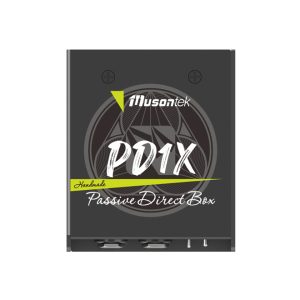
A DI box helps guitarists get clear and steady sound. Many players do not use DI boxes, but these tools fix problems like noise and weak sound. Musicians often have trouble with buzzing or a flat sound when they play. They should think about their setup and ask if their sound is good enough. A small tool can really help the sound quality.We recommend MusonTek’s Active DI BOX AD1F/AD1L and Passive DI BOX PD1X /PD1L.
Tip: Listen for buzzing or weird sounds in your guitar. A DI box can often fix these problems.
Основные выводы
-
A DI box makes your guitar sound better. It changes high-impedance signals to low-impedance signals. This helps your guitar work with audio equipment.
-
Using a DI box lowers noise and stops interference. This keeps your sound clean when you play live or record in a studio.
-
Active DI boxes are good for guitars with passive pickups. Passive DI boxes are best for instruments with active electronics.
-
Important things to check in a DI box are a ground lift switch to stop hum, high input impedance to keep your tone, and strong build for long use.
-
Buying a DI box saves money and makes your guitar sound better. It is useful for beginners and professional musicians.
Что такое DI Box?
Signal Conversion Basics
A DI box is a small device that helps guitarists. It changes the signal from an electric guitar. This makes the signal work better with audio equipment. Electric guitars send out a signal that is not balanced and has high impedance. Mixing consoles and audio interfaces need a balanced signal with low impedance. The DI box changes the guitar’s signal so it matches what these devices need. This helps the signal travel far without losing quality or picking up noise.
The DI box does a few things:
-
It changes high-impedance signals to low-impedance signals. This makes them work with microphone inputs.
-
It turns unbalanced signals into balanced signals. This helps stop interference and noise.
-
Some DI boxes use special parts to keep the signal strong and clear.
Note: Balanced signals do not pick up hum or buzz as easily from cables or other gear.
Reducing Noise and Interference
Guitarists often have problems with noise and interference. This happens a lot in live shows or studios. A DI box helps by cleaning up the signal. When you plug your guitar into a DI box, it removes many unwanted sounds. It can get rid of hum from ground loops. It also blocks noise from power supplies or lights. The balanced signal from a DI box uses a circuit that cancels out noise.
Many studios use DI boxes to record clean guitar sounds. This lets engineers keep the original sound and change it later. Using direct input gives the guitarist a pure signal. It is easy to mix and edit. The DI box helps the sound stay clear and free from buzz or static.
DI Box in the Studio
Clean Tracks and Low Noise
A di box is important for recording in studios. It helps guitarists get clean tracks with less noise. When you plug your guitar into a direct box, it changes the signal. The signal goes from unbalanced to balanced. This change helps stop hum and buzz. These noises can ruin your recording. Balanced cables carry the signal far. They do not pick up extra noise. You get a clear and strong sound.
Tip: Try the ground lift switch on your di box. It can help remove buzz from ground loops.
Many studios use active di boxes for better sound. These boxes make the guitar louder and clearer. The table below shows how active di boxes help acoustic guitars:
|
Evidence Description |
Impact on Acoustic Guitar Signal |
|---|---|
|
An active DI box makes the guitar sound louder and clearer. |
It boosts clarity and volume of the signal. |
|
Using an active DI box helps the sound be clear and detailed. |
It improves detail in the guitar sound. |
|
An active DI box boosts the guitar’s signal and makes it balanced. |
It keeps the sound clear and strong. |
Passive di boxes use transformers. These do not need power. Transformers help lower system noise. Ground lift switches also help remove hum. This makes your recording cleaner.

Easy Interface and Amp Sim Connections
A di box makes it easy to connect your guitar. You can plug into audio interfaces or amp simulators. Impedance matching matters for passive pickups. Higher impedance makes some pickups sound brighter. Lower impedance helps bass guitars sound cleaner.
A direct box lets you shape your guitar signal. You can change impedance settings for different devices. This helps you get the best sound for each recording. Long cables can make the sound dull. A di box keeps the signal strong and clear.
Note: A di box lets you record direct. You can try amp simulators for new tones.
A di box helps you record in the studio. It gives you a strong and noise-free connection. You can be creative and get the best sound.
DI Box for Live Use
Long Cable Runs
Guitarists often play on large stages. They need to use long cables to reach the mixing desk. Long cables can weaken the guitar signal and add noise. A di box helps by changing the guitar’s signal into a balanced one. Balanced signals travel farther without losing quality. This means the sound stays strong and clear, even with cables that stretch across the stage.
Tip: Use a di box when playing in big venues to keep your sound clean.
Hum and Buzz Reduction
Live shows can have many sources of noise. Lights, power cables, and other equipment can cause hum or buzz in the sound. A direct box helps remove these unwanted sounds. It uses special circuits to block noise from outside sources. Many di boxes have a ground lift switch. This switch breaks the ground loop and stops hum. Guitarists can play with confidence, knowing their sound will not have extra noise.
Mixer Compatibility
Mixers in live settings expect a certain type of signal. Electric guitars send out a high-impedance, unbalanced signal. Mixers work best with low-impedance, balanced signals. A di box acts as a bridge between the guitar and the mixer. It converts the signal so the mixer can handle it. This process also protects the sound from interference.
-
A di box converts high-impedance, unbalanced signals into low-impedance, balanced signals.
-
This conversion makes the signal work with professional mixers and preamps.
-
Balanced signals resist noise, so the sound stays clean over long distances.
Guitarists who use a di box in live shows get better sound and fewer problems. The audience hears the music as it should sound.
Choosing Your DI Box
Active vs Passive DI Box
Guitarists can pick from two main DI box types. These are active DI boxes and passive DI boxes. Each type works best for different needs. The table below shows how they are different:
|
Характеристика |
Активные блоки DI |
Пассивные DI-боксы |
|---|---|---|
|
Internal Circuitry |
Built-in preamplification circuits |
Transformer-based circuitry |
|
Требования к питанию |
Requires batteries, phantom power, or external power |
No external power required |
|
Входной импеданс |
Extremely high (often > 1 MΩ) |
Moderate (10 kΩ to 100 kΩ) |
|
Обработка сигналов |
Actively processes and amplifies signals |
Relies on electromagnetic induction for balancing |
|
Приложения |
Ideal for high-impedance sources like guitars |
Preferred for simplicity and reliability |
Active DI boxes use special circuits to make the signal better. They need power from batteries or phantom power. These boxes work well with guitars that have passive pickups. Passive DI boxes use transformers and do not need power. They are good for instruments with strong signals or active electronics.
Active DI boxes help guitars with passive pickups sound clear. They lower noise and keep the sound clean. High input impedance in active DI boxes protects the guitar’s tone. These boxes can handle loud signals without making the sound bad. Passive DI boxes are simple and reliable. Many players use passive DI boxes for instruments with built-in preamps.
Tip: Use an active DI box for guitars with passive pickups. Use a passive DI box for keyboards or basses with active electronics.
Основные характеристики, которые необходимо учитывать
Guitarists should look for certain things when picking a DI box. These features help make the sound better and fix problems.
-
High Input Impedance: Keeps the guitar’s tone safe, especially for passive pickups.
-
Выключатель подъема грунта: Gets rid of hum from ground loops.
-
Phase Reverse Switch: Fixes phase issues when using more than one mic or amp.
-
Robust Build: Makes sure the DI box can handle live shows and studio work.
-
Transformer Isolation: Blocks noise and interference from other gear.
Active DI boxes give extra help for passive sources. They lower noise by keeping the signal path simple. High input impedance helps piezo pickups sound good. These boxes can handle strong signals from many instruments.
Note: A DI box with a ground lift switch and phase reverse switch can fix many sound problems on stage or in the studio.
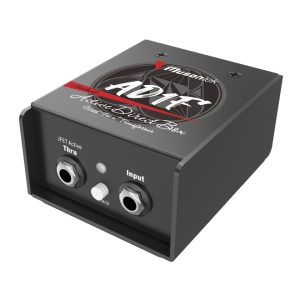
The Musontek Active D.I. Box-AD1L is a great active DI box. It uses a special circuit and a dual-transistor Class A buffer. The input impedance is 1 megaohm, which is good for passive pickups. The AD1L uses 48V phantom power, so you do not need batteries. It has a ground lift switch, phase reverse switch, and a chain port for flexible setups. Its strong build and wide dynamic range make it good for live and studio use.
Tip: Pick a DI box with features that fit your instrument and style. A good DI box can make your guitar sound professional anywhere.
Choosing Your DI Box
Active vs Passive DI Box
Musicians pick between active and passive DI boxes. Active DI boxes, like the Musontek AD1L, use phantom power from mixers. This means you do not need batteries. The signal stays strong with phantom power. Active DI boxes work best for guitars with passive pickups. They have high input impedance. This keeps the guitar’s natural sound safe. Passive DI boxes, like the Musontek PD1X, do not need power. These boxes use transformers to balance the signal. Passive DI boxes are good for instruments with active electronics or strong signals.
The table below shows how they compare:
|
Тип DI Box |
Требования к питанию |
Suitability for Guitar Types |
|---|---|---|
|
Пассивный |
Не требует питания |
Good for active instruments |
|
Активный |
Needs phantom or battery power |
Ideal for passive pickups |
Electric guitarists often use active DI boxes for clear sound. Passive DI boxes are simple and work well for bass guitars with active pickups.
Основные характеристики, которые необходимо учитывать
A good DI box should fix common sound problems. High input impedance keeps the instrument’s tone safe. Ground lift switches help remove hum from ground loops. Phase reverse switches help match signals when using more than one source. Transformer isolation blocks noise and keeps the signal clean. Strong construction helps the DI box work well on stage and in studios.
The table below lists important things to look for:
|
Критерии |
Описание |
|---|---|
|
Согласование импеданса |
Matches the guitar’s output for best sound quality. |
|
Active vs Passive DI Boxes |
Active DIs suit passive sources; passive DIs suit active sources. |
|
Особенности, на которые следует обратить внимание |
Pad, thru-put, polarity reverse, ground-lift, and isolated outputs add versatility. |
Important features include:
-
Ground lift to lower noise.
-
Phase reverse for matching signals.
-
High-frequency filter to cut interference.
-
Attenuation for strong signals.
-
Input and throughput connectors for easy setup.
-
Pad switch to make loud signals softer.
Transformer isolation gives separation from other gear. This stops ground loops and lowers interference. It helps acoustic guitarists get a clean sound in noisy places.
MusonTek DI BOX Recommendation
Musontek has two DI boxes for musicians. The PD1X is a passive model with a simple circuit. It is easy to use and has a highcut shifter, ground lift, phase reverse, and a strong build. These features make it good for live shows and studio work. The AD1L is an active DI box with a special circuit and 1 megaohm input impedance. It uses 48V phantom power, a dual-transistor Class A buffer, and a custom transformer. The AD1L can handle loud signals with a dynamic range of 118dB.
Both models have ground lift and phase reverse switches. These switches help musicians fix noise fast. The tough design makes each box reliable for shows and recording.
Musontek AD1L is great for sound quality, reliability, and flexibility. It works for electric, bass, and acoustic guitarists who want pro results. The AD1L keeps the sound clear and lowers interference in live and studio settings. Musicians can trust this DI box for a strong and clean signal every time.
Tip: Pick a DI box with features that fit your instrument and style. A good DI box makes your guitar sound better and fixes common problems.
A di box helps guitarists make their sound better. It is easy to use in any setup. Many guitarists pick a di box because it stops noise and hum. This makes the guitar sound clear. The device costs less than most pedals. You can use it with mixers, audio interfaces, and PA systems. Guitarists like it because it is simple to use. They get the same good sound every time they play. Musontek AD1L gives pro results for people who want great sound. Using a di box helps musicians sound good on stage and in studios.
-
Costs less than other gear
-
Simple to use, just plug it in
-
Makes your signal clean and strong every time
Try using a di box and notice how your guitar sounds better.
ЧАСТО ЗАДАВАЕМЫЕ ВОПРОСЫ
What does a DI box do for a guitar?
A DI box changes the guitar’s signal. It makes the sound clear and strong. The device helps the guitar connect to mixers and audio interfaces without noise.
Can a DI box remove hum and buzz?
Yes, a DI box can fix hum and buzz. Many models have a ground lift switch. This switch helps stop unwanted noise from power sources or cables.
Should a guitarist use an active or passive DI box?
Active DI boxes work best for guitars with passive pickups. Passive DI boxes suit instruments with active electronics. Players should choose based on their guitar type.
Does a DI box work for both live shows and studio recording?
A DI box helps in both live and studio settings. It keeps the signal clean during long cable runs on stage. In studios, it gives a pure sound for recording.