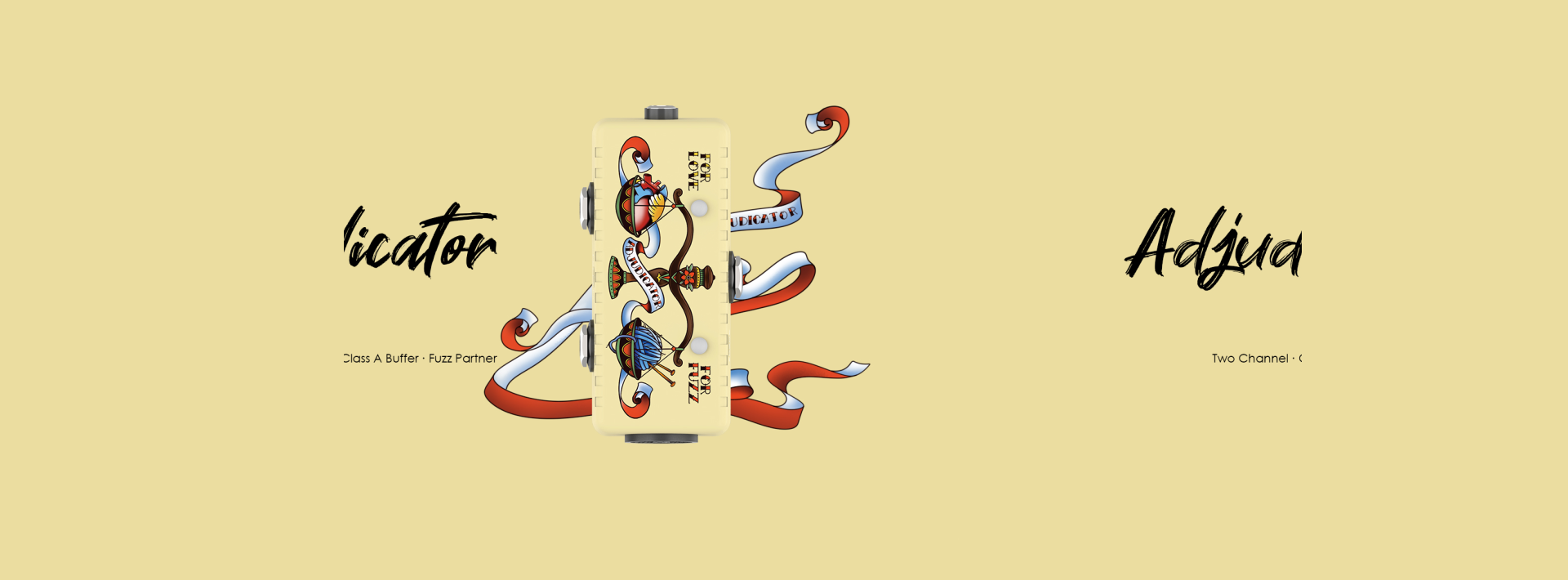
A good buffer guitar pedal helps your guitar sound clear and loud. Many players see that long cables or lots of pedals can make their sound soft or dull. Good pedals help musicians keep their real sound when they play live or record music. New pedals, like the Мусонтек Судья Buffer Pedal, have special features for players who want top sound quality.
Основные выводы
-
A buffer pedal helps your guitar sound stay strong. It stops your tone from getting weak when you use long cables or many pedals. – High input impedance and low output impedance are very important. They help keep your sound clear and good. – Put the buffer pedal first in your signal chain. This helps your guitar keep its natural tone. – Choose a buffer pedal with features like adjustable signal levels. This makes it work better with different setups. – Try putting the buffer pedal in different spots. This helps you find the best sound for your setup.
Buffer Guitar Pedal Function

Preventing Signal Loss
A buffer guitar pedal helps keep your guitar signal strong. If you use long cables or lots of pedals, your signal can get weak. This can make your sound quieter and less bright. People call this problem “tone suck.” The signal from a guitar starts as high impedance. High impedance signals do not travel far very well.
-
A buffer guitar pedal makes the output impedance lower.
-
This helps the signal move through long cables without getting weak.
-
The pedal takes a weak signal and makes it stronger.
-
Many guitarists see their sound stay clear, even with cables over 20 feet.
Tip: Imagine your signal is water in a hose. Without a buffer, the hose can bend and slow the water. A buffer pedal keeps the water flowing fast and steady.
Maintaining Tone Clarity
Guitarists want their real sound to reach the amp. A buffer guitar pedal helps keep the tone clear and bright. Passive pickups in guitars often make weak signals. When you use long cables, these signals lose their sparkle and detail.
-
Buffer pedals change high-impedance signals to low-impedance signals.
-
This keeps the signal clear, especially in the treble range.
-
Players notice buffer pedals bring back both low and high sounds, making the guitar lively.
-
The pedal also helps lower unwanted hum and noise in loud setups.
Professional guitarists like buffer pedals because they keep the tone natural. The pedal lets electricity move through without adding noise or changing the sound. Buffered inputs do not put much load on the guitar, so the tone stays the same. Many people say a good buffer pedal keeps the sound clear without making it too sharp, so the sound stays balanced.
Essential Features of a Buffer Guitar Pedal
High Input and Low Output Impedance
A buffer guitar pedal should work with guitar signals. It must not change the sound. The input impedance needs to be high. This keeps the guitar’s tone safe. Most passive pickups have impedance between 6 kΩ and 15 kΩ. Experts say input impedance should be at least 150 kΩ. Many pedals use 1 MΩ for better results. The output impedance should be low. This helps the signal move through long cables. It also helps when using many pedals. The sound does not lose quality.
A buffer guitar pedal with high input and low output impedance keeps your sound clear and strong, even with lots of gear.
Here is a table with suggested values:
|
Входной импеданс |
Output Impedance |
|---|---|
|
250KΩ or higher |
25KΩ |
Musontek Adjudicator Buffer Pedal uses a Class A design. It also uses field-effect transistors. These help reach the right values. This design keeps the guitar’s real tone. It stops signal loss.
Transparent Sound
Transparency means the pedal does not change the guitar’s sound. Players want their tone to stay pure. Tests show true bypass pedals have a flat response from 10 Hz to 20 kHz. Buffered pedals may lose some middle sounds. They may also roll off at the ends. A good buffer pedal can make high sounds better. It can make the tone brighter and more lively.
-
Buffers sit between the guitar and the signal chain.
-
They help keep the sound clear and strong.
-
Good buffer pedals lower the effect of cable capacitance and pedal input impedance.
Musontek Adjudicator Buffer Pedal uses a Class A circuit on both channels. This keeps the sound clear and lively. The dual-buffer setup helps keep the signal strong in different setups.
Качество сборки
Musicians need pedals that last. A buffer guitar pedal should have strong parts. It should have a tough enclosure. Good footswitches, input/output jacks, and DC power jacks help the pedal last longer. The enclosure protects the pedal from damage. It also blocks unwanted noise.
|
Component Type |
Role in Durability |
|---|---|
|
Footswitches |
Help the pedal work well and last longer |
|
Input/Output Jacks |
Keep the signal strong and last longer |
|
DC Power Jacks |
Give steady power and help the pedal work |
|
Enclosure |
Blocks noise and keeps the pedal safe |
Musontek Adjudicator Buffer Pedal is small and strong. The aluminum enclosure blocks noise. It also protects the pedal. This helps the pedal work well anywhere.
Compatibility with Fuzz Pedals
Some fuzz pedals do not work well with a buffer pedal before them. Old fuzz pedals need a high-impedance signal. This gives them their special sound. If a buffer pedal lowers the impedance too much, the fuzz pedal may sound thin. It may lose its character. Some new fuzz pedals work fine with buffers.
-
Old fuzz pedals often do not sound good with a buffer in front.
-
Some fuzz pedals, like the Boss FZ-1W, work well with buffers.
-
Special designs, like transformer inputs, can help fuzz pedals work better.
Musontek Adjudicator Buffer Pedal has a “For Fuzz” mode on the B channel. Players can change the input signal level. This helps match the fuzz pedal’s needs. This feature gives two sound choices. It helps the fuzz pedal sound full and rich.
Tip: Always check your fuzz pedal’s manual or try different settings to get the best sound with a buffer pedal.
Advanced Features for Tone Preservation and Versatility
New buffer pedals have extra features to help players get great sound. Musontek Adjudicator Buffer Pedal has a dual-buffer setup. It also has a one-to-two signal splitter. There are independent output LEDs. These features let players change their setup easily. Adjustable input levels help players set up for different pedals.
A buffer pedal with these features helps musicians keep their sound clear, strong, and flexible. Players can use long cables, many pedals, and different effects. They will not lose their real sound.
Using a Buffer Guitar Pedal in Your Signal Chain

Советы по размещению
Players often ask where to put a buffer guitar pedal in their signal chain. The answer depends on the setup. Many guitarists place the buffer at the very start of the chain. This spot helps the signal stay strong before it reaches other pedals. Some players put the buffer at the end of the chain to boost the signal before it goes to the amplifier. Both positions can help keep the sound clear.
Here are some common setups:
-
Place a buffer before long cable runs.
-
Position it in front of pedals with low input impedance.
-
Use it before a group of true bypass pedals.
Pedalboards with more than five pedals or cable runs over 20 feet benefit from a buffer. Placing the buffer early in the chain helps preserve the guitar’s natural tone. Some players prefer to put the buffer after fuzz or wah pedals to keep their unique sound.
Tip: Each position in the chain changes the sound. Try different spots to find what works best.
When to Use a Buffer
Not every setup needs a buffer. Short cables and a few pedals may not cause tone loss. If the pedalboard has many true bypass pedals or long cables, a buffer becomes important. The table below shows when to use a buffer:
|
Сценарий |
Why Use a Buffer? |
|---|---|
|
Long cable usage |
Keeps high frequencies from getting lost |
|
Many pedals in series |
Prevents tone loss from high capacitance |
|
Low input impedance pedals |
Stops tone suck, especially with fuzz or wah |
Players can listen to their clean tone. If it sounds weak compared to plugging straight into the amp, a buffer can help.
Распространенные ошибки
Some mistakes can happen when adding a buffer. Placing a buffer before vintage fuzz pedals can change their sound. Fuzz pedals often need a high impedance signal. Wah pedals also need careful placement. They should go before fuzz, but may need a buffer after them.
Other mistakes include using too many buffers or not testing different positions. Each pedalboard is different. Players should try different setups and listen for the best sound.
Note: A buffer does not fix a weak signal from the start. It keeps the signal strong from where it is placed.
Choosing the Right Buffer Guitar Pedal
Technical Specs to Consider
When picking a buffer guitar pedal, you need to check some key specs. Look for high input impedance. This helps your guitar signal stay strong with long cables. Low output impedance lets the signal move through pedals without losing quality. Experts say input impedance should be 1 megaohm. Output impedance should be close to 100 ohms.
|
Specification Type |
Описание |
|---|---|
|
Входной импеданс |
High impedance (1 megaohm) keeps your signal clear, even with long cables. |
|
Output Impedance |
Low impedance (100 ohm) helps the signal move through pedals. |
|
Buffered vs True-Bypass |
Buffered-bypass pedals keep your sound strong, even when off. |
|
Placement Consideration |
Buffers work best after fuzz pedals to keep your tone. |
You should also think about voltage range and headroom. More voltage gives more clean headroom. This means the pedal can handle louder sounds without getting fuzzy. Higher headroom makes your sound clear and lively. If you can adjust the signal level, you can set the pedal for different setups.
Tip: A pedal with a wide voltage range and adjustable levels works with many guitars and effects.
Popular Models
There are many buffer pedals you can buy today. Some are known for being strong and sounding good. The Musontek Adjudicator Buffer Pedal has two channels, fake cable lengths, and adjustable signal levels. It works well with fuzz pedals and uses a Class A design for clear sound and low noise. These features make it useful for many players.
|
Модель |
Key Feature |
|---|---|
|
Musontek Adjudicator |
Two buffers, signal splitter, works with fuzz |
|
Lehle Sundaydriver |
Changes high impedance to low, keeps pure tone |
|
29 OAMP |
Simple and easy buffering |
|
Wampler Decibel + |
Boosts sound and buffers |
The Musontek Adjudicator is special because it has features other pedals do not. You can change the signal level and use it with fuzz pedals. Its wide voltage range gives more headroom and keeps your sound clean. The strong build and flexible design make it a great pick for guitarists who want to keep their tone.
A buffer guitar pedal helps your guitar sound clear and strong. It uses high input impedance and low output impedance. This stops high frequency loss. The pedal keeps your tone bright. It works well with long cables or lots of pedals. Many users and experts say buffered pedals keep sound quality high. They also help fix weak signals. Players should check their own gear. They need to pick a pedal that works for them. A good buffer pedal makes your guitar sound better. It does not change your natural tone.
-
Musicians want to keep their tone safe and clear.
-
Buffered pedals help every performance sound bright and strong.
ЧАСТО ЗАДАВАЕМЫЕ ВОПРОСЫ
What does a buffer pedal do?
A buffer pedal keeps the guitar signal strong. It stops the sound from getting dull when using long cables or many pedals. Players hear a clear and bright tone.
Where should someone place a buffer pedal in the signal chain?
Most guitarists put the buffer pedal first. This spot protects the signal before it reaches other pedals. Some players try different spots to find the best sound.
Does a buffer pedal change the guitar’s tone?
A good buffer pedal does not change the natural tone. It keeps the sound clear and balanced. Players notice their guitar stays bright and strong.
Can a buffer pedal work with all types of pedals?
Many buffer pedals work with most effects. Some fuzz pedals need special settings. The Musontek Adjudicator Buffer Pedal has a “For Fuzz” mode for better results.