Reverb in guitar effects adds echoes to a guitar’s sound. It makes the music seem like it is in a bigger or different place. This effect changes how people hear the space and distance in the music. It can make guitar notes sound close or far away. Audio engineers use reverb to make the music feel deeper and more interesting. It helps the sound feel like it surrounds you. Many guitarists use reverb with an equalizer guitar effect, a Педаль эффектов Boost, or a педаль фьюза. These effects help them change their sound and make their music better.
Основные выводы
Reverb makes guitar sounds have echoes. This gives music a feeling of space and depth. There are different kinds of reverb, like acoustic, mechanical, and digital. Each type has its own sound for different music styles. You can use reverb with an equalizer pedal. This helps change the guitar’s tone and keeps the sound clear in a mix. You should control how much reverb you use. Too much reverb can make notes hard to hear. Try different reverb settings and pedal orders. This helps you find the best sound for your music.
How Reverb Shapes Guitar Sound
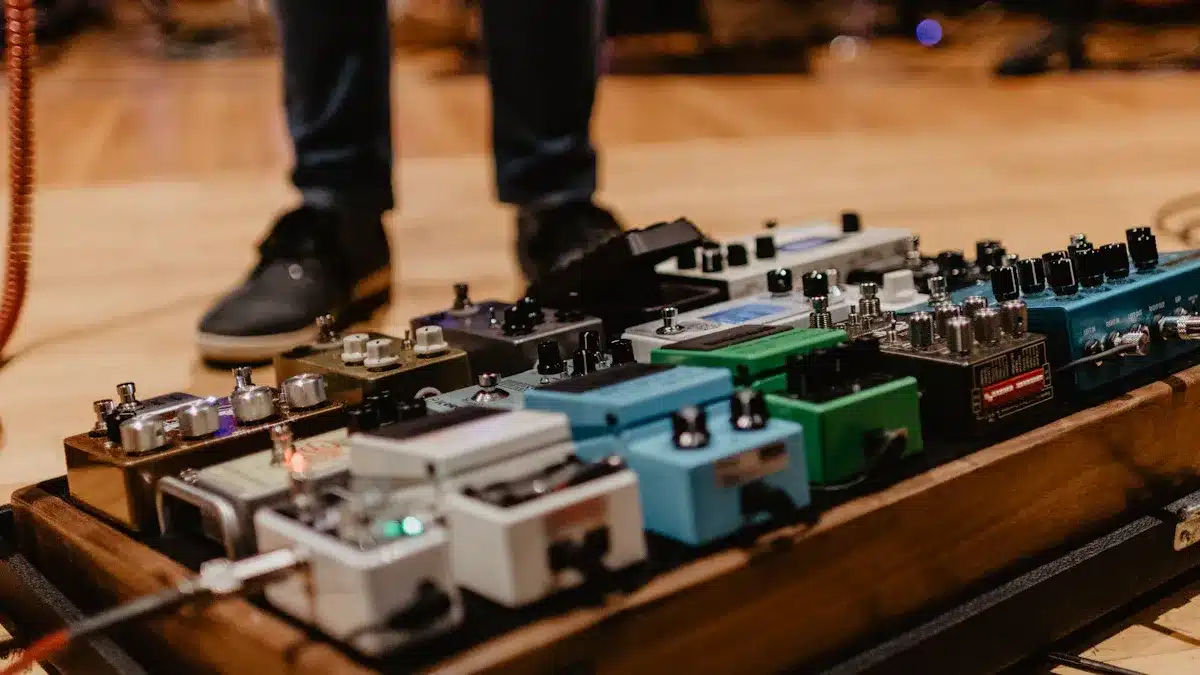
What Is Reverb?
Reverb happens when sound bounces off things in a room. These bounces mix together and make music feel deep. When a guitarist plays, the sound moves through the air. It hits walls, floors, and ceilings. This makes the note last longer and sound bigger.
Reverb changes how we hear music. It can make a guitar sound like it is in a tiny room or a huge hall. The effect helps us imagine the size and shape of the place. Musicians use reverb to add feeling and style to their music.
Scientists look at how reverb changes what we hear. This science is called psychoacoustics. The table below shows some key ideas:
Concept | Описание |
|---|---|
Psychoacoustics | Study of how people hear sound, including how reverb changes what we hear. |
Reverberation | Sound stays in a space after the first sound stops, which changes how we hear the tone. |
Delay Time | Based on how far sound travels to your ear, it changes how loud the sound seems. |
Intensity Decay | Sound gets quieter as it moves away, following a special math rule. |
Sound Absorption | How much sound bounces depends on what the surface is made of, which changes the reverb quality. |
Reverb Time | How long it takes for sound to get much quieter, which helps us know more about the reverb. |
Frequency Decay | Some sounds fade faster than others, and low sounds usually last the longest. |
How Reverb Works
Reverb in guitar effects uses a few main parts to change sound. Pre-delay sets how long before you hear the first echo. Early reflections help you notice the space and shape the sound. Decay time controls how long the reverb lasts after the note stops. Players can change the reverb’s tone to make it brighter or darker.
Bright reverb tails can make the high sounds in a guitar louder.
Many guitarists like reverb that makes the high notes easy to hear. This helps the guitar sound clear in a song with other instruments.
High-pass filters can take out low sounds from the reverb. This keeps the music from sounding messy, especially with bass or drums.
Reverb can add low rumbles, so it is important to control these for a clean sound.
Mix engineers say, “A big reverb makes the sound seem far away, but a small reverb on singing brings it close.”
Reverb helps make music feel like it is in 3D. It gives each instrument its own spot and makes the band sound together.
The main goal of reverb and delay is to make all the tracks feel like they are in the same place, even if they were recorded at different times.
Reverb does more than just add echoes. It changes how we feel and hear music. By changing reverb settings, guitarists can make their music fit any mood or style.
Types of Reverb Effects

Guitarists pick different kinds of reverb to change their sound. Each kind makes a special mood and feeling. The main groups are acoustic, mechanical, and digital reverb.
Acoustic Reverb
Acoustic reverb happens when sound bounces in a real place, like a room or hall. The size and what the room is made of changes the reverb. Big halls make long, smooth echoes. Small rooms make the sound feel close and lively. Many musicians like acoustic reverb because it sounds natural and warm.
Note: Acoustic reverb helps music feel like it is in a real place. It lets people picture how big or small the space is.
Professional guitarists use these common acoustic reverb types:
Room Reverb: Makes music feel close and lively.
Hall Reverb: Gives a big, even sound for concerts.
Chamber Reverb: Adds texture and energy.
Ambiences: Short reverbs for a little bit of space.
Mechanical Reverb
Mechanical reverb uses real devices to copy how rooms sound. Two main types are spring and plate reverb. Spring reverb uses metal springs to make a “sproingy” and dark sound. Plate reverb uses a big metal plate for brighter sounds and longer echoes.
Reverb Type | Sound Characteristics | Decay Time |
|---|---|---|
Spring | Sproingy, dark, metallic sounds | Shorter |
Plate | Brighter, strong attack, early echoes | Longer |
Mechanical reverb usually sounds more controlled than acoustic reverb. Many old guitar amps have spring reverb for a classic sound.
Digital Reverb
Digital reverb uses computers to copy both acoustic and mechanical spaces. This lets players change room size, echo time, and other things. Digital reverb can make sounds that are not found in nature.
Технология | Описание |
|---|---|
Algorithmic Reverb | Uses math to make fake spaces with settings you can change. |
Convolution Reverb | Uses real recordings of places to copy their sound. |
Early Reflection Modeling | Copies the first sound bounces for a real feel. |
Diffusion Algorithms | Shows how sound spreads in tricky spaces. |
Frequency-dependent Decay | Copies how some sounds fade faster in real rooms. |
Stereo Field Manipulation | Puts sounds in a 3D space for a wide effect. |
Digital reverb gives guitarists the most choices. They can pick from many presets or make their own special sound.
Using Reverb and Equalizer Guitar Effect Together
Combining Reverb with EQ Pedals
Guitarists like to use reverb and an equalizer guitar effect together. The equalizer guitar effect lets them make some sounds louder or softer. This helps the guitar fit better with other instruments. When you use reverb and an equalizer together, you can pick which sounds get echoed. For example, a player can use the Musontek Remeowdel pedal to take out muddy low sounds before adding reverb. This keeps the music clear and easy to hear.
The order of pedals is important. If you put the equalizer guitar effect before reverb, it changes the guitar’s sound before the echoes. This can make the reverb sound more natural and clean. If you put the equalizer after reverb, it changes the whole sound, including the echoes. Most guitarists put reverb last in their pedal setup. This is like how sound acts in real rooms.
Professional guitarists have some tips for using these effects together. The table below shows some helpful ideas:
Tip | Описание |
|---|---|
EQing Reverb | Use EQ on reverb channels to avoid masking other sounds in the mix. |
EQ Placement | Try EQ before or after reverb to see which gives the best result. |
Frequency Filtering | Filter out unwanted frequencies from the reverb signal for a cleaner sound. |
Avoid Low-Frequency Reverb | Keep reverb off low notes to prevent muddiness. |
Tame High Frequencies | Use high cuts to control bright, harsh reverb tails. |
Automation | Change EQ settings during a song for more energy and movement. |
Abbey Road Trick | Use a special EQ setting before reverb for a classic studio sound. |
Shaping Tone with Equalizer and Reverb
The equalizer guitar effect and reverb each do something special. The equalizer guitar effect changes the main sound. It can make the guitar brighter, darker, or sharper. Reverb adds space and makes the guitar sound like it is in a room or hall.
Players need to balance these effects for the best sound. Too much reverb can make the guitar sound far away or messy. Too little reverb can make the sound boring. Changing the dry and wet mix helps control how close or far the guitar feels. High-pass filters on the reverb can take out low rumbles. This keeps the music clear.
Here are some mistakes guitarists make with reverb and equalizer guitar effect pedals:
Turning up the reverb mix too much can cover up the guitar.
Using too many reverb effects can make the music crowded.
Picking the wrong reverb type can make the guitar sound strange.
Not using EQ on reverb can make the sound muddy.
Not controlling reverb levels can make the effect too strong or too weak.
Players can fix these problems by learning how each effect works. They should try different settings and listen carefully. Using high and low pass filters after reverb can help keep the sound clean. Mixing different reverb types with short and long decay times can make the guitar stand out without losing clarity.
Tip: Make small changes at first. Listen to how each change affects the sound. Use the Musontek Remeowdel to adjust the sound before or after reverb. This helps the guitar be heard in any song.
The equalizer guitar effect and reverb work best when used carefully together. Players who try different pedal orders, filter settings, and mix levels can make a strong and clear guitar sound. They can change their tone for any kind of music, like rock, jazz, or pop.
Adding Reverb to Your Setup
Amp Reverb vs. Pedal Reverb
Guitarists often choose between amp reverb and pedal reverb. Amp reverb comes built into many guitar amplifiers. It usually uses a spring tank inside the amp. This type gives a classic, warm sound. Many blues and surf players like this effect. Amp reverb is easy to use. Players only need to turn a knob on the amp.
Pedal reverb offers more choices. Pedals can create many types of reverb, such as hall, plate, or shimmer. Some pedals use digital technology to copy real spaces. Others use springs or plates inside the pedal. Pedal reverb works well for players who want to change their sound often. Pedals can go in different places in the signal chain. This gives more control over the final sound.
Tip: Players who want a simple setup may prefer amp reverb. Those who want more options and control often pick pedal reverb.
Choosing the Right Reverb
Selecting the right reverb depends on a few key factors. Guitarists look for pedals that match their style and needs. They often check the types of reverb a pedal can make. A versatile pedal offers spring, hall, plate, and shimmer sounds. Control options matter too. Some pedals have simple knobs. Others use digital menus for deeper settings.
Key parameters like decay, mix, and tone help shape the reverb’s character. Extra features such as pre-delay, modulation, or built-in presets give more creative freedom. Output preferences also play a role. Some players need stereo output for a wide sound. Others use mono for a simple setup. The type of bypass affects the dry tone. True bypass keeps the original sound pure. Buffered bypass helps keep the signal strong.
Size and power needs matter as well. Compact pedals fit small boards. Larger pedals may offer more features. The table below shows what guitarists consider when picking a reverb pedal:
Критерии | Описание |
|---|---|
Types of Reverb | Pedals with spring, hall, plate, and shimmer suit many styles. |
Опции управления | Simple knobs or digital menus affect how easy it is to adjust settings. |
Key Parameters | Decay, mix, and tone controls shape the reverb’s sound. |
Дополнительные функции | Pre-delay, modulation, and presets add creative options. |
Output Preferences | Stereo or mono outputs fit different setups. |
Bypass Type | True bypass keeps the dry tone clear; buffered bypass keeps the signal strong. |
Size and Power Requirements | Compact pedals are portable; larger pedals may have more features. |
Players should try different pedals and settings. This helps them find the reverb that fits their music best.
Do You Need Reverb?
Styles and Genres
Different music styles use reverb in unique ways. Reverb helps guitarists create depth and fullness in their sound. In surf rock, reverb gives the guitar a bright, splashy tone that defines the genre. Post-punk bands use reverb to make their music sound wide and atmospheric. Pop music often uses reverb to enhance certain sounds, making them stand out in a mix. Jazz and folk musicians use reverb to bring all the instruments together, creating a sense of space that feels natural. Electronic dance music (EDM) producers add reverb to drum hits to keep the music interesting and lively.
Guitarists can choose from many types of reverb, such as plate, spring, room, or modulated reverb. Each type fits different styles. Some genres need only a little reverb for a subtle effect. Others use a lot of reverb to create a dreamy or epic soundscape. The equalizer guitar effect works well with reverb in all these genres. It helps shape the guitar’s tone before or after adding space to the sound.
Tip: Try different reverb types and settings to match the style of music you play.
When to Use or Skip Reverb
Guitarists must decide when reverb fits their music. In small venues, too much reverb can make the sound muddy and less clear. A long hall reverb may not suit an intimate performance. Rooms with hard surfaces already reflect sound, so adding more reverb can overwhelm the mix. In these cases, players often use less reverb or skip it altogether.
Some musicians use reverb only for special effects, not as a standard part of their sound. Others add a small amount to smooth out their tone. The equalizer guitar effect can help control which frequencies get reverb, keeping the sound clean. Adjusting reverb based on the room’s acoustics is important. A minimal approach often works best, letting the guitar’s true tone shine.
Размещение | Описание |
|---|---|
Effects Loop | Reverb and delay sound cleaner after the preamp, especially in the effects loop. |
Last in Chain | Placing ambient effects like reverb last helps create a natural space and avoids messy noise. |
Guitarists should listen to their music and the room. They can use the equalizer guitar effect to fine-tune their sound before adding reverb. This approach helps them decide when reverb improves their tone and when it is better to leave it out.
Reverb changes a guitar’s sound by making it feel bigger. It adds space and makes the music deeper. Audio engineers say to use reverb carefully. This keeps the guitar clear and easy to hear. If you use too much reverb, the notes can get lost. Chords might sound blurry and details can hide. Guitarists can use an equalizer pedal to help. They can turn up the mids to make the guitar stand out. They can also lower the lows to stop muddiness. Experts say to record without reverb first. This gives more control when editing later. Players should try different settings and pedal orders. Trying new things helps each guitarist find their best sound for any style.
ЧАСТО ЗАДАВАЕМЫЕ ВОПРОСЫ
What does reverb do to a guitar sound?
Reverb adds echoes to the guitar sound. It makes the music feel bigger and more natural. Players use reverb to create a sense of space and depth in their tone.
Can you use reverb and an equalizer pedal together?
Yes, many guitarists use both. The equalizer shapes the guitar’s tone. Reverb adds space. Using both helps the guitar fit better in a band or recording.
Where should you place reverb and equalizer pedals in the signal chain?
Most players put the equalizer before reverb. This order shapes the guitar’s tone first. Reverb then adds space to the shaped sound. Some players experiment with different orders for unique effects.
Does every music style need reverb?
No, not every style needs reverb. Surf rock and ambient music use lots of reverb. Blues and jazz often use less. Players choose reverb based on the sound they want.