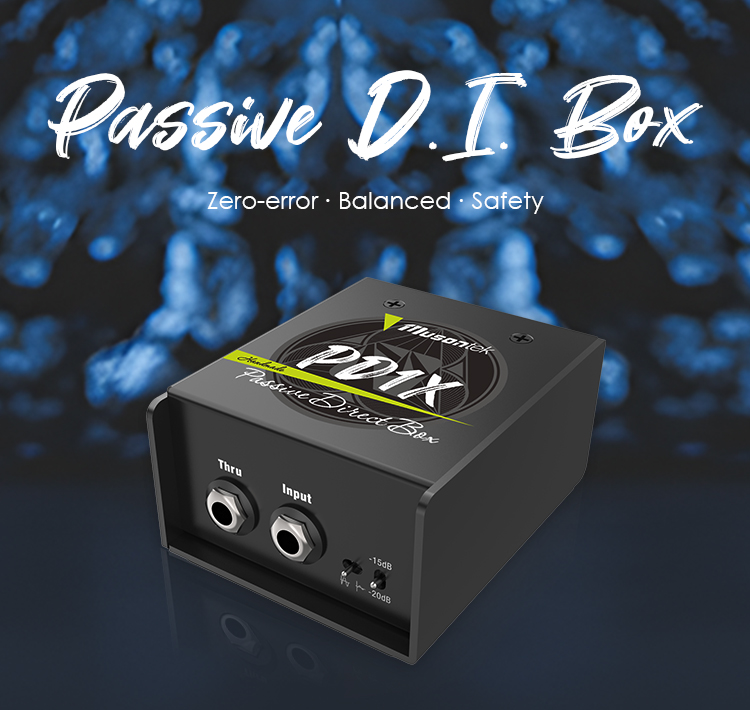
A passive stereo DI box transforms an unbalanced instrument signal into a balanced output, making it an essential tool for musicians and sound engineers. Whether you’re connecting keyboards, electric guitars, or other instruments to mixers and recording systems, a Passive ID BOX—such as the Musontek Passive ID BOX PD1X or Musontek Passive ID BOX PD1—ensures reliable performance. This device effectively reduces unwanted noise and is simple to use in any professional audio setup.
Tip: Using a passive stereo DI box helps deliver clear, high-quality sound for both live performances and studio recordings.
Основные выводы
-
A passive stereo DI box changes unbalanced signals to balanced outputs. This helps lower noise and keeps instrument sound clear.
-
This device is simple to use. It does not need batteries or a power supply. This makes setup fast and easy for live shows and studio work.
-
Important features include a ground lift switch. This switch removes hum and buzz. There is also a pad switch. It stops strong signals from causing distortion.
-
Passive DI boxes work well with instruments that have strong outputs. Keyboards and electric guitars are good examples. They give steady performance in many audio setups.
-
Picking a passive DI box makes connections easier. It also improves sound quality. This is why many musicians and sound engineers like to use them.
Passive Stereo DI Box Operation

Преобразование сигналов
A passive stereo DI box changes unbalanced signals into balanced outputs. It uses a transformer inside the box. The transformer takes the signal from an instrument and matches it to the input of a mixer or audio interface. This lowers the signal to microphone level. The sound stays clear. Balanced outputs send audio over long cables without picking up noise. For example, a keyboard player can connect both left and right outputs to a passive stereo DI box. Then they send clean, balanced signals to the mixing console. The design is plug-and-play. Users do not need batteries or power supplies. They just connect their instruments and start playing.
Passive Circuitry
The passive DI box uses simple circuitry. It does not have active electronic parts. It relies on a transformer to handle the signal. This keeps the original tone of the instrument. It does not need any power source. The passive stereo DI box has several advantages:
-
It keeps the natural sound of the instrument.
-
It matches the electrical levels between instruments and audio equipment.
-
It lowers noise from electromagnetic and radio frequency interference.
The table below shows the main differences between passive and active DI boxes:
|
Характеристика |
Пассивные DI-боксы |
Активные блоки DI |
|---|---|---|
|
Требуемая мощность |
No power needed; uses a transformer |
Needs power (9V battery or phantom power) |
|
Circuitry |
Simple circuitry with no active parts |
Has a preamplifier for higher output |
|
Suitability |
Best for instruments with higher output |
Good for low output instruments like vintage guitars |
|
Distortion Characteristics |
Makes pleasant distortion when pushed hard |
Works quietly and clearly |
Stereo vs. Mono
A passive stereo DI box can handle two signals at once. This is helpful for instruments with stereo outputs, like keyboards with left and right channels. It also helps when a musician wants to connect two different instruments, such as a guitar and a bass, using one device.
A stereo DI box is best when you need to process two separate mono signals at the same time, like with a keyboard that has left and right outputs. It is also good for instruments with stereo outputs, making it easier to manage more than one signal.
Mono DI boxes only handle one signal at a time. Stereo DI boxes save space and make setup easier for musicians who use more than one signal source. This makes the passive stereo DI box a popular choice for live shows and studio work.
Key Features of Passive DI Box
Качество сборки
A passive DI box needs to be tough to last a long time. Makers use thick steel or strong aluminum for the outside. This keeps the inside parts safe from harm. The transformer inside is very important for good sound. Good transformers have mu-metal cases for magnetic shielding. They also use Faraday shields to keep each winding apart. These things help the sound stay clear. Many top DI boxes use through-hole circuit boards for extra strength. The Musontek PD1L uses strong materials and a hard shell to protect its switches and connectors.
Many high-quality passive DI boxes have a 14 gauge steel chassis with I-beam style construction. The outside shell protects the switches and connectors. The circuit board uses through-hole mounting to make it stronger.
Inputs and Outputs
A passive stereo DI box gives you many ways to connect your gear. Musicians can plug in keyboards, electric guitars, or drum machines. The PD1L works with both instrument and line-level signals. It has two input channels for stereo sounds or two mono instruments. Balanced XLR outputs send the signal to mixers or audio interfaces. This setup lets users connect their equipment fast and easily.
|
Характеристика |
Описание |
|---|---|
|
Inputs |
1/4″ jacks for instrument or line-level signals |
|
Outputs |
Balanced XLR connectors for mixers/interfaces |
|
Stereo Support |
Handles two channels for stereo instruments |
Ground Lift and Pad Switch
Passive DI boxes have switches to make the sound better. The ground lift switch stops hum and buzz from ground loops. This helps keep the sound clean. The pad switch lowers the input signal level. This stops overload and distortion when the signal is strong. The Musontek PD1L also has a phase reverse switch. This helps fix phase problems when using more than one mic.
The ground lift switch gets rid of ground loops that make unwanted hum and noise. The pad switch lets users lower the input signal level so there is no distortion or overload.
Musontek PD1L puts all these features in a simple design. Users do not need batteries or outside power. The device works well for live shows and studio work.
Uses of Passive Stereo DI Box
Instruments and Devices
Musicians and sound engineers use passive stereo DI boxes with many instruments. Keyboards often have two outputs, left and right. This keeps the sound wide and clear. Electric guitars with active pickups sound better with balanced outputs. Electronic drum kits use both channels to catch every sound. Laptops and DJ controllers also connect for strong, clean audio. These devices need good sound for live shows and studio work.
Live and Studio Applications
A passive stereo DI box works great on stage and in studios. Performers use it at live shows to send balanced signals to mixers. This cuts down noise and keeps the sound clean. Studio engineers use passive DI boxes to record without interference. The Musontek PD1L is good for both live and studio use. It keeps audio separate, saves the tone, and handles loud sounds without distortion. The ground lift switch removes hum and buzz. This is important for clean recordings and live sound.
|
Характеристика |
Описание |
|---|---|
|
Audio Isolation |
Stops unwanted noise, hum, and interference for pure sound. |
|
Tone Preservation |
Keeps the original sound and feel of the instrument. |
|
Distortion Handling |
Handles loud signals without making the sound bad. |
|
Снижение шума |
Changes the signal to balanced output and lowers noise and hum. |
Setup Scenarios
Musicians use passive stereo DI boxes in many ways. Some common uses are:
-
Hooking up a keyboard with two outputs for wide stereo sound.
-
Using electric guitars with active pickups for better sound.
-
Sending both channels from an electronic drum kit to catch every drum and cymbal.
-
Connecting laptops or DJ controllers to mixers for strong, clear audio.
Tip: A passive DI box helps musicians and engineers set up fast and avoid noise during shows or recording.
Advantages and Limitations
Преимущества
Passive stereo DI boxes give musicians and sound engineers many good things. These devices help make the audio signal cleaner. They also make setting up easier for everyone. People like passive DI boxes because they are simple and work well.
-
Passive DI boxes change unbalanced signals to balanced outputs. This helps stop interference, humming, and buzzing.
-
They work well with long cables. Balanced signals stay strong and clear in big places.
-
The transformer inside does not need outside power. This design lowers system noise and keeps things easy.
-
Many passive DI boxes, like the Musontek PD1L, have ground lift switches. These switches get rid of hum and buzz from ground loops.
-
Plug-and-play means users can connect instruments fast. No batteries or power supplies are needed.
Tip: Passive DI boxes help musicians send a clear signal to mixers or audio interfaces. This is great for live shows or recording in the studio.
Недостатки
Passive stereo DI boxes have some downsides. Users should know these before picking a DI box for their gear.
|
Ограничение |
Описание |
|---|---|
|
Lack of Gain |
Passive DI boxes do not make weak signals louder. |
|
Потеря сигнала |
Some instruments may lose volume or sound less clear. |
|
Fixed Circuitry |
Passive designs cannot change tone or add features. |
Considerations
Picking between passive and active DI boxes depends on what you need. Passive DI boxes are good for instruments with strong signals, like keyboards and electronic drum kits. Active DI boxes are better for instruments with weak signals, like old electric guitars. Users should think about their instrument, cable length, and where they play or record.
Note: Musicians who want something simple and reliable often choose passive DI boxes. People who need more gain or want to change their sound may pick active models.
A passive stereo DI box helps musicians and engineers get clear sound. It is easy to use and does not need power. It works well with active instruments. It also helps lower noise in setups. Some important features are strong build, ground lift, and pad switches.
|
Критерии |
Описание |
|---|---|
|
Согласование импеданса |
Stops signal loss for better sound |
|
Качество сборки |
Makes the box tough and lowers noise |
|
Наземный подъемник |
Gets rid of hum from ground loops |
|
Pad Options |
Stops overload from strong signals |
Many people pick passive DI boxes because they work without power. They keep sound clear even with long cables.
Musicians who want gear that works fast and easily should look for these features in a DI box.
ЧАСТО ЗАДАВАЕМЫЕ ВОПРОСЫ
What does a passive stereo DI box do?
A passive stereo DI box changes unbalanced signals to balanced outputs. This helps lower noise and stops interference. Musicians and sound engineers use it to connect instruments to mixers or recording gear.
Who should use a passive stereo DI box?
Musicians, sound engineers, and live performers use passive stereo DI boxes. These boxes work well with keyboards, electric guitars, and electronic drum kits. They help people get clear sound for live shows and studio work.
Does a passive stereo DI box need power?
A passive stereo DI box does not need batteries or outside power. The transformer inside does the signal conversion. Users just plug in their instruments and start playing.
What is the difference between stereo and mono DI boxes?
Stereo DI boxes handle two signals at the same time. Mono DI boxes only work with one signal. Stereo boxes are good for keyboards and gear with left and right outputs. Mono boxes are best for single-channel instruments.
How does the ground lift switch help?
The ground lift switch gets rid of hum and buzz from ground loops. This keeps the sound clean. Users turn on the switch when they hear noise in their setup.