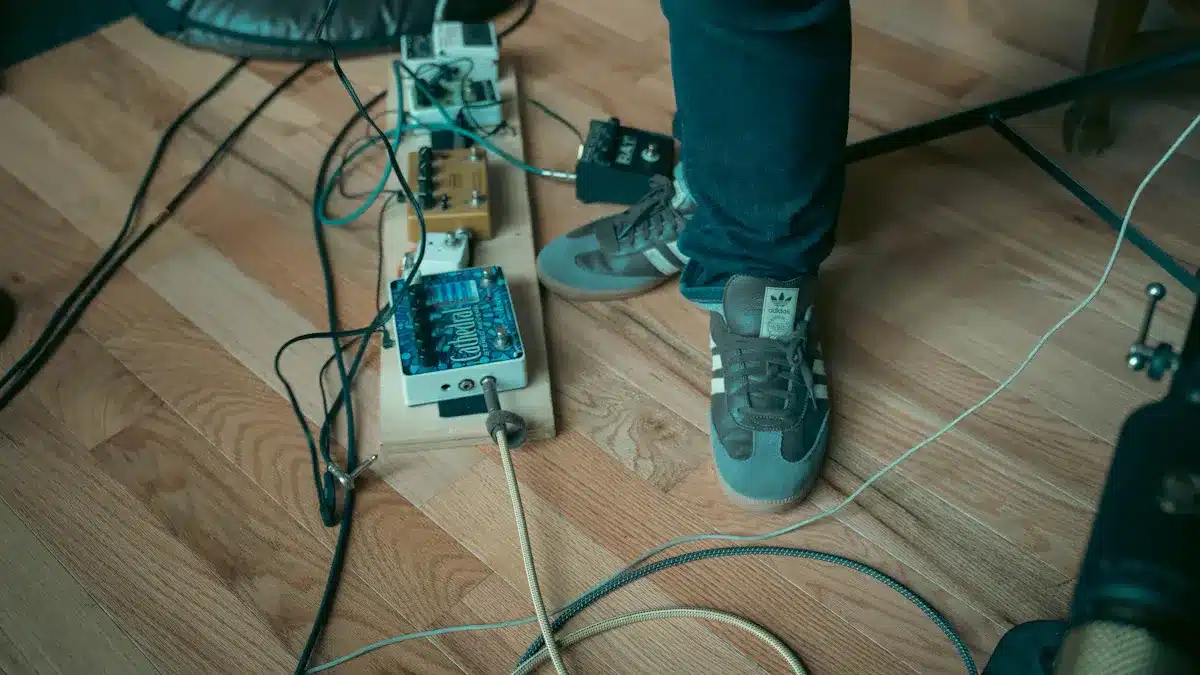
Many acoustic players want to know which pedals help their sound. Simple setups are best for most musicians. Picking the right acoustic guitar pedal gives clear tone and easy control. Beginners and intermediate players do better with basic gear. This helps them play better and be more creative. Some musicians use creative effects for special sounds.MusonTek guitar pedal Overdriver–Замок мечты,Capy Order,Hellfire Razor,Buffer–Судья,Fuzz–FurFur,EQ–Ремоудел, MOD - Voyager(Педаль реверберации с задержкой ) can match your needs.

Основные выводы
-
A tuner pedal helps keep your guitar in tune. This makes your music sound clear and nice.
-
DI/Preamp pedals help you control your sound better. They also stop feedback. These pedals are important for shows and recording.
-
Reverb pedals make your sound feel bigger and deeper. They help your music sound more real and fun to hear.
-
EQ pedals let you change your guitar’s sound. This helps your music fit different places and styles.
-
Begin with just a few pedals to practice playing. Try more effects as you get better.
Essential Acoustic Guitar Pedal Types
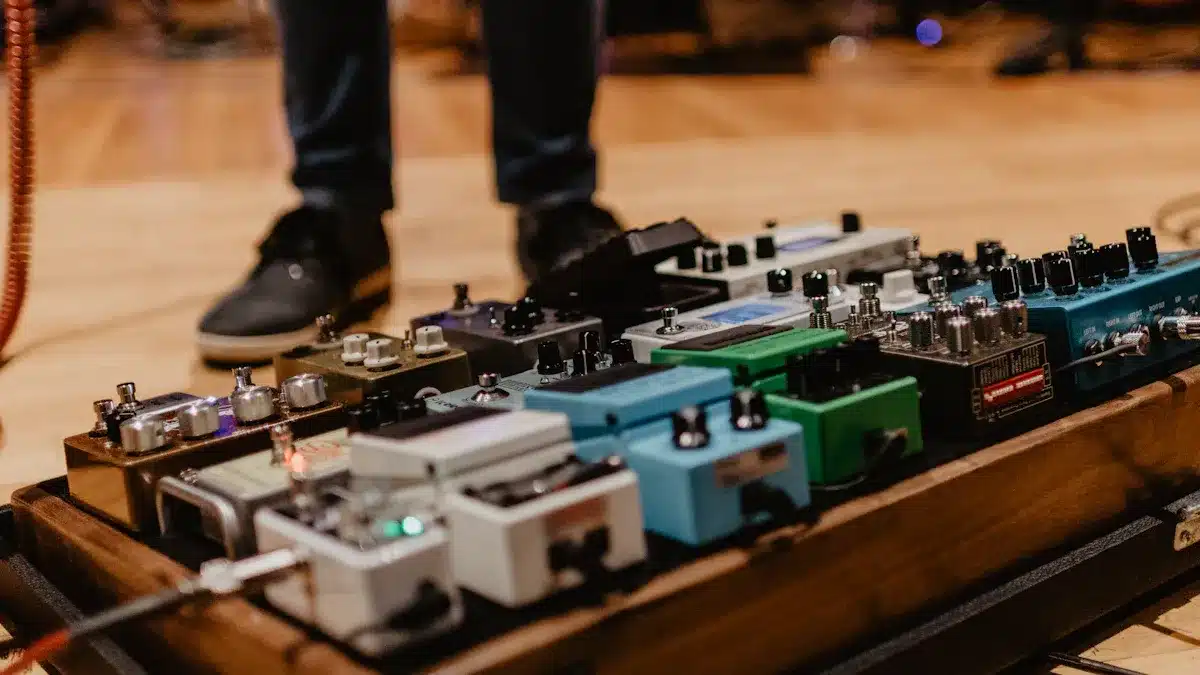
Acoustic guitarists use a few main pedals to help their sound. These pedals help them tune, change their tone, add effects, and adjust for different places.
Tuner Pedal
A tuner pedal helps keep the guitar in tune at all times. Good tuning makes the guitar sound clear and nice. Many people like the Boss TU-3 Chromatic Tuner because it works well. Tuner pedals are fast and quiet. They are a smart pick for any pedal setup.
Tip: Put the tuner pedal first in your signal chain for best results.
DI/Preamp Pedal
A DI/Preamp pedal lets the guitar connect to speakers and recording gear. These pedals help players control their tone and stop feedback. They also make the guitar sound better before it goes to the speakers. Fishman and LR Baggs make popular models with extra features.
Key benefits of DI/Preamp pedals:
-
More control over tone and EQ
-
Better sound for live shows and recording
-
Less feedback for a cleaner sound
|
Модель |
Основные характеристики |
|---|---|
|
Voiceprint DI |
Uses a phone to capture each guitar’s special sound. |
|
Venue DI |
Has DI output, 5-band EQ, boost, and tuner for many uses. |
|
Para DI |
Gives studio-quality EQ, great for live shows. |
|
Session DI |
Makes pickups sound rich, like high-end studio gear. |
|
Align Series |
Has studio tools, a strong preamp, and reverb for many tones. |
Reverb Pedal
A reverb pedal adds space and makes the guitar sound bigger. It gives the guitar a natural and lively feel. Many players like reverb pedals more than amp reverb. DigiTech Hardwire RV-7 and TC Electronics Hall of Fame are liked for their good sound.
Recommended reverb pedals for acoustic guitarists:
-
LR Baggs Align Reverb: Makes the tone better and is easy to use.
-
Fishman AFX Acoustiverb: Has many reverb choices for acoustic guitars.
-
Strymon Cloudburst: Makes big, dreamy sounds.
-
Keeley Soft Reverb: Gives soft, natural effects for solo playing.
-
MXR M300 Digital Reverb: Has many sound choices, especially the ‘Room’ setting.
Note: Reverb pedals help make the music feel more real for listeners.
EQ Pedal
An EQ pedal lets players change the sound of their guitar. This helps them fit their sound to different rooms and styles. EQ pedals can make the sound clearer, warmer, or less muddy. At shows, EQ pedals help with noise and echoes. When practicing, EQ pedals help players learn about their guitar’s tone.
How EQ pedals help acoustic guitarists:
-
Change sound for clarity and warmth
-
Match sound to different rooms
-
Make sound less muddy in small spaces
-
Boost mids for a better mix
-
Help with noise during live shows
|
Название педали |
Distinguishing Features |
|---|---|
|
Boss GE-7 |
Small size, comes in quiet versions. |
|
Maxon GE601 Graphic Equalizer |
6-band EQ, like Boss but with one less band. |
|
MXR M108S Ten Band EQ |
10-band EQ for more control, bigger size. |
|
Mooer Audio Graphic G EQ Pedal |
Small 5-band EQ with level control, good for trying new sounds. |
|
Source Audio SA170 Programmable EQ |
Four presets and 7+1 bands, good for quick changes. |
|
Whirlwind Perfect Ten 10-band EQ |
‘Constant Q’ for better control, great for accuracy. |
|
WMD Utility Parametric EQ |
Small parametric EQ, has features like bigger models. |
A good acoustic guitar pedal setup starts with these main types. Using tuner, DI/preamp, reverb, and EQ pedals helps players build a strong sound and play better.
Optional Acoustic Guitar Pedal Effects
Acoustic guitarists sometimes use extra pedals for more creative sounds. These pedals help players try new styles and make live shows better.
Compression Pedal
A compression pedal helps control how loud or soft the guitar is. It makes the sound more even and helps notes last longer. Many players use compression to make their music sound smooth. This pedal also helps the guitar sound the same each time.
-
Makes the sound more even
-
Helps notes last longer
-
Gives better control over loud and soft parts
-
Makes the music sound smooth
Chorus/Modulation Effects
Chorus and modulation pedals make the guitar sound wider and fuller. Chorus can make one guitar sound like two or more. Players often set the mix low for a gentle effect. The Align Chorus by LR Baggs is a favorite because it keeps the guitar’s real sound.
-
Chorus changes the pitch a little, making it richer
-
Adds layers and depth to the sound
-
Makes the guitar sound better overall
Педаль задержки
Delay pedals add echo to the guitar. This makes it sound like more guitars are playing. Delay can make beats stand out and feel more fun. Some delay pedals let you change the speed and sound of the echo.
|
Характеристика |
Описание |
|---|---|
|
Proprietary Delay |
Made for acoustic guitars, gives clear echoes |
|
Регулировка тембра |
Changes only the echo sound, from warm to bright |
|
Tap Tempo |
Lets you set the echo speed by hand |
|
Versatile Sound |
Mixes old and new sounds for rich tones |
Looper Pedal
Looper pedals let players record and play back their music. This helps them make songs with many layers. Singer-songwriters use loopers to build big songs by themselves. Loop pedals are also good for writing songs and trying new chords.
-
Add layers for bigger songs
-
Make backing music for solos or singing
-
Help with new ideas when practicing
Overdrive Pedal for Acoustic Guitar
Overdrive pedals are not used as much with acoustic guitars, but they can be fun. Some overdrive pedals add a little roughness and make notes last longer. The Musontek Dream Castle Overdrive Pedal is special because it can do many sounds. It has a four-digit OP-Amp, true bypass, and two sound modes. Players can change gain, tone, and presence for different effects. This pedal is good for people who want to try new styles or sounds.
Tip: Use overdrive pedals with low gain on acoustic guitars. This keeps the sound clear but adds something special.
Many acoustic guitarists use these extra pedals to make their music more interesting. Each pedal gives something different, so players can find their own sound.
Choosing the Right Acoustic Guitar Pedal
Match Pedals to Playing Style
Every guitarist has their own way of playing. Some like fingerpicking, and some like strumming. Folk players often want a simple setup. They usually pick a tuner and a reverb pedal. Musicians who play pop or rock might use chorus or delay pedals. Players who like to try new things can use creative pedals. Overdrive and looper pedals help them make new sounds.
Tip: Listen to your favorite artists. Notice which effects they use in their songs.
Consider Performance Needs
Where you play changes which pedals you need. Small coffee shops need quiet and simple gear. A tuner and DI/preamp pedal work well there. Big stages or outdoor shows need more control. EQ and compression pedals help the guitar sound clear in large places. Loopers let solo players add layers to their music.
|
Venue Type |
Suggested Pedals |
|---|---|
|
Small Room |
Tuner, DI/Preamp |
|
Large Stage |
EQ, Compression, Reverb |
|
Outdoor Event |
DI/Preamp, EQ, Looper |
Simplicity vs. Versatility
Some players want only a few pedals on their board. This makes setting up quick and easy. Others want more pedals for different songs. They use many effects to change their sound. Simple setups help beginners focus on learning. More pedals give players more ways to be creative. Each guitarist should pick what fits their music best.
Note: The best pedal setup matches how you play and what you need.
Simple Acoustic Pedalboard Setup

Basic Signal Chain
A clear signal chain helps acoustic guitarists get the best sound from their pedals. The order of pedals matters because each effect changes the sound in a different way. Many players follow a simple order for their pedalboard:
-
Tuner Pedal
-
Compressor Pedal
-
Modulation Pedal (like chorus)
-
Педаль задержки
-
Reverb Pedal
-
DI/Preamp Pedal
This order keeps the guitar in tune, smooths out the sound, adds effects, and sends a strong signal to speakers or mixers. Placing the tuner first gives the cleanest signal for tuning. Compressors and modulation pedals shape the sound before adding space with delay and reverb. The DI/preamp comes last to prepare the signal for the next step.
Assembly Tips
Building a pedalboard takes planning. Acoustic guitarists should look at their current pedals and think about what effects they need for their music. Choosing the right pedalboard platform is important. Some players use a small gig bag for easy travel, while others pick a hard case for more protection.
Pedal layout also matters. Placing the most-used pedals close to the player helps during live shows. Keeping cables neat and short reduces noise and makes the board look tidy. Using Velcro or zip ties keeps pedals in place. Testing the setup before a show helps avoid problems on stage.
Tip: Plan the pedalboard layout based on how often each pedal gets used.
Portability and Ease
Portability helps acoustic guitarists move their gear easily. A smaller pedalboard means less weight to carry. Some musicians use laptops for effects, which makes travel by plane or car simpler. Renting gear like audio interfaces at the gig location can also help. Carrying less equipment saves time and energy, especially for players who perform often.
A portable setup lets guitarists focus on their music instead of heavy gear. Simple boards with only a few pedals work well for most acoustic shows. This approach keeps things easy and reliable for every performance.
Acoustic guitarists get the most help from a few main pedals.
-
A tuner pedal keeps the guitar in tune.
-
An acoustic pedal copies different acoustic sounds.
-
A volume pedal lets you change how loud you play.
-
A wah-wah pedal makes solos sound more fun.
Using just a few pedals is good for beginners. It stops them from getting mixed up. Even with less gear, the sound can still be really good. Fewer pedals also make setting up faster and easier. Trying out extra effects like overdrive helps players find their own sound. Having less equipment means you can pay more attention to playing. But everyone should pick pedals that fit what they like.
ЧАСТО ЗАДАВАЕМЫЕ ВОПРОСЫ
What is the most important pedal for acoustic guitar?
Most people think a tuner pedal is the most useful. It keeps your guitar in tune when you practice or play shows. Using a tuner pedal helps you sound good every time.
Can acoustic guitarists use electric guitar pedals?
Yes, acoustic guitarists can use electric guitar pedals. Many electric pedals work with acoustic guitars. Pick pedals that keep your guitar’s real sound clear. Some pedals, like overdrive, should be used carefully.
Do beginners need many pedals?
No, beginners do not need lots of pedals. A simple setup with a tuner and DI/preamp pedal is enough. This helps new players learn and play better.
How does a looper pedal help acoustic players?
A looper pedal lets you record and play back music. You can add layers to make songs sound bigger. Loopers are good for practicing and playing live.
Should acoustic guitarists use overdrive pedals?
Some acoustic guitarists use overdrive pedals for cool sounds. The Musontek Dream Castle Overdrive Pedal has many tone choices. Use low gain to keep your sound clear.