Musicians and sound engineers pick DI boxes for their instruments. They think about their setup and the sound they want. Many experts check things like power, strength, price, sound, and if it works in different places.
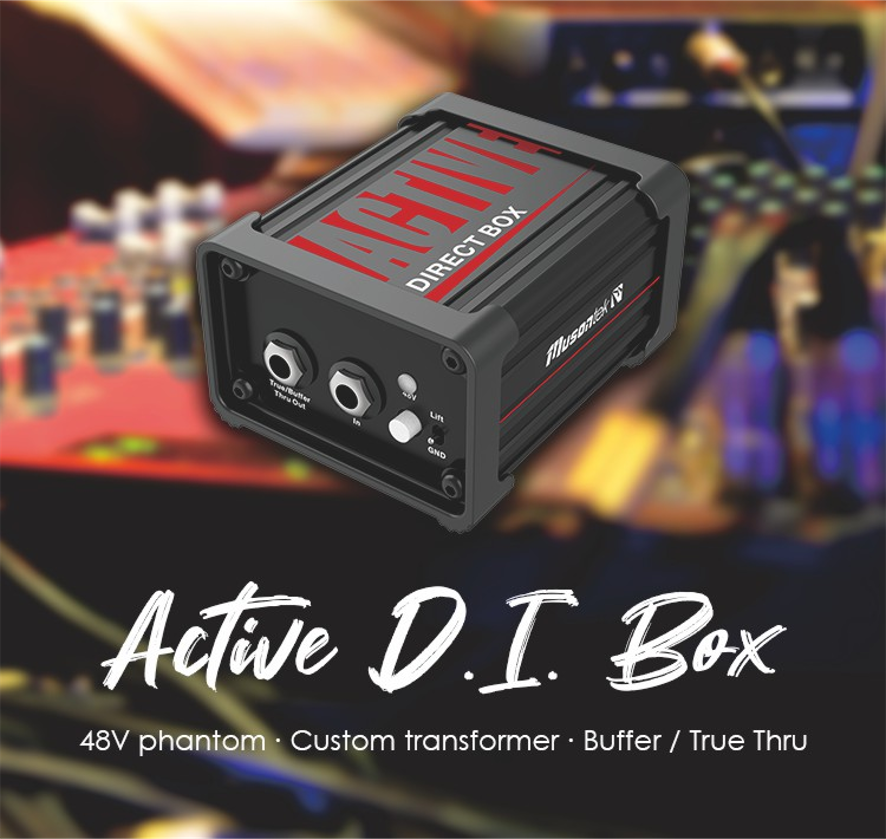
Some instruments work best with passive DIs. Other instruments sound better with active DI boxes. The Мусонтек Активный ящик D.I.–AD1L uses new technology. It helps make sound better and more reliable for many setups.
|
Фактор |
Passive DI Characteristics |
|---|---|
|
Need for Power |
Works without batteries or phantom power. |
|
Долговечность |
Has fewer parts, so it breaks less often. |
|
Экономическая эффективность |
Usually costs less than active DI boxes. |
|
Тональные характеристики |
Some people like the sound from good transformers. |
|
Suitability |
Great for recording outside or at outdoor shows. |
Основные выводы
-
Passive DI boxes work well with loud instruments like electric guitars and basses. They do not need power, so they are good for outdoor shows.
-
Active DI boxes are better for instruments with weak signals, like old electric guitars. They make the signal stronger and keep the sound clear, even with long cables.
-
Think about sound quality when you pick a DI box. Passive boxes can make the sound warmer. Active boxes keep the sound strong and clear.
-
Look at what your setup needs. Passive DI boxes are good for simple setups. Active DI boxes give you more control and choices for bigger setups.
-
Always look for features like ground lift and phase reverse switches in active DI boxes. These features can help stop noise and make the sound better.
Quick Comparison

Key Differences
Passive and active DI boxes are not the same. Passive DI boxes use transformers to match signals. They do not need batteries or phantom power. Many sound engineers like passive DI boxes because they block noise from ground loops. These boxes can make the sound warmer, which some musicians like.
Active DI boxes use powered electronic circuits. They need a power source, like phantom power from a mixer. An active DI box has a buffer that boosts weak signals. This helps instruments with low output, like some electric guitars or keyboards. Active DI boxes let users control sound settings more. They can use longer cables without losing sound quality. Top audio brands talk about these differences when they suggest DI boxes for setups.
Tip: Passive DI boxes are best for strong-signal instruments. Active DI boxes help instruments with weaker signals.
Pros and Cons
The table below lists the main good and bad points of passive and active DI boxes. This helps musicians and engineers pick the right one for their needs.
|
Тип DI Box |
Плюсы |
Cons |
|---|---|---|
|
Пассивный |
No power needed; nice distortion; good for strong-signal instruments |
Not good for weak-signal instruments; may not boost weak signals |
|
Активный |
Higher output; great for weak-signal instruments; works with long cables |
Needs power; can make noise if not made well |
Musicians often pick passive DI boxes because they are simple and reliable. They do not have to think about batteries or power. Active DI boxes give more options and work with more instruments. Many pros use an active DI box to keep their sound clear and make signals stronger.
Passive DI Box Uses
Best Instruments
Musicians pick passive DI boxes for strong-signal instruments. Electric guitars with passive pickups work well with them. Many bass guitars with active electronics also sound good. Keyboards and synthesizers have high output, so they fit too. Some drum machines and samplers can use passive DI boxes.
Tip: Passive DI boxes work best with high-output instruments. They do not make weak signals louder, so strong sounds stay clear.
Ideal Scenarios
Passive DI boxes are great in some places. Outdoor shows or spots without power are perfect for them. Many touring musicians use them because they do not need batteries. Recording studios use passive DI boxes to stop extra noise or hum. Sound engineers like them for simple setups, like connecting keyboards or DJ gear to a mixer.
Common scenarios for passive DI boxes:
-
Outdoor concerts and festivals
-
School assemblies or church events
-
Quick setups for bands on stage
-
Recording with high-output instruments
Passive DI Box Benefits
Passive DI boxes have many good points. They do not need any power, so you never worry about batteries. The simple design means there are fewer parts to break. Many passive DI boxes use good transformers to cut noise and ground loops. This keeps the sound clean and free from hum.
|
Выгода |
Описание |
|---|---|
|
Не требует питания |
Works anywhere, anytime |
|
Durable Design |
Fewer parts mean less risk of failure |
|
Снижение шума |
Transformers block hum and ground loop problems |
|
Cost-Effective |
Usually more affordable than active DI boxes |
Musicians and engineers like passive DI boxes for being simple and reliable. These devices give a solid choice for many live and studio uses.
When to Use an Active DI Box
Преимущества активного DI Box
An active DI box helps musicians and sound engineers get better sound. It uses powered circuits to make weak signals stronger and keep the sound clear. Many professionals pick an active DI box for instruments with passive pickups. Vintage electric guitars and acoustic guitars are good examples. These boxes give more headroom and a wide frequency range. This means the sound stays open and detailed.
Active DI boxes are good for long cables. They keep the signal strong and clean, even if the cable is very long. This makes them great for live shows and recording. The built-in preamplifier gives a higher output, so quiet instruments sound full and rich.
The Musontek Active D.I. Box-AD1L is special among active DI boxes. It has a high input impedance of 1 megaohm (1MΩ). This helps keep the real sound of the instrument. Its circuit uses single parts to make the sound better and cut distortion. The custom audio transformer gives electrical isolation. This stops ground loops and hum. Musicians hear a warm, natural sound with this box. The AD1L also has a ground lift switch and a phase reverse switch for quick fixes.
|
Характеристика |
Musontek AD1L |
Other Active DI Boxes |
|---|---|---|
|
Входной импеданс |
1 MΩ |
Lower than 1 MΩ |
|
Динамический диапазон |
118 dB |
Typically lower |
|
Class A Buffer Circuit |
Да |
Not always |
|
Выключатель подъема грунта |
Да |
Not always |
|
Phase Reverse Switch |
Да |
Not always |
|
Качество сборки |
Strong |
Варьируется |
Note: An active DI box like the Musontek AD1L helps musicians keep their sound clean and reliable anywhere.
Best Instruments for Active DI Box
Musicians use an active DI box for instruments with weak signals. Passive electric guitars and basses often need extra help to sound good. Acoustic guitars with passive pickups also get a boost and clearer sound from an active DI box.
Keyboards and synthesizers sometimes work with passive DI boxes. But old models or ones with low output do better with an active DI box. Many sound engineers use active DI boxes for vintage electric guitars and passive basses. These boxes make weak signals stronger and keep the sound clear.
|
Instrument Type |
Тип DI Box |
Reason for Compatibility |
|---|---|---|
|
Vintage Electric Guitars |
Активный DI Box |
Designed for passive pickups, enhances weak signals |
|
Basses |
Активный DI Box |
Suitable for passive pickups, maintains sound clarity |
|
Modern Keyboards |
Пассивный DI Box |
Better suited for high-output instruments |
|
Synths |
Пассивный DI Box |
High-output instruments do not need extra help |
Tip: Use an active DI box for instruments with passive pickups or low output. This keeps the sound strong and clear.
Common Setups
Active DI boxes work in many setups for live sound and studios. Musicians and engineers use them for:
-
Connecting passive electric guitars and basses to mixers
-
Recording acoustic guitars with passive pickups
-
Handling long cables on stage or in the studio (up to 100 meters)
-
Using old keyboards or synthesizers with low output
-
Fixing ground loops and phase problems with built-in switches
The Musontek Active D.I. Box-AD1L works well in these setups. Its high input impedance keeps the instrument’s sound pure. The circuit design cuts distortion, and the custom transformer adds warmth. The AD1L uses phantom power, so musicians do not worry about batteries during a show or recording.
An active DI box keeps the signal clean over long cables. It gives a higher output, so quiet instruments sound full. Musicians and engineers pick active DI boxes because they keep the tone and work with many instruments.
-
Active DI boxes have a preamplifier for a stronger signal.
-
They work best for low-output instruments like vintage electric guitars and keyboards.
-
These boxes keep the sound clean over long cables.
Callout: An active DI box is a smart choice for live shows, studio sessions, and any setup where you want strong and clear sound.
Key Factors to Consider
Качество звука
Sound quality is very important when picking a DI box. Musicians want their instruments to sound clear and real. Passive DI boxes use transformers that can make the sound warmer. Some players like this for electric guitars and basses. An active DI box uses powered circuits to keep the sound strong and sharp. This type is good for instruments with weak output. The Musontek Active D.I. Box-AD1L has a special circuit and transformer. These help keep the instrument’s true sound and lower distortion.
Tip: Musicians should try both types to see which sound fits their style.
Шумы и помехи
Noise and interference can mess up a show or recording. Passive DI boxes stop ground loops and hum with their transformer. This keeps the sound clean in many places. Active DI boxes also fight noise, especially with long cables. Some, like the Musontek AD1L, have ground lift and phase reverse switches. These help fix common problems fast.
-
Passive DI boxes: Best for simple setups with strong signals.
-
Active DI boxes: Good for complex setups and long cables.
Power and Reliability
Power and reliability matter for DI boxes on stage or in the studio. Passive DI boxes do not need batteries or phantom power. They work anywhere and almost never break. Active DI boxes need power, usually from mixers. Reliability can change because powered circuits have more parts.
|
Тип DI Box |
Требуемая мощность |
Надежность |
|---|---|---|
|
Пассивный |
No external power |
Высокий |
|
Активный |
Requires power |
Умеренный |
Note: Passive DI boxes are great for outdoor shows or places without power.
Price and Value
Price is a big part of picking a DI box. Passive DI boxes usually cost less than active ones. Some active DI boxes, like the LR Baggs Venue DI, cost over $300. Many passive DI boxes cost under $150. Musicians should look at features and prices before buying.
-
Active DI Boxes:
-
LR Baggs Venue DI Acoustic Guitar Preamp: $329.99
-
On-Stage DB1000 Active DI Box: $85.99
-
Radial Pro48 Active Direct Box: $129.99
-
Rupert Neve Designs RNDI Active Transformer Direct Box: $199.00–$399.00
-
-
Passive DI Boxes:
-
On-Stage DB1050 Passive Multimedia DI Box: $107.99
-
On-Stage DB2150 Passive USB DI Box: $134.99
-
Sescom SES-DIPRO Studio-Quality Passive Direct Box: $153.95
-
Callout: Musicians should think about price, reliability, and sound quality when choosing a DI box.
Use Cases and Recommendations
Electric Guitar
Electric guitar players pick a DI box based on their pickups. If a guitar has passive pickups, an active DI box works better. The active circuit makes the weak signal stronger and keeps the sound clear. Guitars with active pickups or built-in preamps do well with passive DI boxes. These boxes keep the sound natural and do not need power. Many guitarists use active DI boxes in studios to get every detail.
Tip: If you have a vintage electric guitar, an active DI box keeps your sound strong and full.
Bass Guitar
Bass guitars need a DI box that fits their output. Players with passive basses often use active DI boxes. These boxes give more control over the sound and make weak signals louder. Active DI boxes also help in studios by keeping the signal clean. Bassists with active electronics use passive DI boxes for a natural and steady sound.
|
Тип DI Box |
Характеристики |
Effects on Tone and Signal Integrity |
|---|---|---|
|
Пассивный |
Reliable, natural sound, no power needed |
Keeps the tone natural, works well live |
|
Активный |
Has a preamp, boosts weak signals |
Gives more sound options, keeps the signal strong |
Keyboards & Synths
Keyboards and synthesizers usually have strong signals. Passive DI boxes work well for these instruments. They keep the sound warm and block noise. Some old or low-output keyboards may need an active DI box. This helps keep the signal strong, especially with long cables.
-
Passive DI boxes are good for most new keyboards.
-
Active DI boxes help with old or weak-signal synths.
Acoustic Instruments
Acoustic guitars with passive pickups often need an active DI box. The active circuit makes the signal stronger and keeps the sound clear. Acoustic instruments with built-in preamps can use passive DI boxes. This setup keeps the sound simple and natural.
Note: An active DI box helps acoustic players stop noise and keeps the sound bright.
Live vs. Studio
Musicians and engineers pick DI boxes based on where they play or record.
|
Сценарий |
Тип DI Box |
Основные характеристики |
|---|---|---|
|
Живое выступление |
Пассивный |
Reliable, does not need power, blocks noise, warm sound |
|
Студийная запись |
Активный |
Needs power, best for passive instruments, keeps signal strong, captures clean sound |
-
At live shows, passive DI boxes are reliable and block noise.
-
In studios, active DI boxes keep signals clean and work well with passive instruments.
Callout: Pick a DI box that fits your instrument and where you play for the best sound.
Musicians and sound engineers pick DI boxes for their needs. They think about what instrument they have and the sound they want. Passive DI boxes are good for strong signals and easy setups. Active DI boxes are better for weak signals and give more options. The Musontek Active D.I. Box-AD1L is known for clear sound and being reliable.
Checklist for choosing a DI box:
-
Pick passive or active DI
-
See if it has pads and level control
-
Choose trusted brands like Countryman, Radial, Whirlwind, or Musontek
ЧАСТО ЗАДАВАЕМЫЕ ВОПРОСЫ
What does a DI box do?
A DI box changes an instrument’s signal to balanced. This lets the sound go farther without picking up noise. Musicians use DI boxes to connect guitars, basses, and keyboards to mixers or audio interfaces.
When should someone use a passive DI box?
A passive DI box works best with strong-signal instruments. Electric guitars with active pickups and most keyboards are good matches. Passive DI boxes do not need power, so they are great for outdoor shows and simple setups.
Why do active DI boxes need power?
Active DI boxes use powered circuits to make weak signals stronger. They need phantom power from a mixer or audio interface. This power helps the box keep the sound clear and strong, especially for passive instruments.
Can a DI box remove hum or ground loop noise?
Yes, many DI boxes help get rid of hum and ground loop noise. Passive DI boxes use transformers to block noise. Active DI boxes often have ground lift switches. These features keep the sound clean in live and studio settings.
Is the Musontek Active D.I. Box-AD1L good for studio recording?
The Musontek AD1L gives clear sound and strong output. Its high input impedance and special circuit design help capture every detail. Studio engineers use it for electric guitars, basses, and keyboards to get reliable, professional results.