Yes, an педаль овердрайва is one of the most transformative effects for bass players. It adds warmth, grit and character to your tone, helping your bass cut through the mix without losing the deep, punchy low end that defines the instrument. Whether you want a subtle tube-like grind or a heavy distorted tone, the right bass overdrive can elevate your playing in any genre.
Основные выводы
- Overdrive adds warmth, grit and sustain to bass tones, helping your instrument cut through the mix
- Always use a bass-specific overdrive pedal – guitar pedals often cut low frequencies and sound thin on bass
- A blend knob is the most important feature for bass overdrive, allowing you to mix clean and distorted signals
- Place overdrive early in your signal chain for the most natural, dynamic response
- Use low to medium gain settings to avoid muddiness and preserve low-end punch
How Overdrive Affects Bass Tone
Overdrive works by gently clipping the guitar signal to create harmonic distortion. For bass players, this adds rich harmonics and sustain while retaining the fundamental low frequencies that make the bass sound full and powerful.
A good bass overdrive pedal will:
- Add warmth and tube-like character to clean tones
- Increase sustain for longer notes and solos
- Help your bass cut through loud band mixes
- Add grit and aggression for rock, punk and metal styles
The biggest risk with bass overdrive is losing low-end clarity. Too much distortion can muddy your tone and make your bass sound weak. This is why bass-specific pedals are essential – they are designed to preserve deep frequencies while adding distortion.
Guitar vs. Bass Overdrive Pedals
Many beginners wonder if they can use a guitar overdrive pedal on bass. While it will work, the results are often disappointing:
- Guitar pedals are tuned to emphasize mid and high frequencies, which can make your bass sound thin and weak
- They often roll off low frequencies to avoid muddiness in guitar tones
- They lack features like blend knobs that are critical for bass players
Bass overdrive pedals are specifically engineered to retain low-end punch:
- Extended frequency response that preserves deep bass notes
- Built-in blend knobs to mix clean and distorted signals
- EQ controls tailored to bass frequencies
- Lower noise floors for cleaner tones at high gain
| Тип педали | Low-End Retention | Формирование тона | Лучшее для |
|---|---|---|---|
| Guitar Overdrive | Poor | Limited to mid/high frequencies | Only for very subtle grit |
| Bass Overdrive | Превосходно | Full frequency range | All bass applications |
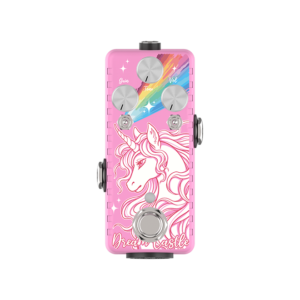
Musontek Dream Castle Overdrive: Built for Bass

The Musontek Dream Castle Overdrive is designed from the ground up for bass players. Its custom OP-Amp circuit delivers rich, harmonic distortion while keeping your low end tight and clear.
Key features for bassists:
- Dual Blend Circuit: Mix clean and distorted signals perfectly to retain punch while adding grit
- Modern & Vintage Modes: Switch between tight modern distortion and warm vintage tube tones
- 3-Way Attack Switch: Adjust response for fingerstyle, pick or slap playing
- True Bypass: Preserve your clean tone when the pedal is off
- Ultra-Low Noise Floor: No unwanted hiss or hum, even at high gain settings
Whether you need a subtle boost for blues or heavy distortion for metal, the Dream Castle delivers clear, powerful tones that work perfectly with bass.
How to Use Bass Overdrive Effectively
Dial In the Perfect Settings
Follow these steps to get a clear, punchy overdrive tone:
- Start with unity gain: Set the level knob so the volume is the same when the pedal is on and off
- Keep gain low: Begin with the gain knob at 9 o’clock and increase slowly until you get the desired amount of grit
- Use the blend knob: Mix in 30-50% clean signal to preserve low-end punch
- Adjust tone carefully: Boost mids slightly to help your bass cut through the mix; avoid excessive treble which can sound harsh
For clarity, the recommended control settings are listed in the table below:
| Control | Recommended Setting | Назначение |
|---|---|---|
| Gain | 9-12 o’clock | Add grit without muddiness |
| Уровень | Unity gain | Match clean volume |
| Тон | 11-1 o’clock | Shape midrange presence |
| Blend | 30-70% | Preserve low-end punch |
Maintain Low-End Clarity
The most important rule for bass overdrive is: less is more. Too much gain will muddy your tone and make your bass disappear in the mix.
Additional tips:
- Always use a pedal with a blend knob to retain clean low end
- Avoid stacking more than two gain pedals
- Use a compressor before overdrive to even out your dynamics
- Boost low mids (80-200Hz) with an EQ pedal if your tone sounds thin
Optimal Pedal Placement
Place your overdrive pedal early in the signal chain, right after your tuner and compressor. This gives the pedal the cleanest possible signal to work with, resulting in a more natural, dynamic tone.
Standard bass signal chain order:
Tuner → Compressor → Overdrive → EQ → Modulation (Chorus/Flanger) → Delay/Reverb → Amp
Who Should Use Bass Overdrive?
Best Genres for Bass Overdrive
Overdrive works exceptionally well in these styles:
- Rock: Adds grit and attitude to bass lines
- Панк: Delivers aggressive, cutting tones
- Metal: Provides heavy distortion for rhythm and lead parts
- Funk: Adds punch and brightness to slap bass
- Blues: Creates warm, tube-like sustain
- Indie/Alternative: Adds character and texture to bass lines
Playing Style Considerations
- Fingerstyle players: Use lower gain and more blend for warm, smooth tones
- Pick players: Crank the gain slightly for extra attack and edge
- Slap bassists: Use the attack switch to enhance percussive notes
Заключение
An overdrive pedal is an essential tool for any bass player looking to expand their tonal palette. The right bass-specific overdrive adds warmth, character, and presence without sacrificing low-end clarity.
As a professional guitar effects pedal manufacturer, Musontek develops high-quality overdrive pedals—including the Dream Castle Overdrive—for musicians, brands, distributors, and OEM/ODM partners worldwide. Our pedals are designed for consistent performance, pedalboard compatibility, and tonal versatility, making them suitable for both individual players and commercial applications.
Contact the Musontek team today to explore our custom bass overdrive pedal solutions, request bulk orders, or discuss OEM/ODM opportunities for your brand
ЧАСТО ЗАДАВАЕМЫЕ ВОПРОСЫ
Can bass players use guitar overdrive pedals?
Yes, but they will often sound thin and lose low-end clarity. Bass-specific overdrive pedals are designed to preserve deep frequencies and include features like blend knobs that are essential for good bass tones.
Does overdrive make bass sound muddy?
It can if you use too much gain. The key is to use low to medium gain settings and a blend knob to mix in clean signal. This preserves low-end punch while adding grit.
What is the most important feature in a bass overdrive pedal?
A blend knob (also called a wet/dry knob) is essential. It allows you to mix your clean bass signal with the distorted signal, ensuring you never lose the deep, punchy low end that makes the bass sound great.
Where should I place my overdrive pedal in the signal chain?
Place it early in the chain, right after your tuner and compressor. This gives the pedal the cleanest possible signal and results in the most natural, dynamic tone.
Should I try a pedal before buying?
Yes, if possible. Every bass and amp combination sounds different, so testing a pedal with your own gear is the best way to ensure it sounds right for you.