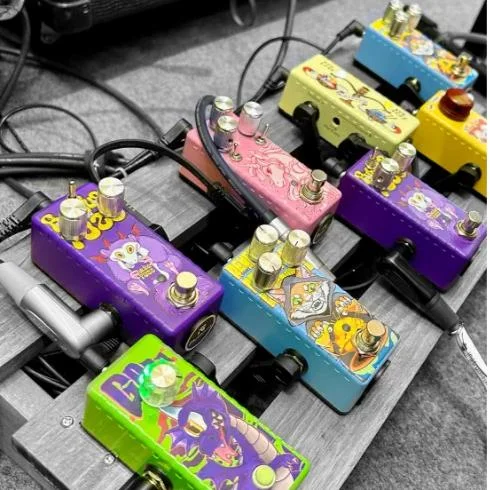
Yes, Kurt Cobain used a delay pedal in his career. But it was not the main part of his sound. He often picked the Boss DM-2 Delay pedal. This pedal is known for its warm and full tone. It has a maximum delay time of 300 milliseconds. Delay pedals like this add depth and space to music. They help each note stand out more. Trusted sources say he used педаль реверберации effects. Other pedals were also important in his setup. Today, guitarists can use the Musontek MOD – Voyager Delay Pedal. It gives a modern way to get this classic sound.
Основные выводы
Kurt Cobain mostly used the Boss DM-2 Delay pedal. This pedal is famous for its warm sound. He used it to make his guitar sound better. He did not make the pedal the main part of his music.
Setting the delay time from 30 to 80 milliseconds gives a fast slapback effect. This effect adds depth to solos and riffs. It does not take over the music.
Cobain used different effects like distortion and chorus. These effects helped make Nirvana’s sound special. Using many pedals can give a richer tone.
Guitarists can copy Cobain’s sound by using delay in small amounts. They should focus on distortion and chorus for their main sound.
New pedals like the Musontek MOD – Voyager Delay Pedal have classic sounds. They also have new features. These pedals help players find their own style more easily.
Kurt Cobain’s Delay Pedal Choices
Boss DM-2 Delay Pedal Use
Kurt Cobain picked the Boss DM-2 Delay pedal for his guitar. He used it in the studio and at concerts. The DM-2 gives a warm sound that works well for rock and blues. Cobain liked to set the delay time low for reverb effects. He sometimes turned up the delay time for slap-back and doubling. The pedal’s analog parts made his sound special, even though it could not delay as long as new pedals.
You can hear the DM-2 in early songs like If You Must. Cobain tried out feedback and oscillation with the pedal. He pushed it hard to get big, strong solos. He was the only guitarist in Nirvana, so he used the DM-2 to make his playing sound fuller.
Key features of the Boss DM-2 Delay pedal for Cobain:
Warm, analog delay tone
Reverb effects at low delay settings
Slap-back and doubling effects with increased delay time
Feedback and oscillation for creative sound manipulation
Early Nirvana Demos With Delay
Cobain’s delay pedal helped shape Nirvana’s early demos. The DM-2 gave his music natural echoes and more feeling. At home, he used soft echoes to make his guitar sound bigger. You can hear the pedal in songs from 1987-1988, like If You Must and Love Buzz. These tracks show how the DM-2 helped Cobain make a sound that was different from other bands.
The DM-2’s analog delay let Cobain try new sounds.
He used the pedal at home to add depth and mood.
The delay pedal was important for Nirvana’s early music.
Cobain’s cool use of the DM-2 made other guitarists want to try delay pedals. He showed that simple gear can do a lot if you use it in smart ways.
Delay Pedal In Nirvana’s Sound
Effects Behind Nirvana’s Sound
Nirvana’s music is special because Kurt Cobain used many guitar effects. He did not just use one pedal. He mixed different effects to make his sound. The effects in Nirvana’s music were more than just delay. Cobain liked pedals that gave his guitar grit, texture, and movement.
Some of the most important pedals he used were:
Electro-Harmonix Small Clone chorus pedal
Boss DS-2 distortion pedal
ProCo Rat distortion pedal
Boss DS-1 distortion pedal
Electro-Harmonix Big Muff
Electro-Harmonix EH-1311 Echoflanger
EH-7700 Polychorus
DOD FX69 Grunge
Tech 21 Sansamp Preamp
These pedals let Cobain change his tone for each song. Chorus pedals, like the Small Clone and Polychorus, made a swirling, watery sound. Distortion pedals, like the DS-1 and DS-2, made his guitar loud and full of energy. The delay pedal gave his solos and riffs more space and depth.
Cobain’s smart use of effects made other guitarists want to try them. He showed that simple gear can make a big sound if you use it well.
Comparing Delay To Other Pedals
Delay pedals were part of Nirvana’s music, but other effects were more important. Distortion and chorus pedals shaped the band’s best songs. For example, “Come As You Are” uses a chorus pedal with high depth and rate. This, with a bright guitar sound, makes the song stand out.
Cobain started using the Small Clone chorus pedal around 1990. This pedal was a big part of the Nevermind album. Songs like “Smells Like Teen Spirit” and “Come As You Are” show how much chorus mattered to Nirvana. Later, on the In Utero album, Cobain added the EHX Poly Chorus. This showed that his use of pedals changed over time.
Chorus pedals made thick, rich sounds.
Distortion pedals gave strong power and energy.
The delay pedal added echo and space, but Cobain used it lightly.
Tip: If you want to sound like Nirvana, start with chorus and distortion. Add delay for more depth, but remember Cobain used it gently, not as the main sound.
Cobain’s way of using pedals shows that the right mix can help any guitarist find their own style. By learning how he used each effect, players can build a setup that honors him and fits their own music.
When Kurt Cobain Used Delay Pedals
Studio Sessions And Live Shows
Kurt Cobain made smart choices with his effects during both studio sessions and live shows. He often reached for the Boss DM-2 during the early days of Nirvana. This pedal helped him create a bigger sound, especially when he played alone on stage. In the studio, he used the delay pedal to add depth and space to his guitar parts. The table below shows when he used certain pedals during key recording sessions:
Equipment | Session Dates | Примечания |
|---|---|---|
Boss DM-2 | 06-09/88 (Love Buzz sessions) | Used on ‘Love Buzz’ and ‘If You Must.’ |
Electro Harmonix Small Clone | 05/02-28/91 (Nevermind sessions) | Kurt bought five units; possibly stolen. |
During live shows, Cobain used delay effects to fill the room with sound. He set the pedal for short repeats, making his guitar stand out without getting lost in the mix. Fans noticed the difference, especially during solos and quiet parts. The delay pedal gave him control over the mood of each song.
Tip: Guitarists can use a delay pedal like Cobain did to make their playing sound larger and more powerful on stage.
Notable Songs Featuring Delay
Several Nirvana songs show how Cobain used delay for creative effect. In “Love Buzz,” he used the Boss DM-2 to add echo and make the riff sound huge. “If You Must” also features clear delay, giving the guitar a haunting, spacious feel. These tracks prove that Cobain knew how to use effects to shape his sound.
“Love Buzz”: Delay adds energy and space to the main riff.
“If You Must”: Echoes create a dreamy, layered guitar part.
Cobain’s approach inspires many players today. By studying these songs, guitarists can learn how to use delay pedals to build their own unique sound.
Reliable Sources On Kurt Cobain’s Pedals
Interviews And Gear Lists
A lot of fans want to know about Kurt Cobain’s pedals. Good sources help answer these questions. Interviews with Kurt, his band, and his guitar techs give real info. Magazines like Guitar World and Rolling Stone have talked to Cobain about his gear. These talks often tell us which pedals he liked and how he used them.
Gear lists from trusted sites and books also give proof. Photos from concerts and studio times show the pedals on his board. Fans can see the exact models he used. Some of the best online places to check his pedal setup are:
Boss DS-1 Distortion
Boss DS-2 Turbo Distortion
Electro-Harmonix Op-amp Big Muff Pi Fuzz
Pro Co RAT 2 Distortion
Electro-Harmonix Small Clone Analog Chorus
Electro-Harmonix Stereo Polychorus Analog Flange/Chorus
These lists match what is in interviews and pictures. They help fans and guitar players pick the right pedals to sound more like Cobain.
Tip: Always check more than one source before you buy gear. Look for interviews, photos, and official lists to make sure.
Technician And Band Member Insights
Technicians and band members give great info about Kurt Cobain’s pedals. Guitar techs who worked with Nirvana share stories about setting up his pedalboard. They say Cobain liked simple setups but wanted a big sound. Bandmates like Krist Novoselic have said effects were important for Nirvana’s music.
Techs remember Cobain using delay pedals on early tours and in the studio. They say he set the delay for short repeats to keep his sound clear. These stories help fans see why Cobain picked certain pedals and how he used them.
Note: Listening to people who worked with Cobain gives the best idea of his real gear choices.
Practical Delay Pedal Tips For Guitarists
Replicating Kurt Cobain’s Delay Sound
If you want to sound like Kurt Cobain, you need to know how he used delay. He set his Boss DM-2 Delay pedal for short repeats. This made a soft echo that filled the room but did not take over the music. He used delay to give space to solos and riffs, but he kept it light. Most of his sound came from distortion and chorus. Delay was just for adding depth, not the main part.
Here are some good ways to set the Boss DM-2 Delay pedal:
Set the delay time between 30 and 80 milliseconds for a quick slapback sound.
Keep feedback low so you do not get too many repeats.
Use delay only a little to keep your playing clear.
When you learn about Kurt Cobain’s pedals, you see delay works best with other effects. Mixing delay with distortion and chorus makes your sound full and strong. This way, you can make your own style and still play like Cobain.
Tip: Try different delay settings when you practice. Listen to how your sound changes. Keep changing the settings until you find what works for your music.
Musontek MOD – Voyager Delay Pedal
The Musontek MOD – Voyager Delay Pedal lets guitarists get the classic sound of Kurt Cobain’s pedals in a new way. This pedal can make quick slapback or long, echoing sounds. Its analog circuit gives warm, real repeats that fit grunge and rock music.
The MOD – Voyager has a color knob that changes high sounds and keeps your tone clean. You can use the feedback control for soft echoes or big loops. The simple controls help you find your sound fast, even on stage.
Педаль | Delay Time Range | Special Features | Лучшее для |
|---|---|---|---|
Boss DM-2 | Up to 300 ms | Warm analog repeats | Classic Cobain tones |
Musontek MOD – Voyager | 30-625 ms | Color knob, analog path | Modern grunge, rock |
If you want to play like Cobain, try the MOD – Voyager for its old-school warmth and new features. This pedal helps you try new sounds and make your music stand out.
Kurt Cobain played with delay pedals such as the Boss DM-2. These pedals were not the main part of his sound. Many fans and guitar players want to get a similar tone. Some popular choices are:
Boss DM-2W Waza Craft
Donner Yellow Fall
Electro-Harmonix Deluxe Memory Boy
Way Huge Smalls Aqua-Puss
MXR M169 Carbon Copy
Musontek MOD – Voyager
Musicians who want Cobain’s style should try these pedals. Learning about his gear helps players see how he made his special sound.
ЧАСТО ЗАДАВАЕМЫЕ ВОПРОСЫ
Did Kurt Cobain use delay pedals in every Nirvana song?
Kurt Cobain did not use delay pedals in every song. He picked delay for certain tracks to add space and depth. Most of his signature sound came from distortion and chorus effects.
What delay pedal did Kurt Cobain prefer?
He preferred the Boss DM-2 Delay pedal. This pedal gave him warm, analog repeats. Many fans choose the DM-2 or modern alternatives like the Musontek MOD – Voyager to capture his vibe.
Can beginners use the Musontek MOD – Voyager Delay Pedal?
Yes! The MOD – Voyager features simple controls. Beginners can quickly dial in classic slapback or lush echoes. Its analog circuit helps anyone achieve a rich, vintage tone with ease.
How do you set a delay pedal for a Cobain-style sound?
Set delay time between 30–80 ms for slapback.
Keep feedback low for clear repeats.
Mix with distortion and chorus for a full, grunge tone.
Why should guitarists try a modern delay pedal?
Modern pedals like the Musontek MOD – Voyager offer vintage warmth and new features. Players can shape their sound, reduce noise, and explore creative effects. This pedal inspires musicians to find their own voice.