Understanding the difference between active and passive DI boxes is crucial for audio professionals and musicians seeking optimal sound quality. This comprehensive guide explores identification methods, technical specifications, practical applications, and selection criteria to help you make informed decisions for your audio setup. Whether you’re working in professional recording studios or live performance venues, knowing how to distinguish between these two types of direct injection boxes will significantly impact your audio signal quality and overall sound experience.
Understanding DI Boxes: Active vs Passive Fundamentals
Direct Injection (DI) boxes serve as essential audio interfaces that convert high-impedance, unbalanced signals into low-impedance, balanced signals suitable for mixing consoles and recording equipment. The fundamental distinction between active and passive DI boxes lies in their internal circuitry and power requirements, which directly affects their performance characteristics and application scenarios.
Active DI boxes incorporate built-in preamplification circuits powered by batteries, phantom power, or external power supplies. These units feature electronic components such as operational amplifiers, field-effect transistors (FETs), or vacuum tubes that actively process and amplify the incoming signal. The active circuitry provides signal buffering, impedance conversion, and often includes additional features like signal attenuation, ground lift switches, and high-pass filtering.
Passive DI boxes, conversely, rely solely on transformer-based circuitry without requiring external power sources. These units utilize high-quality audio transformers to perform impedance matching and signal balancing through electromagnetic induction. The passive design offers simplicity, reliability, and a distinct sonic character that many audio professionals prefer for specific applications.
| Characteristic | Caixa DI ativa | Caixa DI passiva |
|---|---|---|
| Power Source | Battery/Phantom Power/External | No power required |
| Internal Components | Electronic circuitry (Op-amps, FETs) | Audio transformer |
| Processamento de sinais | Active amplification/buffering | Passive impedance conversion |
| Impedância de entrada | Very high (1MΩ+) | Moderate (10kΩ-100kΩ) |
Visual Identification Methods and Physical Characteristics
The most straightforward method to distinguish between active and passive DI boxes involves examining their physical characteristics and external features. Active DI boxes typically display several distinctive visual indicators that immediately reveal their electronic nature and power requirements.
Active units commonly feature power indicator LED lights that illuminate when the device receives power from batteries, phantom power, or external power supplies. These LEDs serve as operational status indicators, showing whether the unit is receiving adequate power for proper functioning. Additionally, active DI boxes often include battery compartments with removable covers or panels, allowing users to install or replace 9-volt batteries for portable operation.
The control interface on active DI boxes tends to be more extensive, featuring additional switches and controls beyond the basic ground lift and attenuation options. Common controls include high-pass filter switches, active/passive mode selectors, gain adjustment potentiometers, and signal presence indicators. Some advanced active models incorporate multiple input sensitivity settings, allowing users to optimize the input stage for different signal levels.
Passive DI boxes present a more minimalist appearance with fewer external controls and indicators. These units typically feature only essential switches such as ground lift, attenuation pad, and occasionally a speaker/line input selector. The absence of power indicators, battery compartments, and extensive control panels serves as a clear indication of passive operation.
The physical construction also provides identification clues. Active DI boxes often require larger enclosures to accommodate electronic components, power circuits, and heat dissipation requirements. Passive units can maintain more compact designs since they only house audio transformers and basic switching components.
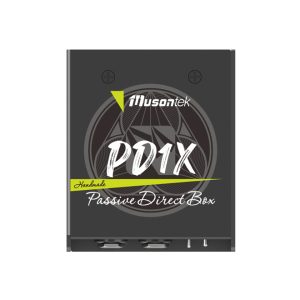
Professional DI box manufacturers like Musontek incorporate clear visual identification features in their designs. For example, the Musontek AD1F active DI box features a prominent LED power indicator that illuminates when receiving 48V phantom power, immediately identifying it as an active unit. In contrast, the PD1X passive DI box presents a clean, minimalist control panel with only essential switches, clearly indicating its transformer-based passive design.
Technical Specifications and Performance Indicators
Technical specifications provide definitive identification criteria for distinguishing between active and passive DI boxes. Understanding these performance metrics enables informed decision-making and proper application selection for specific audio scenarios.
Input impedance represents one of the most significant differentiating factors between active and passive designs. Active DI boxes typically exhibit extremely high input impedance values, often exceeding 1 megohm (MΩ), due to their electronic input stage design. This high impedance characteristic allows active units to properly interface with high-impedance sources such as electric guitars, basses, and electronic keyboards without loading effects or signal degradation.
Passive DI boxes demonstrate moderate input impedance values, typically ranging from 10 kilohms to 100 kilohms, determined by the transformer’s primary winding characteristics and input switching configuration. While lower than active alternatives, passive units still provide adequate impedance matching for most musical instruments and line-level sources.
Frequency response specifications reveal important performance differences between active and passive designs. Active DI boxes often provide extended frequency response ranges, particularly in the high-frequency spectrum, due to their electronic circuitry’s bandwidth capabilities. Many active units specify frequency responses extending from 10 Hz to 100 kHz or beyond, with minimal amplitude variation across the audio spectrum.
Passive DI boxes exhibit frequency response characteristics determined by their transformer design and quality. High-quality passive units can achieve excellent frequency response performance, though they may show some high-frequency roll-off compared to active alternatives. However, many audio professionals prefer the subtle harmonic coloration that quality transformers impart to the signal.
| Especificação | Active DI Typical Range | Passive DI Typical Range |
|---|---|---|
| Impedância de entrada | 1MΩ – 10MΩ | 10kΩ – 100kΩ |
| Maximum Input Level | +10 to +20 dBu | +20 to +40 dBu |
| Resposta de frequência | 10 Hz – 100 kHz | 20 Hz – 20 kHz |
| Signal-to-Noise Ratio | 90-110 dB | N/A (transformer dependent) |
Power Requirements and Connection Analysis
Power requirements serve as the most definitive identification method for distinguishing between active and passive DI boxes. Understanding these power characteristics is essential for proper operation and integration into audio systems.
Active DI boxes require electrical power to operate their internal electronic circuitry. The most common power sources include 9-volt batteries, 48-volt phantom power supplied through XLR connections, and external power adapters. Battery-powered active DI boxes offer portable operation independent of mixing console phantom power availability, making them ideal for location recording and live performance applications where power sources may be limited or unreliable.
The Musontek AD1F exemplifies advanced active DI design with its 48V phantom power operation and JFET input stage providing megohm-level input impedance. This active design incorporates a double buffer discrete circuit with studio-level isolation transformer, delivering the transparency and high impedance characteristics that active units are known for. The integrated LED power indicator provides immediate visual confirmation of phantom power reception and operational status.
For phantom power testing, the AD1L active DI box requires 48V phantom power to operate its fully discrete class A buffer circuit. When phantom power is removed, the unit ceases operation, clearly identifying it as an active design. The built-in LED indicator provides immediate visual feedback regarding power status, making identification straightforward during setup and troubleshooting.
Passive designs like the PD1X and PD1L demonstrate the power-independent nature of transformer-based DI boxes. These units operate entirely through signal coupling via their studio-level audio transformers, requiring no external power source while maintaining excellent signal integrity and providing comprehensive peripheral functions for live performance applications.
When examining a DI box for power requirements, look for power input connectors, battery compartments, power indicator lights, and manufacturer specifications regarding phantom power compatibility. These features immediately identify active designs and their specific power requirements.
Sound Characteristics and Audio Quality Differences
The sonic characteristics of active and passive DI boxes differ significantly due to their contrasting internal architectures and signal processing approaches. Understanding these tonal differences helps audio professionals select appropriate DI solutions for specific musical applications and sonic objectives.
Active DI boxes typically provide clean, transparent signal reproduction with minimal harmonic coloration. The electronic circuitry in quality active units aims for linear frequency response and low distortion, resulting in accurate signal reproduction that preserves the original source character. This transparency makes active DI boxes excellent choices for modern digital recording environments where pristine signal capture is paramount.
The high input impedance of active DI boxes ensures minimal loading effects on source instruments, particularly important for electric guitars and basses with passive pickups. This impedance matching preserves the instrument’s natural frequency response and dynamic characteristics, preventing the signal dulling or high-frequency loss that can occur with improper impedance matching.
Passive DI boxes impart distinctive sonic characteristics derived from their transformer-based design. High-quality audio transformers naturally introduce subtle harmonic enhancement and pleasing saturation characteristics, particularly when processing higher signal levels. This harmonic coloration often enhances musical instruments by adding warmth, depth, and harmonic richness that many audio professionals find musically appealing.
The transformer isolation in passive DI boxes provides excellent common-mode rejection and ground loop elimination, often resulting in cleaner signal transmission in electrically noisy environments. The magnetic isolation effectively breaks ground loops while maintaining signal integrity, making passive units particularly effective in complex live performance scenarios with multiple grounded devices.
Real-world examples demonstrate these specification differences clearly. The Musontek AD1L active DI box specifications showcase typical active characteristics with 1MΩ input impedance, 0.002% THD, and 118dB dynamic range. These specifications enable excellent performance with high-impedance instruments while maintaining pristine signal quality. Conversely, the PD1L passive DI box features 10kΩ input impedance with 0.008% THD and 128dB dynamic range, demonstrating the passive design’s ability to handle high signal levels with exceptional clarity.
The frequency response specifications also illustrate the technical differences between designs. Active units like the AD1L maintain ±0.2dB frequency response from 20Hz-20kHz, while passive units such as the PD1L achieve ±0.3dB response across the same range. Both specifications represent excellent performance, with the slight variations reflecting the different approaches to signal processing.
Practical Applications and Use Case Scenarios
Understanding the practical applications and ideal use cases for active and passive DI boxes enables informed selection decisions based on specific audio requirements and operational constraints. Each design type offers distinct advantages in different professional audio scenarios.
The Musontek PD1X passive DI box demonstrates excellent practical performance for live broadcast and performance applications. Its passive discrete circuitry preserves the real sound of instruments while processing huge transient signals without distortion. The comprehensive feature set includes high-cut shifter, ground lift, signal phase reverse, and selectable -15dB/-25dB pad options, making it highly versatile for various live scenarios.
For recording applications requiring pristine signal capture, the AD1F active DI box provides exceptional performance with its JFET input stage and double buffer discrete circuit. The megohm-level input impedance ensures optimal interfacing with passive pickup instruments, while the studio-level 1538 output transformer maintains signal integrity throughout the recording chain.
Live performance environments benefit significantly from the reliability and feature sets of both designs. The PD1L passive DI box offers merge mode functionality supporting line signal input, making it ideal for complex live setups requiring flexible signal routing. The AD1L active DI box provides switchable direct through and buffered output options via its chain port, enabling versatile signal distribution in live applications.
Live performance applications often favor passive DI boxes due to their reliability, power independence, and robust construction. The absence of electronic components eliminates potential failure points, while the transformer isolation provides excellent noise rejection in electrically challenging venue environments. Bass guitars and keyboards frequently utilize passive DI boxes in live settings for their warm, musical sound characteristics.
Speaker-level signal applications, such as amplifier head outputs or power amplifier monitoring, typically require passive DI boxes capable of handling high voltage and power levels safely. Active DI boxes cannot accommodate these extreme signal levels without damage, making passive units the only viable option for such applications.

| Model | Tipo | Caraterísticas principais | Best Applications |
|---|---|---|---|
| Musontek PD1X | Passivo | High-cut shifter, -15/-25dB pad, phase reverse | Broadcasting, live performance |
| Musontek AD1F | Ativo | JFET input, double buffer, LED indicator | Studio recording, high-impedance sources |
| Musontek PD1L | Passivo | Merge mode, 128dB dynamic range | Live sound, complex signal routing |
| Musontek AD1L | Ativo | Class A buffer, switchable through output | Professional recording, signal distribution |
Testing Methods and Troubleshooting Techniques
Practical testing methods provide definitive identification of active versus passive DI boxes when visual inspection and specification review are insufficient. These techniques also serve as valuable troubleshooting tools for verifying proper DI box operation and diagnosing performance issues.
Practical testing with specific models provides clear identification examples. Testing the Musontek AD1F with phantom power demonstrates typical active behavior – the LED indicator illuminates upon receiving 48V phantom power, and the unit ceases operation when phantom power is removed. The megohm input impedance characteristic can be verified by connecting high-impedance sources and observing the excellent signal preservation without loading effects.
The PD1X passive DI box demonstrates classic passive characteristics during testing. It operates consistently regardless of phantom power presence, showing no power consumption on phantom power monitoring equipment. Signal level testing reveals its ability to handle huge transient signals without distortion while maintaining the instrument’s real sound character through its passive discrete circuitry.
Comparative frequency response testing between the AD1L and PD1L models illustrates the technical differences between active and passive designs. The AD1L’s ±0.2dB response specification reflects the linear characteristics of active electronic circuitry, while the PD1L’s ±0.3dB response demonstrates the excellent performance achievable with quality passive transformer design.
Frequency response testing using sine wave generators and spectrum analyzers reveals the bandwidth capabilities and frequency response characteristics of different DI box types. Active units typically demonstrate extended high-frequency response and linear amplitude characteristics across the audio spectrum. Passive units may show some high-frequency roll-off and transformer-related frequency response variations that contribute to their distinctive sonic character.
Load testing helps evaluate input impedance characteristics by connecting different source impedances and observing signal level changes. High-impedance sources will show minimal level variation with active DI boxes due to their high input impedance, while passive units may exhibit more significant level changes with varying source impedances.
Ground loop testing assesses the isolation capabilities of different DI box designs. Create an intentional ground loop condition and observe the resulting noise levels through each DI box type. Passive units with quality transformers typically provide superior ground loop isolation compared to active electronic designs.
Selection Guide and Professional Recommendations
Selecting between active and passive DI boxes requires careful consideration of application requirements, source characteristics, operational constraints, and sonic objectives. This comprehensive selection guide provides systematic evaluation criteria for making informed DI box choices in professional audio applications.
Source impedance compatibility represents the primary selection criterion for DI box choice. High-impedance sources such as electric guitars and basses with passive pickups require the high input impedance provided by active DI boxes to prevent signal loading and maintain optimal frequency response. Low-to-moderate impedance sources, including line-level devices and instruments with active electronics, can work effectively with either active or passive DI boxes, allowing sonic preference to guide the selection decision.
Signal level considerations significantly impact DI box selection, particularly for high-output sources. Passive DI boxes typically handle higher input levels without distortion compared to active units, making them preferable for high-output instruments, amplifier monitoring, and speaker-level applications. Active DI boxes excel with low-to-moderate signal levels where their gain and buffering capabilities provide optimal performance.
Power availability and reliability requirements influence DI box selection in different operational environments. Battery-powered active DI boxes offer maximum portability and independence from external power sources, ideal for location recording and situations where phantom power availability is uncertain. Passive DI boxes provide inherent reliability and power independence, making them excellent choices for touring, live performance, and installations where maintenance access is limited.
Sonic character preferences play a crucial role in DI box selection for many audio professionals. Active DI boxes deliver clean, transparent signal reproduction ideal for modern recording techniques and applications where pristine signal capture is paramount. Passive DI boxes provide harmonic enhancement and musical coloration that many professionals find attractive for certain instruments and musical styles.
Environmental factors, including electrical noise, temperature extremes, and physical stress, affect DI box selection and performance. Passive DI boxes typically demonstrate superior performance in electrically noisy environments due to their transformer isolation characteristics. Active DI boxes may be more susceptible to environmental factors affecting electronic components, though quality designs incorporate protection against these conditions.
Budget considerations often influence DI box selection, with quality passive units typically offering excellent value for money due to their simpler construction and lack of electronic components. Active DI boxes generally command higher prices due to their complex circuitry and additional features, though they provide unique capabilities not available in passive designs.
The Musontek product line exemplifies optimal DI box selection criteria across different applications. For broadcast and live performance requiring zero-error operation, the PD1X passive DI box provides reliable performance with its comprehensive peripheral functions and ability to process huge transient signals without distortion. The integrated high-cut shifter and selectable pad options make it adaptable to various source requirements.
Studio recording applications benefit from the AD1F’s advanced active design, featuring JFET megohm input impedance that perfectly interfaces with passive pickup instruments. The double buffer discrete circuit maintains signal integrity while the studio-level 1538 output transformer ensures professional audio quality throughout the recording chain. The 48V phantom power operation with LED indication provides convenient operation in professional studio environments.
Complex live sound environments often require the flexibility offered by models like the PD1L, which includes merge mode functionality for line signal input alongside traditional instrument interfacing. The 128dB dynamic range specification ensures excellent performance across a wide variety of signal levels and source types, while the passive design provides the reliability essential for touring and live performance applications.
For professional applications requiring both signal distribution and pristine audio quality, the AD1L active DI box offers switchable direct through and buffered output options via its chain port. The fully discrete class A buffer circuit with 1MΩ input impedance ensures optimal interfacing with high-impedance sources while maintaining exceptional signal fidelity with 0.002% THD specification.
Sobre Musontek
Musontek represents a collective of passionate audio designers with unique insights into sound engineering and musical applications. Our team combines extensive knowledge and practical experience to pursue the ultimate in audio quality, refusing to follow conventional approaches and instead focusing on addressing real-world pain points that audio professionals encounter daily.
Our commitment to creativity and innovation stems from our active involvement in recording studios and live performance venues, where we continuously communicate with artists and audio engineers to understand their evolving needs. This direct interaction with end users enables us to develop products that truly meet the demands of professional audio applications.
The Musontek design philosophy encompasses both sonic excellence and visual innovation, utilizing scientific measurement and rigorous testing methodologies to ensure every product meets our exacting standards. Our DI box products undergo comprehensive performance evaluation including frequency response analysis, harmonic distortion measurement, dynamic range testing, and real-world application validation.
Our vision focuses on establishing Musontek as a globally recognized brand in professional audio and video accessories, while our mission centers on customer experience through safe, reliable, innovative, and cost-effective product solutions. We operate under core values of customer-first service, continuous innovation, integrity in all relationships, and win-win cooperation with partners and clients.
Informações de contacto:
Sítio Web: musontek.com
Correio eletrónico: musontek@roxtone.com
Telefone: +86 574 87154705 / +86 574 56138193
Ningbo Roxtone Audio Technology Co., Ltd.
Factory Address: 600 Qiaoqian East, Yushantou Village, Dongqiao Town, Haishu District, Ningbo City, Zhejiang Province, China
Office Address: Room 1002, New Bond Building, No.188, Tai’an Middle Road, Yinzhou District, Ningbo, 315199, China