Yes, guitar pedals can be used with acoustic guitars. They let players make new sounds and add layers to their music. Picking the right pedals keeps the acoustic sound clear and full. Players often get new ideas when they try out effects.Musontek offers beautiful also useful overdrive guitar pedals, buffer guitar effects, and fuzz guitar pedals.
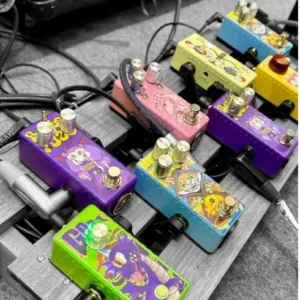
Tip: Test many settings to find cool acoustic sounds.
Principais conclusões
-
Guitar pedals can make acoustic guitar sound better. Effects like reverb and delay add depth. They do not take away the natural tone.
-
Pick pedals with care. High-gain distortion can make the sound unclear. Low-gain overdrive can make it warmer if set right.
-
Know the signal chain. Connect pedals in the right order for best sound. Start with a preamp and finish with reverb.
-
Try different settings. Test many pedal mixes to find new sounds. This can help you be more creative.
-
Watch out for feedback. Use feedback suppressors and EQ to stop unwanted noise when you play.
Guitar Pedal Basics For Acoustic Players
Acoustic-Electric Setup
Many acoustic players use acoustic-electric guitars with effects. These guitars have pickups inside. Most pickups are piezo types. Piezo pickups pick up string vibrations in a different way than electric guitar pickups. Piezo pickups make a weaker signal. Because of this, some guitar pedals do not work well with acoustic guitars. Sometimes, players hear extra noise or bad distortion. This happens more with strong pedals.
Most acoustic players pick effects that make the natural sound better. Reverb and delay pedals add space and depth. They do not cover up the acoustic tone. Distortion and high-gain pedals do not work well for acoustic guitars. But a low-gain overdrive pedal can work if you set it right. Players should try different settings to see what they like.
Tip: Try simple effects like reverb or delay first. This helps keep the acoustic sound clear.
Main differences between electric and acoustic-electric setups:
-
Piezo pickups in acoustic guitars make a weaker signal.
-
Some guitar pedals can add noise or distortion to acoustic signals.
-
Reverb and delay pedals are good for acoustic guitars.
-
High-gain pedals do not work well for acoustic signals.
-
Low-gain overdrive pedals can work if set up right.
Signal Chain Essentials
A signal chain helps acoustic players get the best sound from pedals. The signal chain is the order you connect pedals from the guitar to the amp or PA. Each pedal changes the sound in its own way. The order you use matters a lot.
Acoustic preamps, like the AD-2 or AD-10, help balance the pickup signal. These preamps make the tone better and send a strong signal to the PA. Compressors go before gain pedals to keep the volume steady. EQ pedals let you change the bass, mid, and treble.
Players often put modulation effects, like chorus or phaser, after distortion pedals. This way, modulation can work with more complex sounds. Delay pedals usually go after distortion to keep the repeats clear. Reverb works best at the end of the signal chain. It adds space but does not make the sound muddy.
Typical signal chain for acoustic guitar:
|
Order |
Tipo de pedal |
Purpose |
|---|---|---|
|
1 |
Preamp |
Balances and boosts signal |
|
2 |
Compressor |
Normalizes volume |
|
3 |
EQ |
Shapes bass, mid, and treble |
|
4 |
Overdrive/Distortion |
Adds drive or grit (if desired) |
|
5 |
Modulação |
Adds movement (chorus, phaser, etc.) |
|
6 |
Delay |
Creates echoes and repeats |
|
7 |
Reverb |
Adds space and depth |
Note: Changing pedal order can change the sound. Try different orders to see what works best for your music.
If players know these basics, they can use a guitar pedal to make their acoustic sound bigger. They can make new sounds and effects but still keep the natural tone.
Best Guitar Pedal Types For Acoustic Guitar
Acoustic guitarists can use many kinds of guitar pedal to change their sound. Each pedal type gives special benefits and helps players make new tones and textures.
Reverb And Delay Effects
Reverb and delay pedals are important for acoustic guitar music. These effects add space and depth. This makes the guitar sound fuller and more fun to listen to.
-
Reverb makes the guitar sound like it is in a big room. Players can pick spring, plate, or hall reverb to fit their music.
-
Delay gives the guitar echoes and repeats. This helps the guitar mix well with other sounds in a band or recording.
-
Acoustic guitarists often use both reverb and delay together. They might set one delay pedal to a dotted 8th note and another to a quarter note. Then they add reverb for a smooth, dreamy sound.
Tip: Change the level and feedback on delay pedals. This helps you find the best sound for playing live or recording.
EQ And Compression
EQ and compression pedals help acoustic players control their tone and volume. These tools make the guitar sound smooth and clear.
-
Compression keeps the volume even on all strings and frets. Strumming sounds stronger, and fingerpicking stays balanced.
-
Compressors fix sound problems and control big changes in volume. This makes playing sound better.
-
EQ pedals let players change the bass, mid, and treble. Subtractive EQ takes away harsh sounds before compression. After compression, EQ can bring back details.
-
Using both pedals together helps control loud notes and smooth out the sound. This gives the guitar more power.
Steps for managing dynamic range:
-
Use subtractive EQ to clean the sound before compression.
-
Set the compressor to make soft and loud notes even.
-
Play at different volumes to hear how it works.
Modulation Pedals
Modulation pedals add movement and color to the acoustic guitar sound. These effects include chorus, phaser, and flanger.
-
The Mooer Acoustikar pedal copies acoustic tones with three modes: Standard, Jumbo, and Piezo. It makes the natural sound better without making it too strong.
-
The Boss AD-2 Acoustic Preamp has an Acoustic Resonance knob for natural tones and an Ambience knob for reverb.
-
The Caline CP-35 Golden Halo pedal lets players control high end and body resonance. This helps shape the guitar’s tone.
Note: Use modulation pedals a little bit at a time. They can add shimmer or depth without hiding the acoustic sound.
Overdrive And Distortion
Overdrive and distortion pedals can make acoustic guitars sound rough or strong. Players need to use these pedals carefully to keep the natural sound clear.
-
Overdrive pedals, like the Musontek Dream Castle Overdrive Pedal, give many tones from warm drive to strong distortion. This pedal has Modern and Vintage modes, a clip switch, and an attack switch for more control.
-
The Dream Castle pedal works well with acoustic guitars on low gain. Its true bypass and buffer bypass help keep the sound clear.
-
Acoustic amps are made for clean sound. Too much distortion can make the sound too sharp or hurt the amp’s tweeters. Players should start with soft settings and change presence and attack to fit their style.
Tip: Use overdrive pedals for a little grit in blues or rock. Do not use high-gain settings so you keep the acoustic sound.
|
Tipo de pedal |
Main Benefit |
Example Pedal |
|---|---|---|
|
Reverb |
Adds depth and ambiance |
Boss RV-6, Strymon BlueSky |
|
Delay |
Creates space and repeats |
TC Electronic Flashback, MXR Carbon Copy |
|
EQ |
Shapes bass, mid, treble |
Boss GE-7, Fishman Platinum Pro |
|
Compressão |
Balances dynamics |
MXR Dyna Comp, Keeley Compressor |
|
Modulação |
Adds movement and color |
Mooer Acoustikar, Caline CP-35 |
|
Overdrive/Distortion |
Adds grit and drive |
Musontek Dream Castle Overdrive Pedal |
Players can mix and match these guitar pedal types to find their favorite acoustic sounds. Trying different settings and pedal orders helps players find new ways to be creative.
Practical Tips And Challenges
Avoiding Feedback
Acoustic guitarists sometimes have feedback problems with effects. Feedback can mess up a show and bother the crowd. Players use feedback suppressors to stop bad sounds. Many pros test the room before they play. They listen for feedback and change their settings. Most feedback happens from 170 Hz to 200 Hz. The 180 Hz spot can sound too loud and not nice. Players should use EQ pedals to lower these sounds. Some places have special feedback spots, so testing helps before playing.
Tips for controlling feedback:
-
Use feedback suppressors to fix problem sounds.
-
Test the room and change EQ settings.
-
Lower sounds from 170 Hz to 200 Hz to stop boom.
Preserving Acoustic Tone
Many players want to keep the real sound of their acoustic guitar when using effects. Some pedals, like the Align Session Pedal, add soft compression and warmth but do not change the main sound. The Align Chorus Pedal gives a rich chorus but keeps the guitar’s feel. The Radial JDI keeps the sound clear and stops distortion. Players should set EQ pedals to cut harsh sounds and use compressors to smooth loud notes. Reverb and echo pedals add space but should not cover up the real sound.
Ways to keep your acoustic tone:
-
Use pedals that help, not hide, the guitar’s sound.
-
Set EQ to take away harsh sounds.
-
Pick compressors that add warmth and balance.
-
Change reverb and echo for a real feel.
Live And Studio Use
Acoustic guitarists use pedals for live shows and studio work. Each place has its own problems. In live shows, a pedal tuner helps tune fast and mutes the sound when unplugging. DI pedals connect the guitar to the mixer and shape the sound. Clean boost pedals make solos louder. Compressor pedals control volume, especially for fingerstyle. Modulation effects like chorus and flanger add new sounds. Delay and reverb pedals make the music sound bigger. Looper pedals let players stack sounds for a fuller show.
|
Tool or Pedal |
Benefit in Live/Studio Use |
|---|---|
|
Pedal tuner |
Helps tune, lets you unplug quietly |
|
DI pedal/box |
Connects direct, shapes the sound |
|
Compressor |
Controls volume, balances sound |
|
Clean boost |
Makes solos stand out |
|
Modulation effects |
Adds new sounds and movement |
|
Delay/Reverb |
Makes music sound bigger |
|
Looper |
Stacks sounds for richer music |
Note: Try pedal settings before a show or recording. This helps stop problems and keeps the sound even.
Creative Uses And Inspiration

Soundscapes And Looping
Acoustic guitarists use effects pedals to make cool soundscapes. They start with a clean pickup so the sound stays pure. Many players try different pedal orders to find new sounds. Reverb and delay pedals turn simple tunes into rich sound worlds. Modulation and shimmer effects add movement and sparkle. Looping pedals let musicians record short parts and play them back right away.
Looping pedals help artists stack sounds on top of each other. They can add singing or tap the guitar for drum sounds. This trick makes solo shows sound bigger and more fun. Ed Sheeran uses looping pedals to build songs live. KT Tunstall and Newton Faulkner use looping too. They add rhythm and harmony with their guitars.
Tip: Try mixing pedals in new ways to find sounds you like.
Creative steps for building soundscapes:
-
Start with a clean pickup sound.
-
Try different pedal orders.
-
Add reverb, delay, and modulation.
-
Use looping pedals to stack melodies and beats.
Solo And Band Settings
Pedals help acoustic guitarists sound great alone or with a band. Special reverb pedals sound better than built-in ones. Chorus and delay pedals add depth and shimmer. This makes playing more interesting. Some players use the DigiTech Hardwire RV-7 Reverb for its good sound. The TC Electronic Corona Chorus gives a soft boost. The Mad Professor Deep Blue Delay makes a cool spacey sound.
In a band, mixing is important. A high pass filter on the guitar channel controls low sounds. This keeps the mix clear. Boost pedals help the guitar stand out when the music gets loud. Brighter strings help the acoustic guitar be heard with other instruments.
|
Pedal/Technique |
Benefit in Solo |
Benefit in Band |
|---|---|---|
|
Reverb Pedal |
Adds space |
Improves clarity |
|
Chorus Pedal |
Adds shimmer |
Enhances texture |
|
Pedal de atraso |
Creates layers |
Adds ambiance |
|
Boost Pedal |
Highlights solos |
Cuts through mix |
|
Filtro passa-alto |
Not needed |
Controls bass |
Note: Pedals give players many choices and help them fit any music style.
Acoustic guitarists can make new sounds by using effects pedals. These pedals change the way their guitar sounds and add more feeling to their music. When players try out different pedals and settings, they often come up with new ideas. Testing pedals helps musicians learn and find their own style.
-
Players use effects pedals to hear many different sounds.
-
They mix effects like distortion, delay, reverb, chorus, and wah.
-
Using more than one pedal makes special sounds.
-
Musicians find their own sound by trying new things.
Trying new ways with a guitar pedal helps players be creative and find what makes their music special.
FAQ
Can any guitar pedal work with an acoustic guitar?
Most guitar pedals work with acoustic guitars. Reverb, delay, EQ, and compression are good choices. High-gain distortion pedals can change the natural sound. Players should test pedals to see what fits their style.
How can players avoid feedback when using pedals?
Players can use feedback suppressors and EQ pedals. These help lower problem sounds. Testing the room helps find feedback spots. Changing pedal settings also helps stop unwanted noise.
What pedal order works best for acoustic guitar?
A common order starts with preamp. Then comes compressor, EQ, overdrive, modulation, delay, and reverb. This order keeps the sound clear and balanced. Players can try new orders for different effects.
Do overdrive pedals suit acoustic guitars?
Overdrive pedals like the Musontek Dream Castle Overdrive Pedal add warmth and grit. Low-gain settings work best for acoustic guitars. Players should change presence and attack to keep the natural tone.
Can acoustic players use pedals for live shows?
Acoustic players use pedals for live shows. Pedals help shape tone, control volume, and add effects. Pedal tuners, DI boxes, and loopers help with performance. Testing pedal settings before the show makes sure the sound is smooth.