A buffer guitar effect helps you keep your guitar sound strong and clear. You need a buffer when using long cables or many pedals.
Buffers boost your signal, keeping it crisp.
They prevent treble loss and keep your guitar’s true tone.
Your guitar signal is like water in a hose. A buffer restores the pressure, so your sound stays powerful.
Principais conclusões
A buffer guitar effect helps your sound stay clear and strong. This is important when you use long cables or lots of pedals.
You can put a buffer at the start or end of your pedalboard. This stops your tone from getting weak and keeps your guitar sounding real.
If you use a good buffer pedal, like the Musontek Adjudicator, your sound can get better and stay bright. This works even when your setup is complicated.
Buffer Guitar Effect Basics
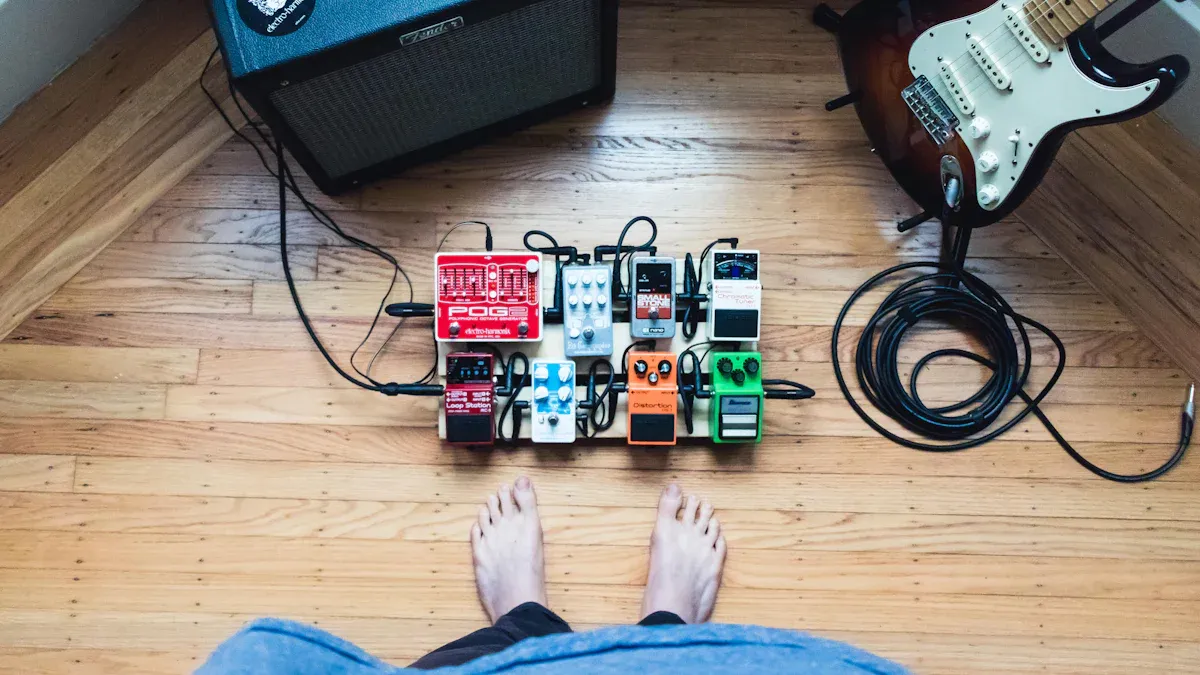
What Is a Buffer?
A buffer guitar effect acts like a helper for your sound. Imagine your guitar signal as water flowing through a hose. If the hose is long or has many twists, the water pressure drops. In the same way, your guitar signal can lose strength and clarity as it travels through long cables or many pedals. A buffer keeps your signal strong, so your tone stays bright and clear.
Here is a simple table that explains what a buffer does in your guitar setup:
Definition | Descrição |
|---|---|
Tipo | Unity gain amplifier |
Impedância de entrada | Elevado |
Output Impedance | Baixa |
Função | Prevents high frequency roll-off and preserves brightness of guitar signal |
A buffer is a small preamp stage built into a pedal. It keeps your guitar signal powerful, even when you use long cables or lots of pedals.
How Does a Buffer Work?
A buffer converts your guitar’s high-impedance signal into a low-impedance signal. This change helps your sound travel farther without losing quality. Think of it as a device that keeps the water flowing smoothly through a long hose, so the pressure never drops.
The buffer guitar effect restores your signal flow strength.
It prevents loss caused by cable capacitance and long cable runs.
Buffers make sure your guitar signal remains strong until it reaches your amplifier.
When you use a buffer, it matches the output of your guitar to the input of the next device in your chain. This process stops frequency loss and keeps your tone clear. Placing a buffer at the start or end of your pedalboard can bring back the strength lost from long cables or many pedals.
Why Buffers Matter for Guitarists
You need a buffer guitar effect if you want to keep your tone crisp and lively. Long cables and multiple pedals can cause signal loss, often called “tone suck.” This problem makes your sound dull, like turning down the tone knob on your guitar.
Here are some reasons why buffers matter:
Impedance affects the clarity and strength of your guitar signal.
Each connection in your pedal chain adds resistance, which can reduce clarity and make your tone muddy.
Buffer pedals lower the impedance, stopping tone loss across many pedals.
Longer cables can lead to tone degradation, especially with high-impedance signals from passive pickups.
Buffers help you keep your sound bright, even with long cable runs or many true-bypass pedals.
Tip: Even high-quality cables can cause problems if they are too long or have poor connections. A buffer guitar effect helps you avoid these issues and keeps your sound at its best.
Do You Need a Buffer in Your Guitar Setup?
Signs You Need a Buffer
You might wonder if your guitar setup needs a buffer. Simple tests can help you decide. Plug your guitar straight into your amp and listen to the tone. Then, connect your guitar through your full pedalboard and cables. If you hear less brightness or your sound feels weak, you may need a buffered pedal.
Here is a table showing common symptoms that suggest your guitar signal needs help from a buffer:
Symptoms | Descrição |
|---|---|
Signal Distortion | Your guitar sound seems distorted, with odd ringing or sudden drops. |
Ruído e interferência | You notice extra noise, glitches, or unwanted sounds in your setup. |
Timing Violations | Your effects do not respond as expected, or you hear strange timing issues. |
Overheating | Your pedals act strangely or lose performance during long sessions. |
Functionality Issues | Your buffered pedal chain does not work right, with stuck or inconsistent sounds. |
If you spot these problems, a buffer can restore your guitar’s true tone and keep your signal chain healthy.
Tip: Try switching between short and long cables. If your guitar sounds dull with longer cables, a buffer will help.
Where to Place a Buffer
You want your guitar to sound clear and strong. The spot where you place a buffered pedal matters. Most guitarists put a buffer at the start of the signal chain. This keeps your guitar’s tone crisp before it hits other pedals. Some players add a buffer at the end of the chain, especially if they use long cables to reach the amp.
Here are the best places for a buffer in your signal chain:
Place a buffered pedal at the beginning to keep your guitar signal strong.
Add a buffer at the end if you notice tone loss from long cables or many pedals.
You can experiment with placement to find what works best for your guitar setup.
Choosing the Right Buffer
Not all buffered pedals work the same way. You want a buffer that keeps your guitar’s natural tone and supports your effects. The Musontek Adjudicator Buffer Pedal stands out for several reasons. It converts your guitar’s high-impedance signal to low-impedance, so your sound stays clear and strong. The Adjudicator prevents tone loss and high-frequency roll-off, even with long cables or many pedals.
This pedal uses a discrete Class A circuit and a dual-buffer structure. You get low noise and high fidelity. The Adjudicator also works as a one-to-two signal splitter, letting you send your guitar signal to two places at once. You can adjust the input level, and the pedal supports a wide voltage range. These features help your effects perform better and keep your guitar’s natural tone.
You might wonder if built-in buffers in some pedals are enough. Dedicated buffer pedals like the Adjudicator offer more control and better performance. Built-in buffers may not handle long signal chains or complex setups. Dedicated buffer pedals give you a stronger, cleaner signal and help your guitar sound its best.
Note: A dedicated buffer pedal can make a big difference in your guitar setup, especially if you use many pedals or long cables.
Buffer Technology Demystified
The Science Behind Buffers
A buffer is like a pump for water in a long hose. When you play guitar, your signal moves through cables and pedals. If the path is long, your signal can get weak. This is like water losing pressure in a long hose. A buffer circuit helps keep your signal strong and clear. It does this by making input impedance high and output impedance low. This stops high frequencies from getting lost and keeps your tone bright.
Characteristic | Valor |
|---|---|
Impedância de entrada | High (1 megaohm) |
Output Impedance | Low (100 ohm) |
Gain | Close to unity (1) |
A buffer works best with long cables or lots of pedals. You can put a buffer after vintage fuzz pedals to make your signal strong again.
Common Buffer Circuit Types
There are different buffer circuits in guitar pedals. Each type has its own features and uses.
Type of Buffer | Caraterísticas | Casos de utilização |
|---|---|---|
Transistor Buffer | Needs less power, is small, works for most needs | Used for general buffering in pedals |
Op-Amp Buffer | Gives extra gain, can sound too clean for some | Good for drive pedals |
Op-amp buffer circuits have very high input impedance and low output impedance. FET and discrete transistor buffers also have high input impedance, but their output impedance can be higher. You can pick a buffer circuit that fits your pedalboard.
How Circuit Design Affects Your Tone
The way a buffer is built can change your guitar sound. A buffer lowers output impedance, so your signal travels farther without losing clarity. You get a clear and punchy tone, even with long cables. Some buffer circuits, like op-amp types, sound very clean. Others, like FET or discrete transistor buffers, can add warmth or character.
Tip: Without a buffer, every pedal or connector can add noise and make your tone dull. Guitar pickups are sensitive to this because they have high impedance.
A buffer helps keep your tone crisp and lively. The right buffer circuit stops signal loss and keeps your guitar sounding great.
Real-World Examples of Buffer Use
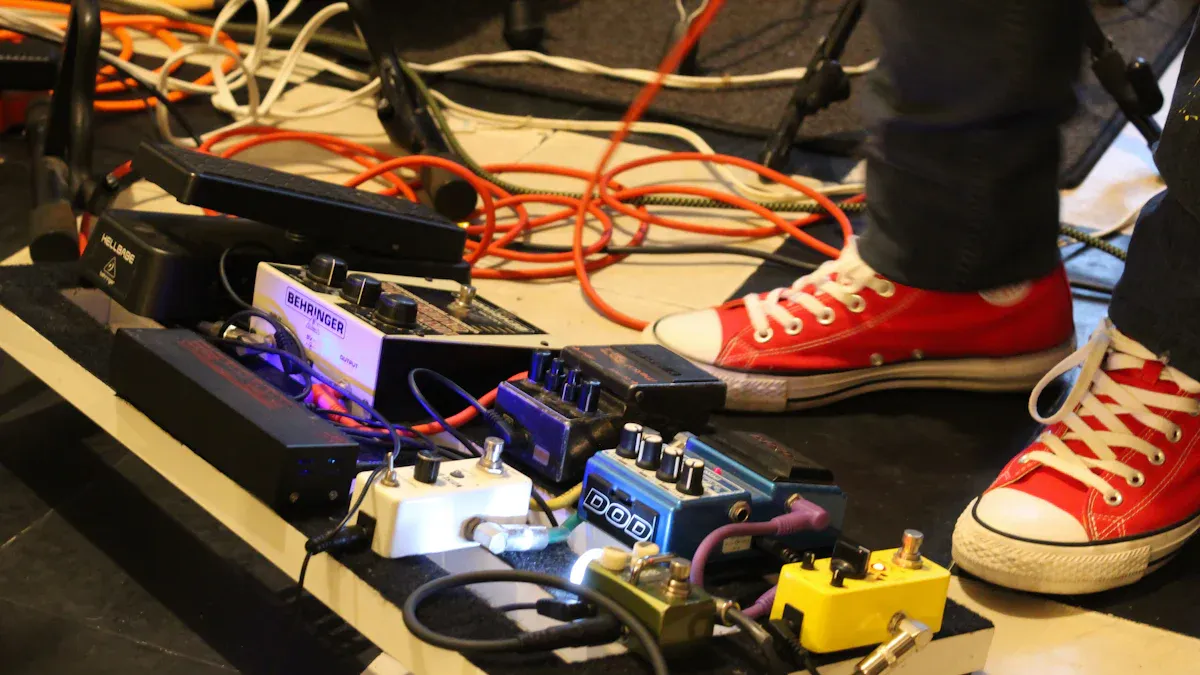
Buffer Pedals in Action
Imagine you play guitar on stage with a long cable and several pedals. You notice your tone sounds dull and weak. You add a buffer pedal at the start of your chain. Suddenly, your guitar sounds brighter and more lively. The buffer keeps your signal strong, even with all those pedals and cables.
Buffers minimize capacitance and high-end loss, preserving the core tone of the guitar.
Placement of buffers in the signal chain can significantly affect tonal characteristics, especially with certain pedals like fuzz.
Using a buffer early in the chain helps maintain a robust core tone by reducing tone-sucking effects from subsequent pedals.
You hear the difference right away. Your guitar cuts through the mix, and your tone stays clear from the first note to the last.
How Buffers Improve Live and Studio Setups
You might think buffer pedals only help during live shows. In the studio, they also make a big impact. When you record guitar, you want your tone to stay consistent and strong. Long cables and complex pedalboards can weaken your signal. A buffer pedal solves this problem.
Buffer pedals are not only beneficial for live performances but also for studio recordings. They can help maintain signal strength and clarity when recording guitars, ensuring consistent tone and reducing the impact of cable length or pedalboard complexities.
You get a clean, natural sound that matches what you hear when you plug straight into your amp. Your recordings sound professional, and your guitar’s true tone shines through every track.
Common Misconceptions About Buffers
Buffers Change Your Tone for the Worse
Many players think a buffer will always change or ruin their tone. This is not true if you use a well-designed buffer. A good buffer keeps your guitar signal strong and clear, even with long cables or many pedals. You might notice your tone sounds brighter and more lively after adding a buffer. Problems only happen with low-quality buffers or poor circuit designs.
A high-quality buffer helps you keep your guitar’s natural sound, not take it away.
True Bypass Is Always Better
Some guitarists believe true bypass pedals are always the best choice. True bypass sends your signal straight through when the pedal is off, so it does not change your tone. This works well with short cables and a few pedals. If you use many pedals or long cables, true bypass can cause signal loss and dull your sound.
Here is a quick comparison:
Bypass Type | Signal Preservation | Tone Impact |
|---|---|---|
True Bypass | High fidelity | No coloration of tone |
Buffered Bypass | Maintains integrity | May color the tone slightly |
True bypass routes your signal directly, keeping it pure.
Buffered bypass uses a buffer to keep your signal strong over long distances.
You need to choose what works best for your setup.
All Buffers Are the Same
Not all buffers work the same way. The design and quality of the buffer circuit matter a lot. High-quality buffers keep noise low and protect your tone, even with long cable runs. Lower-quality buffers can add noise or make your sound thin. Always look for a buffer pedal with a strong design and good parts.
Tip: A well-made buffer can make your guitar sound better and keep your tone clear, no matter how many pedals you use.
A buffer keeps your guitar signal clear and strong. You can check your setup for tone loss by following these steps:
Use short, quality cables.
Compare your direct sound to your pedalboard sound.
Test each pedal for tone changes.
Consider the Musontek Adjudicator for the best results.
FAQ
What does a buffer pedal do for your guitar signal?
A pedal de amortecimento keeps your guitar sound clear and strong. You avoid tone loss when you use long cables or many pedals.
Where should you place a buffer pedal in your signal chain?
You can put a buffer pedal first or last in your chain. Placing it first helps keep your tone crisp before other effects.
Can you use a buffer pedal with any type of guitar?
Yes, you can use a buffer pedal with electric, acoustic, or bass guitars. You get better signal strength and more consistent tone.