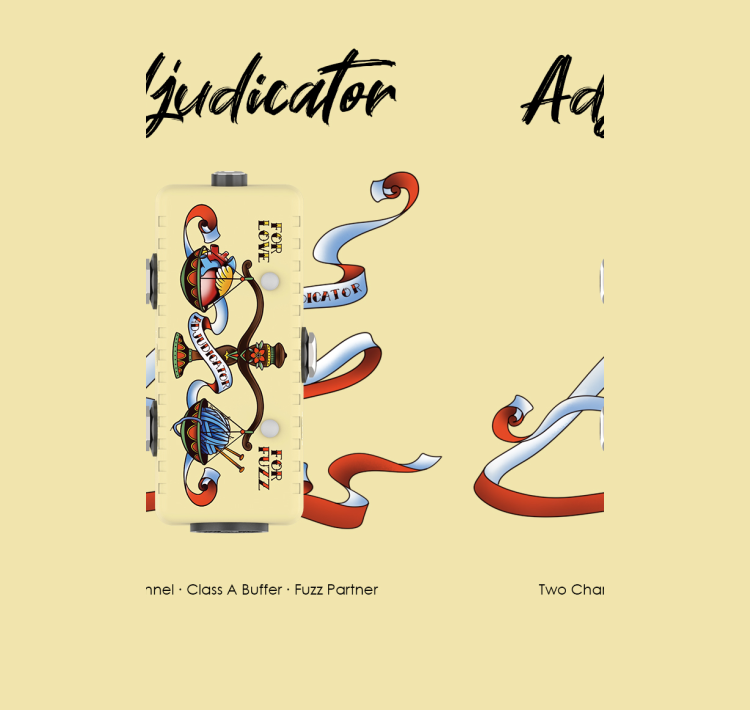
Many guitar players say the Line 6 DL4 MKII is the best delay pedal today. This pedal is special because it has many delay types. It also has built-in reverbs and copies classic echo machines well. People like its easy-to-use controls. It works great on stage and in the studio. The DL4 MKII has a strong looper and new effects from the HX family. Signal clarity is important when you use delay pedals. A buffer guitar effect como o Musontek Adjudicatário helps your sound stay clear and strong.
Principais conclusões
-
The Line 6 DL4 MKII is a great choice. It has many delay types and is easy to use.
-
There are different delay types, like digital, analog, and tape. Each one makes a special sound that can make your music better.
-
A buffer pedal, like the Musontek Adjudicator, keeps your guitar sound clear and strong. This is important if you use long cables.
-
Pick a delay pedal that fits your music style. Some music types need special delay features.
-
Take care of your delay pedal often. This helps it last longer and work well when you practice or play live.
Best Delay Pedal Features
Som e versatilidade
A good delay pedal can change your sound in many ways. You can pick digital delay, analog delay, or tape delay. Each one sounds different. Digital delay is clear and bright. Analog delay is darker and old-fashioned. Tape delay has special movement and is brighter than analog. The best delay pedal lets you change mix, feedback, and delay time. You can make the effect soft or strong. Many famous players use delay in their music. David Gilmour uses long feedback for solos. Brian May uses two digital delays for a big sound. Slash likes a classic digital delay for his style. John Mayer uses slapback delay. The Edge uses dotted-eighth delay for cool rhythms.
|
Caraterística |
Descrição |
|---|---|
|
Digital |
Very clear sound, can be bright, good for repeats. |
|
Analog |
Darker sound, like old pedals such as Memory Man or DM-2. |
|
Tape |
Special movement, brighter than regular analog delays. |
|
Levels |
Mix is usually set in the middle; change for strong or soft effects. |
|
Feedback |
Best in the middle; change for rhythm or solos. |
|
Division |
Dotted eighth is good for worship; try different note settings. |
|
Modulação |
Makes sound wider; changes tone, pitch, or delay. |
|
Filter |
Changes how clear repeats are; set for the sound you want. |
Build and Reliability
The best delay pedals are made with tough materials. Metal cases keep the inside safe. Switches and knobs are strong and last a long time. Good delay pedals work well on stage and in the studio. They keep your sound clear and stop unwanted noise. Top pedal makers test their pedals to make sure they last. This helps the pedal work well for many years.
Controls and Usability
Simple controls help you get the sound you want fast. Many delay pedals have three main knobs. This makes it easy for beginners and experts. You can change delay time, feedback, and mix without trouble. You do not need to use hard menus. People like pedals that mix old sounds with new features.
|
Caraterística |
Descrição |
|---|---|
|
Intuitive Design |
Simple layout makes it easy to set delay sounds. |
|
Built for Musicians of All Levels |
Good for beginners and experts. |
|
No Overly Complex Menus |
Three main knobs make changing sounds simple. |
Tip: A simple delay pedal helps you save time when you practice or play live.
Unique Innovations
New delay pedals have cool features. Some have modulation and pitch-shifting for creative sounds. Others mix delay with lo-fi effects for special sounds. These new ideas help players make new music. You can change settings and find your own style. The best delay pedals let you try new things and do more than before.
-
Modulation and pitch-shifting make interesting sounds.
-
Lo-fi effects give your music a special feel.
-
Custom settings help you be creative and make new sounds.
Buffer Guitar Effect and Signal Chain
Why Use a Buffer Pedal?
A buffer guitar effect keeps your guitar sound strong and clear. If you use lots of pedals or long cables, you might lose high notes and volume. The buffer pedal fixes this by changing the guitar’s high-impedance signal to low-impedance. This helps the sound travel farther without losing quality. The Musontek Adjudicator is a buffer pedal that keeps your sound bright and full, even with many pedals. Audio engineers say a buffer guitar effect with a delay pedal keeps your tone sharp, especially with long cables. This matters for players who want their delay to sound clear and powerful.
|
Descrição das provas |
Explicação |
|---|---|
|
Buffer pedals prevent signal loss |
They help keep high notes and volume, even with long cables and many pedals. |
|
Impedance matching |
This makes sure the guitar sound stays strong and clear, so the tone does not get worse. |
|
Stops ‘tone suck’ |
A buffer at the start of the pedal chain keeps the original sound clear all the way through. |
-
A buffer pedal changes the high-impedance signal from the guitar to low-impedance.
-
Low-impedance signals can go farther without losing sound quality.
-
This helps the delay pedal sound crisp and lively.
Buffer vs. True Bypass
True bypass pedals let the sound go through without change when off. This works well with short cables and just a few pedals. With bigger setups, true bypass can make you lose treble and make the sound dull. Buffer pedals keep the sound strong and stop treble loss. Players often hear their delay sound brighter and clearer with a buffer guitar effect. The “tone suck dilemma” is when true bypass pedals make the sound lose brightness, especially with many pedals. Buffer pedals fix this and keep the delay and other effects clear.
Enhancing Delay Pedal Tone
A buffer guitar effect can really help a delay pedal work better. Buffers lower the output impedance, so the delay pedal keeps its tone with long cables. This means repeats from a digital delay or analog delay stay sharp and do not fade away. Buffers also help the delay time stay right and the effect sound full. Many players put a buffer pedal first in their chain to make sure every delay, from analog delay to digital delay, sounds great. The buffer guitar effect keeps the sound strong, so the delay pedal can do its job and add depth to the music.
Comparing the Best Delay Pedals
Top Models Overview
Many guitarists want the best delay pedal for their sound. There are several top models you can choose from. Each delay pedal has special features and fits different styles.
-
Line 6 DL4 MKII: This pedal is popular because it has many delay types. It gives classic analog delay, digital delay, and tape delay sounds. Players like its looper and simple controls.
-
Strymon Timeline: This pedal lets you control delay time and effects deeply. It has lots of presets and sounds very good. Musicians use it for live shows and studio work.
-
Boss DD-3T: This digital delay pedal is known for clear repeats and tap tempo. It is easy to use and fits on any pedalboard.
-
Boss DD-8: This pedal has ten delay types and a long delay time. It also has a looper for creative practice.
-
Electro Harmonix Grand Canyon: This pedal gives up to three seconds of delay time. It has twelve delay types and a looper. Players can save thirteen presets.
-
Universal Audio UAFX Starlight Echo: This pedal copies tape delay, analog delay, and digital delay. It has presets and USB-C for updates.
|
Nome do pedal |
Tipo |
Preço |
Delay Time |
Unique Features |
|---|---|---|---|---|
|
Line 6 DL4 MKII |
Multi |
$330 |
Up to 15 seconds |
Looper, 15 delay types, HX effects |
|
Strymon Timeline |
Digital |
$450 |
Up to 2.5 seconds |
12 delay machines, deep editing, MIDI |
|
Boss DD-3T |
Digital |
$140 |
800 ms |
Tap tempo function, compact size |
|
Boss DD-8 |
Digital |
$180 |
Up to 10 seconds |
10 delay types, 40-second looper |
|
Electro Harmonix Grand Canyon |
Digital |
$250 |
Up to 3 seconds |
12 delay types, looper, 13 presets |
|
Universal Audio UAFX Starlight Echo |
Digital |
$350 |
N/A |
Tape/analog/digital simulation, presets, USB-C |
Note: Every delay pedal in this list has something special. Some focus on classic sounds. Others have modern features.
Strengths and Weaknesses
Each delay pedal has good points and weak points. Players should think about what matters most for their music.
-
Line 6 DL4 MKII
-
Strengths: Many delay types, strong looper, easy controls.
-
Weaknesses: Big size may not fit small pedalboards.
-
-
Strymon Timeline
-
Strengths: Deep editing, great sound, lots of presets.
-
Weaknesses: Costs more, hard for beginners.
-
-
Boss DD-3T
-
Strengths: Simple design, clear digital delay, tap tempo.
-
Weaknesses: Not as many features as bigger pedals.
-
-
Boss DD-8
-
Strengths: Many delay types, long delay time, looper.
-
Weaknesses: Menus can be hard for some users.
-
-
Electro Harmonix Grand Canyon
-
Strengths: Many delay types, looper, preset storage.
-
Weaknesses: Big size, takes time to learn all features.
-
-
Universal Audio UAFX Starlight Echo
-
Strengths: Real tape delay and analog delay sounds, presets, USB updates.
-
Weaknesses: Costs more, no looper.
-
Tip: If you want simple controls, try the Boss DD-3T. If you want lots of sounds and editing, try the Strymon Timeline or Line 6 DL4 MKII.
Price and Value
Price and value are important when picking a delay pedal. Some pedals cost more because they have more features or better sound. Others are good for players who want to save money.
|
Nome do pedal |
Preço |
Value for Money |
Melhor para |
|---|---|---|---|
|
Line 6 DL4 MKII |
$330 |
High value, many features |
Players needing versatility |
|
Strymon Timeline |
$450 |
Premium, deep control |
Studio and pro musicians |
|
Boss DD-3T |
$140 |
Affordable, simple and reliable |
Beginners, live performers |
|
Boss DD-8 |
$180 |
Good value, many delay types |
Players wanting variety |
|
Electro Harmonix Grand Canyon |
$250 |
Feature-rich, mid-range price |
Creative players, looping fans |
|
Universal Audio UAFX Starlight Echo |
$350 |
Premium, top sound quality |
Tone purists, studio use |
Players should pick the delay pedal that fits their needs and budget. The best delay pedal for one player might not be right for another. Some want a simple delay pedal for live shows. Others need lots of editing and delay types for recording. Every delay pedal in this list can help players find their sound.
Choosing the Right Delay Pedal
Styles and Genres
Guitarists pick a delay pedal based on their music style. Each type of music needs different delay features. Shoegaze players like long repeats and lots of delay. Jazz players use short delays and slapback sounds. Worship music uses shimmer and tape delay with movement. Blues players want tap tempo and flexible delay pedals. Dub artists use long repeats and tape sounds. The table below shows what each genre needs in a delay pedal.
|
Género |
Important Features |
|---|---|
|
Shoegaze |
Multiple repeats, elongated delay times, shimmer effects, modulation, stereo functionality, tape saturation |
|
Jazz |
Short delay times, low feedback, minimal repeats, reverb-style slapback delay |
|
Worship |
Shimmer setting, ethereal simmer delay, digital accuracy, modulated tape warble |
|
Blues |
Tap tempo functionality, digital or analog delays, adaptable to changing tempos |
|
Dub |
Lengthy repeats, tape saturation, slight modulation, maintaining tight rhythm |
Players should get delay pedals with adjustable delay time and feedback. Mix control, modulation, and tone shaping are also helpful. These features help players make the right sound for their music.
Beginners vs. Pros
Beginners want a delay pedal that is simple to use. Easy controls and clear labels help new players learn fast. Many beginner pedals have digital delay and basic settings. Pros want more features like different delay types and deep editing. They use analog delay, tape delay, and digital delay to change their sound. Experienced players like tap tempo and saving presets. The best beginner delay pedal is easy to set up and sounds good. Pros pick pedals that let them be creative and have more control.
Tip: Beginners should pick a delay pedal with easy controls. Pros can try pedals with more features.
Live vs. Studio Use
Live players need a delay pedal that works fast. Tap tempo helps them match the song’s speed. Strong switches and tough cases are important on stage. Studio players care about sound quality and clear tone. They use delay pedals with high sound quality and low noise. Studio setups use analog delay, tape delay, and digital delay for different sounds. Studio players use fewer pedals to keep the sound clean. The best live delay pedal is easy to adjust quickly. Studio players want delay pedals that sound clear and have flexible delay time.
-
Live players need tap tempo and strong build.
-
Studio players want great sound and accurate delay.
-
Both use delay pedals to add depth and style to their music.
User Reviews and Expert Insights
Guitarist Feedback
Many guitarists talk about delay pedals online. They say delay pedals help them make new sounds. Delay pedals also add depth to their music. Some players like the Line 6 DL4 MKII. It has many delay types and simple controls. Others pick the Boss DD-3T for its easy design. It gives clear delay repeats. Some guitarists use the Strymon Timeline. It lets them control each delay setting more. Musicians use delay pedals for solos and rhythm parts. They say a good delay pedal makes their tone stand out.
“The delay pedal changed my sound. I use it for solos and rhythm. My band noticed the difference right away.” – A guitarist review
Professional Endorsements
Professional musicians suggest using delay pedals for live and studio work. Many like the Line 6 DL4 MKII. It is versatile and built strong. Studio engineers use the Strymon Timeline. It has high-quality delay effects and deep editing. Touring artists trust the Boss DD-8. It works with many styles and is reliable. Experts say every serious guitarist should have a delay pedal. They also mention buffer pedals like the Musontek Adjudicator. Buffer pedals keep delay pedals sounding clear with long cables.
|
Professional |
Favorite Delay Pedal |
Reason for Choice |
|---|---|---|
|
Studio Engineer |
Strymon Timeline |
Deep editing, clear delay |
|
Touring Artist |
Boss DD-8 |
Reliable, many delay types |
|
Session Player |
Line 6 DL4 MKII |
Versatile, strong build |
Common Praise and Critiques
Users like delay pedals because they add space and texture. Many say delay pedals help them try new music ideas. Players enjoy pedals with easy controls and tough cases. Some wish for more presets or longer delay times. A few say learning advanced settings takes time. Most agree delay pedals make their sound better and practice more fun. Experts and players suggest trying different delay pedals to find the best one.
-
Praise: Adds depth, easy to use, strong build
-
Critiques: Takes time to learn, some want more presets, longer delay times
Note: Guitarists often find the right delay pedal helps them be creative and play better.
Delay Pedal Setup Tips
Signal Chain Placement
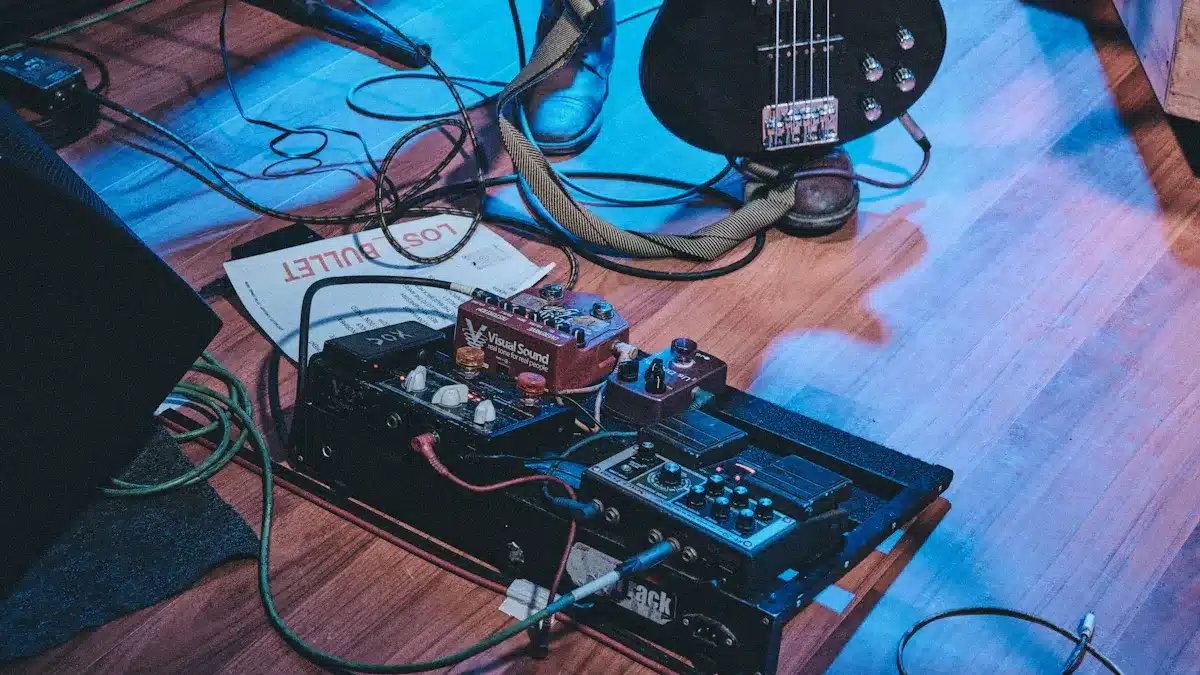
Many players ask where to put a delay pedal. Most guitarists place it after drive pedals. This keeps the repeats clear and stops muddy sounds. Some musicians use the effects loop in their amplifier. This makes the delay sound cleaner and more clear. Putting a buffer pedal first helps keep the signal strong. This is good for long cables and big pedalboards. A clear signal path helps the delay pedal work its best.
Recommended Settings
Players can change delay pedal settings for their style. For solos, set delay time between 350 ms and 550 ms. Keep the mix knob at 50% so notes blend well. Short delay times, like 80 ms to 120 ms, are good for slapback in country or rock. The feedback knob controls how many repeats you hear. Set it low for rhythm and higher for solos. Tap tempo helps match delay to the song’s speed. Try modulation and filter settings for new sounds. The table below shows common settings:
|
Style |
Delay Time |
Mix Level |
Feedback |
Notas |
|---|---|---|---|---|
|
Solo |
400 ms |
50% |
Médio |
Adds depth to leads |
|
Slapback |
100 ms |
40% |
Baixa |
Classic rock/country |
|
Ambiente |
600 ms |
60% |
Elevado |
Big, spacious sound |
Tip: Start with easy settings. Change one knob at a time to find your best delay sound.
Maintenance Advice
Taking care of your delay pedal helps it last longer. Makers suggest some steps to keep it working well:
-
Keep the delay pedal in a cool, dry spot. This stops damage from heat, wetness, and dust.
-
Be gentle when plugging and unplugging cables.
-
Clean the pedal often to remove dust and dirt. This helps all parts work right.
-
Use the power supply the maker suggests. This stops electrical problems.
Players who do these things have fewer problems. Regular care keeps the delay pedal ready for practice, recording, or shows.
The Line 6 DL4 MKII is known as the best delay pedal. It gives you lots of delay types to use. The pedal is built tough and has simple controls. Many players say it helps them make cool new sounds. It also makes their music better. Every guitarist should think about what they need before picking a delay pedal. Using a buffer guitar effect keeps the delay sound bright and strong.
Tell us which delay pedal you like or ask a question below. Your story can help other guitarists learn more.
FAQ
What does a delay pedal do?
A delay pedal records the guitar signal and plays it back after a short time. This creates an echo effect. Players use delay pedals to add depth, space, and rhythm to their sound.
Where should a delay pedal go in the signal chain?
Most guitarists place the delay pedal after drive and distortion pedals. This keeps the repeats clear. Some players use the effects loop in their amplifier for cleaner delay sounds.
Why use a buffer pedal with a delay pedal?
A buffer pedal keeps the guitar signal strong. It prevents loss of high frequencies when using long cables or many pedals. The Musontek Adjudicator helps delay pedals sound crisp and clear.
How do you set delay time for solos?
Players often set delay time between 350 ms and 550 ms for solos. This range adds depth without making the sound muddy. Adjust the mix and feedback to blend the repeats with the lead notes.
Which delay pedal is best for beginners?
The Boss DD-3T works well for beginners. It has simple controls and clear digital delay. Many new players find it easy to use and reliable for practice or live shows.