You should use a compression pedal when you want your guitar to sound smoother and more controlled. With the right settings, you can make soft notes stand out and keep loud notes from overpowering your mix. The Super ZIP Factory by Musontek acts as a creative factory for shaping your sound, giving you punchy rhythms and longer sustain. Many guitarists place their compressor at the start of the signal chain to help every note remain clear and balanced.
アスペクト | Effect on Dynamics and Tone |
|---|---|
Attack Time | Controls how much of the pick attack you hear. |
Sustain | Makes quiet notes louder and extends how long notes ring out. |
Volume Consistency | Keeps your playing even, no matter where or how you play on the neck. |
Punchiness | Adds impact to chords and single notes, great for rhythm work. |
要点
Use a compression pedal to make your guitar sound smoother. It helps keep loud and soft notes even and clear.
Put your compression pedal first in your signal chain. This makes sure every note is clear and balanced.
Change settings like threshold and ratio for your style. Begin with medium settings and adjust them for the best sound.
Compression helps your notes last longer and keeps volume steady. This is very helpful for rhythm and solos.
Do not use too much compression or you lose natural sound. Listen carefully to find the best mix of compressed and natural tones.
What does compression do?
How compression affects tone
A compression pedal changes how your guitar sounds by controlling loud and soft parts. When you play, some notes are louder than others. The pedal works like an automatic volume knob. It makes quiet notes louder and loud notes softer. This helps your playing sound smooth and even. You can hear every note, no matter how hard you pick. If you use a dual-band compressor, you get more control. The pedal splits your sound into high and low parts. It compresses each part by itself. This makes your sound tighter and helps your guitar fit better in a band mix.
Tip: To make your guitar sound smooth and professional, try putting a compression pedal first in your signal chain.
Why use compression for guitar
Compression helps your guitar sound steady and controlled. It keeps your volume the same, which is good for shows and recording. When you play rhythm, compression adds punch and keeps your chords clear. For solos, it gives you longer sustain and makes each note easy to hear. The Musontek Dynamics – Super ZlP Factory gives you strong compression with a clear sound. You get easy controls, less noise, and better music quality. This pedal works for many styles, like country and rock.
特徴 | 説明 |
|---|---|
Professional-grade compression | Great sound for any show or practice |
Musical transparency | Keeps your guitar’s real sound clear and natural |
Intuitive controls | Simple to use for all players |
Versatile dynamic control | Good for light or strong compression |
Minimal noise | Cuts out extra sounds |
Maximum musical enhancement | Makes your guitar sound even better |
A compression pedal like the Dynamics – Super ZlP Factory helps you shape your sound and control how loud or soft you play. You get a clear, balanced, and strong sound every time you play.
When to use a compression pedal
It is good to know when to use a compression pedal. This helps you get the best guitar sound. You can use it on stage or in the studio. The right settings give you more control and make your playing clear. Your music will have more impact.
Clean tones and dynamics
Clean guitar tones should sound smooth and even. A compression pedal helps with this. It makes quiet notes louder and loud notes softer. This is helpful with single-coil pickups. These pickups can have big changes in volume. Use a little gain reduction at a low ratio. This makes your clean tone better but not squashed.
Compression helps clean guitars during recording. It keeps your playing steady. You will not have sudden jumps in volume.
Many guitarists use compression for a smoother sound. Each note will be clear and easy to hear.
If you play country or pop, compression adds sparkle. It also brings out the details in your picking.
Tip: Use gentle threshold and ratio for clean tones. This keeps your sound natural. You still get more control.
The Musontek Dynamics – Super ZlP Factory is good for clean tones. It has clear sound and easy controls. You can adjust your dynamics for any style.
Rhythm and consistency
Rhythm guitar needs chords and strumming to sound even. A compression pedal helps keep your volume steady. Every chord will ring out at the same level. This is important for live shows and studio work.
Compression pedals keep rhythm parts tight and even.
Use attack and release knobs to change how fast the pedal works.
The mix knob lets you blend dry and compressed sounds. You keep your original tone and add just the right effect.
In live shows, compression helps your guitar stand out. Your sound will be polished.
If you use chicken picking or play harmonics, compression helps. Chicken picking needs clear notes. Compression gives more sustain and makes notes stronger. Harmonics are easier to hear. Your picking will stay sharp.
The Musontek Dynamics – Super ZlP Factory works for many styles. You can use it for pop, rock, country, or blues. Its controls let you change your sound for any music. You can make your sound smooth or control your dynamics a lot.
Note: For solos, use a slower attack setting. This lets your pick attack come through. Your lead lines will have more feeling.
Common scenarios for using a compression pedal:
Make clean tones better
Keep rhythm volume steady
Get longer sustain for solos
Balance tracks in the studio
Sound polished at live shows
A compression pedal like the Musontek Dynamics – Super ZlP Factory helps you get a balanced and controlled guitar sound. You can play expressively in any situation.
Benefits of compression pedal
Smoother sound and sustain
You want your guitar to sound smooth and full. A compression pedal helps by making loud and soft parts more even. When you use compression, your notes last longer. Your tone stays the same each time you play. This helps your guitar stand out in a band or when recording.
Compression stops sudden loud sounds, so your music stays balanced.
It gives your notes more sustain, so they last longer and sound better.
Your guitar tone gets smoother, and every note is easy to hear.
You get a steady sound that helps your guitar be heard with other instruments.
The Musontek Dynamics – Super ZlP Factory keeps your sound clear. You still hear your guitar’s real voice, but with more warmth. This pedal works for many styles, like country and rock. You can change the settings to get the right amount of smoothness and sustain.
Tip: Turn up the sustain control to make solos sing and chords ring out.
Balanced volume and attack
You want your guitar to sound even and pro. A compression pedal helps keep your volume and attack balanced. It makes quiet notes louder and stops loud notes from taking over. You can change attack and release to shape how notes start and end.
Compression lets you control how hard you strum or pick.
You can keep rhythm parts tight and solos strong.
The pedal stops sudden jumps in volume, so your gear stays safe.
Your playing sounds more smooth and steady.
Sound engineers use compression to balance attack and sustain. By changing these settings, you get a sound that feels natural and musical. The Musontek Dynamics – Super ZlP Factory gives you a clear, warm tone with no extra noise.
ベネフィット | 説明 |
|---|---|
Enhances Sustain | Notes last longer, making your playing sound richer and fuller. |
Balances Volume | Makes your playing even, so you sound more pro. |
Improves Clarity | Quiet notes are easier to hear, and loud notes don’t take over. |
Protects Your Gear | Stops loud peaks, so your amp and speakers stay safe. |
汎用性 | Works for many music styles, from clean country to funky rhythms. |
Note: Try different attack and release settings to find what works best for you.
Setting up your compression pedal
Basic settings for beginners
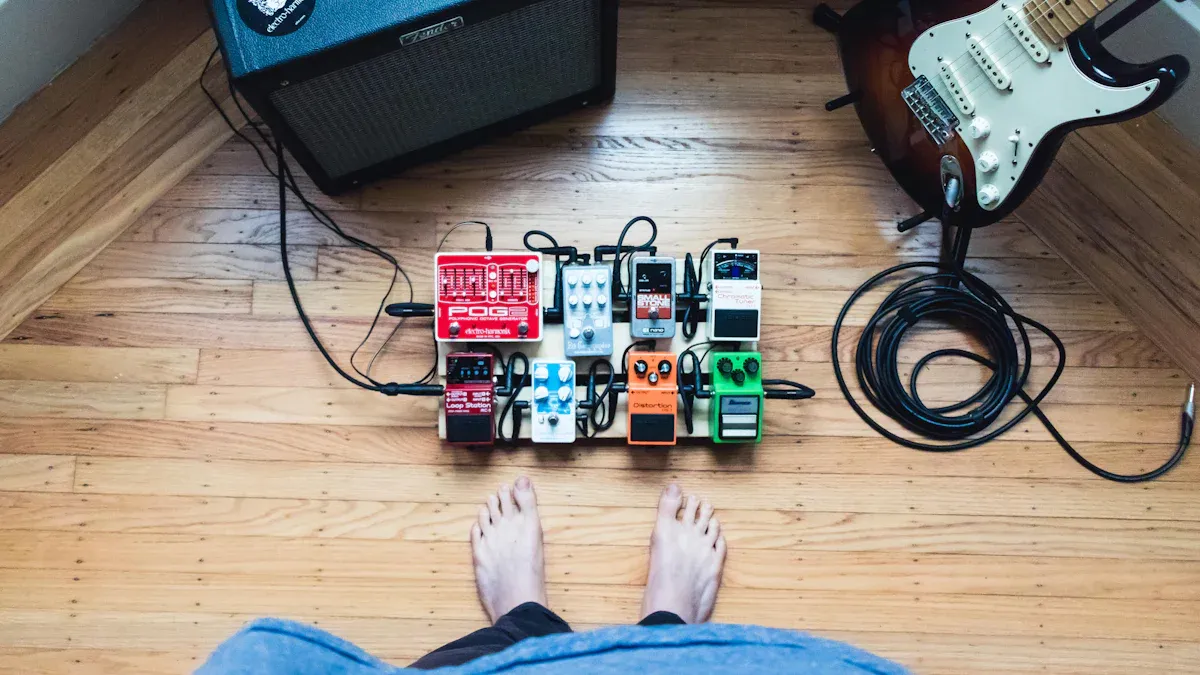
When you first use a compression pedal, you want to start with simple settings. This helps you learn how each control shapes your sound. The Musontek Dynamics – Super ZlP Factory makes this process easy with its clear layout and intuitive knobs.
For rhythm guitar, set a moderate threshold and a higher ratio. This keeps your levels steady and your chords punchy.
For lead guitar, use a lower threshold and a lower ratio. You get more sustain without changing your tone too much.
For fast solos, try a higher threshold with a lower ratio. This keeps your notes clear and defined.
Tip: Start with all controls at noon. Play your guitar and adjust one knob at a time. Listen to how your sound changes.
Advanced controls and tips
Once you feel comfortable, you can explore advanced settings. The Musontek Dynamics – Super ZlP Factory gives you full control with threshold, ratio, attack, release, and output level knobs. These options let you fine-tune your tone for any style.
A player shared that this pedal boosts sustain but keeps your sound lively. You can shape your attack and release to match your picking style. Fast attack settings catch sharp peaks, while slower attack lets your pick attack shine through. Adjust the release to control how quickly the effect fades.
特徴 | 説明 |
|---|---|
Intuitive Controls | Easy for beginners and pros to use. |
Versatile Options | Adjust settings for any playing style. |
適応性 | Works well for both strumming and solos. |
Common mistakes include using too much compression, which can make your sound flat. Avoid setting the ratio or threshold too high at first. Always listen and tweak until your guitar feels natural and expressive.
Note: The Musontek Dynamics – Super ZlP Factory is designed for easy use. You can quickly find the right balance for your music.
When not to use compression
Preserving natural dynamics
You may love the control that a compression pedal gives you, but sometimes you need to let your guitar breathe. Natural dynamics make your playing feel alive and expressive. If you play jazz, blues, or fingerstyle, you often want every touch and change in picking strength to come through. Compression can smooth out these details and make your sound less personal.
You should skip compression when you want your audience to hear every soft and loud note.
If you play with lots of emotion or use volume changes for effect, keep your signal clean.
Acoustic guitarists often avoid compression to keep the instrument’s natural voice.
ヒント Trust your ears. If your guitar starts to sound flat or loses its character, try turning off the compressor.
Avoiding over-compression
Too much compression can make your guitar sound lifeless. Over-compression removes the punch and excitement from your playing. You might notice that your notes all sound the same, with no rise or fall in volume. This can make your music less interesting.
Symptom | What You Hear |
|---|---|
Loss of dynamics | Every note sounds equally loud |
Lack of punch | Chords and solos feel dull |
Unnatural sustain | Notes ring too long or sound forced |
You should watch for these signs:
Your guitar feels less responsive.
The music loses its energy.
You miss the natural attack of your pick or fingers.
注: Use compression as a tool, not a rule. Sometimes, the best sound comes from letting your guitar’s natural dynamics shine.
If you want your playing to feel real and expressive, remember that less can be more. Turn off the compressor when you need your true touch and tone to stand out.
You gain smoother sound and better sustain when you use a compression pedal. Many guitarists use compression for clean tones, rhythm, and solos. You should start with a 4:1 ratio and adjust for your style. Try different settings on the Musontek Dynamics – Super ZlP Factory to find what fits your music.
Compression can make your guitar sound clear, but too much can flatten your tone.
Adjust threshold, ratio, attack, release, and makeup gain for best results.
Use modest compression and blend natural sound for a balanced setup.
Find your own mix of compressed and natural tones. 🎸
よくあるご質問
How do you know if you need a compression pedal?
If your guitar volume is not even, you might need one. Sometimes, some notes are too loud. Other notes are hard to hear. A compression pedal helps make your sound smooth and controlled.
Where should you place a compression pedal in your signal chain?
Put the compression pedal first, right after your guitar. This way, you control your dynamics before other effects change your sound.
Can you use compression with distortion or overdrive?
You can use compression with distortion or overdrive. Put the compressor before those pedals. This gives you a tighter sound. Your notes will have more sustain and be clearer.
What settings should you start with on the Musontek Dynamics – Super ZlP Factory?
Set all the knobs in the middle. Play your guitar and listen to the sound. Change threshold and ratio to get balance. Use attack and release to change how your notes feel. Adjust the output level for the right volume.
Does compression work for acoustic guitar?
Compression works for acoustic guitar too. It makes your sound more even and helps notes last longer. Use gentle settings to keep your guitar’s natural sound.