Stereo EQ means stereo equalizer effect. It lets people change sound frequencies on the left and right sides by themselves. Musicians, producers, and music fans use stereo EQ to change sound in a careful way. Home audio systems, car stereos, and guitar pedals like the ムソンテック レミオーデル all use stereo EQ. People can make music clearer, balance instruments, or make special effects. Stereo EQ helps people get the sound they want.
要点
Stereo EQ lets you change sound frequencies for each side. This helps make the music clear and balanced.
Filters like high-pass and low-pass help you pick which sounds to change. This makes music sound good anywhere.
Mid/side processing with stereo EQ makes the music feel wider. Each instrument can have its own spot in the mix.
Do not make the same mistake of boosting too much. Small changes and subtractive EQ keep your mix clean and real.
Try different EQ types and settings to get the best sound. This works for your music at home, in the car, or live shows.
Stereo EQ Basics
What Does Stereo EQ Do
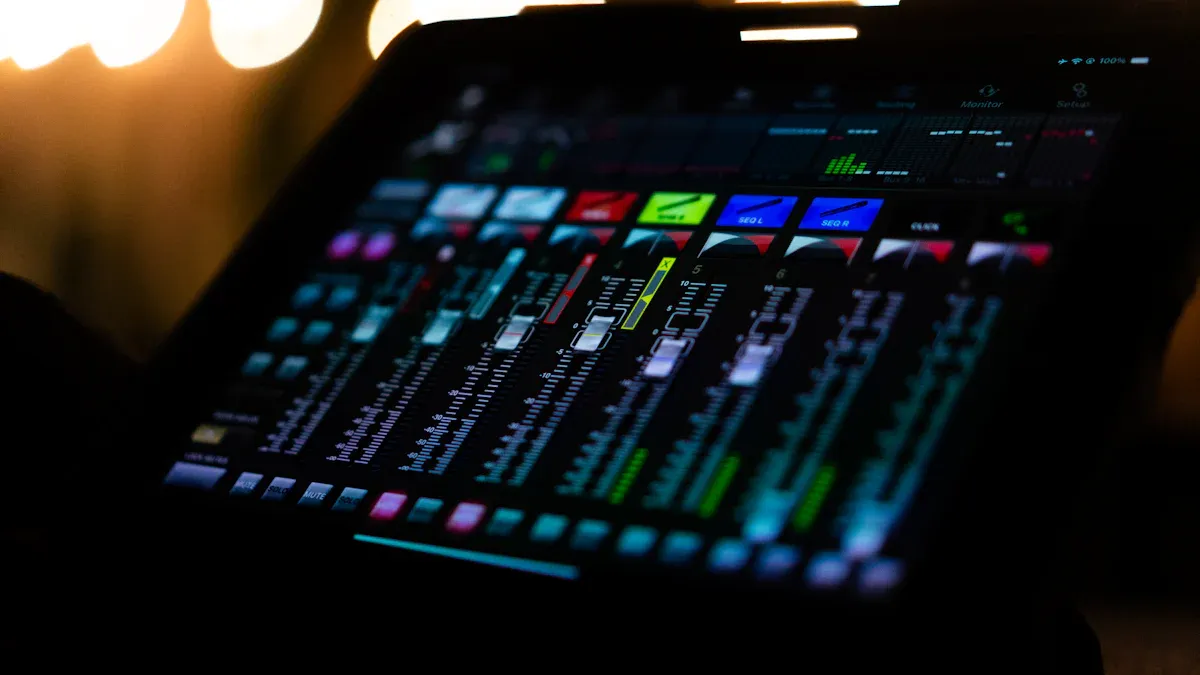
Stereo EQ changes the way sound feels by adjusting different frequencies on the left and right sides. This tool helps people shape music and audio to fit their needs. Mono EQ works with one channel, but stereo EQ works with two channels at the same time. People use stereo EQ to make music sound wider and clearer.
Stereo EQ uses several types of filters to change sound:
Peak, parametric, and bell filters help adjust specific frequency ranges.
High-pass filters remove low sounds below a certain point.
Low-pass filters remove high sounds above a certain point.
High-shelf filters boost or cut high frequencies, making treble brighter or softer.
Low-shelf filters boost or cut low frequencies, making bass stronger or lighter.
People use stereo EQ in many places. Home audio systems use it to make music sound good in a room. Guitar pedals, like the Musontek Remeowdel, let musicians change their guitar tone for live shows or recordings. Car stereos use stereo EQ to balance sound for drivers and passengers.
Tip: Stereo EQ helps people control how music sounds in different spaces and setups.
Channel Processing
Stereo EQ lets people adjust the left and right channels separately. This means each side can have its own sound. When someone changes the EQ on the left channel, it does not affect the right channel. This control helps create a balanced and interesting mix.
People often use mid/side processing with stereo EQ. The mid channel has sounds that are the same in both left and right. The side channel has sounds that are different. By changing the mid and side channels, people can make music sound wider or more focused.
The mid channel is the same in both left and right.
The side channel is different in each channel.
Adjusting these channels helps improve the stereo field.
Mid/side EQ splits the signal into mid and side channels.
People can change each channel separately.
The final sound combines both channels for a full stereo effect.
Stereo EQ works with other audio tools in a signal chain. It shapes the frequency content before or after effects like distortion or reverb. People use parametric EQ for precise control, graphic EQ for fixed bands, and shelving EQ for boosting or cutting wide ranges.
Application Type | 説明 |
|---|---|
Room Equalization | Sets EQ once for a room, helping sound fit the space. |
Speaker EQ | Makes speakers sound their best, often set inside an amplifier’s DSP. |
アスペクト | 説明 |
|---|---|
Role of EQ | Shapes the frequency content of the signal. |
機能 | Boosts or cuts certain frequency ranges. |
目的 | Balances or changes the tonal quality. |
Types of EQ | Parametric, graphic, and shelving EQ. |
Importance of Frequency | Knowing the frequency spectrum helps make good choices. |
Interaction with Effects | Effects work differently with various frequency ranges. |
Example | Boosting high frequencies before distortion makes sound harsher. |
Stereo EQ gives people the power to control sound in many ways. It helps music sound better in homes, cars, and live shows. Musicians and audio fans use stereo EQ to make their mixes stand out.
Key Features of Stereo EQ
Independent Band Control
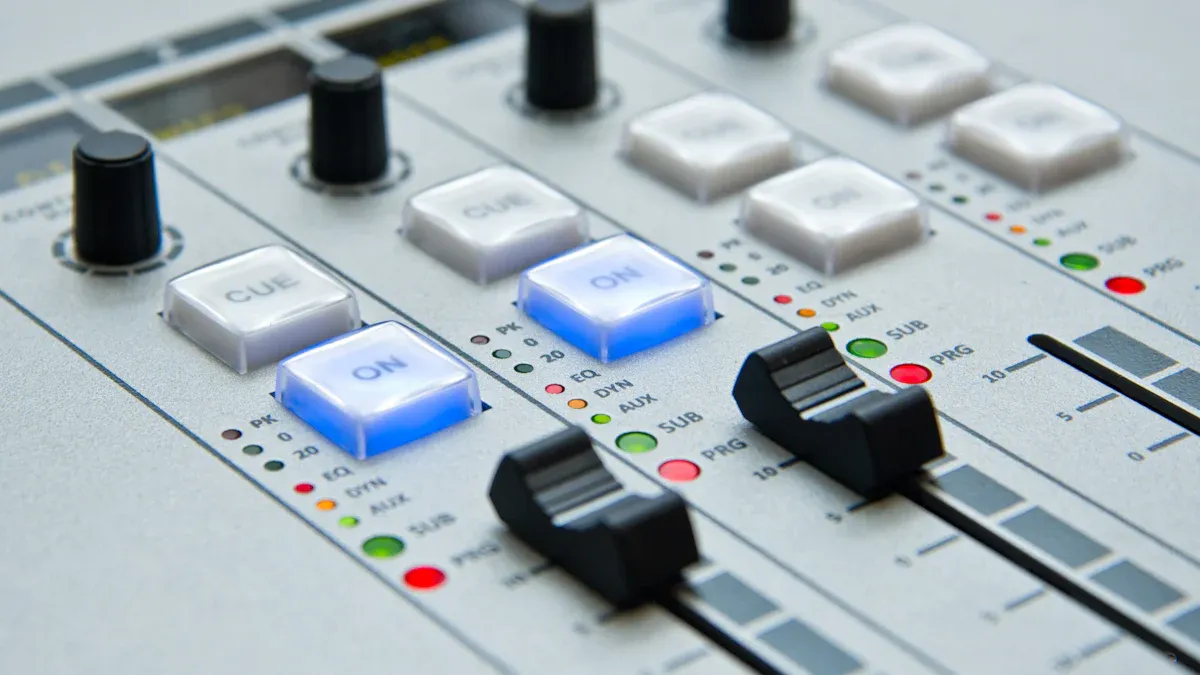
Stereo EQ lets you change certain sound ranges on each side. You can make the bass, midrange, or treble louder or softer on the left or right. Musicians and sound experts use this to make their own sound. They can adjust each side to make music clear and balanced.
The table below shows how this feature helps you change sound:
特徴 | 説明 |
|---|---|
Independent Band Control | Lets you change certain sound ranges for each side. You can make your own sound by changing each part. |
11-Band Equalization | Lets you change many sound ranges, so you can make your music sound just how you want. |
Adjustable Frequency Centers | Lets you pick the exact sound range to change. This gives you more control than some other EQs. |
Gain Controls | Lets you make each sound range louder or softer. You can make the bass or treble just right for you. |
Built-in Low-Pass Filters | Helps you control low sounds. This keeps the bass strong and clear, without extra noise. |
Linked vs Unlinked Modes
Stereo EQs have linked and unlinked modes. Linked mode changes both sides at once. This keeps the sound even and smooth. Unlinked mode lets you change each side by itself. You can make one side brighter or give the other more bass. These modes help you mix and master music in different ways.
Mono vs Stereo EQ
Mono EQ works with just one sound channel. Stereo EQ works with two channels, left and right. Stereo EQ gives you more ways to change the sound. You can make each side sound different. This makes music sound bigger and more interesting.
Many stereo EQs use graphic or parametric EQ. The table below shows what they do:
EQ Type | 機能性 | Control Features |
|---|---|---|
Graphic EQ | Changes set sound ranges. You can control certain sounds. | You can only change certain sound ranges. |
Parametric EQ | Lets you change how wide or narrow the sound range is. | You can change both the sound range and how wide it is. |
使用例 | Good for fixing sharp sound problems. | Good for fixing big sound problems. |
New stereo EQs use smart technology. Some have up to 32 bands and 15 filter types. Some copy old EQs for a classic sound. Many software EQs let you use special features for better sound. These features help you get great sound in any setup.
Tip: Picking the right stereo EQ and features can really help your music sound better.
Benefits and Uses
Sound Enhancement
Stereo EQ gives many good things to home audio. People can change the sound to fit what they like. They can make the bass deeper or the treble brighter. Music sounds better when you change the frequencies. Rock music needs strong mids and highs. Hip-hop sounds best with a lot of bass. Stereo EQ can fix sound problems from the room or furniture. Voices in movies and songs get clearer when you boost the midrange. Stereo EQ keeps sound balanced and clear at any volume. It also cuts out noise, so the audio is cleaner and more fun to hear.
Change sound for what you like
Make music fit different styles
Fix sound problems from the room
Make voices and talking clearer
Keep sound clear at any volume
Cut out harsh or muddy sounds
Mixing and Mastering
Stereo EQ is very important in music making. It helps make mixes sound wide and full. Each instrument or voice has its own space. This keeps things from getting lost or messy. By changing the stereo field, engineers make songs more fun and pro. Today, people like mixes with a wide stereo sound. This makes music sound new and exciting.
“Fantastic piece of gear, a serious gotta have for those who want pleasing 3D sound in the studio, and do remote recording where detail, high gain and low noise matter.”
Guitar players use pedals like the Musontek Remeowdel to change their sound. They boost or cut frequencies to fit their guitar in the mix. The pedal’s analog parts and true bypass keep the sound strong and clear.
Creative Applications
Sound designers use stereo EQ for cool effects. They split up sounds in a mix so it is not messy. Band-pass filters help certain instruments stand out. They also stop sounds from overlapping. Lowering the mid EQ makes far sounds louder and keeps the mix clean. The smile curve boosts bass and treble for more energy. Stereo EQ works in many music styles, like rock and jazz.
ジャンル | EQ Focus |
|---|---|
Rock & Metal | Power, clarity, and impact |
Hip-Hop & Electronic | Maximum bass extension and impact |
Classical & Jazz | Natural sound with midrange clarity |
Pop & Top 40 | Balanced approach with vocal emphasis |
Tips for Using Stereo EQ
Best Practices
Sound engineers and musicians use stereo EQ to help music sound clear and even. They listen to each track first. Then, they decide which frequencies need to be changed. They use equalizers to adjust bass, midrange, and treble. This helps each instrument and voice be heard better. Engineers also fix problems from the room or background noise. Stereo EQ helps make sure every sound has its own place in the music.
The table below gives expert advice for getting the best sound:
Recommendation | 説明 |
|---|---|
Use Equalizers | Change bass, midrange, and treble to fit your taste. |
Correct Acoustic Imbalances | Fix problems from room or car noise to make music clearer. |
Achieve Balanced Soundstage | Put each instrument and voice in its own spot in the stereo image. |
Enhance Bass Response | Set EQ for deep and strong bass notes. |
Boost Treble | Turn up treble for clear and bright high sounds. |
Tip: Always listen to your mix in different places, like headphones, speakers, and car audio. This helps you find problems and make the sound better.
Common Mistakes
Many beginners make mistakes with stereo EQ. They often turn up too many frequencies. This can make the music sound too loud or sharp. Frequency masking happens when one sound hides another. This makes the mix less clear. Using too much EQ can make the music sound fake or muddy. Sometimes, engineers do not find the real cause of muddiness. This can make the mix sound dull or too full.
Common mistakes are:
Turning up frequencies too much, making mixes harsh or boomy.
Not fixing frequency masking, which hides important sounds.
Using too much EQ, making the mix sound fake or muddy.
Cutting sounds below 100Hz can make space and reduce muddiness.
Using EQ for style instead of clarity makes tracks sound good alone but weak together.
Forgetting to use subtractive EQ to take out bad sounds before boosting others.
Not using highpass filters to clean up low sounds.
Note: Make small changes first and use subtractive EQ to fix problems before boosting. This keeps your mix sounding clean and real.
Stereo EQ changes sound by adjusting frequencies on both sides. It helps music sound clear and gives each instrument its own space. People use stereo EQ at home, in cars, and with instruments.
Stereo EQ stops sounds from covering each other.
It makes the left and right sides sound better.
EQ carving helps each instrument stand out.
These changes make music clear in any room.
Musicians can use tools like the Musontek Remeowdel. They can also try these plugins:
Plugin Name | 特徴 | ユースケース |
|---|---|---|
NSEQ-2 | Low and high shelves, mid-side mode | Makes stereo sound clear |
Amek EQ 200 | Very exact changes, mid/side | Adds space to mixes |
iZotope EQs | Clear filters | Good for mastering and headroom |
Learning about mid/side EQ and dynamic EQ helps you get better sound. Using EQ with compression can also improve your music.
よくあるご質問
What is the main difference between stereo EQ and mono EQ?
Stereo EQ works on two channels: left and right. Mono EQ only works on one channel. Stereo EQ lets users shape the sound on each side. This creates a wider and more interesting mix.
Can stereo EQ improve the sound in a car or home audio system?
Yes. Stereo EQ helps balance the sound in any space. Users can adjust bass, mid, and treble for each side. This makes music clearer and more enjoyable in cars and homes.
How does the Musontek Remeowdel pedal use stereo EQ?
The Musontek Remeowdel pedal gives guitarists control over bass, mid, and treble for each channel. Its analog design keeps the sound pure. Players can boost or cut frequencies to fit their style and mix.
Is stereo EQ only for professionals?
No. Anyone can use stereo EQ. Beginners and hobbyists can shape their sound with simple controls. Many devices, like car stereos and guitar pedals, include easy-to-use stereo EQ features.