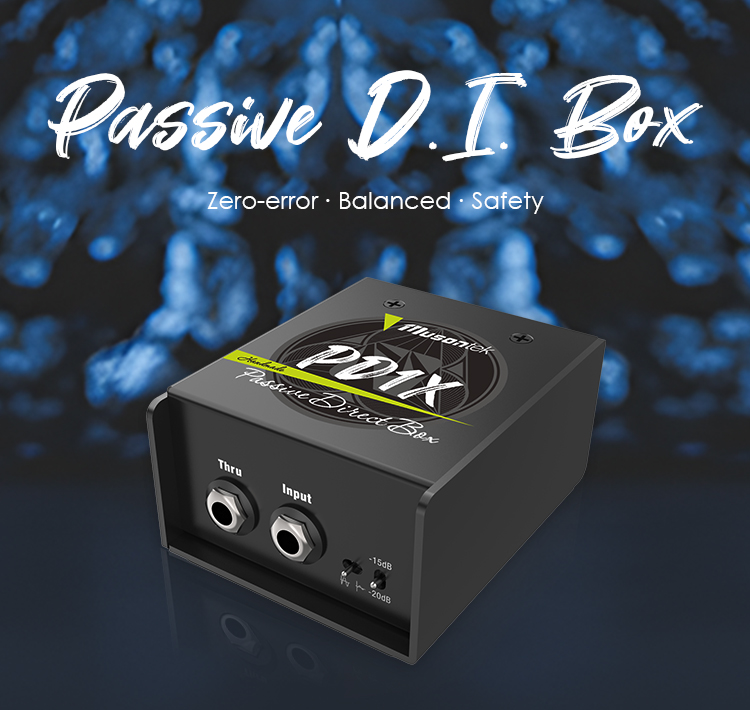
Musicians choose DI boxes based on their needs. If you’re using a passive instrument, an アクティブDIボックス like the ムソンテックAD1L offers better sound quality and signal amplification. Passive DI boxes, like the ムソンテック PD1L, are better suited for keyboards and active pickups. Most musicians use active DI boxes on stage, while passive DI boxes are popular for live performances.
| Category | Active DI Boxes | Passive DI Boxes |
| Market Growth | Rapid growth due to increased demand for quality | CAGR: 6.3% (2024-2030) |
| User Preference | Signal amplification, helps with buffering | Ease of use, cost-effective |
要点
- Active DI boxes are best suited for passive instruments. They amplify weak signals while maintaining clarity.
- Passive DI boxes are ideal for high-signal devices like keyboards and active pickups. They are easy to use and require no power source.
- Choosing the right DI box can improve sound quality and help you play better. It also makes live performances and recording easier.
Active vs. Passive DI box Quick Comparison
Key Differences
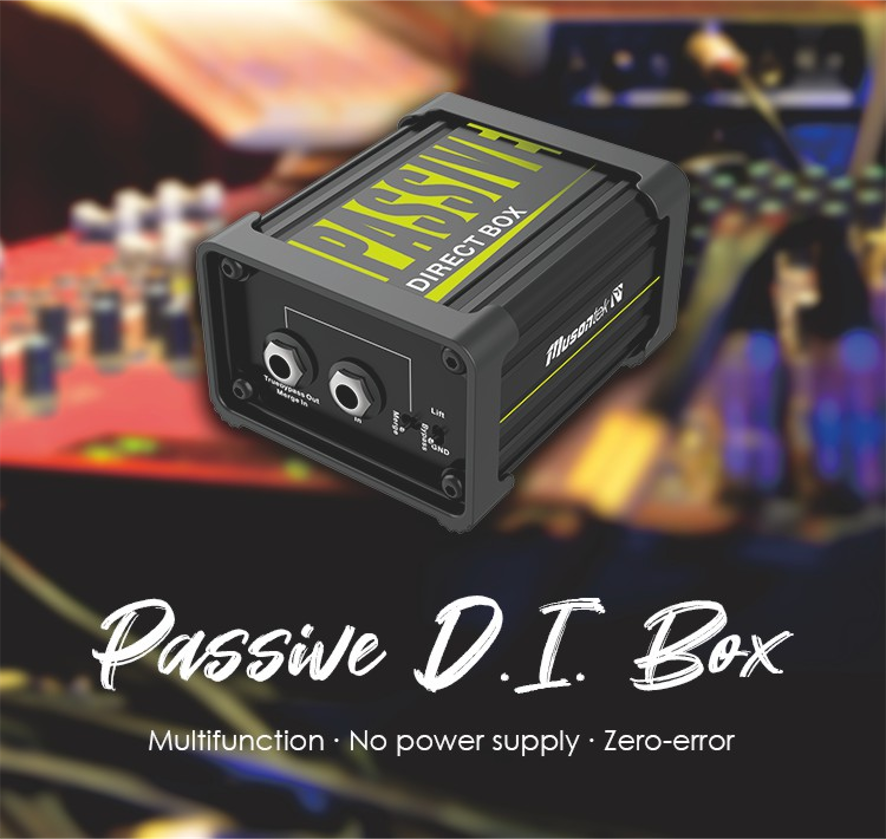
DI boxes connect instruments to mixing consoles or audio interfaces. The main difference between active and passive DI boxes lies in how they process signals. Active DI boxes use special circuitry and require a power supply to operate. Passive DI boxes, on the other hand, do not require a power supply but instead use a transformer. Here is a brief summary of their differences:
| 特徴 | Active DI Boxes (e.g., Musontek AD1L) | Passive DI Boxes (e.g., Musontek PD1L) |
| 所要電力 | Requires external power (phantom power) | No power needed |
| 入力インピーダンス | Very high (typically above 1 MΩ) | Medium (10 kΩ to 100 kΩ) |
| 信号処理 | Uses circuitry to amplify weak signals | Uses a transformer, does not amplify the signal |
| 周波数特性 | Maintains balance, low distortion | May be limited by the transformer |
| 音色の特徴 | Clear sound, minimal tonal variation | May add warmth or alter the tone |
The Musontek AD1L uses circuitry to provide a clear, strong signal. The Musontek PD1L uses a transformer, simple and stable to use.
Strengths & Weaknesses
- Active di boxes:
- Amplifies weak signals produced by passive instruments.
- Provides a flat sound and low distortion.
- Requires phantom power.
- Uses circuitry to achieve a stable sound.
- Passive di boxes:
- Requires no power supply, making setup simple.
- Suitable for strong signals generated by keyboards or active pickups.
- Simple to use, plug and play.
- Uses a transformer to convert the signal.
Note: Both the Musontek AD1L and PD1L maintain clear and accurate sound, suitable for live performances and studio work.
Active DI Box: When to Choose
Best for Passive Instruments
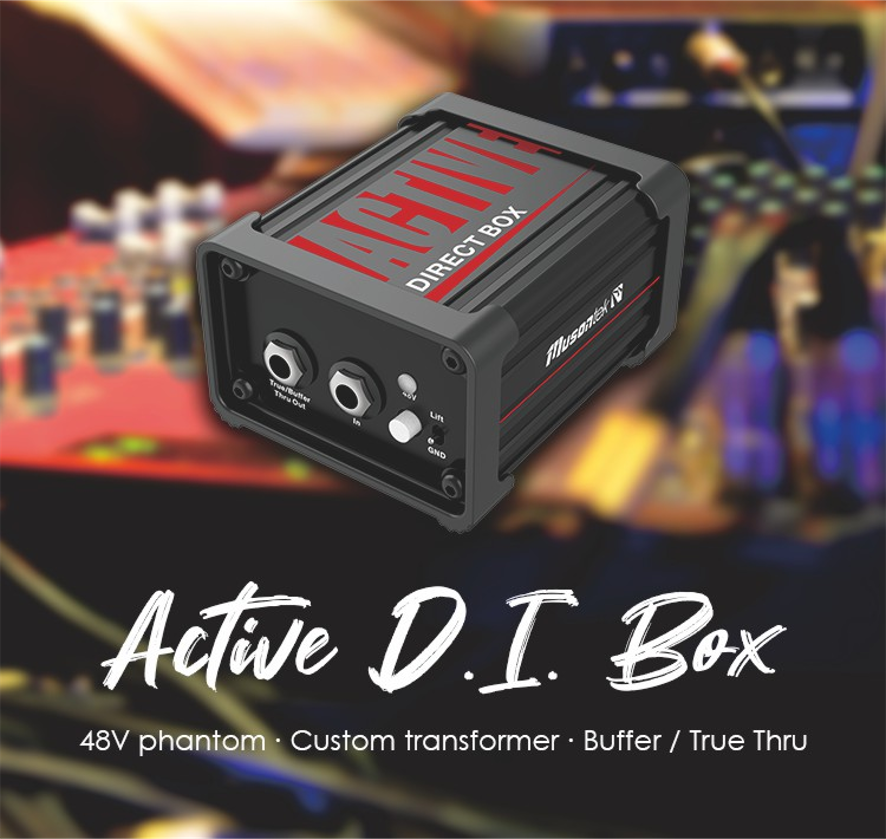
Musicians typically choose active DI boxes for passive pickups. Passive pickups are widely used on electric guitars and basses. These pickups lack an internal preamplifier, producing a weak signal that needs boosting. Active DI boxes like the Musontek AD1L can boost the signal while maintaining the clarity and realism of the instrument’s tone.
- Active DI boxes are ideal for passive guitars and basses.
- They provide a clean sound and maintain tone consistency.
- Many experts recommend using an active DI box with an input impedance of at least 500kΩ for classic passive basses like the Fender Precision.
The Musontek AD1L uses special circuitry and Class A buffers to help maintain the purity of the instrument’s tone and avoid distortion. Musicians who want to maintain tonal clarity often pair active DI boxes with passive instruments.
Studio & Live Use Cases
Active DI boxes are essential in both studio and live performances. They require power to operate, and the power source may vary. Most professional equipment uses 48-volt phantom power via XLR cables. Some active DI boxes can also be powered by 9-volt batteries or adapters. This makes them very practical in many situations.
- Active DI boxes require power for their circuitry.
- Common power sources include:
- 48-volt phantom power
- 9-volt batteries
- External adapters
Sound quality is a major reason for choosing active DI boxes. In studio testing, active DI boxes deliver a clean signal with virtually no added coloration. This is crucial for high-precision digital recording.
| Type of DI Box | Sound Quality Characteristics |
|---|---|
| アクティブ | Clean, clear sound with almost no added coloration, ideal for digital recording. |
| パッシブ | Natural sound with a touch of warmth from the transformer, adding depth. |
Professional studios use active DI boxes for recording bass to achieve a more focused sound. Engineers sometimes mix direct signals with microphone signals to achieve both amplifier sound and DI box impact simultaneously. This helps create excellent recordings.
Active DI boxes are also ideal for live performances. They convert instrument signals to balanced lines, speeding up setup and reducing cabling. Active DI boxes work even better with wireless systems, as they allow performers freedom of movement and playing. Noisy stages can generate noise, but active DI boxes can maintain signal strength through phantom power. Musicians can distribute the signal to stage monitors without adding extra noise, making active DI boxes ideal for busy performances.
| Scenario | Advantage of Active DI Boxes |
| Large-scale tours | Converts signals to balanced lines, speeding up setup and reducing cabling. |
| Wireless setups | Aids performers to move easily via Bluetooth or UHF connectivity, ideal for high-volume performances. |
| High stage volumes | Cancels noise and maintains signal strength through phantom power. |
| Parallel routing | Allows musicians to distribute signals to monitors without using high-volume microphones, reducing noise. |
The Musontek AD1L excels in these situations. Its robust construction and wide signal range make it ideal for both studio and stage use. Musicians and engineers rely on active DI boxes for a stable sound, wherever they play or record.
Passive DI Box: Best Uses

Ideal for Active Pickups
Musicians and sound engineers often choose passive DI boxes to connect keyboards, active pickups, and line-level sources. These instruments generate strong signals on their own, requiring no external power. The Musontek PD1L DI box receives these signals and converts them to balanced outputs for connection to mixing consoles and recording equipment. This helps maintain sound purity and eliminates unwanted noise.
Passive DI boxes separate input and output signals, thus avoiding ground loops and noise. They require no power, making them easy to use and suitable for a wide range of audio setups, especially keyboards and line-level sources.
Passive DI boxes are ideal for live performances. They allow guitars, keyboards, and effects pedals to connect directly to PA systems. Bass can be plugged in directly, which is very practical because bass is difficult to record with a microphone. Musicians also use passive DI boxes to sample signals from amplifiers or stereo systems.
Versatility & Simplicity
The Musontek PD1L DI box is easy to use. No batteries or external power supply are required. Simply plug in your instrument and play. This makes passive DI boxes ideal for both studio and stage performances.
- It converts unbalanced high-impedance signals to balanced low-impedance microphone-level signals, suitable for professional audio systems.
- It features a pass-through interface for monitoring and sending signals to mixing consoles.
- It uses a grounding switch to reduce hum and noise in live performances and studio setups.
- It provides clean, stable output for instruments in recordings and live performances.
The passive DI box is a versatile and reliable tool. It is compatible with a wide range of devices and maintains signal strength over long distances.
Active vs. Passive DI box Pros & Cons
Active Direct Box Pros & Cons
Active DI boxes help musicians and sound engineers in many ways. They can amplify weak signals and maintain clarity. Many people appreciate its versatility for different setups. You can use it as either passive or active, making it very flexible. Attenuation helps control excessive volume. This tool is reasonably priced, making it popular with many.
Tip: Active DI boxes work exceptionally well with passive pickups. They help prevent signal loss from long cables.
Pros:
- Can be passive or active
- Pad helps with loud sounds
- Good price
Cons:
- None
Musicians frequently use active DI boxes in recording studios and live performances. It works with a wide range of instruments and maintains the realism of the sound.
Passive Direct Box Pros & Cons
Passive DI boxes are easy to use. They require no power supply, so setup is quick. Many people trust them because of their excellent performance. They work with keyboards, active pickups, and line-level sources. Built-in transformers help reduce noise and hum. Some people find they add warmth to the sound.
- Plug and play
- No batteries or phantom power required
- Works with strong signals and long cables
- Can add a slightly warmer sound
Passive DI boxes are versatile. They provide a clean signal, allowing musicians to focus on playing.
Active vs. Passive DI box Price & Value
Cost Comparison
Price is a significant factor when choosing a DI box. Passive DI boxes are generally cheaper than active DI boxes. Basic passive DI boxes start at around $40. If you need more features, you may need to pay up to $130. The best passive DI boxes cost over $130 and are of top quality.
Active DI boxes are more expensive because they contain additional components and require a power supply. Musontek’s products in both types are reasonably priced. The Musontek AD1L active DI box is priced roughly the same as the On-Stage DB1000 ($85.99) and Radial Pro48 ($129.99). Some brands, such as LR Baggs and Rupert Neve, charge significantly more for their active DI boxes.
| Brand/Model | タイプ | 価格帯 |
| Musontek Active D.I. Box-AD1L | アクティブ | Good price |
| LR Baggs Venue DI Acoustic Guitar Preamp | アクティブ | $329.99 |
| On-Stage DB1000 Active DI Box | アクティブ | $85.99 |
| Radial Pro48 Active Direct Box | アクティブ | $129.99 |
| Rupert Neve Designs RNDI Active Transformer | アクティブ | $199.00–$399.00 |
| On-Stage DB1050 Passive Multimedia DI Box | パッシブ | $107.99 |
| On-Stage DB2150 Passive USB DI Box | パッシブ | $134.99 |
| Sescom SES-DIPRO Studio-Quality Passive Direct Box | パッシブ | $153.95 |
Note: Musontek allows musicians to achieve professional sound quality without spending too much.
Long-Term Value
DI boxes should be durable. Musicians and recording engineers want their equipment to work perfectly every time. Passive DI boxes have a simple design with fewer parts, making them robust, durable, and easy to use. Many people use the same passive DI box for years.
Active DI boxes offer more features and superior sound quality on certain instruments. They perform exceptionally well in the studio and at concerts. Musontek manufactures robust DI boxes that deliver clear sound. A high-quality DI box can save you money because you won’t need frequent repairs or replacements.
Musicians who purchase high-quality DI boxes like those from Musontek get excellent value for their money. They not only get better sound quality but also fewer breakdowns during performances or recordings.DI box Final Recommendation
Decision Guide
Musicians and recording engineers must choose between active and passive DI boxes. The best choice depends on the instrument you use and the performance venue. You also need to consider how much you can trust your equipment. Experts say active DI boxes are suitable for bass, keyboard, and acoustic guitar amps. These DI boxes offer balanced XLR outputs, which help reduce noise. Passive DI boxes are better suited for line-level signal sources and strong signals. They are robust and durable, functioning well even in noisy environments.
Modern equipment can present some connectivity issues. Here are some of the most common problems:
- Ground loops and humming can occur when equipment uses different power supplies. DI boxes with ground switches can solve this problem.
- Impedance mismatch occurs when the guitar and DI box are not impedance matched. This degrades sound quality. Choosing a suitable DI box and using a guitar preamp can improve this.
- Signal distortion can come from poor-quality cables or incorrect gain settings. Adjusting the gain and checking the cables can improve sound quality.
The playing environment is also important. Passive DI boxes are well-suited for use in environments with high electrical noise. Their transformers protect the signal. They also withstand high temperatures and vibrations well. Active DI boxes may require more care in harsh environments.
Tip: Musontek offers both active and passive DI boxes. This makes it easy to find the right DI box for your equipment.
Quick Reference Table
| Instrument/Source | Recommended DI Box | Key Features/Benefits |
| Bass | アクティブ | Balanced Output, High-Quality Transformer |
| Keyboard | アクティブ | Ground Switch, Noise Reduction |
| Acoustic Amp | アクティブ | Clean Conversion, Eliminates Hum |
| Line-level Source | パッシブ | Rugged and Durable, Handles Strong Signals |
| Noisy Environment | パッシブ | Transformer Isolation, Reliable Performance |
| Weak Signal | アクティブ | More Flexible, Signal Enhancement |
Musicians can use this table to choose the best DI box. The right choice will result in a clear sound and a smoother performance.
- Active DI boxes are best suited for passive guitars and basses.
- Passive DI boxes are suitable for keyboards and active pickups.
- Musicians need to choose the appropriate DI box based on their instrument and budget.
Musontek manufactures both active and passive DI boxes, offering reliable quality. Choosing the right DI box will allow your music to achieve better sound quality in live performances and recordings.