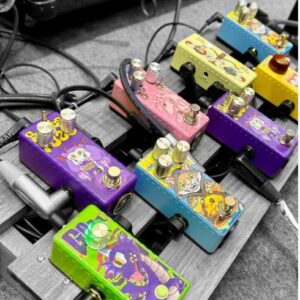
What is an オーディオ・アイソレーター? It is a device capable of preventing unwanted electrical noise from entering an audio signal. With this tool, users can enjoy clear, high-fidelity sound. The working principle of an audio isolator involves electrically isolating the audio signal from interference originating from other electronic devices.
要点
- Audio isolators eliminate excess noise, thereby enhancing sound clarity in many audio systems.
- Choosing the right audio isolator is key; it requires identifying the source of the noise and selecting the specific type of isolator best suited to address it.
- Audio isolators come in a wide variety of types, broadly categorized into two main groups: Passive and Active. Each type is designed to meet specific requirements and is widely utilized in both home audio systems and professional audio equipment.
- Audio isolators also serve to protect equipment from damage caused by electrical faults, thereby ensuring a superior listening experience for you.
- Installing an audio isolator is remarkably simple. Most isolators require nothing more than a direct connection (plug-in) to the audio cables, with no need for any specialized tools.
What Is an Audio Isolator? Purpose and Function
Core Function
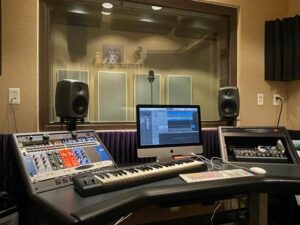
What exactly is an audio isolator? It is a device designed to electrically isolate audio circuits from one another, aiming to prevent unwanted noise from infiltrating the signal transmission path. According to industry standards, an audio isolator—sometimes referred to as an “isolation amplifier”—is a specialized tool used to eliminate noise generated by “ground loops” during the audio transmission process. By electrically separating circuits, the isolator ensures the purity of the audio signal while simultaneously allowing the sound signal to pass through unimpeded.
In the field of audio engineering, audio isolators serve a multifaceted role:
- They eliminate excess noise within audio systems, making music and vocals sound clearer and more pleasing to the ear.
- They resolve ground loop issues—the root cause of annoying “humming” or “hissing” sounds in audio—by effectively breaking the electrical pathways responsible for generating such noise.
- They provide protection for loudspeakers and amplifiers, shielding users from the distraction of intrusive noise while they enjoy music and movies.
The table below outlines the primary functions of an audio isolator:
| Core Function | 説明 |
| Blocking unwanted reflections | Stops signals from getting worse and keeps audio clear. |
| Maintaining clear and stable audio signals | Makes sure audio signals move without interference. |
| Protecting equipment from damage | Keeps devices safe from harm caused by signal surges and reflections. |
| Ensuring proper operation in various systems | Helps audio systems work well in different setups and places. |
Types of Audio Isolators
Audio isolators come in different types. Each type is made for certain needs in consumer and professional audio systems. What-is-an-audio-isolator? It can be passive or active, depending on how it is used.
- パッシブ・アイソレーター: These are simple and dependable. They are good for home studios and live sound setups.
- アクティブ・アイソレーター: These are more advanced. They are often used in big installations. They help stop signal loss and keep signals strong.
- Ground Loop Isolators: These devices remove ground loop noise. They do this by separating the ground path in signal cables. Their job is not the same as other isolators, which may not fix ground loop problems.
- Differential Signal Isolators: These block common-mode noise. They work well in professional setups like mixers and DI boxes.
- Stereo Line Isolators: These keep signals pure and fix grounding problems in both professional and commercial places.
- オーディオ・トランス: These are small, passive parts used for galvanic isolation in audio lines.
Tip: Ground loop isolators are great for stopping hums and buzzes in audio systems. They separate the ground path, which is often where noise comes from.
Each type of audio isolator plays a unique role in ensuring the purity of audio signals and safeguarding equipment integrity. Ultimately, the choice of which type of isolator to use depends on the specific requirements and configuration of the particular audio system in question.
How Audio Isolators Eliminate Noise and Improve Sound
Signal Isolation Methods
Audio isolators employ specialized techniques to preserve the purity of audio signals. They isolate the signal from electrical noise, which may originate from other devices or connecting cables. The use of transformers is a common method for achieving this objective. Transformers are capable of breaking unwanted electrical connections, thereby eliminating “ground loop” issues. Ground loops often manifest as humming or low-frequency buzzing within an audio system. Electromagnetic transformers transmit the audio signal while simultaneously blocking the passage of noise, ensuring that harmful currents do not flow into the audio equipment.
Optical isolators operate based on a different principle. They utilize miniature LEDs to convert incoming electrical signals into light signals; subsequently, a light sensor converts the received light signals back into electrical signals. This process effectively blocks harmful currents from reaching the output side. These isolation technologies help suppress interference and provide protection for sensitive audio equipment.
The table below outlines the primary operating principles of audio isolators:
| Method | 説明 |
| 絶縁トランス | Break bad electrical links to stop ground loops that make noise in audio systems. |
| Electromagnetic Transformers | Send audio signals but block noise, so bad currents do not reach the equipment. |
| Optoisolators | Change electrical signals to light and back, keeping bad currents away. |
Note: These isolation ways help stop voltage changes and lower electromagnetic interference. They also keep equipment safe from voltage spikes.
Key Components
High-quality audio isolators typically incorporate several key components to ensure efficient operation. Isolation transformers utilize magnetic fields to transmit signals; this not only preserves the signal’s strength and clarity but also effectively breaks ground loops. The magnetic core within the transformer is responsible for generating the magnetic field, and it also influences the device’s frequency response characteristics and its ability to handle distortion.
Shielding is another critical component. It blocks electromagnetic noise from the external environment, preventing unwanted interference signals from infiltrating the system. The input/output circuitry is responsible for signal shaping and impedance matching, thereby ensuring the stability of the audio signal transmission.
The table below lists the key components of an audio isolator and their respective functions:
| コンポーネント | 機能 | 信号への影響 |
| 絶縁トランス | Moves signal with magnetism | Keeps signal clear and breaks ground link |
| コア材 | Makes magnetic field | Changes how the device handles sound and distortion |
| シールド | Blocks outside noise | Stops extra noise from getting in |
| 入出力回路 | Shapes the signal | Keeps impedance right |
Some audio isolators incorporate specialized materials to suppress mechanical vibrations. These materials convert vibrational energy into thermal energy for dissipation, thereby effectively lowering noise levels and rendering the sound purer and clearer. Accessories such as isolation platforms and anti-vibration spikes can also help users capture the subtle details and layers within the music, thereby enhancing the overall listening experience.
What is an audio isolator? It is a device that utilizes specific methods and components to ensure the purity of an audio signal, keeping it free from noise interference.
Audio Isolators: Impact on Sound Quality
Benefits for Audio Clarity
Audio isolators help enhance the sound quality of both music and vocals. They are capable of eliminating noise such as low-frequency hums and high-frequency buzzes, allowing listeners to perceive greater detail within the audio. With the use of isolators, sound becomes more powerful and dynamic. For instance, a piano performance—such as one by Lang Lang—will sound more lifelike and expansive; bass frequencies become more distinct, while treble frequencies sound purer.
The following represent some of the most significant improvements in sound quality:
- Speaker vibration amplitude in the mid-range frequency spectrum is reduced by approximately 25dB.
- The sound becomes more vivid and lifelike.
- Both bass and treble frequencies become easier to discern.
The table below illustrates the specific benefits of audio isolators across various application scenarios:
| Benefit Description | オーディオの明瞭度への影響 |
| Cuts down mechanical interference | Keeps details and clarity when playing music |
| Makes furniture more stable | Lowers vibrations that can hide good sound |
| Makes listening rooms sound better | Stops energy loss, keeps sound clear |
| Needed in studios | Keeps sound right for careful listening |
| Fixes hard sound problems | Gives a cheap fix for floor shakes or uneven bass |
| Works with room acoustics | Stops vibrations at the source, makes sound better overall |
Potential Drawbacks
Audio isolators are not a panacea; they cannot resolve every audio-related issue and do possess certain limitations. The table below outlines these potential drawbacks:
| 制限 | 説明 |
| Effectiveness | Only works for some kinds of noise |
| Changes in audio fidelity | Might change how music sounds, making it less full |
| Compatibility issues | May not fit all audio gear, so users need to check their system |
Choosing the Right Isolator
Picking the best isolator depends on the noise and the system. People should follow these steps:
- Find where the noise comes from, like ground loop hum or radio interference.
- Match the isolator type to the signal path, picking transformer, active, or capacitive models.
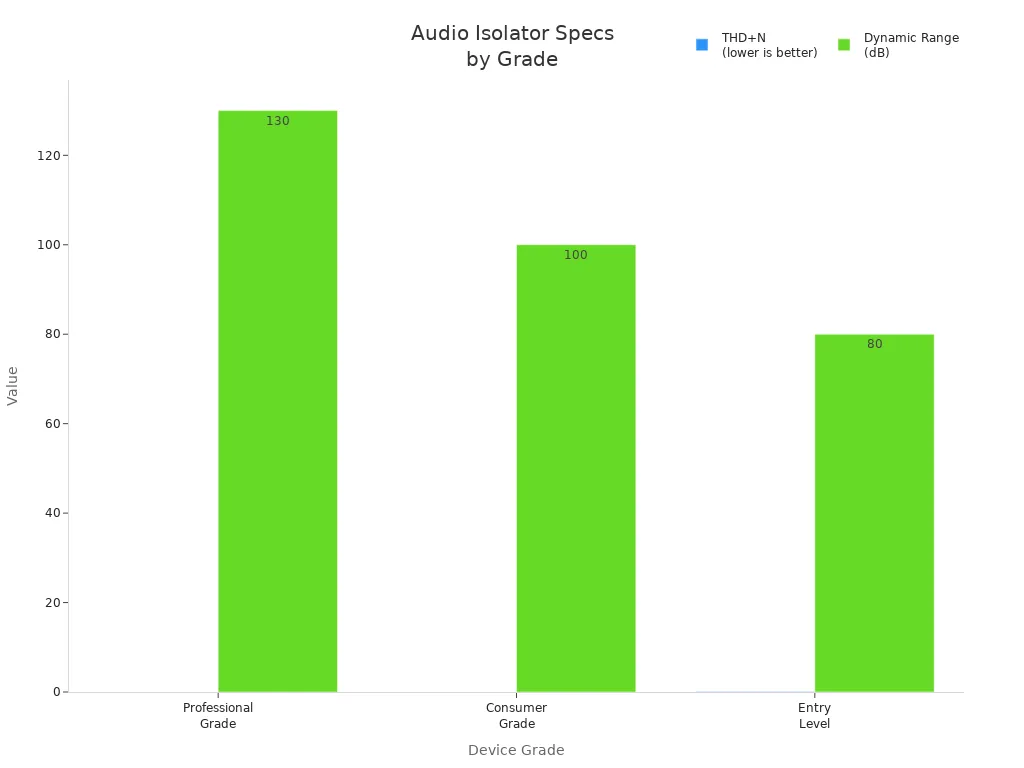
- Check important specs like Common-Mode Rejection Ratio (CMRR), frequency response, max input level, input/output impedance, and THD+N.
What-is-an-audio-isolator? It is a device that makes sound better by lowering noise and keeping signals safe. Picking the right isolator helps you get clear and true sound anywhere.
Audio Isolators: Uses and Costs
When to Use an Audio Isolator
Audio isolators are important in many sound systems. People use them when speakers make hum or buzz sounds. These devices help when gear plugs into different outlets. Studio monitors need protection from electrical problems. Audio isolators are good for quick fixes at live shows or recording.
Scenario Description:
- Hum or buzzing is present in the audio system.
- Multiple devices are connected to different power outlets.
- Sensitive equipment requires protection from electrical faults.
- Quick fixes are necessary for live sound or recording.
Common Applications
Audio isolators have a wide range of applications. Home theater systems require them to eliminate noise generated by televisions or game consoles. Recording studios utilize isolators to ensure pristine sound quality during the mixing process. Live sound engineers employ them on stage to prevent interference. Car audio systems use isolators to shield against engine noise. In classrooms and conference rooms, isolators help ensure that speech remains clearly audible.
Musontek is an innovative brand within the audio industry. Its products—such as the ISO2C—incorporate studio-grade isolation transformers. They support a wide variety of connector types. Musontek collaborates closely with audio engineers, dedicating itself to creating professional tools that meet real-world operational demands. The company places a strong emphasis on product reliability and cost-effectiveness, making its isolators a smart choice for both professionals and audiophiles alike.
Cost Factors
The price of an audio isolator depends on many things. Materials like metal, wood, and composites change how well they work and last. Metal blocks sound well and lasts long, so it is good for noisy places. Wood looks nice and blocks sound, so studios use it. Composite materials mix metal and polymers, making isolators light and strong. New material technology keeps improving isolators and lowers costs. Better designs and advanced parts give users clear sound without spending too much.
Audio isolators are important for keeping sound systems clear. They stop unwanted noise from getting in. These devices break ground loops. This means they cut the ground in the signal cable to stop noise. They also help music and voices stay clear by blocking feeble currents. Audio isolators protect equipment from electrical problems. The table below shows what they do:
| 機能 | 説明 |
| Breaking ground loops | Cuts the ground in the cable to stop noise. |
| Maintaining sound clarity | Blocks bad currents so music and voices stay clear. |
| Protecting equipment | Guards against electrical problems. |
“Sound-isolating devices fix noise problems before they happen. This keeps audio quality good.”
Picking the right isolator helps you get the best sound.
よくあるご質問
What does an audio isolator do?
The function of an audio isolator is to prevent noise from entering an audio system, thereby ensuring that the audio signal remains pure and clear. It achieves this by electrically isolating circuits from one another, helping listeners enjoy a superior listening experience for both music and vocals.
When should I use an audio isolator?
You should use an audio isolator whenever you hear noise—such as humming or electrical buzzing—coming from your audio system. These devices are widely used in home theaters, recording studios, live performance venues, and car audio systems to quickly and effectively resolve noise interference issues.
Is it easy to install an audio isolator?
Most audio isolators can be connected directly to your audio cables. Users simply need to insert the isolator in-line between different audio devices; no special tools are required, and the entire installation process takes just a few minutes to complete.
Does an audio isolator affect sound quality?
Audio isolators enhance sound clarity by eliminating noise. High-quality audio isolators preserve the strength and fidelity of the audio signal; however, some inexpensive isolators may have a minor impact on sound quality.
How much does an audio isolator cost?
The price of an audio isolator varies depending on its materials and features. Basic models typically cost under $20, while professional-grade isolators featuring higher-quality components may cost upwards of $100.