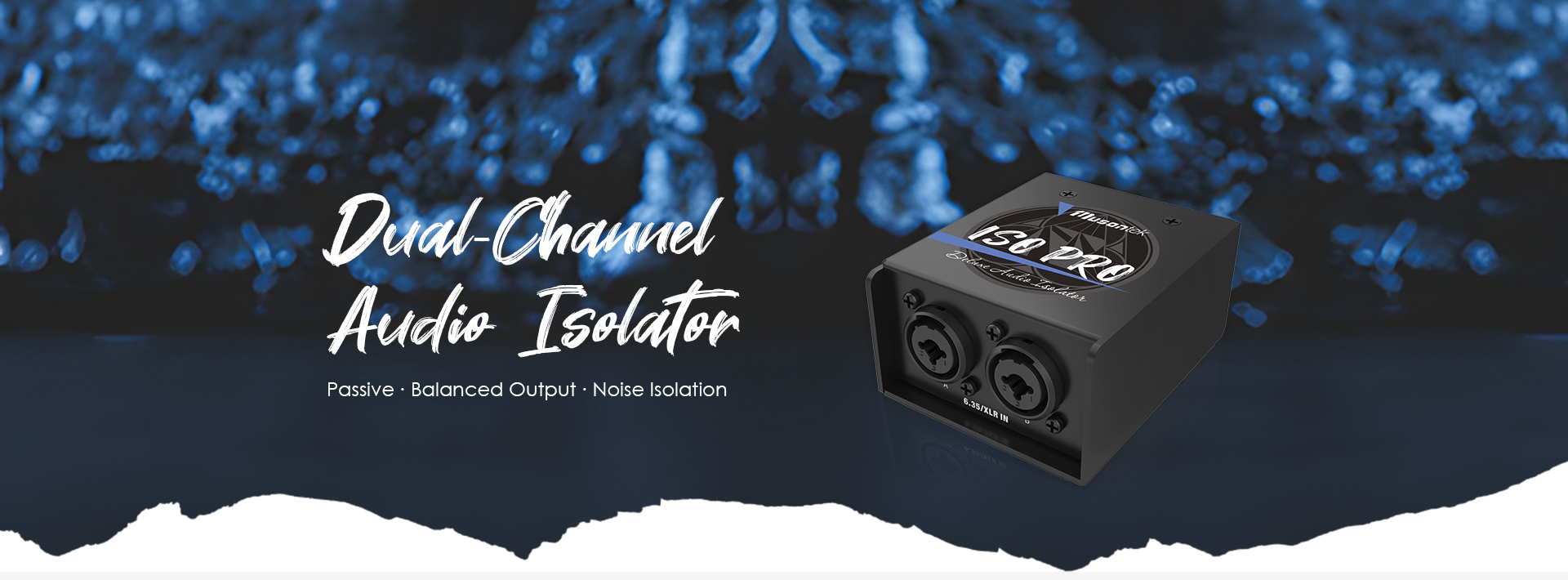
Ground loop isolators can eliminate hum and noise in audio systems, thereby enhancing the comfort and enjoyment of the listening experience. Many audio experts note that ground loop isolators are effective at suppressing hum while preserving sound quality as close to its original state as possible. While some listeners may perceive a slight attenuation in low-frequency volume, most consider this level of attenuation to be acceptable. Eliminating noise helps listeners discern audio details more clearly and simultaneously reduces the auditory fatigue often associated with prolonged listening sessions.
要点
- Ground loop isolators help eliminate annoying hum and noise, making the music listening experience much more enjoyable.
- Choosing a high-quality isolator —such as the ムソンテックISO2C— delivers cleaner sound and prevents audio quality from being compromised or degraded.
- It is crucial to install the isolator correctly: it should be connected in series within the audio signal path and placed as close as possible to the device generating the noise to achieve optimal noise reduction results.
- It is recommended to select an isolator equipped with high-performance transformers and a high Common Mode Rejection Ratio (CMRR). If your audio system exhibits a persistent hum that does not vary with volume adjustments, a ground loop isolator is an effective solution for resolving this specific type of noise.
What Are Ground Loop Isolators?
Ground Loop Noise Explained
Ground loop noise is a common and often vexing issue in audio systems. This noise occurs when different audio devices are connected to different power outlets or operate at different ground potentials. This potential difference creates a “loop” between the devices, allowing unwanted electrical currents to flow through it. This loop typically manifests as a persistent hum (usually at a frequency of 60Hz) or generates other types of strange electrical noise. Such noise can severely interfere with the clarity of music or vocals, making the audio content difficult to discern. Listeners frequently encounter this type of noise in home theater setups, car audio systems, and professional sound reinforcement equipment. Ground loop noise can even make speakers with otherwise excellent sound quality sound terrible.
ヒント If you hear buzzing or humming that stays when you change the volume, ground loop noise might be causing it.
グラウンド・ループ・アイソレータの仕組み
Ground loop isolators are designed specifically to resolve this issue. They are connected in series between the audio source and the amplifier or speakers. Their core function is to sever the unnecessary electrical connection path that causes ground loop noise. They achieve this using built-in “isolation transformers.” These transformers transmit audio signals via magnetic fields rather than through direct electrical connections via wires. This method of transmission ensures that the audio signal flows smoothly between devices while effectively blocking the unwanted currents that generate noise.
The table below outlines the key functions of a グランドループアイソレーション:
| 機能性 | 説明 |
|---|---|
| Isolation | Keeps input and output circuits apart to stop unwanted electrical links. |
| Signal Quality | Makes sure the audio signal stays clear and strong. |
| Noise Prevention | Stops ground loop noise from getting to speakers or amplifiers. |
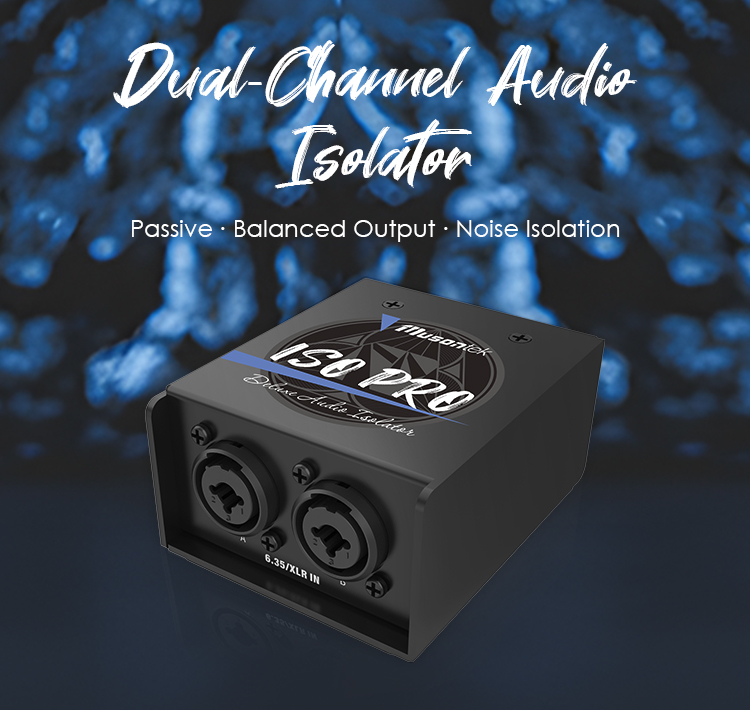
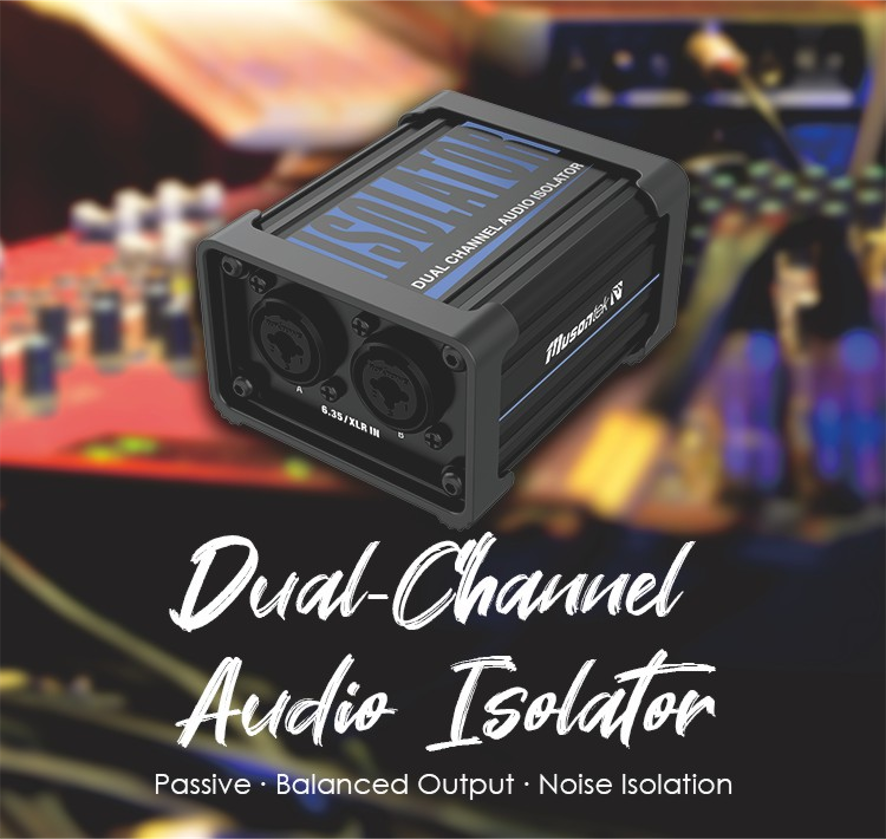
Most ground loop isolators are easy to use; users simply need to connect them using RCA, 3.5mm, or XLR cables. Some models (such as the Musontek ISO2C) feature a dual-channel design, making them ideal for stereo systems or dual-microphone setups. The Musontek ISO2C is compatible with both balanced and unbalanced signals and requires no external power supply; it offers a simple “plug-and-play” experience, allowing the device to begin working immediately.
Ground loop isolators also help protect audio equipment from damage caused by electrical faults. Such devices are particularly crucial in environments where audio quality is paramount—such as recording studios, theaters, and car audio systems. By eliminating ground loop noise, these devices enable users to enjoy a pure, crystal-clear audio experience.
Ground Loop Isolators and Sound Quality
Benefits for Audio Quality
Ground loop isolators help enhance audio quality. They work by eliminating noise caused by ground loops. This noise typically manifests as a low-pitched “hum” or “hiss.” When you use a ground loop isolator, it blocks unwanted current paths, thereby effectively eliminating this noise. This allows listeners to perceive music and spoken content with greater clarity, making it easier to discern the quiet, subtle nuances within a song.
High-quality ground loop isolators—such as the Musontek ISO2C—typically employ high-performance transformer designs to ensure the purity of the audio signal. Far from degrading audio quality, these devices actually help restore the original sound exactly as the artist intended. In practical testing, superior ground loop isolators can completely eliminate annoying “humming” and “hissing” sounds; they utilize electromagnetic transformers to transmit audio signals, thereby effectively blocking and preventing the passage of harmful currents.
The table below outlines the specific improvements in audio quality provided by ground loop isolators:
| Improvement Type | 説明 |
|---|---|
| ノイズ・リダクション | Gets rid of ground loop hum, which is a low buzzing noise. |
| Improved Signal Clarity | Makes audio cleaner and helps you hear more details. |
| Reduced Distortion | Cleaner signals stop clipping and distortion, keeping sound good. |
| シグナル・インテグリティ | Keeps the original sound shape for better and true audio. |
Note: Using a ground loop isolator to eliminate noise can make your listening experience significantly more relaxed and enjoyable.
Possible Drawbacks and Distortion
Although ground loop isolators are designed to eliminate noise, certain products may actually compromise audio quality. Low-quality ground loop isolators can negatively alter sonic characteristics—specifically by attenuating low-frequency (bass) output, causing the sound to become muddy or indistinct, or even introducing new forms of distortion. Some isolators may reduce audio fidelity—particularly when processing extremely high or low frequencies—primarily due to the operational principles of their internal transformers. Problems that may arise from using inferior isolators include:
- Restricted signal flow, resulting in the truncation or loss of certain audio details.
- Signal attenuation in the high or low-frequency bands, thereby compromising overall sound quality.
- Degradation of sound quality caused by signal waveform distortion.
- Inability to effectively process low-frequency or DC signals, which subsequently has a negative impact on audio performance.
- Unsuitability for high-fidelity (Hi-Fi) audio systems, leading to significantly diminished playback quality for music or film soundtracks.
- Design flaws that necessitate the addition of external filtering circuits—supplementary components which themselves may inflict secondary damage upon the sound quality.
Relevant test results indicate that the use of inferior ground loop isolators frequently leads to increased audio distortion, resulting in a comprehensive decline in sound quality. For instance, utilizing a substandard isolator may cause the Total Harmonic Distortion (THD) to skyrocket from 0.00227% to 0.125%. Similarly, harmonic levels at frequencies of 2 kHz and 3 kHz may rise from -90 dBV to -52 dBV. This degradation causes the music to lose its richness and clarity. These issues clearly demonstrate why selecting a high-quality ground loop noise isolator is absolutely critical.
Factors Affecting Sound Quality
Numerous factors determine the extent to which a ground loop isolator impacts sound quality. The most critical of these is the quality of the transformer. A high-quality transformer is more effective at blocking noise while inflicting minimal damage to the audio signal. Impedance matching is equally vital; if the isolator is properly impedance-matched with the audio system, it will not alter the original character of the sound nor result in signal loss. The Common Mode Rejection Ratio (CMR) is another metric that cannot be overlooked. A high CMR value—typically exceeding 80 dB—ensures that the audio remains clear and pure, even when operating in a noise-laden environment.
The build quality of the product is also of great importance. A well-constructed ground loop noise isolator is not only durable but also consistently preserves the purity of the audio signal. The Musontek ISO2C features studio-grade transformers and robust, durable components, enabling it to effectively preserve audio clarity and prevent sound quality degradation caused by equipment deficiencies.
The table below lists the key factors that influence sound quality during the ground loop isolation process:
| ファクター | 説明 |
|---|---|
| Transformer Quality | Good transformers block noise well and keep sound clear. |
| インピーダンス・マッチング | Good matching stops signal loss and distortion for best sound. |
| Common-Mode Rejection | High CMR (>80 dB) is needed in noisy places to keep sound clear. |
| ビルド・クオリティ | Strong isolators last longer and work better for good sound. |
ヒント Always pick a good ground loop noise isolator with strong transformers and good impedance matching. This helps you avoid products that hurt sound quality.
Choosing and Using a Ground Loop Isolator
アイソレーターの使用時期
If your audio system is plagued by a persistent hum or electrical buzzing, we recommend using a ground loop isolator. This type of noise does not disappear—nor does it change in intensity—as you increase or decrease the volume. It can occur in various setups, including home theater systems, car audio systems, or professional audio rigs. If the noise vanishes immediately after connecting all your equipment to a single power outlet, a “ground loop” is most likely the culprit. A ground loop isolator effectively eliminates this type of noise and helps protect your equipment from potential electrical faults.
Selecting for Best Audio Quality
Selecting the right ground loop isolator is crucial for ensuring optimal sound quality. High-quality transformers are essential for maintaining musical clarity and effectively suppressing noise. By electrically decoupling the connected devices, these transformers eliminate ground loops, thereby reducing distortion and ensuring the purity and fidelity of the audio signal. Transformers—such as those utilized in the Musontek ISO2C—help restore the original tonal character intended by the artist.
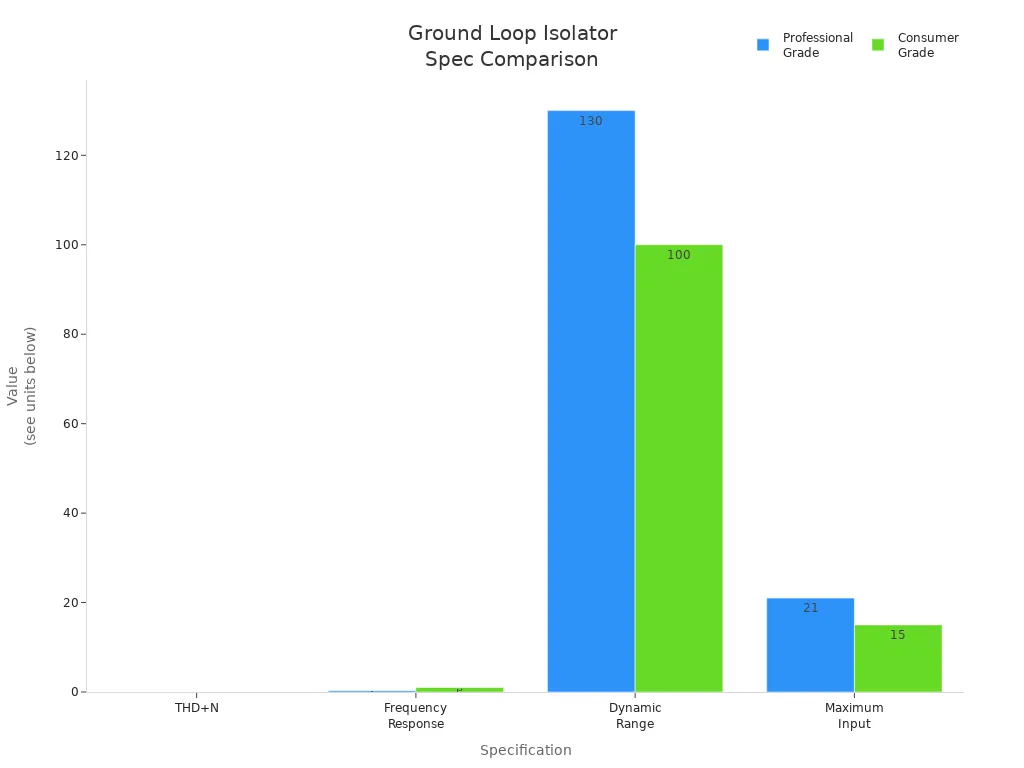
The table below outlines the key technical specifications you should prioritize when selecting a ground loop isolator:
| 仕様 | Why It Matters | Minimum Acceptable | Professional Benchmark |
|---|---|---|---|
| Common-Mode Rejection Ratio | Blocks hum and noise for better sound quality | 60 dB | ≥90 dB |
| 周波数特性 | Keeps all tones clear, from bass to treble | 20 Hz – 15 kHz | 10 Hz – 50 kHz |
| Insertion Loss | Reduces signal loss for better audio quality | ≤1.5 dB | ≤0.3 dB |
| Isolation Voltage Rating | Protects against electrical surges | 1,500 VAC | 4,000 VAC |
You should also check if it supports two channels and works with both balanced and unbalanced signals.
Installation Tips
Setting up your ground loop isolator the right way helps it work best. Always put the isolator on the audio line, not the power line. It works best if you place it close to the device where you hear the noise. Using short cables helps stop extra noise. Do not run signal wires next to power lines. Try to use a steady power source for all your audio devices.
The Musontek ISO2C features a “plug-and-play” design, making its installation extremely simple. It requires no external power supply; simply connect it to your audio line, and it is immediately ready for operation. The table below outlines some of its practical features:
| 特徴 | 説明 |
|---|---|
| Plug-and-Play Design | No external power needed, works instantly |
| デュアル・チャンネル・プロセッシング | Handles two audio channels at once |
| Signal Compatibility | Works with balanced and unbalanced signals |
Tip: Do not make mistakes like bad grounding or putting the isolator in the wrong spot. These mistakes can make the isolator work worse and hurt your sound quality.
Research shows isolators can take away hum. They might change sound a little bit.
- They help lower noise and hum.
- Some types can make bass weaker or add distortion.
- Experts say to use good equipment for best sound.
| Key Point | 説明 |
|---|---|
| No Signal Loss | Good isolators keep the signal strong and clear. |
| Improved Stability | Removing ground loops makes sound more steady and clear. |
People should pick the right device and use it the right way to get the best sound.
よくあるご質問
What causes ground loop noise in audio systems?
Ground loop noise typically occurs when audio equipment utilizes different grounding points. This discrepancy creates unwanted currents—the very culprits responsible for the “humming” or “hissing” sounds emitted by speakers.
Can a ground loop isolator eliminate all types of audio noise?
Ground loop isolators are specifically designed to eliminate the “humming” caused by ground loops. They cannot resolve other types of noise issues, such as radio interference or static resulting from poor cable connections.
グランドループ・アイソレーターの使用は音質に影響しますか?
Most high-quality ground loop isolators are capable of preserving audio clarity. However, some inexpensive isolators may result in diminished bass response or audio distortion. Therefore, selecting a high-quality isolator is crucial for ensuring that your audio quality remains uncompromised.
How do I install a ground loop isolator?
Simply connect the isolator between your audio source device and your speakers (or amplifier). Taking the Musontek ISO2C as an example, this device is plug-and-play and requires no external power supply. For optimal performance, please be sure to consult the product manual.