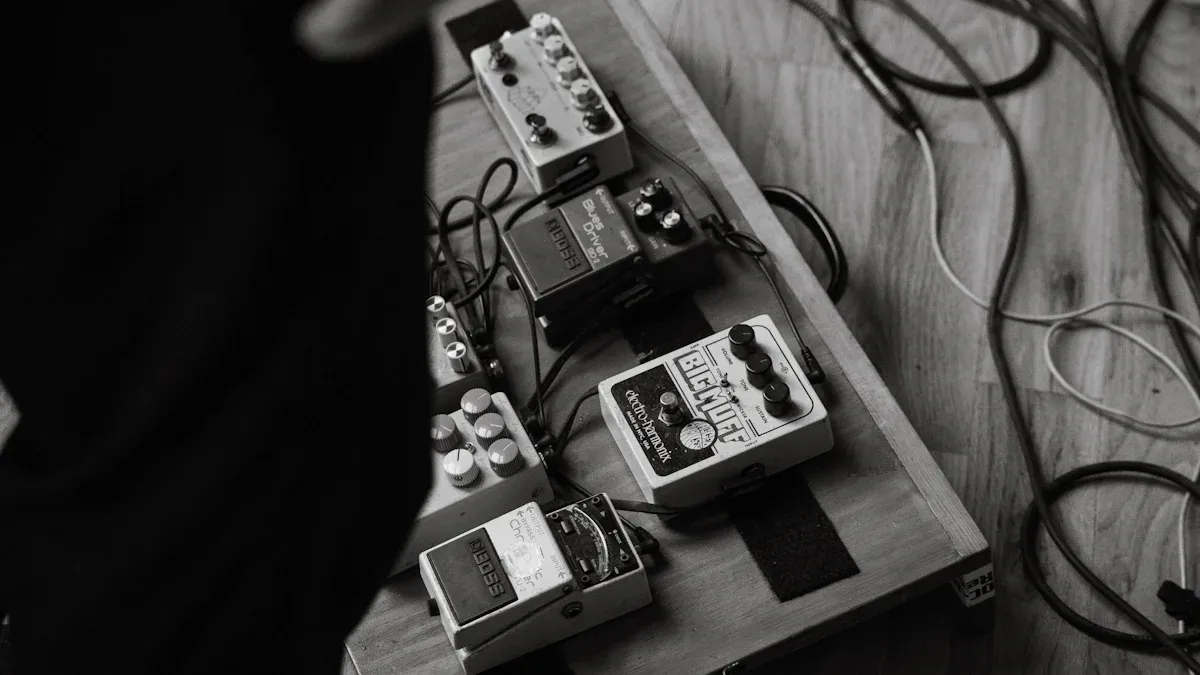
A DI box for bass lets players connect their instrument to mixers or recording gear with ease. It changes the signal so it travels long distances without picking up noise. Check out how it helps:
|
Aspect |
Bénéfice |
|---|---|
|
Signal Conversion |
Reduces noise, keeps sound clear |
|
Distance Handling |
Sends signal up to 100 meters, stays clean |
Players often choose either an active DI box ou un boîte de direct passive to match their setup.
Principaux enseignements
-
A DI box changes high impedance signals from a bass to low impedance signals. This helps the sound stay clear over long distances.
-
Using a DI box lowers noise and stops interference. It is important for live shows and studio recordings.
-
Find a DI box with a ground lift switch and pad switch. These features help make the sound better and stop distortion.
DI Box Basics
What Is a DI Box?
A DI box, or direct box, helps bass players connect their instruments to mixers or recording gear. It takes the high impedance, unbalanced signal from a bass and changes it into a low impedance, balanced signal. This process keeps the sound strong and clear, even when the cable runs are long. Without a DI box, the signal can lose quality and pick up unwanted noise.
Think of a DI box as a translator for your bass. It makes sure your sound travels safely from your instrument to the sound system.
Here’s a quick look at what happens inside a DI box:
|
Component/Function |
Description |
|---|---|
|
DI Box |
Converts high impedance, unbalanced signals to low impedance, balanced signals. |
|
Signal Flow |
Corrects mismatched impedance signals, reducing noise for longer distances. |
The Musontek Passive DI Box PD1L uses a transformer to handle this job. It works without batteries or power, so players just plug in and play. The PD1L also keeps the bass tone natural and clear.
Why Use a DI Box?
Bass players use a DI box for several reasons. First, it helps keep the sound clean by reducing noise and interference. When a bass connects directly to a mixer through a DI box, the signal stays strong and less likely to pick up hum or buzz. The ground lift switch on the Musontek PD1L can fix buzzing sounds caused by ground loops. Just flip the switch, and the noise often disappears.
Here are some main benefits:
-
Adjusts the tone in tricky rooms or on big stages.
-
Makes the sound cleaner for both the player and the sound engineer.
-
Simplifies mixing, so the bass stands out in the final sound.
-
Saves money and time compared to using lots of microphones.
A DI box also helps isolate the bass from other gear. This isolation protects the equipment and keeps the sound pure. The Musontek PD1L, for example, blocks unwanted electrical noise and handles strong signals without distortion.
When to Use a DI Box
Bass players reach for a DI box in many situations. During live shows, a DI box makes sure the bass cuts through the mix, even with lots of other instruments on stage. Sound engineers can control the bass better, so it never gets lost. For example, in big bands or busy venues, a DI box like the Musontek PD1L helps the bass stay clear and powerful.
Players also use a DI box in the studio. It gives a focused, punchy tone that works well for recording. Many engineers use both a microphone and a DI box for bass to capture every detail. The Musontek PD1L can handle both instrument and line-level signals, making it flexible for different setups.
Some common times to use a DI box include:
-
Playing live on stage, especially with long cable runs.
-
Recording bass in a studio for a clean, direct sound.
-
Fixing noise or hum problems in a setup.
-
Sending the bass signal to both an amp and a mixer at the same time.
Tip: If you hear buzzing or your bass sounds weak, try using a DI box with a ground lift switch. It often solves the problem fast.
Using a DI Box for Bass
How to Connect Your Bass
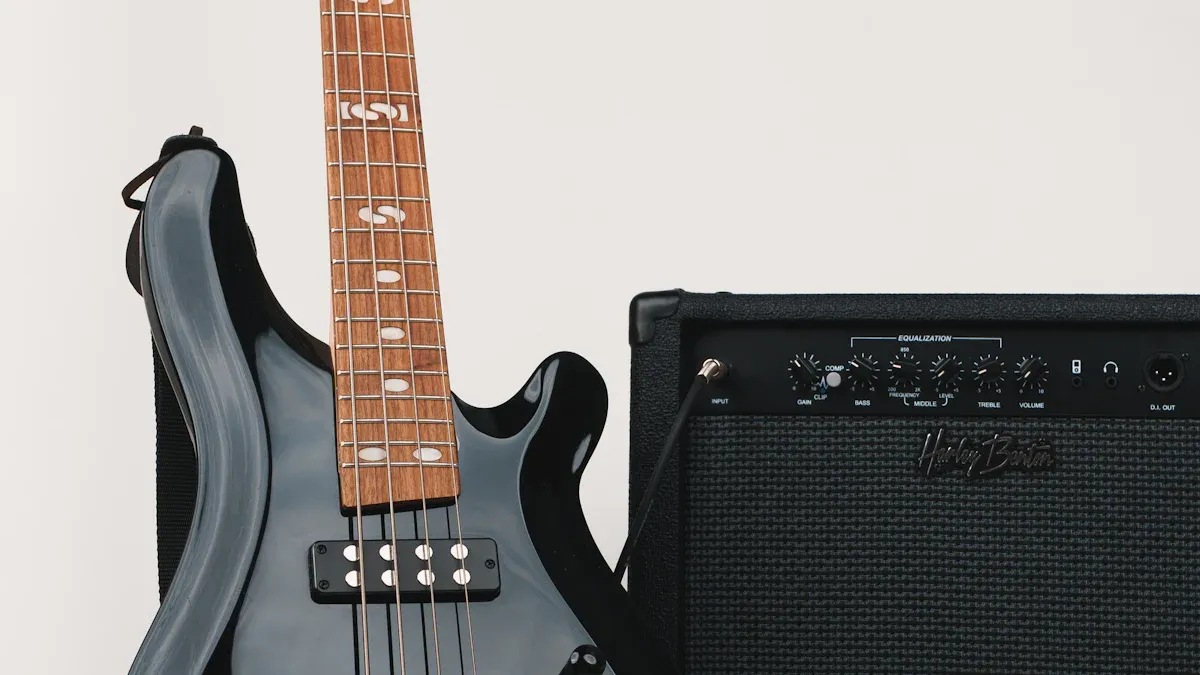
It is simple to connect a bass to a DI box. Players want to set up fast before a show. The Musontek Passive DI Box PD1L makes this easy. It has a plug-and-play design. Here is how players connect everything:
-
Plug a ¼” cable into the bass. Connect it to the DI box input.
-
Use an XLR cable to connect the DI box output to the mixer or audio interface.
-
Make sure all cables are tight. Now the player can perform.
Tip: Never use an amp without a speaker. This can break the amp’s transformers.
The PD1L is easy to use. Players do not need to change any settings. They just connect and start playing. This is great for live shows when time is short.
|
Fonctionnalité |
Description |
|---|---|
|
Plug-and-Play |
Connect instruments fast without extra steps or software. |
|
Quick Setup |
Good for live shows when time is important. |
|
User-Friendly Design |
Makes connecting easy so players can play right away. |
Key Features to Consider
A good DI box for bass should have features that help players sound better. The Musontek PD1L has many useful options:
|
Fonctionnalité |
Description |
|---|---|
|
Ground Lift |
A switch that stops humming or buzzing from ground loops by breaking the loop. |
|
Interrupteur à coussinets |
Lowers the signal going into the DI box. This helps stop overload from active instruments. |
Players also want phase reverse and transient handling. The phase reverse switch helps when using both a mic and a DI signal. If the sounds do not match, flipping the switch can fix it. This makes the bass sound fuller. Handling transients means the DI box can handle loud notes without distortion. The PD1L does this well. It keeps the sound clear even when playing hard.
|
Fonctionnalité |
Description |
|---|---|
|
Circuit passif discret |
No batteries or power needed. It gives high-quality sound with little change. |
|
Traite les signaux transitoires de grande ampleur |
Can handle loud audio spikes without distortion. Keeps sound clean during loud playing. |
|
Interrupteur de levage du sol |
Stops ground loop problems. This lowers noise and hum for clearer sound. |
|
Interrupteur à coussinets |
Lowers signal level for strong instruments. This stops distortion or clipping. |
Note: Players say they get better tone control, easier mixing, and less noise with a DI box. These features help on stage and in the studio.
Active vs. Passive DI Box
Players want to know the difference between active and passive DI boxes. The choice depends on the bass and setup.
-
Active DI boxes work best with active basses that have built-in electronics.
-
Passive DI boxes, like the Musontek PD1L, are good for passive basses and live shows.
-
Both types can handle different input levels. A pad switch helps with strong signals from active instruments.
Passive DI boxes have many benefits. The PD1L does not need batteries or power. It is easy and reliable. Its transformer design keeps the bass tone and handles loud sounds without distortion. Players trust passive DI boxes for steady performance and less noise, especially at busy live shows.
|
Avantage |
Description |
|---|---|
|
Facilité d'utilisation |
The PD1L does not need batteries or power. It is simple to use. |
|
Reliability |
Passive design gives steady performance. There is no risk of losing power. |
|
Préservation de la qualité du son |
Keeps the original tone and feel of the instrument. The sound stays pure. |
|
Handling Transients |
Can handle loud audio spikes without distortion. The sound stays clear during shows. |
|
Noise Isolation |
Transformer isolation lowers unwanted noise and interference. This helps in live settings. |
Players who want a simple, steady, and great-sounding setup often pick passive DI boxes like the Musontek PD1L.
A DI box gives bass players better sound and fewer problems on stage or in the studio. Check out these key benefits:
|
Bénéfice |
Description |
|---|---|
|
Intégrité du signal |
Keeps the bass signal strong and clear. |
|
Réduction du bruit |
Blocks unwanted hum and buzz. |
|
Distortion Prevention |
Protects the original tone. |
Players should look for features like ground lift and pad switches. The Musontek PD1L offers these. For the best results, pick a DI box that matches the player’s setup and style.
FAQ
What does a ground lift switch do on a DI box?
The ground lift switch removes hum or buzz from ground loops. Players flip the switch to get a cleaner sound during shows or recording.
Can someone use a DI box with other instruments?
Yes! Musicians use DI boxes with guitars, keyboards, and acoustic instruments. The Musontek PD1L works for both instrument and line-level signals.
Does a passive DI box need batteries or power?
|
DI Box Type |
Power Needed |
|---|---|
|
Passif |
Non |
|
Actif |
Oui |
Passive DI boxes like the PD1L work without batteries or external power.