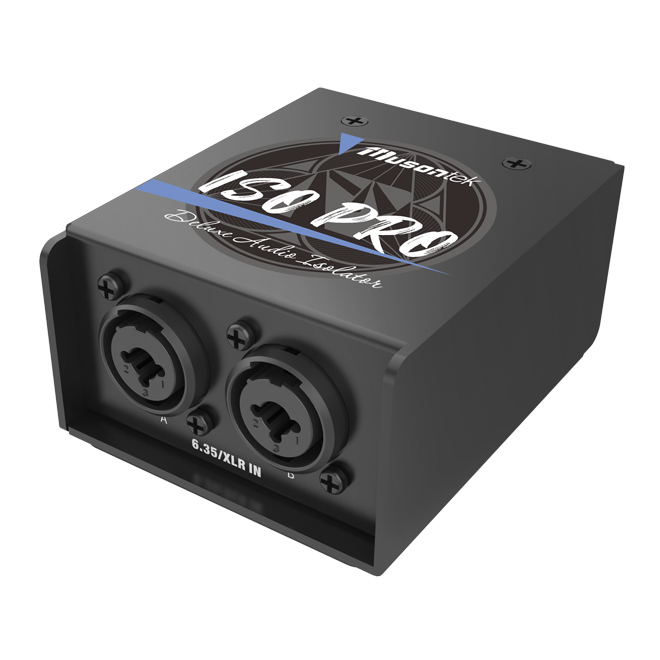
Radio isolators help protect audio and radio frequency systems. They prevent unwanted signal backpropagation, thus preventing interference and protecting equipment. Many isolators offer strong isolation, sometimes up to 70 dB. This helps transmitters remain stable and function properly. They also block damage from reflected signals or lightning strikes.
| Fonction | Description |
| High Isolation | Stops signals from coming back from antennas. This prevents interference. |
| Stable Load | Keeps a steady 50-ohm load for transmitters. |
| Protection | Protects amplifiers from damage by signal reflection or surges. |
Principaux enseignements
- Radio audio isolator prevent unwanted signal reflections, thus helping to maintain clear and stable audio and radio systems. They protect equipment from damage caused by signal reflections and surges, thus avoiding costly repairs. Isolators maintain a stable 50-ohm load for the transmitter. Engineers should consider isolation, insertion loss, and power handling capability when selecting isolators for a system. These factors are all very important.
Radio isolator basics
Definition and function
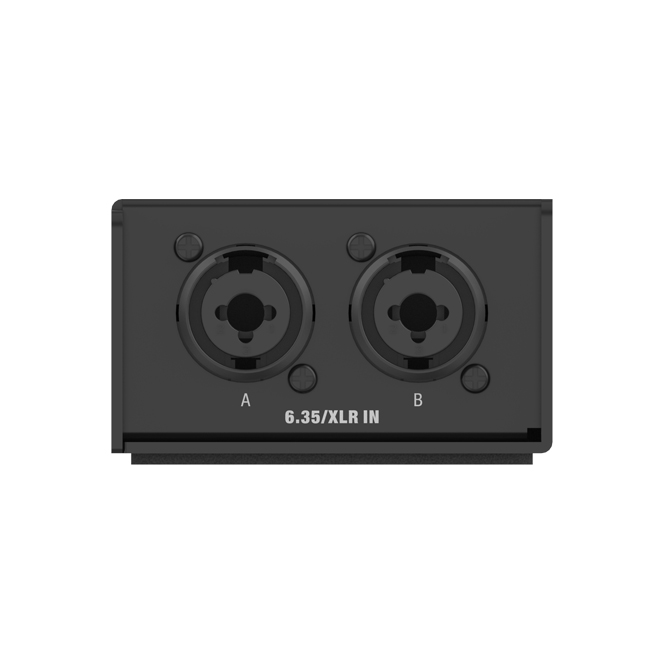
RF isolators are essential in radio frequency and audio systems. It allows signals to travel in one direction and blocks unwanted reflections. This device protects equipment from damage and ensures clear signals. Many systems use isolators to maintain normal operation and prevent interference.
- Radio frequency isolators allow signals to travel forward and block reflections.
- They protect amplifiers and other components from strong signal reflections.
- Isolation helps maintain signal strength in radar, telecommunications, and scientific instruments.
- Communication systems use isolators to prevent high-power signal leakage and reduce interference.
- In laboratories, isolators isolate the device under test from the test equipment to avoid affecting test results.
- Broadcasting and telecommunications systems require isolators to prevent signal reflections that could degrade signal quality.
One-way signal flow
Imagine stirring water in a cup with a spoon. If you add pepper, it moves with the water. The pepper cannot flow backward because the water is too fast.
Radio isolators use the magnetic field in ferrite materials to guide signals unidirectionally. Isolators prevent signals from propagating backward. This ensures equipment safety and keeps the signal path pure. Without proper isolation, the system may lose gain, develop bad feedback loops, or generate more noise.
RF Radio isolator operation
Working principle
A radio frequency (RF) isolator acts like a one-way door for radio signals. It allows energy to flow from the input port to the output port. If a signal attempts to return, the isolator blocks it. This protects critical components of the radio system from unwanted reflections. Isolators use a special material called ferrite. Ferrite reacts to magnetic fields, helping to control the direction of signal transmission.
The device’s impedance is matched to the system impedance, typically 50 ohms. This helps maintain signal strength and clarity. If a signal attempts to return, the isolator absorbs or shields it. This protects the transmitter and prevents interference.
Imagine a corridor with a door that can only open in one direction. People can go through, but cannot go back. An isolator is like this door for radio signals.
Isolators are made of different materials and components. The following table lists some materials/components and their functions:
| Material/Component | Description | Properties |
| Ferrite Core | MnZn, NiZn, Ba-ferrite | High permeability, low conductivity, frequency-dependent loss, corrosion resistance |
| Magnetic Bias | Neodymium, Samarium-Cobalt | High coercivity, strong magnetic field, compact size, easy demagnetization |
| Inner Conductor | Copper, Silver-plated Copper | High conductivity, low signal loss, oxidation resistance |
| Dielectric Insulator | PTFE, Polyethylene, Foam PE | Low dielectric constant, stable impedance, moisture absorption varies |
| Outer Jacket | PVC, LDPE, Armored Sheathing | Flexibility, environmental protection, UV, abrasion, and chemical resistance varies by material |
These materials help the isolator work well in many places. They also make sure the device lasts a long time.
Circulator vs isolator
Both circulators and isolators control the transmission of radio signals. However, they differ in structure and application. A circulator has three ports, allowing the signal to travel in a loop from one port to the next. An isolator has two ports, allowing only forward transmission of the signal and preventing signal return.
The table below shows the differences between these two devices:
| Device | Type | Fonction | Application |
| Circulator | Three-port | Controls the direction of signal flow | Commonly used as duplexers in communication systems |
| Isolator | Two-port | Protects signal sources from reflections | Used in laboratory setups to prevent signal interference |
Circulators are suitable for systems that simultaneously transmit and receive signals. Isolators provide strong protection by blocking unwanted signals. Both devices use ferrite materials and magnetic fields to guide the signal.
Note: Engineers will choose between a circulator and an isolator based on the system’s requirements. They will consider how many ports are needed and which protection measure is best.
RF Radio isolator features
Isolation and directionality
Isolation is a crucial component of any RF isolator. Engineers use decibels (dB) to measure isolation. Most isolators have isolation levels between 25 dB and 35 dB. Some specialized isolators can exceed 40 dB isolation in certain frequency bands. High isolation prevents signals from propagating backward, ensuring equipment safety and keeping the signal path clear. Directivity means that signals can only propagate forward; it blocks reflections and eliminates interference that can impair signal quality. Isolators help radio systems function better by guiding signals correctly. They also reduce reflections caused by impedance mismatches.
- Most isolators have isolation levels between 25 dB and 35 dB.
- Some isolators can exceed 40 dB isolation in certain frequency bands.
- Directivity blocks interference and maintains signal strength.
Insertion loss
Insertion loss represents the amount of signal loss within an isolator. High-quality isolators maintain low insertion loss, typically 0.5 dB or less. If insertion loss exceeds 3 dB, half the signal power is lost. This weakens the communication signal and shortens the signal transmission distance. Engineers evaluate isolator performance using insertion loss. Low insertion loss means the signal can pass through with minimal loss.
| Aspect | Impact |
| Power Loss | Any dB of loss makes the signal weaker. If you lose 3 dB, you lose half the signal power! |
| Noise Figure | High insertion loss makes the noise figure higher, so the receiver is less sensitive. |
| Overall Signal Quality | High insertion loss weakens signals, making communication less effective and lowering range and reliability. |
Insertion loss changes power, noise, and signal quality. Engineers pick isolators with low insertion loss to keep signals strong.
Power handling
Power handling capacity refers to the energy an isolator can withstand without damage. Some commercial RF isolators, especially large waveguide isolators, can handle up to 1000 watts of power. Power ratings must be matched to system requirements. This includes average power and peak power, which is especially important for pulsed systems. Studio-grade transformers and passive components help isolators handle high-power and bursty signals. Good power handling capability ensures the safety and proper operation of equipment.
- Some isolators can withstand power up to 1000 watts.
- The rated power should match the average and peak power of the system.
- Good power handling capability prevents damage and contributes to proper system operation.
Note: Engineers always check isolation, insertion loss, and power handling capability before selecting an isolator. These characteristics ensure the safety and proper operation of radio systems.
Radio isolator applications

Communication systems
Many communication systems use radio isolators to maintain signal strength. Cellular networks use RF isolators to protect amplifiers from damage. Reflected signals can damage amplifiers, so isolators help prevent this. Broadcast systems rely on isolation to maintain high signal quality. Signal reflections degrade transmitted signals. Telecommunication base stations require isolators for smooth communication. These devices allow signals to propagate in only one direction. This prevents interference from reflected signals. This is crucial for maintaining signal clarity in RF systems. The demand for high-quality RF isolators continues to grow in the telecommunications, defense, and aerospace industries.
- Cellular networks use radio frequency (RF) isolators to protect amplifiers.
- Broadcast systems use isolators to maintain signal clarity.
- Telecommunications base stations require isolators for smooth operation.
- Microwave and satellite systems use RF isolators to eliminate interference.
Audio and broadcasting
RF isolators are crucial in professional audio and broadcasting. The isolation they provide prevents signal reflections, thus maintaining high-quality transmitted signals. Ground loop isolators provide electrical isolation, preventing unwanted electrical connections between audio equipment. Isolation helps maintain the clarity of audio signals.
| Role of Radio Isolators in Broadcasting | Description |
| Protect high-power transmitters | Stops damage from impedance mismatches and standing waves |
| Ensure clean signal output | Keeps quality for analog and digital broadcasts |
| Support wideband frequency operation | Needed for HD, 4K, and new 8K video standards |
| Improve system uptime | Lowers maintenance costs in high-power broadcast places |
Equipment protection
Isolators are used to protect equipment in radio frequency (RF) and audio systems. They utilize the principle of isolation to prevent electrical faults or surges from propagating between devices, thus ensuring the safety of audio equipment and radio transmitters. Isolation also prevents ground loops, which can cause noise and interference. Many isolators are passively designed and require no external power supply.
Tip: Adding radio isolators to your system design can help avoid costly repairs and ensure proper equipment operation.
Radio and RF isolators are crucial for obtaining clear signals. They help protect equipment from damage. Isolators block noise that can interfere with signals and protect equipment from damage. Those working with RF or audio systems should understand how isolators work. Understanding the role of isolators allows you to choose the best one for your needs.
- Isolators can improve signal quality.
- They help avoid costly repairs.
Engineers frequently use isolators when designing and repairing systems.
FAQ
What is the main function of a radio isolator?
A radio isolator allows signals to travel in only one direction, preventing signal return. This protects equipment and ensures clear signals.
Can a radio isolator eliminate noise in an audio system?
Yes. A radio isolator eliminates ground loop noise and cuts off the circuit path between devices, thus eliminating hum and other noise.
Does a radio isolator require a power source to operate?
Most radio isolators do not require an external power source; they do not need batteries or plugs. They use special materials to ensure unidirectional signal transmission.
Where are radio isolators used?
Radio isolators are widely used in radio stations and recording studios, as well as in communication towers, home audio systems, and laboratories.
How do radio isolators protect equipment?
Isolators block harmful signals and surges, thus protecting amplifiers, receivers, and other equipment from damage.