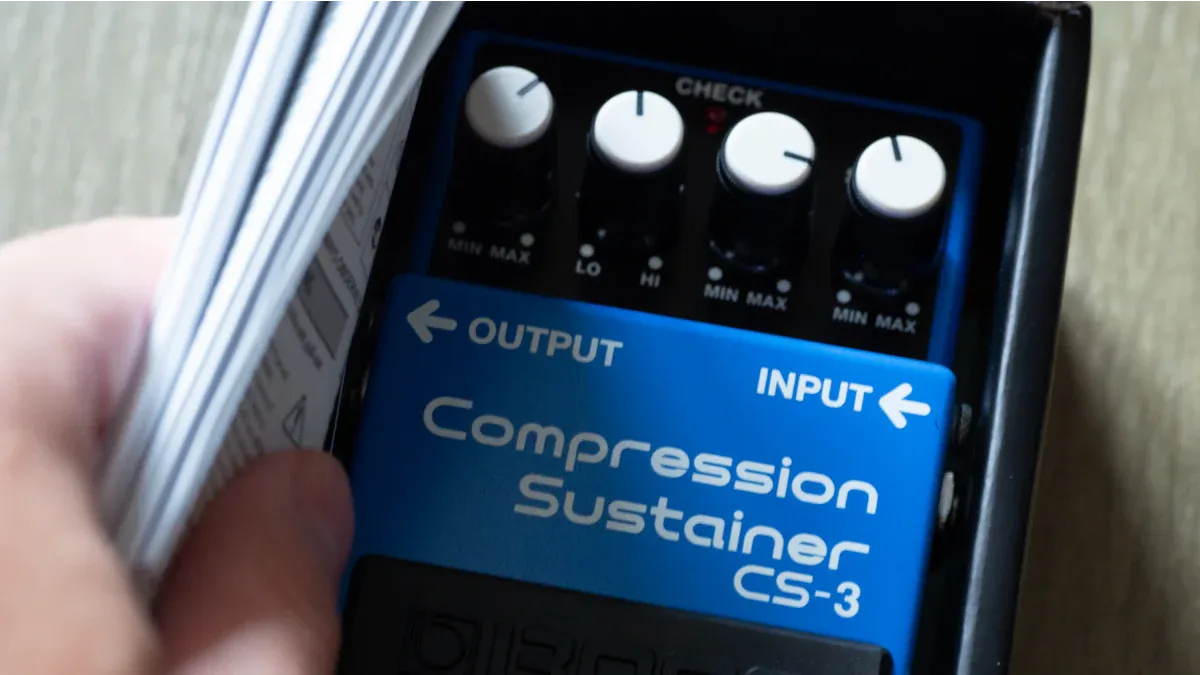
When I play guitar, I want each note to sound clear. I also want my notes to sound full. A pédale de compression helps me do this. It makes my quiet notes louder. It also makes my loud notes smoother. This pedal can change how my guitar sounds. It works on stage and in the studio. I use the Musontek Dynamics – Super ZlP Factory. It helps my notes last longer. It keeps my volume even. It makes my sound clearer. My guitar stands out more. This happens when I use a distorsion pédale overdrive. It also happens with a pédale d'effet boost. Compression helps my playing sound better. It makes my music sound professional.
|
Bénéfice |
Description |
|---|---|
|
Enhances Sustain |
Compression helps notes last longer. This gives your playing a richer sound. |
|
Balances Volume |
It makes your playing sound even. This helps your performance sound professional. |
|
Improves Clarity |
Quiet notes are easier to hear. Loud notes do not take over the mix. |
Principaux enseignements
-
A compression pedal helps notes last longer. It makes your playing sound fuller.
-
It keeps the volume even. Quiet notes can be heard. Loud notes stay smooth. This gives your music a polished sound.
-
Important controls like threshold, attack, and release let you change how the pedal works. You can adjust it for different ways of playing.
-
Using a compressor pedal keeps your sound clear. Every note can be heard in shows and recordings.
-
Putting the compressor first in your pedal chain gives you more control. It helps shape your guitar’s sound and volume.
Compression Pedal Basics
What It Does
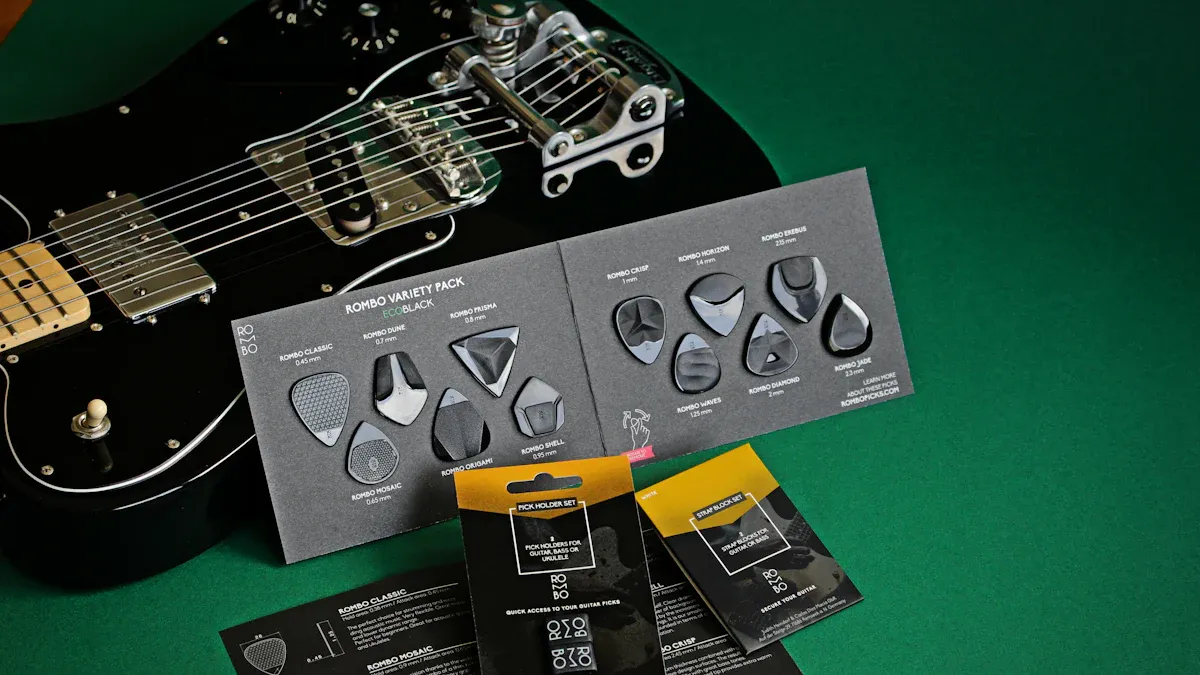
At first, I thought a compression pedal only changed volume. But it does a lot more than that. It helps me control both loud and soft parts of my guitar. The pedal listens to my playing and changes the volume right away. This keeps my sound smooth and balanced.
A compressor pedal has some main controls that shape my sound:
-
Threshold: This sets when the compressor starts working.
-
Ratio: This tells how much the volume drops after the threshold.
-
Attack: This decides how fast the compressor reacts to loud playing.
-
Release: This sets how quickly the compressor stops after quiet playing.
-
Knee: This makes the start of compression smoother or sharper.
-
Gain: This lets me make everything louder after compression.
When I use a compressor pedal, I notice three big changes:
|
Measurable Effect |
Description |
|---|---|
|
Gain Reduction |
The compressor lowers the volume if I play too loud. |
|
Increased Sustain |
My notes last longer, so solos and chords sound bigger. |
|
Even Transient Profile |
The compressor makes all my notes sound more even and balanced. |
I use the Musontek Dynamics – Super ZlP Factory as my main compressor pedal. This pedal is special because it gives both old and new sounds. It uses an OTA circuit, which makes my guitar sound warm and musical. I can pick fast attack for funky or country music. I can also choose a slower feel for blues or rock. The high voltage support keeps my sound clear, even when I play loud or use strong pickups.
|
Fonctionnalité |
Bénéfice |
Application |
|---|---|---|
|
Circuit OTA |
Compression chaude et musicale |
Tous les genres, en particulier les sons vintage |
|
Attaque rapide |
Contrôle immédiat des transitoires |
Funk, country, styles percussifs |
|
Support haute tension |
Increased headroom, less distortion |
Micros à haut rendement, performances élevées |
|
Interrupteur vintage/moderne |
Flexibilité tonale |
S'adapte à différents contextes musicaux |
A compressor pedal does more than just change loud and soft notes. It helps me keep my volume steady, which is important for live shows or recording. The pedal also makes my playing more even, so every note is clear.
Many beginners think a compressor pedal is just a magic volume knob. I learned it actually changes my sound a lot, both on stage and in the studio.
Why Use One
I use a compressor pedal for many reasons. First, it makes my guitar sound smooth and professional. When I play, I want my notes to last and be clear. The compressor pedal helps my notes ring out, so solos and chords sound better.
Here are some reasons I always use a compressor pedal:
-
Improved sustain: My notes last longer without turning up the volume.
-
Enhanced picking: My picking sounds more even, and I avoid sudden loud notes.
-
Better sound quality: The compressor pedal adds warmth and thickness, making my guitar sound full.
-
Taming dynamics: The pedal helps me control volume and strength, so my playing stays steady.
I also like how a compressor pedal keeps my natural sound. I can still play soft or loud, but the pedal smooths out the really quiet or really loud parts. This makes my guitar sound more controlled but still keeps its style.
When I set up a compressor, I use the controls to fit my playing. If I want more sustain, I use a higher ratio and lower threshold. For a brighter sound, I change the attack and release. The Musontek Dynamics – Super ZlP Factory makes this easy with simple controls.
I use my compressor pedal with both electric guitar and bass. Both instruments sound better with compression, but bass needs extra care because of its low notes. The Super ZlP Factory works well for both, so I get a balanced sound no matter what I play.
Some compressor pedals are hard to set up. I found the Super ZlP Factory is easy to use and gives great results. I can quickly find the right settings for any song or style.
Compression is often felt more than heard. When I use my compressor pedal, my guitar fits better in the mix, and my playing sounds more professional.
In the end, a compressor pedal helps me keep my sound clear, balanced, and full of sustain. It lets me focus on my music, knowing every note will sound right with the right amount of compression and natural feel.
Compressor Pedal Features
Main Controls
When I started using a compressor pedal, I saw many controls. Each one changes how the pedal works with my playing. Here are the main controls I use on most compressor pedals:
-
Threshold: This sets when the compressor starts working. If I set it lower, it turns on sooner and catches more notes.
-
Attack: This controls how fast the compressor reacts. A fast attack makes it work right away, which helps with sharp picking.
-
Release: This sets how long the compressor holds the sound before stopping. A longer release can make my notes last longer.
-
Ratio: This decides how much compression the pedal uses. A higher ratio means the pedal squeezes the sound more.
-
Volume / Makeup Gain: After compression, my sound might get quieter. I use this to make my guitar loud again.
-
Blend / Parallel Compression: This lets me mix my normal sound with the compressed sound. I use it to keep my tone clear and natural.
The Musontek Dynamics – Super ZlP Factory has all these controls. I can change threshold, ratio, attack, release, and output level easily. The layout is simple, so I can find the right settings for any song. Both beginners and pros find this pedal easy to use.
Tip: I always try different attack and release settings to get the best sustain for my solos.
Qualité de construction
I want my compressor pedal to be strong. The Super ZlP Factory has a metal case and a tough footswitch. I trust it for live shows and studio work. The pedal also has true bypass, so my sound stays clean when the pedal is off. Many top pedals use true bypass to keep the signal safe.
|
Product Name |
True Bypass Functionality Description |
|---|---|
|
Musontek Dynamics – Super ZlP Factory |
Preserves signal integrity when disengaged. |
|
Strymon Compadre Compressor & Boost |
Preserves signal integrity when disengaged. |
|
Tone Corset |
True Bypass for maximum signal path integrity. |
|
Trace Elliot Dual Band Compressor |
Ensures pristine sound on stage or in the studio. |
I also think about price when I pick a compressor pedal. Many pedals cost between $99 and $280. The Super ZlP Factory gives me great compression and sustain at a price I can afford.
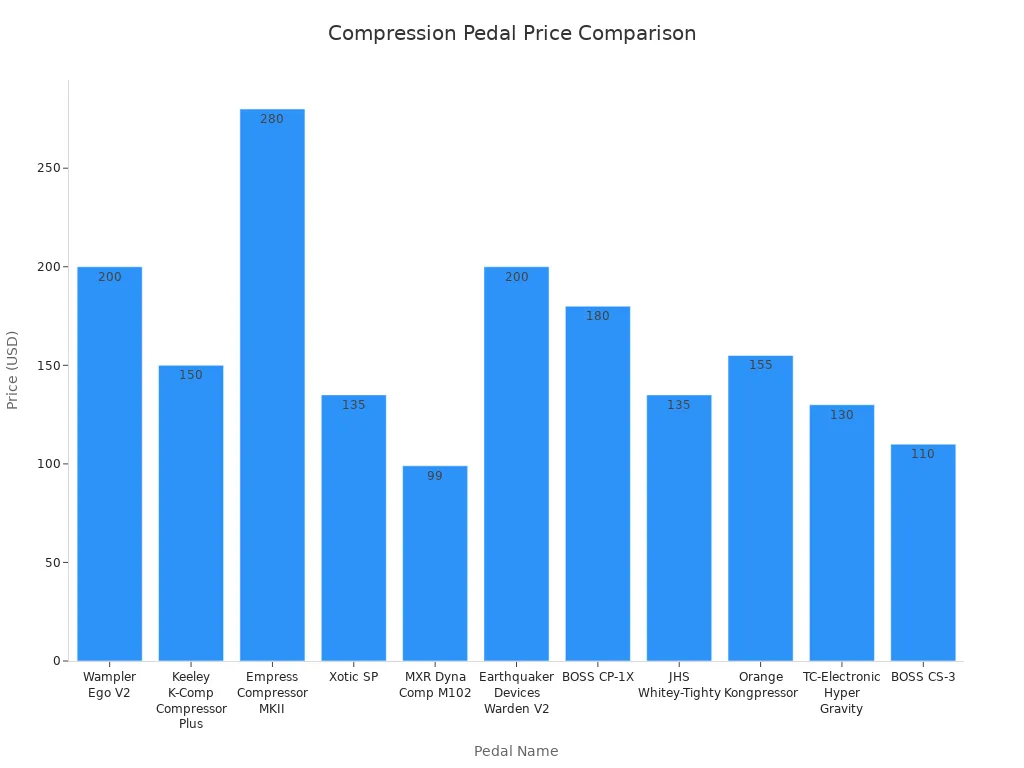
The Super ZlP Factory is a good deal. I get pro compression, strong build, and great sustain without spending too much. This pedal helps me control my sound and keeps it steady every time I play.
Uses and Placement
Practical Applications
I use a compressor pedal in many ways when I play guitar. The pedal helps me keep my rhythm parts tight and even. When I strum chords, the compressor smooths out the volume so every chord sounds clear. My lead guitar lines also benefit from compression. The pedal makes my solos stand out and gives each note extra sustain. I notice that my picking sounds more controlled, and my notes do not get lost in the mix.
When I play acoustic guitar, the compressor helps balance my fingerpicking. It brings out the quiet notes and keeps the loud ones from jumping out. This makes my acoustic guitar sound professional, whether I play live or record in the studio.
Bass players use compression to keep their sound steady. I play bass with a drummer, and the compressor helps me match the beat. My picking stays even, and the bass sits well in the band. Many bassists choose compressor pedals to fix uneven picking and keep their tone smooth.
Here are some common ways I use a compressor pedal:
-
I control the dynamics of rhythm guitar for a steady sound.
-
I boost sustain and clarity in lead guitar solos.
-
I balance fingerpicking on acoustic guitar.
-
I keep bass guitar notes even and strong.
The Musontek Dynamics – Super ZlP Factory works well for all these uses. I switch between genres and settings, and the pedal adapts every time. I use it for pop, rock, country, and blues. The pedal gives me control and clarity in every style.
|
Genre |
Performance Characteristics |
|---|---|
|
Pop |
Dynamic control and tonal clarity are essential. |
|
Rock |
Versatile control options for fine-tuning compression. |
|
Country |
Adaptable for both studio recordings and live performances. |
|
Blues |
Maintains clarity and musicality across different styles. |
Tip: I always try different compressor settings for each style of music. This helps me find the best sound for every song.
Pedal Placement
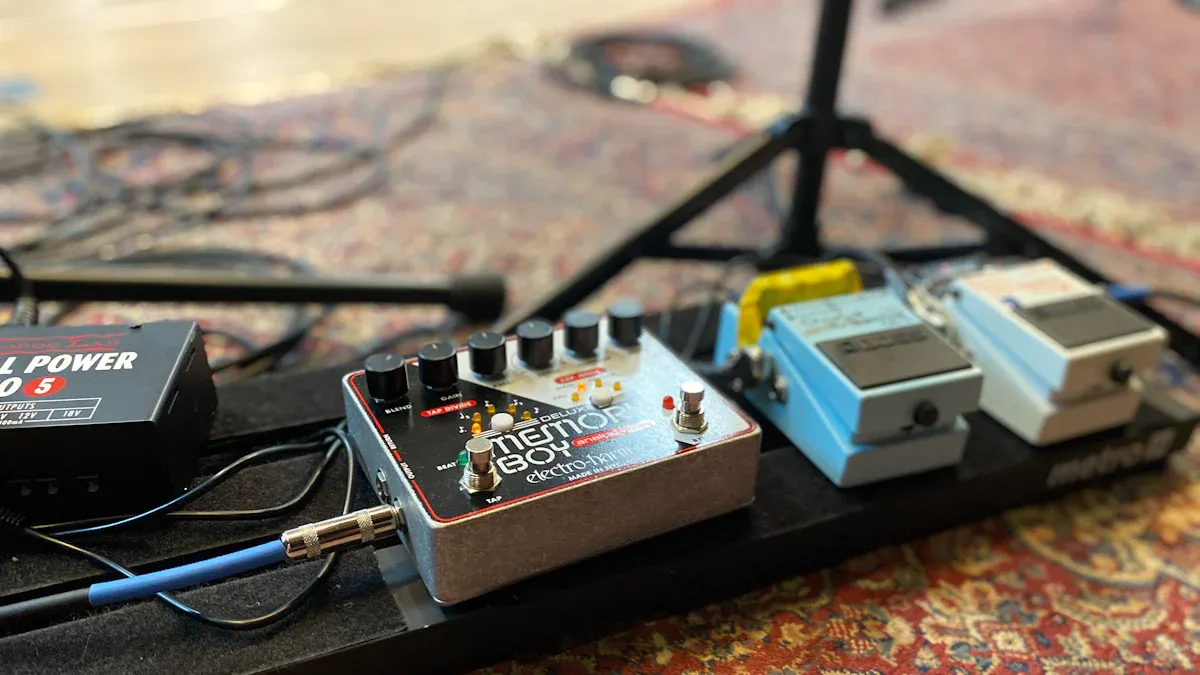
I learned that pedal placement matters for getting the best sound from my compressor. Most players, including me, put the compressor at the front of the signal chain, right after the tuner. This lets the compressor smooth out my guitar signal before it reaches other pedals. My overdrive and distortion pedals sound better when the compressor comes first. The pedal controls my dynamics and keeps my tone tight.
Some players put the compressor after effects like envelope filters. This keeps those pedals sensitive to my playing style. A few people place the compressor at the end of the chain to keep the output steady, but I prefer it at the beginning.
Here is how I set up my pedalboard:
-
Accordeur
-
Compresseur
-
Overdrive / Distortion
-
Modulation (chorus, phaser)
-
Delay / Reverb
Placing the compressor before distortion helps me control my attack and keeps my guitar sound clear. If I put the compressor after distortion, it can change the effect and make fuzz pedals sound different. I always test my setup to find what works best for my style.
Note: I recommend starting with the compressor at the front of your chain. This gives you the most control over your guitar’s dynamics and tone.
When I use a compression pedal, my sound changes a lot. My notes last longer. My tone gets thicker. My playing feels smoother. These are the main benefits I notice:
|
Bénéfice |
Description |
|---|---|
|
Enhance Sustain |
Notes ring out and solos sound bigger. |
|
Thickening Tone |
My guitar sounds fuller and richer. |
|
Smoothing Dynamics |
My playing stays even and controlled. |
|
Taming Harsh Transients |
Sharp sounds become softer and more pleasant. |
|
Consistency in Tone |
Every note fits well in the mix. |
I like to try different settings. Sometimes I use a higher ratio for rhythm guitar. Other times I pick a lower threshold for solos. The Musontek Dynamics – Super ZlP Factory makes changing settings easy. Many people say it is strong and affordable. It also keeps their sound clear. I think you should try a compressor pedal in your setup. You might find new control and better quality in your music.
FAQ
What does a compression pedal do for my guitar sound?
I use a compression pedal to even out the dynamics in my guitar playing. The pedal helps me get a steady and even volume. My notes sound clear and balanced. I notice more sustain and a smoother tone when I play both rhythm and lead parts.
How do I dial in a compressor for natural dynamics?
I start with low ratio and gentle threshold settings. I adjust attack and release until my guitar keeps its natural dynamics. I listen for clarity and sustain. I change compressor settings for each song. I always test different settings to find what works best for me.
Can I use a compressor pedal with bass or acoustic guitar?
I use a compressor pedal with bass to keep my low notes tight. Acoustic guitar sounds more balanced with compression. The pedal helps me control volume and sustain. I get a professional sound in both live and studio settings.
What are some popular compressor pedals for beginners?
I tried several popular compressor pedals. The Musontek Dynamics – Super ZlP Factory is easy to use. Other pedals like the Tone Corset and Strymon Compadre also work well. I look for simple controls and strong build quality when I choose a compressor pedal.
Why does my guitar need compression in a band mix?
I use compression to help my guitar fit in the band mix. The compressor pedal keeps my volume steady and even. My notes do not get lost. I hear more sustain and clarity. Compression makes my guitar sound professional and consistent with other instruments.