Yes, an active DI box does boost your signal. It performs two key jobs at once: it converts an unbalanced, high-impedance instrument signal into a balanced, low-impedance signal for noise-free transmission, and uses a built-in preamplifier to strengthen weak signals by 10–20dB. Musicians and audio engineers rely on this combination to keep sound clear, consistent, and free of interference, especially during live shows and long cable runs.
Principaux enseignements
- Active DI boxes boost weak signals by 10–20dB using built-in preamps, improving clarity and overall level.
- Proper gain staging prevents noise, distortion, and clipping in live and studio environments.
- Always confirm phantom power is available before using an active DI box to avoid signal interruptions.
- Active DI boxes work best for high-impedance instruments like electric guitars and passive pickups.
- Good grounding and a ground lift switch eliminate hum and ground-loop noise in your audio setup.
How Active DI Boxes Boost Your Signal

Internal Signal Amplification Mechanism
An active DI box uses powered internal components to shape and strengthen your instrument signal. A built-in preamp amplifies weak output from instruments like electric guitars and passive basses, raising the level before it reaches the mixing console or audio interface.
Most passive instruments require high input impedance to retain their natural tone. An active DI box typically provides up to 1 megaohm (1MΩ) of input impedance, preserving harmonic detail and clarity that would otherwise be lost.
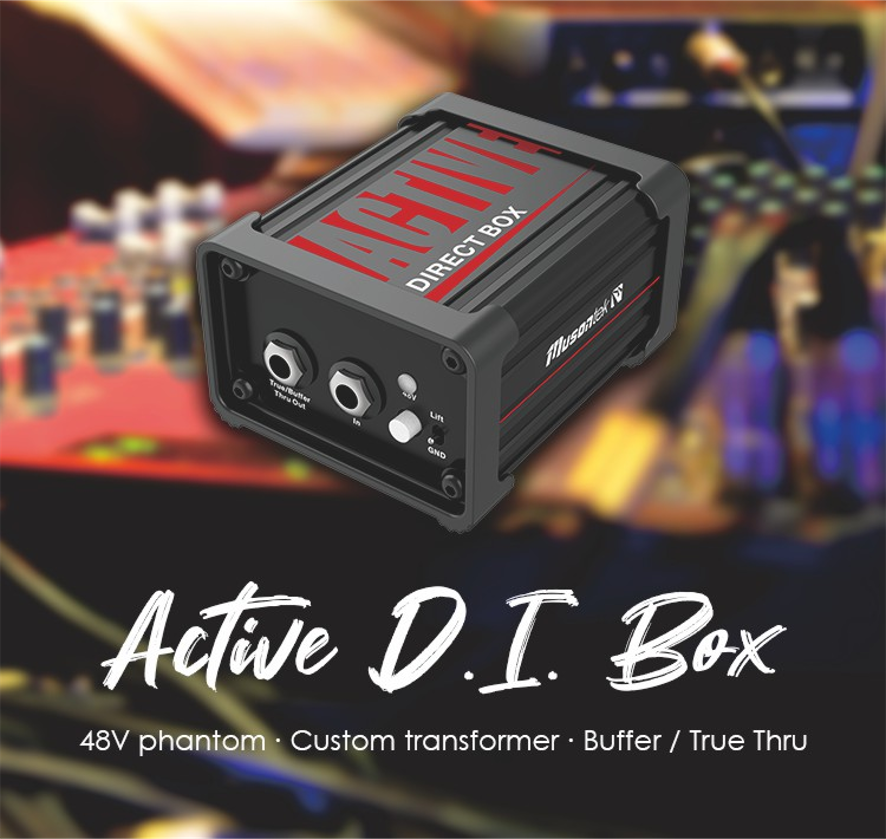
Les Musontek Active D.I. Box-AD1L is designed specifically for clean signal boosting. It uses a dual-transistor Class A buffer and custom audio transformer to maintain signal integrity while reducing noise. These components work together to ensure weak signals stay strong, clear, and faithful to your original tone.
Tip: Using an active DI box prevents signal loss, especially when using long cables on stage or in the studio.
| Fonctionnalité | Description |
|---|---|
| Impédance d'entrée | 1MΩ preserves clarity for passive pickups like electric guitars. |
| Gamme dynamique | 118dB allows loud signals to stay clean without distortion. |
| Circuit Design | Specialized circuitry for improved clarity and low distortion. |
| Buffer Type | Dual-transistor Class A buffer maintains a strong, consistent signal. |
Power Requirements for Gain Operation
Active DI boxes require external power to run their amplification circuits. The most common power source is 48-volt phantom power delivered through XLR cables from a mixing console. Some models also support 9-volt batteries or external power adapters for portable use.
The Musontek Active D.I. Box-AD1L runs on 48V phantom power, enabling consistent signal boosting and high-fidelity performance in both studio and live environments.
Note: Always check if your mixer or audio interface provides phantom power before connecting an active DI box. This ensures stable gain and avoids signal dropouts during performances.
Active vs. Passive DI Box: Signal Boost Comparison
Signal Strength & Gain Handling Differences
Active and passive DI boxes process signals in fundamentally different ways. An active DI box uses powered preamps to lift weak signals, making it ideal for low-output instruments. Passive DI boxes have no power source and provide no gain—they only convert impedance and balance the signal.
| Type of DI Box | Signal Strength | Traitement des gains |
|---|---|---|
| Passif | Lower output; best for instruments with strong existing signals | No active circuitry, no signal boost |
| Actif | Higher output thanks to built-in preamps; ideal for low-output instruments | Requires power, effectively boosts weak signals |
Pros and Cons for Signal Boosting
Active DI boxes like the Musontek AD1L provide clean gain, high impedance, and extra features such as ground lift and phase reverse. Passive DI boxes are simple, rugged, and require no power but offer no amplification.
The following is a comparison table of features:
| Fonctionnalité | Active DI (AD1L) | Passive DI |
|---|---|---|
| Impédance d'entrée | 1MΩ | 10kΩ |
| Signal Boosting | Built-in preamps boost and buffer signals | N/A |
| Gamme dynamique | 118dB | 128dB |
| Distorsion harmonique totale | 0.002% @ -5dBu | 0.008% @ -10dB |
| Réponse en fréquence | 20Hz–20kHz (±0.2dB) | 20Hz–20kHz (±0.3dB) |
Note: Active DI boxes require phantom power; passive DI boxes do not.
Which Type Gives You a Better Signal?
Active DI boxes deliver a stronger, cleaner signal for high-impedance instruments with passive pickups. They preserve tone, reduce noise over long cables, and add usable gain. Passive DI boxes work best for high-output instruments like keyboards and active-pickup guitars.
Active DI boxes are best for:
- High-impedance instruments with passive pickups
- Long cable runs on stage or in the studio
- Users who want clarity, gain, and extra utility features
Passive DI boxes are best for:
- Instruments with strong, active onboard electronics
- Simple setups where power is unavailable
Choose based on your instrument’s output, cable length, and performance environment. The Musontek AD1L ensures a strong, clean signal in nearly any setup.
When to Use an Active DI Box for Signal Boost
Best Instruments & Setups That Need a Boost
An active DI box is especially useful for instruments that produce naturally weak signals. Acoustic guitars with passive pickups, vintage electric guitars, passive basses, and low-output keyboards all benefit significantly from the gain and impedance matching of an active DI.
| Instrument Type | Benefit from Active DI Box |
|---|---|
| Acoustic guitars with passive pickups | Strengthens signal and reduces degradation |
| Vintage electric guitars | Amplifies weak output for clearer tone |
| Low-output keyboards | Ensures consistent, strong level |
| Passive basses | Improves definition and clarity |
Long stage cables often weaken signals and introduce noise. An active DI box compensates for signal loss, keeping your tone consistent even over extended cable runs.
Tip: For live performances, always match your DI type to your instrument’s output and cable length.
Key Limitations & Setup Best Practices
Active DI boxes require power to function, most commonly 48V phantom power from a mixer. If power is unavailable, a passive DI may be more practical.
Grounding is also critical. Poor grounding causes hum and ground-loop noise. Most active DI boxes include a ground lift switch to eliminate this issue.
| Enjeu | Description |
|---|---|
| Grounding Problems | A ground lift switch breaks ground loops and removes hum. |
| Power Requirements | Always confirm phantom power is available to avoid signal loss. |
| Signal Weakness | Check cables and power if your signal remains low. |
To achieve the best results, test your entire setup before performances and choose the DI box that matches your instrument and environment.
Conclusion
An active DI box does boost signal, using a built-in preamp to add 10–20dB of clean gain while balancing and impedance-matching your instrument signal. It is the ideal choice for passive pickups, weak-output instruments, and long cable runs. Passive DI boxes remain useful for strong, active signals but provide no amplification.
By selecting the right DI box and setting up gain and grounding properly, you can achieve quiet, clear, professional tone in any live or studio situation.
FAQ
Does an active DI box boost signal?
Yes, an active DI box includes a built-in preamplifier that boosts weak instrument signals by 10–20dB, while also balancing the signal and matching impedance.
What does a DI box do?
A DI box converts an unbalanced instrument signal to a balanced, low-impedance signal for mixers and audio interfaces, reducing noise and preserving tone.
Does an active DI box need power?
Yes, active DI boxes require power, usually 48V phantom power from a mixer. Some models also use batteries or external adapters.
Which instruments benefit most from an active DI box?
Passive electric guitars, acoustic guitars, vintage keyboards, and passive basses benefit the most, as they produce weaker signals that gain from amplification.
How does a ground lift switch help?
A ground lift switch breaks unwanted ground loops, eliminating hum, buzz, and interference in live and recording setups.