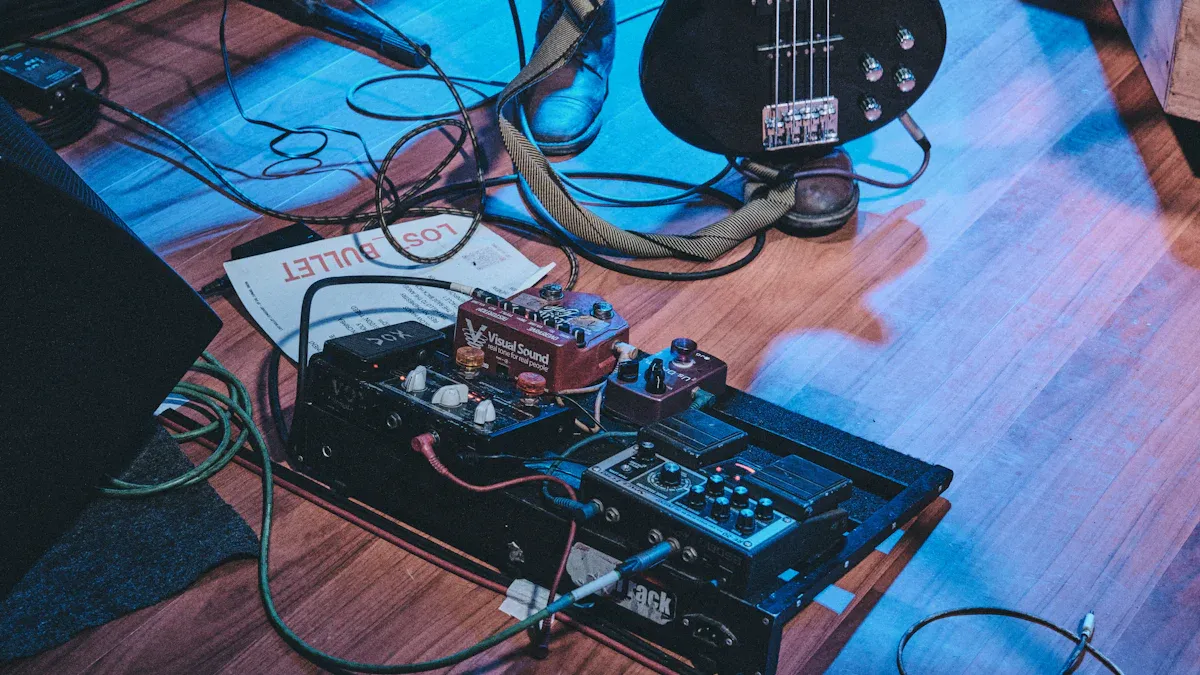
Yes, bassists use effects pedals. In the last ten years, bass players have seen many new pedal choices. Musicians now have more options because of better digital devices, new small companies, and cheaper gear. Many players try different pedals to find what fits their style and needs. The MUSONTEK Functional – GRRR Monster is a special tool for people who want more control and options.
-
New digital devices let players try new sounds.
-
Small pedal makers help musicians test new tones.
-
DIY electronics and community help small brands get bigger.
Principaux enseignements
-
Bassists use effects pedals to change their sound and show their style. These pedals help make special tones for each song.
-
Trying out effects pedals can give bassists new ideas and songs. One pedal can make a bass line sound very different.
-
There are many kinds of pedals, like distortion and compression. These help bassists get different sounds. Each pedal gives the music its own feel.
-
Picking the right pedal depends on the kind of music and the sound wanted. Bassists should test different pedals to see which ones they like.
-
Making a pedalboard is a big part of how bassists create music. It lets them switch sounds fast when they play live.
Effects Pedals for Bass
Why Use Effects Pedals
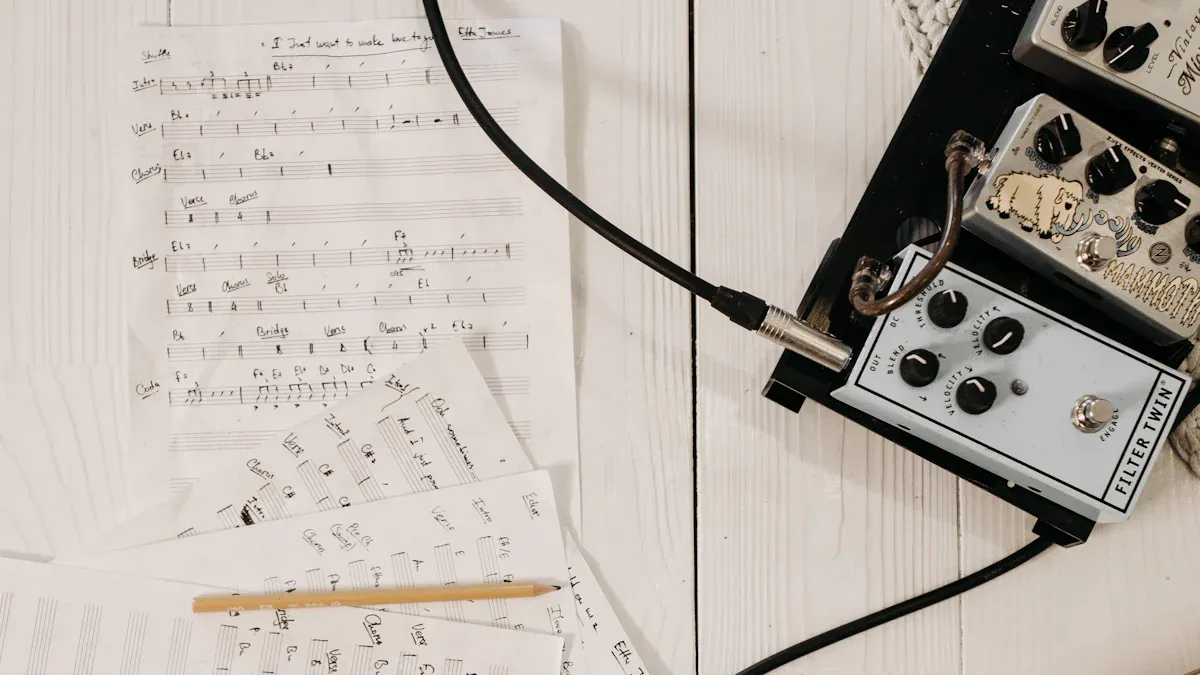
Bassists love effects pedals for many reasons. These small devices help players shape their sound and show their personality. Some use pedals to create new tones that fit different songs or styles. Others want quick changes during a live show or recording session. Effects pedals make it easy to switch sounds without touching the amp.
Players enjoy experimenting with effects pedals. They can try new sounds and find what works best for their music. Many bassists say pedals are fun to use and can transform the sound of a bass. The wide variety of pedals lets musicians explore and create unique tones. Some compare choosing pedals to picking colors for a painting. Each pedal adds something special.
Effects pedals also help bassists express themselves. They can dial in the exact vibe they want for each part of a song. This control gives them confidence on stage and in the studio. Many musicians feel that building a pedalboard is as important as learning the music. It becomes part of their creative process.
Tip: Effects pedals allow bassists to improvise and discover new ideas. Sometimes, a new pedal can inspire a whole song or riff.
Enhancing Bass Tone
Effects pedals change the way a bass sounds. Some pedals add grit or warmth, while others make the tone smooth and clear. Here are some popular types of bass guitar effects pedals:
-
Overdrive and distortion pedals add crunch and power.
-
Compression pedals smooth out the volume and make each note stand out.
-
Chorus pedals create a rich, swirling sound.
-
Octave pedals let players add deep or high notes for a bigger sound.
-
Envelope filter pedals give a funky, moving tone.
Bass effects pedals help musicians match their sound to different genres. Rock, funk, jazz, and pop all use effects in their own way. Pedals give bassists versatility with their tone. They can change sounds quickly and adjust for any song or setting. This flexibility is great for live shows and studio work.
The MUSONTEK Functional – GRRR Monster stands out among bass-oriented products. It offers buffer, boost, DI, isolator, and cabinet simulation features. Players can use it to keep their signal clean and strong. The GRRR Monster works well with many setups, thanks to its XLR and 1/4” TRS connectors. It also provides signal isolation and a ground lift button to reduce noise. With level gain adjustment and cabinet simulation, bassists can shape their sound for any situation.
Bassists use effects pedals to add creativity to their songwriting. Pedals encourage spontaneous exploration and help musicians find new ideas. Sometimes, a pedal can lead to a unique sound that becomes the heart of a song. Effects pedals make the bass more than just a background instrument. They help it stand out and shine.
Types of Bass Effects Pedals
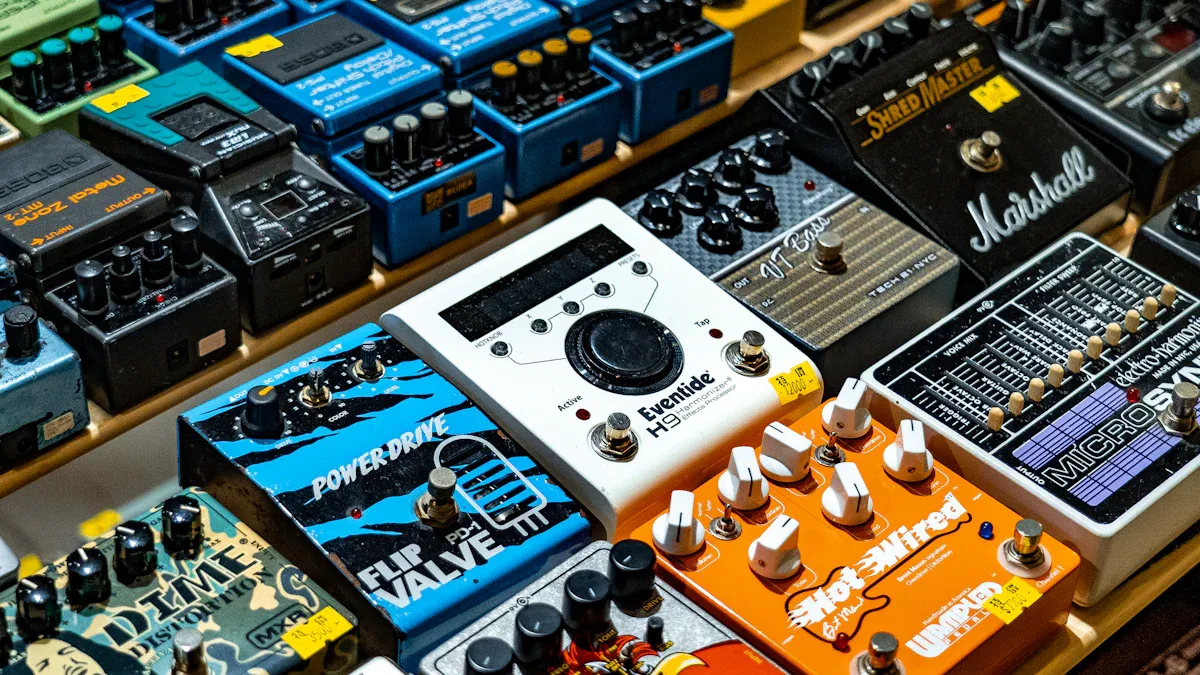
Bassists have lots of ways to change their sound. The main kinds of bass effects pedals help players make new tones and styles. Here is a quick look at some popular groups:
|
Category |
Description |
|---|---|
|
Used to change certain frequencies, comes in graphic and parametric types. |
|
|
Wah Pedals |
Make a sweeping sound, liked in rock and metal. |
|
Multi Effects |
Put many effects in one device, good for beginners and pros. |
|
Distorsion |
Has overdrive, distortion, and fuzz pedals, used for strong sounds. |
|
Modulation |
Changes timing or frequencies, includes octaver and chorus pedals. |
Overdrive and Distortion
Overdrive and distortion pedals change the bass signal. They add extra sounds and harmonics. These pedals give everything from soft fuzz to heavy grit. Overdrive pedals use soft-clipping for a smooth sound. Distortion pedals use hard-clipping for a rougher tone. Fuzz pedals give a classic, rich sound. Some pedals also have filters and different clipping choices. Many bassists like the Electro-Harmonix Bass Big Muff PI for its warm fuzz.
Tip: Distortion pedals help bassists stand out in rock and metal bands.
Compression
Compression pedals are important for bass sound. They keep the volume even by lowering the dynamic range. Compression makes loud notes softer and quiet notes louder. Changing the attack can make the bass feel punchy. A fast attack controls strong notes. A slow attack lets the bass thump. Transparent compression smooths peaks but keeps the real sound. Using a low ratio and longer attack or release brings out small details. The Keeley Electronics Bassist Compressor is liked for its gentle touch.
-
Compression helps bassists be heard in the mix.
-
Compression lets players show more feeling.
-
Compression changes the sound and feel.
Chorus and Modulation
Chorus pedals split the bass signal into two parts. The modulated part has a small pitch change. This makes it sound like more than one instrument is playing. Chorus adds movement and depth. It works well with clean or overdriven bass. Popular chorus pedals are the EHX Bass Clone and Boss CE-2W Waza Craft Chorus. Modulation pedals, like the JAM pedals WaterFall, give vibrato and other effects.
Octave and Pitch
Octave pedals use pitch-shifting to make notes higher or lower than the original. Digital octave pedals track pitch well. They let players mix different octaves for a bigger sound. These pedals can make the bass sound like a synth or organ. Octave pedals help bassists make bold new tones or add soft layers.
-
Octave pedals give more sound choices.
-
They let players blend sounds in creative ways.
Filter and Wah
Filter and wah pedals give bassists funky, moving sounds. Wah pedals sweep through frequencies. Envelope filters react to how hard the strings are played. These pedals are liked in funk and rock. The Xotic Wah and Fulltone Clyde Deluxe Wah give warm, even sounds. The Mu-Tron Micro-Tron IV and MXR M82 Bass Envelope Filter are favorites for classic funk.
|
Pedal Model |
Description |
|---|---|
|
The Xotic Wah |
Clear wah effect, even sound without too much treble. |
|
Fulltone Clyde Deluxe Wah |
Old Vox style, warm sound for funk. |
|
Mu-Tron Micro-Tron IV |
Classic funk sound, reliable reissue. |
|
MXR M82 Bass Envelope Filter |
Works for guitar and bass, liked in funk. |
|
Keeley Neutrino |
Special envelope filter, settings can be changed. |
|
Electro-Harmonix Q-Tron+ |
Warm, funky sweep, made by Mu-Tron creator. |
Players can mix these types of bass effects to find their own style.
Impact of Bass Guitar Effects Pedals
Shaping Sound
Effects pedals help bassists change their sound in many ways. They can make the bass louder or softer. Some pedals change the tone a lot. Some pedals add grit or fuzz. Others make notes smooth and clear. Players use pedals to match their sound to each song or style. A rock bassist might want a heavy, distorted sound. A funk player might pick a pedal for a punchy, funky feel.
Musicians like to try different pedals to find new sounds. They sometimes use more than one pedal at a time. This helps them discover what works best for their music. Many bassists think pedals help them stand out in a band. The right pedal can make a simple bass line exciting.
Note: Effects pedals can help bassists be creative. A new sound can give ideas for a song or riff.
Performance Versatility
Bassists must change their sound quickly during shows or recording. Effects pedals let them switch sounds fast. One tap can go from clean to gritty. This helps them play any genre or fit any setting. Some pedals, like the MUSONTEK Functional – GRRR Monster, have extra features. These include boost, DI, and cabinet simulation. These features help players adjust their sound for different places.
Here are some ways effects pedals help:
-
Fast sound changes during a show
-
Easy setup for recording or live gigs
-
Can blend with other instruments
-
Control over noise and signal quality
Bassists use effects pedals to be ready for any music. They can change their sound, match the mood, and keep the audience interested. The right pedalboard makes every show or session easier.
Notable Bassists and Their Effects Pedals
Famous Users
Many famous musicians have changed the way people think about bass. They use effects pedals to create new sounds and styles. Flea from Red Hot Chili Peppers loves using envelope filters and distortion. His funky bass lines often stand out in songs. Chris Wolstenholme from Muse uses a mix of fuzz, octave, and synth pedals. He builds huge walls of sound that fill stadiums. Bootsy Collins, a legend in funk music, uses wah pedals and envelope filters. His bass grooves feel alive and full of energy.
Here is a quick look at some well-known bassists and their favorite pedals:
|
Bassist |
Favorite Pedals |
Style |
|---|---|---|
|
Flea |
Envelope Filter, Distortion |
Funk/Rock |
|
Chris Wolstenholme |
Fuzz, Octave, Synth |
Alternative |
|
Bootsy Collins |
Wah, Envelope Filter |
Funk |
|
Justin Chancellor |
Overdrive, Delay |
Progressive |
|
Victor Wooten |
Compression, Chorus |
Jazz/Fusion |
Note: Many top players use effects pedals to help their bass sound unique.
Influence on Bass Playing
Effects pedals have changed the way people play bass. Musicians now have more ways to shape their sound. They can make the bass sound deep, bright, or even like a synth. Players use pedals to fit different styles, from rock to jazz. Some bassists use pedals to stand out in a band. Others use them to blend in and support the music.
Effects pedals help bassists try new ideas. They can switch sounds quickly during a show. This makes live music more exciting. Many young players look up to famous bassists and want to copy their pedal setups. The use of effects pedals has made the bass more than just a background instrument. It can lead a song or create new textures.
Tip: Trying different pedals can help any bassist find their own voice.
Should You Use Bass Effects Pedals?
Getting Started
Every bassist has a unique sound. This sound comes from the instrument, the amp, and the way someone plays. Some players use their fingers, while others use a pick. Even where a player plucks the strings can change the brightness or depth of the music. Many bassists also try new strings or adjust the EQ on their amp to find a fresh tone.
Trying new things is part of the fun. Some bassists like to experiment with different gear. They might test out a new pedal or change their playing style. These changes can lead to exciting results. A new pedal might inspire a new song or riff. No two players sound exactly the same, so each person’s journey will look different.
Tip: Experimenting with gear helps bassists discover what works best for them. Sometimes, a small change can make a big difference.
Choosing the Right Pedals
Picking the right pedal can feel overwhelming. There are many choices, but a few simple steps can help. First, think about what kind of music you want to play. Some pedals work better for rock, while others fit jazz or funk. Next, decide what you want to change about your sound. Do you want more punch, a smoother tone, or something wild and new?
Here is a simple guide to help:
|
Étape |
What to Try |
|---|---|
|
1 |
Adjust your amp’s EQ |
|
2 |
Try playing with fingers or a pick |
|
3 |
Change your plucking position |
|
4 |
Test new strings |
|
5 |
Try a new pedal |
Bassists should not be afraid to try different pedals. Sometimes, the best way to learn is by listening and experimenting. Many players find that a pedalboard grows over time as they discover new sounds. The right pedal can help a bassist stand out or blend in, depending on what the music needs.
Note: There is no single “best” setup. Each bassist creates their own path by exploring and listening.
Bass players have many ways to shape their sound. They use tools like compression for smooth notes, distortion for grit, and envelope filters for funky grooves. Some add a preamp or DI-box for better control in live shows or the studio. The MUSONTEK GRRR Monster gives even more options for any bass setup. Every player can find something new to try. Have you found a pedal that changed your bass sound? Share your story in the comments!
FAQ
Do all bassists need effects pedals?
Not every bassist needs effects pedals. Some players like a clean, natural sound. Others want more options for their music. It depends on the style and what the bassist wants to create.
Can guitar pedals work with a bass guitar?
Many guitar pedals work with bass, but some may cut low-end frequencies. Bass-specific pedals keep the deep sound strong. Players often test both to see what fits their needs.
What order should bass pedals go in?
Most bassists start with compression, then add overdrive or distortion, followed by modulation and time-based effects. Some experiment with the order to find their favorite sound.
Tip: Try different pedal orders to discover new tones!
What is a good first pedal for beginners?
A compressor or overdrive pedal makes a great first choice. These pedals help shape the sound and add punch. Beginners often start simple and add more pedals as they learn.