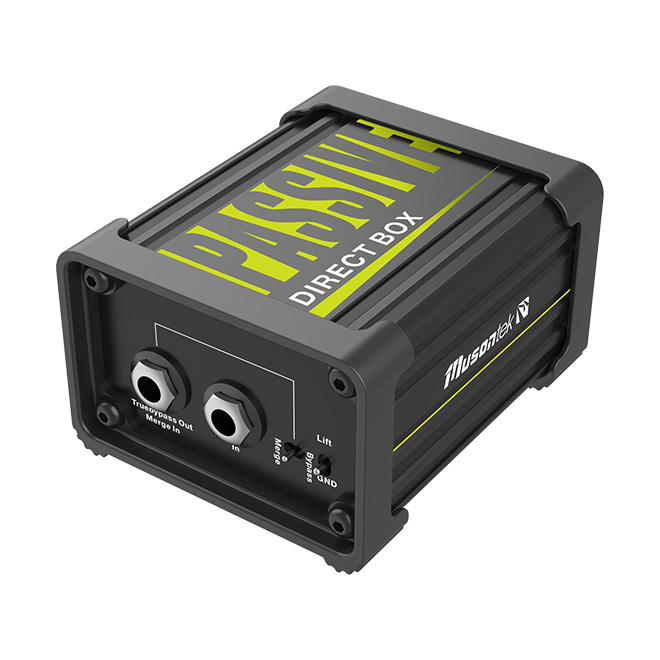
A DI box converts an unbalanced guitar signal to a balanced signal. This process helps musicians achieve a clearer, less noisy sound. Many musicians use DI boxes to connect their instruments to mixing consoles or recording equipment. They find that DI boxes reduce hum and maintain a full tone over long distances. Whether performing live or recording in the studio, DI boxes ensure reliable performance.
¿Qué es una caja DI?
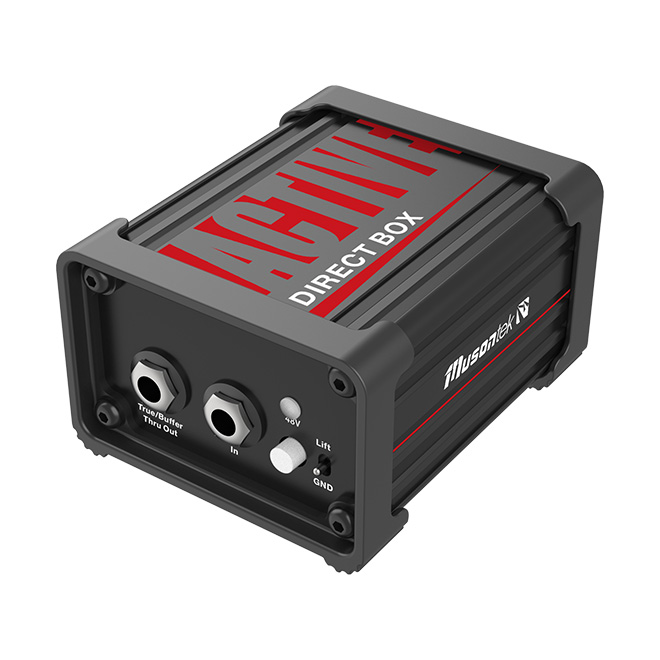
Conversión de señales
A DI box acts as a bridge between your instrument and your audio equipment. It converts the guitar’s unbalanced signal to a balanced signal. This helps you connect your guitar to a mixing console or audio interface without sacrificing sound quality.
DI boxes offer several important features:
- Interface Matching: It allows you to use plugs with XLR inputs on your audio system.
- Impedance Matching: It provides high input impedance, so you don’t lose high-frequency signals when connecting to a mixing console.
- Signal Balancing: It converts unbalanced signals to balanced signals, allowing you to transmit sound further without introducing noise.
The transformer inside a DI box matches the signal impedance to the balanced input, maintaining a strong and clear sound. A balanced connection also effectively blocks noise and interference. This is especially important when using long cables on stage or in the recording studio.
Why Guitars Need DI Boxes
Guitars produce relatively weak and low-power signals. If a guitar is plugged directly into a mixing console, the high-impedance signal can lose clarity and volume. Mixing consoles are designed for low-impedance signals, so direct plugging usually degrades sound quality. DI boxes solve this problem by converting high-impedance signals to low-impedance outputs. This helps the signal travel better, maintaining good sound quality even with long cables.
DI boxes also protect the guitar signal from noise and interference. On stage, cables can be very long, making this protection crucial. DI boxes help maintain a clear and pure sound, eliminating hum and noise that can affect a performance.
DI Box Benefits
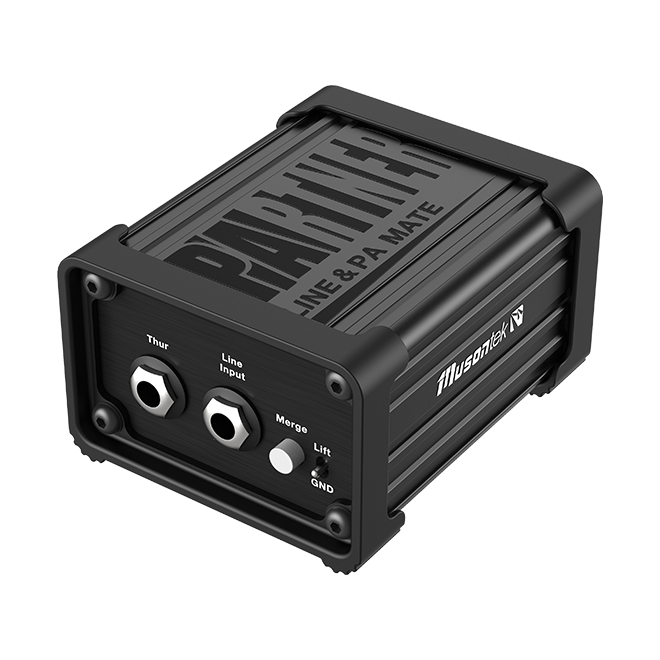
Sound Quality Improvement
DI boxes help guitarists maintain a clear tone. They convert the guitar signal to a balanced signal, reducing the likelihood of audio pick-up noise. Musicians receive a stable signal without loss of sound quality. Even with long cables, the sound remains powerful and robust.
- The DI box converts the electric guitar’s unstable signal into a balanced one, helping to reduce noise.
- It also reduces electromagnetic interference from nearby devices, thus improving signal quality.
- The stable signal allows the DI box to output clearer audio, reducing the possibility of sound quality loss.
Guitarists can ensure their tone remains consistently pure. Whether playing on stage or recording in the studio, the DI box allows them to use longer cables without sacrificing sound quality. Therefore, the DI box is ideal for both live performances and studio recording.
Reducción del ruido
Noise can ruin a performance or recording. DI boxes can help musicians avoid problems like hum and hiss. They eliminate ground loop hum, which is the humming sound produced when different devices are connected to the same power source.
- DI boxes help eliminate ground loop hum, a common problem in guitar setups.
- They also eliminate interference. This makes live performances and recordings sound clearer.
DI boxes give electrical isolation between devices in a signal chain. This stops the physical connection between grounds that can cause hum.
This isolation keeps the guitar signal pure. It eliminates unwanted noise. Musicians can focus on playing. They know the DI box will protect their signal from interference.
Reliable Connections
DI boxes provide guitarists with reliable connections in many situations. They convert high-impedance, unbalanced signals to low-impedance, balanced signals. This allows the guitar to work with mixing consoles, audio interfaces, and other equipment.
- DI boxes convert high-impedance, unbalanced signals from instruments to low-impedance, balanced signals. This is crucial for compatibility with external devices.
- This change reduces noise. It allows musicians to use longer cables without sacrificing signal quality.
- Features such as grounding switches and pass-through/bypass outputs make the DI box more practical and reliable in various setups.
Passive DI boxes use an internal transformer to isolate ground voltage, thus preventing ground loops. Active DI boxes are equipped with active preamplifiers, providing greater dynamic range and signal enhancement. These features help maintain a strong signal over long distances.
DI boxes also save cost and time. They provide reliable signal transmission, allowing musicians to use longer cables without complex microphone setups or additional equipment. Mixing direct and microphone signals improves sound quality and efficiency in live performances and studio environments.
The table below illustrates how DI enclosures bring more possibilities to guitarists:
| Característica | Benefit for Guitarists |
| Clean and strong signal | Keeps sound quality over long distances and setups |
| Multiple instrument connections | Makes switching between different guitars easy |
| Noise reduction | Lowers interference and ground loop hum |
| Compatibilidad | Works with many guitar types and setups |
| Phantom power | No need for batteries in studio settings |
| Phase reverse switch | Helps mix signals from many sources |
| Audio isolating transformer | Protects the signal from noise interference |
A high-quality DI enclosure can last for many years. Some models can even last up to 20 years. Therefore, a DI enclosure is a wise investment for any guitarist.
How DI Boxes Work
Adaptación de impedancias
A DI box converts the impedance of a guitar signal from high to low. Electric guitars typically have high output impedance, which can cause them to lose high frequencies when connected to audio equipment. A DI box matches the impedance, maintaining a strong and clear signal, resulting in good sound quality for both live performances and recording studios.
- High-impedance pickups produce a sharper and more impactful tone.
- Low-impedance pickups provide a cleaner signal, revealing musical detail.
- If impedance is mismatched, the guitar may lose high frequencies and clarity.
Impedance matching allows the full tone to reach the amplifier or mixing console. A DI box maintains tonal accuracy and prevents muddiness.
Balanced Connections
Balanced connections maintain the purity of the guitar signal. The DI box sends both the raw and inverted signals simultaneously. If noise is introduced into the cable, both signals are affected equally. Ultimately, the mixing console or audio interface eliminates the noise, leaving only the guitar’s sound.
| Ventaja | Explanation |
| Adaptación de impedancias | DI boxes change high impedance to low, keeping the guitar’s tone accurate. |
| Reducción del ruido | The transformer blocks unwanted noise and ground hum. |
| Natural Compression | Passive DI boxes add a pleasing effect that improves sound quality. |
Balanced connections also stop hum and buzz from power lines or other gear. This makes the DI box important for musicians who want a clear signal.
Cable Length and Signal Integrity
Excessively long cables can affect the guitar signal. The longer the cable, the greater the impedance and noise. High frequencies are most prone to attenuation or distortion. DI boxes address this issue by balancing the signal. This helps the signal maintain its quality over long distances.
- Low-capacitance cables maintain clear high frequencies.
- Excessively long cables can cause signal loss and slower transmission speeds.
- The longer the cable, the greater the likelihood of external noise entering.
Even with long cables on stage or in the recording studio, DI boxes maintain a strong and clear signal. Musicians can rest assured that their sound will be transmitted to the mixing console without loss.
Types of DI Box
Active DI Box Features
Active DI boxes have built-in power circuitry that amplifies and balances the guitar signal. They work best with passive pickups, as passive pickups typically have lower signal strength. The Musontek AD1L active DI box is a prime example. It uses specialized circuitry and a dual-transistor Class A buffer, a design that maintains a clear, sharp sound, performing well at all volumes.
The Musontek AD1L has a custom transformer inside. This part stops ground loops and hum, so the signal stays clean. It also has ground lift and phase reverse switches. These help fix common problems on stage fast.
Here is a table that compares the Musontek AD1L to other DI boxes:
| Especificación | Musontek AD1L | Industry Standard |
| Rango dinámico | 118 dB | 100dB – 120dB |
| Respuesta en frecuencia | ±0.2dB (20Hz-20kHz) | N/A |
| Impedancia de entrada | 1MΩ | N/A |
Passive DI Box Features
Passive DI boxes use transformers instead of power supply components. They operate without batteries or phantom power. The Musontek PD1L passive DI box is easy to use, plug and play. It can handle high-volume signals without altering its tone, maintaining the naturalness of the guitar tone. The PD1L is equipped with a ground switch and an attenuation switch, giving you more control in different settings.
- Capable of handling loud sounds without altering the original tone
- Preserves the natural characteristics of the guitar tone
- Simple to use, no batteries or phantom power required
The table below lists the differences between passive and active DI boxes:
| Característica | Caja DI pasiva | Caja DI activa |
| Requisitos de potencia | No necesita alimentación | Needs batteries or phantom power |
| Conversión de señales | Transformer | Active circuitry |
| Tone Coloration | Minimal | Possible slight coloration |
| Best Use | Active pickups | Passive pickups |
| Cable Distance | Shorter runs | Longer runs |
| Precio | Baja | Más alto |
| Extra Features | Fewer | More (e.g., ground lift, EQ) |
Choosing the Right DI Box
Musicians should consider their guitar and equipment configuration before choosing a DI box. If your guitar has passive pickups, an active DI box like the Musontek AD1L can provide a powerful and clear sound.
For live performances, active DI boxes effectively solve the problems of excessive cable length and noisy environments. In the recording studio, passive DI boxes are simple to use and perform well.
Musicians can focus on features such as grounding switches, attenuation switches, and phase inversion. These features help address sound issues. Both Musontek DI boxes have these features, making them ideal for various setups.
DI boxes help guitarists achieve better sound quality and lower noise, while also providing a stable connection for their equipment. Musontek DI boxes ensure that guitars maintain a clear tone in any environment. The table below explains the importance of DI boxes:
| Feature/Benefit | Descripción |
| Calidad de sonido | Changes signals so they work better and sound clearer |
| Reducción del ruido | Makes hum and interference lower |
| Durabilidad | Made tough to last a long time |
| Cost-Effectiveness | Saves money and works for beginners and experts |
Musicians know Musontek DI boxes work well on stage and in studios.
PREGUNTAS FRECUENTES
What’s the difference between a direct-injection box and a direct-input box?
These two terms refer to the same device. “Direct-injection” and “direct-input” are used to refer to a device that alters the instrument’s signal, making it compatible with mixing consoles or audio interfaces. Musicians use these devices to achieve a clear sound and reduce noise.
Why do electric guitarists need DI boxes?
Electric guitarists use DI boxes to maintain a full and clear tone. DI boxes help transmit signals over long distances without loss of sound quality. They also protect the sound from unwanted noise during live performances or studio recordings.
Can DI boxes be used on acoustic guitars?
Yes, DI boxes are ideal for acoustic guitars. They help the instrument connect to mixing consoles and recording equipment. DI boxes maintain a natural sound and reduce hum or noise, thus improving performance and recording quality.
Are DI boxes suitable for live performances and studio recordings?
DI boxes are suitable for both live performances and studio recordings. They provide musicians with a reliable way to connect their instruments to sound systems. Wherever you play, a DI box keeps the signal clear and strong.
What features should a DI box have?
Musicians should check if a DI box has a ground switch, attenuator, and phase inversion function. These features help resolve common sound quality issues. A robust casing and easy setup also make the DI box more practical in various situations.