Low-pass filters are commonly used in audio and signal processing to remove high-frequency noise. High-frequency noise refers to unwanted, higher-frequency sounds or signals. This noise makes music or recordings difficult to hear clearly. Noise filters like low-pass filters allow signals below a certain frequency to pass through while attenuating signals above that frequency. There are many types of noise filters, some analog and some digital. They improve sound quality in different ways.
- Low-pass filters allow low-frequency signals to pass through.
- They attenuate or block high-frequency signals.
- This helps make audio and other signals clearer.
Principales conclusiones
- Low-pass filters remove high-frequency noise, making audio sound clearer and more pleasant.
- Digital filters, such as FIR and IIR filters, can be adjusted according to different signals, significantly improving sound quality.
- Choosing the right filter means you need to understand the characteristics of the signal and noise. This helps the filter perform optimally.
- Analog filters, such as RC and LC filters, are a cost-effective method for dealing with high-frequency noise and are widely used in various applications.
- Specialized filters used in hearing protection and electronic products offer new avenues for noise reduction.
How Filters Remove High-Frequency Noise
Principle of Noise Filtering
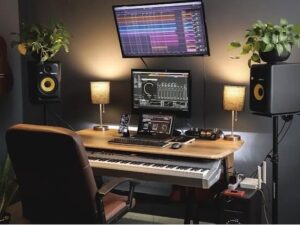
Filters help people distinguish between good and bad sound. If high-frequency noise is present in music, a filter can improve its sound quality. Noise filters allow certain frequencies to pass through while blocking others. This is called noise suppression.
Engineers use different filters to make sound clearer. Digital filters, such as FIR and IIR filters, remove unwanted signals. In one test, these filters effectively cleaned up sinusoidal signals, making measurements easier to read and more accurate. Adaptive filters, such as the LMS algorithm, also perform well. They can reduce the noise floor of ultrasonic signals, thus helping to detect material defects. The following table lists the results of experiments and tests:
| Evidence Description | Findings |
| Adaptive filtering methods, especially the LMS algorithm, work well to reduce high-frequency noise. | The noise floor in ultrasonic signals dropped below 35 dBm. This made it easier to find defects. |
| FIR and IIR filters were used to clean up a sinusoidal signal. | The filters removed unwanted signals. This made measurements clearer and more accurate. |
| Magnitude response simulation shows how the FIR filter acts as a low-pass filter. | The FIR filter lets low-frequency signals pass. It weakens high-frequency noise. This makes sound clearer. |
Noise suppression is more difficult in complex environments. Some challenges include complex acoustic environments, sensor placement, and the diversity of noise sources. Changes in environmental conditions can also degrade filter performance.
Low-Pass vs. High Pass Filter
There are many types of filters, but low-pass and high-pass filters are particularly important. Each type of filter handles frequencies differently.
Low-pass filters allow low-frequency signals to pass through while blocking or attenuating high-frequency signals. Low-pass filters are used to eliminate high-frequency noise in audio, electronic devices, and images. These filters are commonly found in music equipment such as subwoofers, helping to produce a smooth, deep sound.
High-pass filters, on the other hand, allow high-frequency signals to pass through while blocking low-frequency signals. High-pass filters can eliminate low-frequency noise, such as hum or rumble. They also help sharpen images and make audio clearer.
The table below compares these two types of filters:
| Característica | Low-Pass Filter (LPF) | High-Pass Filter (HPF) |
| Gama de frecuencias | Lets frequencies below the cutoff frequency (fc) pass. | Lets frequencies above the cutoff frequency (fc) pass. |
| Stop-band Attenuation | Weakens high frequencies by 20 dB per decade. | Weakens low frequencies by 20 dB per decade. |
| Applications | Removes high-frequency noise, smooths signals, used in audio subwoofers, blurs images. | Removes DC offsets, used in audio tweeters, AC coupling, sharpens images. |
Low-pass filters are chosen to eliminate high-frequency noise. High-pass filters are better suited for handling low-frequency issues. Both filters improve signal quality and reduce noise.
Engineers must consider the environment and noise type when designing noise suppression filters. Acoustic environment, sensor location, and many noise sources affect noise suppression performance. Changes in environmental conditions also increase the difficulty of noise suppression.
Types of Noise Filters
Analog Filters (RC, LC, Active)
Analog filters use actual components to control signals. Engineers use RC filters, LC filters, and active filters to eliminate high-frequency noise. An RC filter contains a resistor and a capacitor. It is suitable for low-frequency signals and is relatively inexpensive. An LC filter contains an inductor and a capacitor.
Tip:Many electronic devices use bypass capacitors to block high-frequency noise. Placing bypass capacitors near the chip can keep the signal pure. Decoupling capacitors can also prevent noise propagation.
Here is a table that compares common analog filters:
| Filter Type | Gama de frecuencias | Performance | Size and Cost | Power Requirements |
| LC | High-frequency | Minimal signal loss | Large and costly | Passive, no external power |
| RC | Low-frequency | Adequate but can suffer from attenuation | Compact and economical | Passive, no external power |
| Activo | Wide range | High precision and gain | Varies in size and cost | Requires external power |
Some filters, such as LC bandpass filters, are used in radio systems. Surface acoustic wave (SAW) filters are used to process extremely high-frequency signals in wireless devices. Cavity bandpass filters are used in spacecraft communications.
Digital Filters (Moving Average, Gaussian)
Digital filters use mathematical operations to modify signals. Moving average filters can smooth random noise in time-domain signals while preserving signal abrupt changes. This is very useful in many audio and data systems. Gaussian filters are widely used in image processing. They can gently blur images and remove high-frequency noise without losing important details.
- Digital filters are easy to adjust in software.
- They require no additional hardware.
- They can adapt to different signals.
One study showed that FIR filters can clean up electrocardiogram (ECG) signals. The design of these filters is crucial; it helps to maintain signal clarity while removing noise.
Here is a table showing the advantages of digital filters:
| Ventaja | Descripción |
| Smoothing Signals | Digital filters smooth signals and keep important features. |
| Ease of Implementation | They are easy to use in software. |
| Adaptability | Filters can change settings quickly for different needs. |
Many digital filters use bypass capacitors in their circuitry to block high-frequency noise from power lines.
Specialized Filters (Hocks Noise Breakers, EP-2700)
Some filters employ new technologies to suppress noise. Hocks noise-canceling earplugs are earplugs with special filters that block loud, high-frequency noise, helping musicians and workers protect their hearing. The EP-2700 is a filter used in the electronics field to eliminate unwanted signals in critical operations such as aerospace or military work.
Note: Modern filters use smart ideas like machine learning. These filters can change how they work in real time. Some combine high-pass filters with other tricks to block even more noise.
Specialized filters often use a bypass capacitor in their design. This helps them stop high-frequency noise before it reaches important parts.
Choosing the Right Filter for High-Frequency Noise
Cutoff Frequency and Filter Design
To choose the best filter, you need to understand the characteristics of the signal and noise. Engineers will examine which frequencies are present in the signal and noise. They will select a cutoff frequency to distinguish the valid signal from the noise. The cutoff frequency is the frequency at which the filter begins to attenuate noise.
Several key factors need to be considered when selecting a filter:
- Signal characteristics: Determine which frequencies in the signal are important.
- Noise characteristics: Analyze which frequencies are present in the noise.
- System requirements: Ensure the cutoff frequency meets system requirements, such as reducing distortion or improving noise cancellation efficiency.
- Filter order: Higher-order filters attenuate faster after the cutoff frequency, but may cause phase shift or distortion.
A high pass filter is made to let high frequencies go through and block low ones. How well it works depends on the cut-off frequency, how much signal is lost, and how fast it drops off. In radar, a high pass filter helps get rid of low-frequency clutter. This makes it easier to see targets.
Musicians and audio engineers look at stopband attenuation. This tells how well the filter blocks signals you do not want. They also check the impulse response. This affects how clear and real the music sounds. A good filter keeps the details in music but takes away high-frequency noise.
Application Context (Audio, Electronics, Image)
The best filter depends on its application. Each area has unique needs:
- In audio, filters help separate music from background noise. FIR filters are widely used for their excellent sound quality. This is crucial for music and broadcasting.
- In electronics, filters control the amount of signal transmitted and reduce interference. High-pass filters are used to eliminate hum and rumble. Filters also help with channel selection and maintaining signal clarity over long distances.
- In image processing, filters eliminate grainy noise, making images sharper. The grain size of film or tape affects noise, so filters must meet the image’s requirements.
Noise filters in electronics are often used to suppress hissing caused by thermal disturbances. In image processing, grain structure helps in selecting the appropriate filter. Digital filters, while more expensive and power-consuming, are generally more effective. Analog filters are simpler and cheaper; if your power supply is limited, analog filters are a good choice.
Tip: Always pick the right cut-off frequency and filter type for your job to get the best results.
Filter Practical Examples and Musontek Solutions

Audio Noise Filtering (GRRR Monster, MOD Voyager)
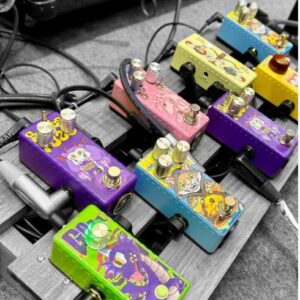
Musicians and audio experts use noise filters to improve the sound quality of music. Musontek’s GRRR Monster helps artists alter the timbre and eliminate high-frequency noise. This effect uses special components that preserve the true timbre of instruments while blocking harsh noise. MOD Voyager is another effect from Musontek.
Noise filters are crucial in many audio applications. Google Meet uses artificial intelligence to eliminate background noise and keep vocals clear. Microsoft’s Azure Cognitive Service improves meeting audio quality by eliminating noise and echo. Engineers used a noise-canceling plugin to restore an old interview recording, eliminating static and background noise. A podcast recorded in a busy coffee shop became clearer after using a high-pass filter and volume adjustment tools. These examples demonstrate that noise filters, such as high-pass filters, help make audio clear and professional.
Other Real-World Applications
Noise filters are also useful in many other fields. In the electronics field, noise filters maintain signal purity and prevent equipment malfunctions. The table below lists some advantages:
| Benefit Type | Descripción |
| Performance Enhancement | Noise filters let only the right signals pass, making systems work better. |
| Clear Communication | They stop signal interference in radios and TVs, so messages stay clear. |
| Prevention of Malfunctions | They stop electrical noise from causing problems in phones and game consoles. |
Noise filters also play a role in medical equipment such as electrocardiographs and MRI scanners. They ensure patients receive safe and clear signals. In factories, they reduce noise generated by power supplies and motors. In home electronics, they eliminate image problems, making devices more comfortable to use.
When choosing a filter, one should consider the following: whether it is compatible with the system’s voltage and frequency, what kind of noise needs to be eliminated, whether it is easy to use, and where the filter will be used. High-pass filters eliminate low-frequency hum, while low-pass filters block high-frequency hiss. One should choose the filter that best suits their needs. High-pass filters are best suited for eliminating rumble and maintaining clear human voices. Musicians, engineers, and electronic device users are more productive if they know which filters deliver the best results.
Low-pass filters are the best for taking out high-frequency noise. They work well and keep the signal clear. Studies say FIR low-pass filters do a great job and are very efficient. Other ways might not work as well and could hurt the signal.
| Method | Effectiveness | Integridad de la señal |
|---|---|---|
| FIR Low-Pass Filter | Alta | Preserved |
| Other Methods | Variable | Risk of Loss |
People and experts like new ideas from Musontek. These help make sound clearer and stop unwanted hum. Special filters help many fields, like cars and hospitals. More people want these filters, and new designs keep coming. Picking the right filter and using good sound treatment keeps sound nice for a long time.
- Readers should think about what they need, look at filter features, and check out new products to get the best results.
- In the future, noise filters will get smarter and use both old and AI methods.
PREGUNTAS FRECUENTES
What is High-Frequency Noise?
High-frequency noise refers to interference signals with very high frequencies. These signals can make music or speech difficult to hear and data difficult to understand. Engineers use filters to eliminate this noise. Filters help make the main signal clearer.
Why Do Musicians Use Low-Pass Filters?
Musicians use low-pass filters to maintain the purity of the sound. These filters block out harsh high-frequency noise. Effects like the GRRR Monster help musicians control the tone. The MOD Voyager also helps reduce background noise in performances.
Can Digital Filters Eliminate High-Frequency Noise?
Digital filters are excellent at eliminating high-frequency noise. They use mathematical operations to alter the signal. Many audio and video systems use digital filters. Digital filters work quickly and can adapt to different needs.
How Does the MOD Voyager Help Eliminate Noise?
MUSONTEK’s MOD Voyager has a color knob. This knob allows users to adjust the high frequencies and noise in the delayed signal. Musicians can shape the sound and maintain its clarity. This method is effective even with long delay effects.
What factors should be considered when selecting a noise filter?
The type of noise and the filter’s cutoff frequency should be checked. The actual requirements of the system should also be considered. Furthermore, the filter’s ease of use is also important. A suitable filter can make the signal clearer and improve system performance.