Stereo delay is an audio effect that gives different delay times to the left and right channels. This makes special echoes that help sounds feel wider and more real. Musicians use stereo delay to make cool rhythms or effects like reverb. A MUSONTEK buffer guitar pedal Adjudicador helps keep the sound clear and strong when you use many effects in a row.
Stereo delay is special because each channel gets its own timing. This makes music feel more lively and three-dimensional.

Principales conclusiones
-
Stereo delay makes sound wider by giving each side a different echo time. This helps music feel more alive and full.
-
A buffer guitar pedal keeps the sound strong and clear when you use many effects. It stops the echo from sounding weak.
-
Changing the delay time for each side can make the stereo image better. Small changes can make music sound bigger and more fun.
-
Stereo delay works well for both singing and playing instruments. It gives songs more depth and makes them clearer and more interesting.
-
Digital delay lets musicians get creative with sound. They can make special echo patterns and effects to improve their music.
Stereo Delay Basics

How Stereo Delay Works
Stereo delay helps music sound bigger by splitting sound into two channels. Each channel gets its own timing, so the left and right speakers play sounds at different times. This makes the music feel wider and more exciting. Musicians use stereo delay to add movement and depth to their songs.
It starts with a stereo sample as the main sound. The channel editor splits this into two mono signals, one for each side. Engineers add an analog delay to both the left and right channels. They can set different delay times, like 5 milliseconds for the left and 20 milliseconds for the right. This timing difference makes special echoes that bounce between speakers.
Stereo delay often uses two short delays that are panned hard left and right. This makes the sound feel much wider than a mono delay. The Precedence Effect is a psychoacoustic trick that changes how we hear where sounds come from. Pitch-shifting in stereo delays can also change the balance of the stereo image, which does not happen with mono delay.
Digital delay technology is important for stereo delay. It lets you use more than one delay line and set where each echo goes. This is needed for effects like ping pong, where the echo jumps from one side to the other. The DIG digital delay uses two true-stereo delays to make cool and creative effects. You can sync Delay 2 with Delay 1 to make complex patterns. New digital delay technology lets you make echoes move from left to right, creating a rich stereo sound.
Tip: Changing the delay time for each channel can make your music sound more interesting and spacious.
Signal Processing in Left and Right Channels
Signal processing in stereo delay needs careful work. The left and right speakers should have the same frequency response so the sound does not go in the wrong direction. Volume levels must be even so the stereo image stays balanced. The timing of sound from each speaker should match at the listening spot for a good stereo effect.
The process starts by copying the channel and using a Utility device to set the Channel Mode to Left, which ignores the right side. The sound moves to the left, and the volume drops to -3 dB. Do the same for the right channel so both sides are handled on their own.
Stereo delay lets you control the delay time for each channel. This makes the sound more complex. Each sound in the stereo mix can have its own filter and Doppler shift, which adds to the space effect. The stereo mix can have many sounds in different places, making the music feel more lively.
Digital delay technology makes stereo delay better by giving true-stereo delays. These delays can sync with each other for creative sound design. Echoes can jump between channels, like in ping pong effects, because of digital delay. This helps musicians and engineers make wide and immersive sound spaces.
-
Key ideas for good stereo delay signal processing:
-
Make sure both speakers have the same frequency response.
-
Keep the volume even on both sides.
-
Match the timing of sound from each speaker at the listening spot.
-
Stereo delay is different from other delay effects because you can control each side on its own. Digital delay technology makes these features possible, so stereo delay is popular in modern music.
Key Features of Stereo Delay
Independent Channel Control
Stereo delay units let people change sound in fun ways. You can set each channel by itself. The left and right sides can have different settings. A musician might put a short echo on one side. They can put a long echo on the other side. This makes the music feel lively and full of movement. Many stereo delay pedals and plugins have controls for delay time, feedback, and mix for each channel. These controls help musicians make special echo patterns that move across the stereo field.
Here is a table that shows common features in stereo delay units:
|
Característica |
Descripción |
|---|---|
|
Independent Channels |
Lets you control left and right channels separately. |
|
Delay Mode/Model |
Choices like Mono, Stereo, and Ping Pong make stereo effects better. |
|
Feedback Level |
Changes how long the echo lasts. |
|
Cutoff Filter |
Lets you change the sound to make different moods. |
|
Mix/Output |
Sets how much dry and wet sound you hear. |
|
Additional Effects |
Adds things like saturation and modulation for more sound options. |
Musicians often use different delay times for each channel. This makes a wide echo effect. Short and long echoes can make cool rhythms. Cross-feedback lets echoes from one side go to the other. This adds even more depth.
Enhancing Stereo Width
Changing each channel does more than make cool echoes. It also makes music sound wider. When the left and right sides have different echoes, the sound feels bigger. The brain hears the timing and level changes. This helps make the music feel like it is in a big space.
-
You hear width because the left and right channels are different.
-
Recording the same part twice or using different echo times makes the stereo image larger.
-
Changing the middle and side sounds lets engineers make the center strong or spread out the sides.
Even small changes in echo timing, like a few milliseconds, can move where the sound seems to come from. In live shows, engineers sometimes delay speakers by 10-20 milliseconds. This makes the echo sound like it comes from the stage, not the speakers. It helps the music feel natural.
Tip: Try using different echo times on each channel. This can make your mix sound wider and more fun.
Stereo Delay in Music Production
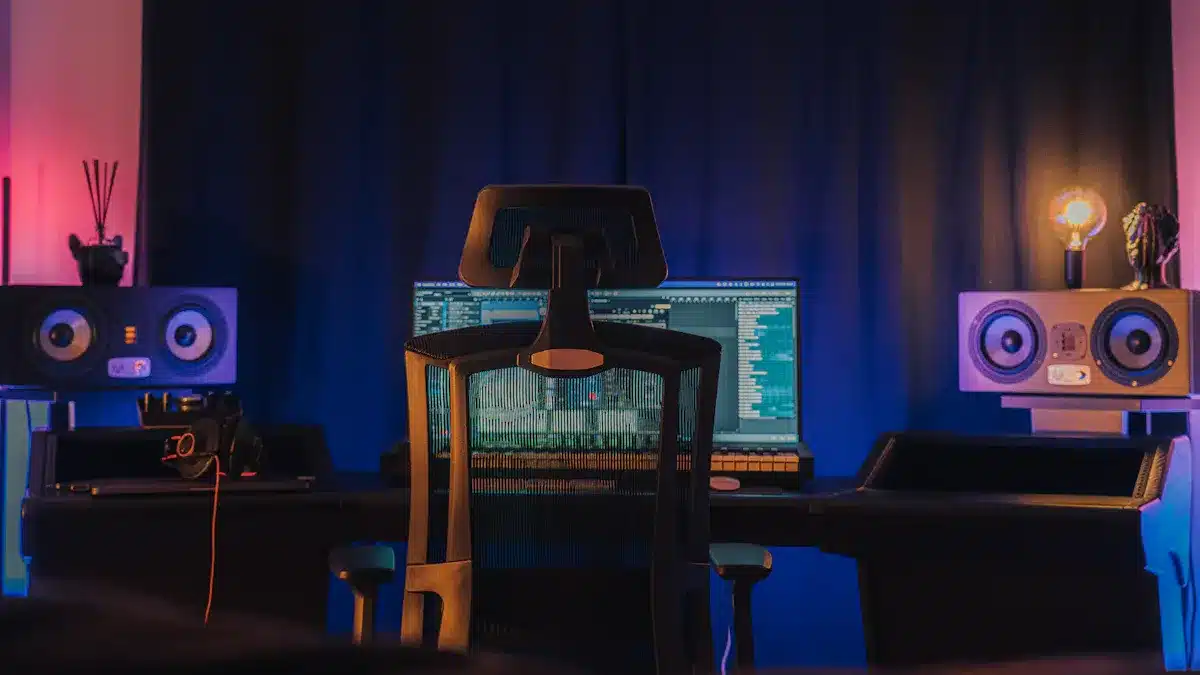
Applications for Vocals and Instruments
Stereo delay helps music sound deeper and bigger. Producers use delay to help vocals fit better in songs. This effect gives space and makes each word clear. Stereo delay can make singing sound wider, which makes the music feel larger. Musicians use echo to highlight words, fill quiet spots, and add rhythm. For example, slap delay gives vocals more depth. Changing delay times helps match the song’s speed. Automation lets producers change delay settings as the song plays, so the sound stays interesting.
Many well-known songs use stereo delay for special sounds.
-
“OWNER OF A LONELY HEART” by YES uses panning and stereo effects on singing and instruments.
-
“WONDERS OF THE DEEP” by Chemical Brothers uses wide panning for background singing and synthesizers.
-
“SHEEP” by Pink Floyd has soft panning on organ and singing.
-
“LUCKY MAN” by Emerson, Lake & Palmer has a synthesizer solo with moving stereo sound.
-
“RAMBLE ON” by Led Zeppelin has layered singing with cool panning.
-
“MAGGOT BRAIN” by Funkadelic starts with wide stereo reverb and delayed guitar solos.
-
“IF 6 WAS 9” by Jimi Hendrix Experience uses stereo panning and echo on guitar solos.
-
“THE BOMBER” by James Gang moves the guitar solo across the stereo field.
Stereo delay works great in live shows and in the studio. Musicians use echo to make instruments sound bigger and more fun. In big setups, a buffer guitar pedal like the Musontek Adjudicator keeps the sound clear and strong, even with many effects.
Creative Sound Design
Stereo delay is a strong tool for making new sounds. Electronic and experimental music often uses echo to build thick sound layers. Producers mix different delays, like slapback and ping pong, to add depth and detail. Layering echo effects makes music sound full and exciting.
Controlling the left and right channels lets producers shape sound in cool ways. They set different delay times, strengths, and levels for each side, making complex sounds. Digital delay units give musicians more choices to make special echo effects. This is important for electronic music, where new sounds are key.
Sound design in electronic music means making effects from scratch, using layers to create big echo sounds.
Stereo delay lets artists try new things with movement and space. Echo can bounce between speakers, swirl around, or make patterns. These tricks make songs feel lively and fun.
Delay Types Compared
Stereo Delay vs. Mono Delay
Mono delay and stereo delay are not the same. Mono delay uses one signal path. It sends the same echo to both speakers. This keeps the sound in the center and makes it clear. Stereo delay splits the sound into left and right channels. Each side can have its own echo time. This makes the music sound wider and gives more control. Musicians use stereo delay when they want their songs to feel bigger.
-
Stereo delay adds width and depth to music. The echo can move from side to side.
-
Mono delay keeps the sound focused and clear. It works well in busy songs.
-
The Haas effect uses stereo delay to make vocals sound wider. It does this without making a strong echo.
Stereo Delay vs. Digital Delay
Stereo delay is about how the echo moves between left and right. Digital delay is about the technology inside the effect. Digital delay uses computer chips to make echoes. This gives better sound than old analog delay units. Digital delay makes echoes that are very clear and have little noise. It can also do special tricks like freezing, reversing, and pitch-shifting. These tricks help musicians make new sounds and keep the audio quality high. Analog delay uses old circuits to make echoes. These echoes sound warm and natural but may lose some high notes.
Buffer Guitar Pedal Role
A buffer guitar pedal keeps the guitar sound strong and clear. If you use many pedals or long cables, the sound can get weak. This makes the echo dull and lifeless. A buffer guitar pedal fixes this by lowering impedance and boosting the signal. This keeps the echo crisp and punchy, even with many pedals.
-
A buffer guitar pedal helps between the guitar and other pedals.
-
It stops the sound from getting weak, so the echo stays bright.
-
Putting a buffer pedal first helps delay and echo pedals work better.
-
It also stops volume jumps and keeps the echo even across all pedals.
Tip: Use a buffer guitar pedal to keep your echo effects sounding great, even if you use lots of pedals.
Stereo delay makes music sound bigger and deeper. Musicians use it to make songs feel wider and more fun. It helps tracks sound wider and gives vocals or instruments more shape. Ping-pong effects can make sounds move in playful ways. Stereo delay helps people feel like they are inside the music. As new technology comes out, producers keep using stereo delay for richer sounds. Trying stereo delay and buffer pedals can help artists get clear and bright sounds in any setup.
PREGUNTAS FRECUENTES
What does stereo delay do in music?
Stereo delay makes echoes move from left to right. This helps music sound bigger and more real. Musicians use it to add space and depth to songs.
Can stereo delay work with vocals and instruments?
Stereo delay is good for both singing and instruments. Producers use it to make voices sound larger and instruments more exciting. Many hit songs use stereo delay for cool effects.
Why should a guitarist use a buffer pedal with stereo delay?
A buffer pedal keeps the guitar sound strong and clear. If a guitarist uses lots of pedals, the buffer pedal stops the sound from getting weak. The Musontek Adjudicator Buffer Pedal helps keep the sound clear in big setups.
How is stereo delay different from mono delay?
Mono delay gives both speakers the same echo. Stereo delay splits the sound and gives each side its own echo time. This makes the music sound wider and more interesting.