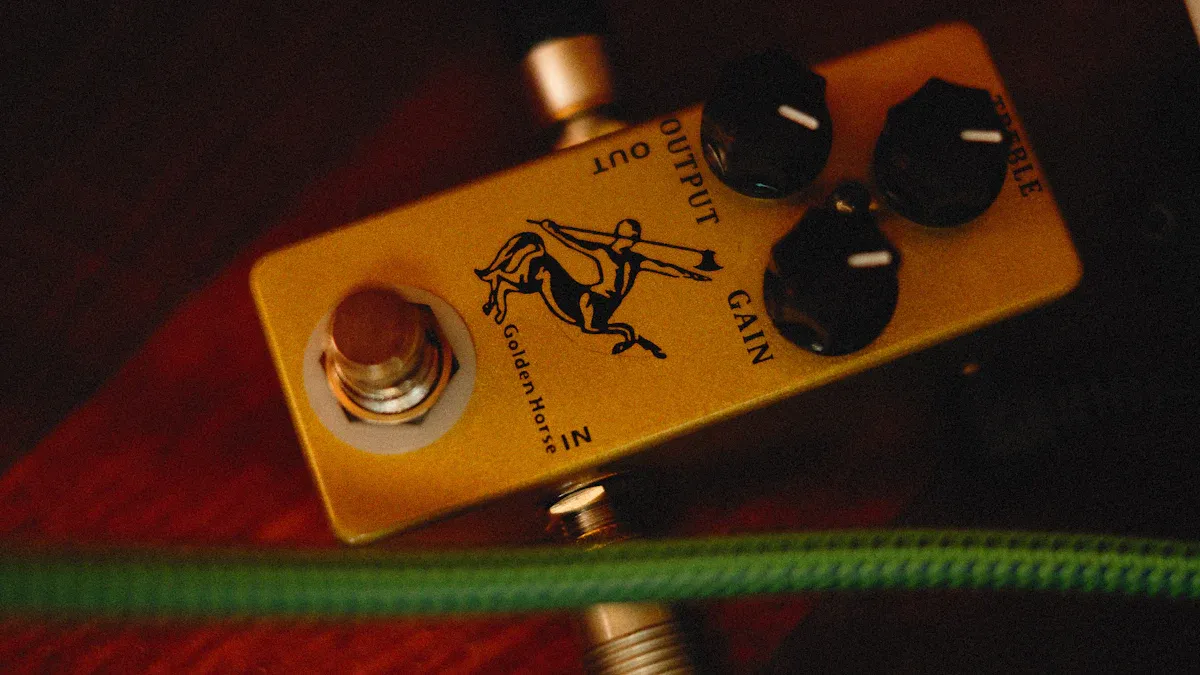
The Klon Centaur works as both a boost and an overdrive. Many guitarists ask this because they want to know how it will shape their sound. Some players use a pedal de efecto boost to make their signal louder without changing their tone. Others prefer a pedal de distorsión overdrive for more grit. A compression pedal can smooth out the volume. Musontek The Shit Power stands out as a modern option for those who want a strong, clear boost.
Principales conclusiones
The Klon Centaur works as a clean boost and overdrive. It lets players make their sound louder but keeps the guitar’s true tone. Boost pedals make the guitar signal stronger. This helps solos be heard and helps the amp work better. Overdrive pedals make the sound warmer and rougher. The Klon Centaur has a special circuit design. It uses germanium diodes and a unique signal path. This mixes clean and distorted sounds. It gives players many choices for different music styles. New boost pedals like Musontek The Shit Power are very clear and simple. They are good for players who want an easy boost with no change in tone. When picking a gain pedal, think about your sound needs. Decide if you want more tone choices or just a simple, steady boost.
What Is a Boost Effect Pedal?
Conceptos básicos del pedal de efecto Boost
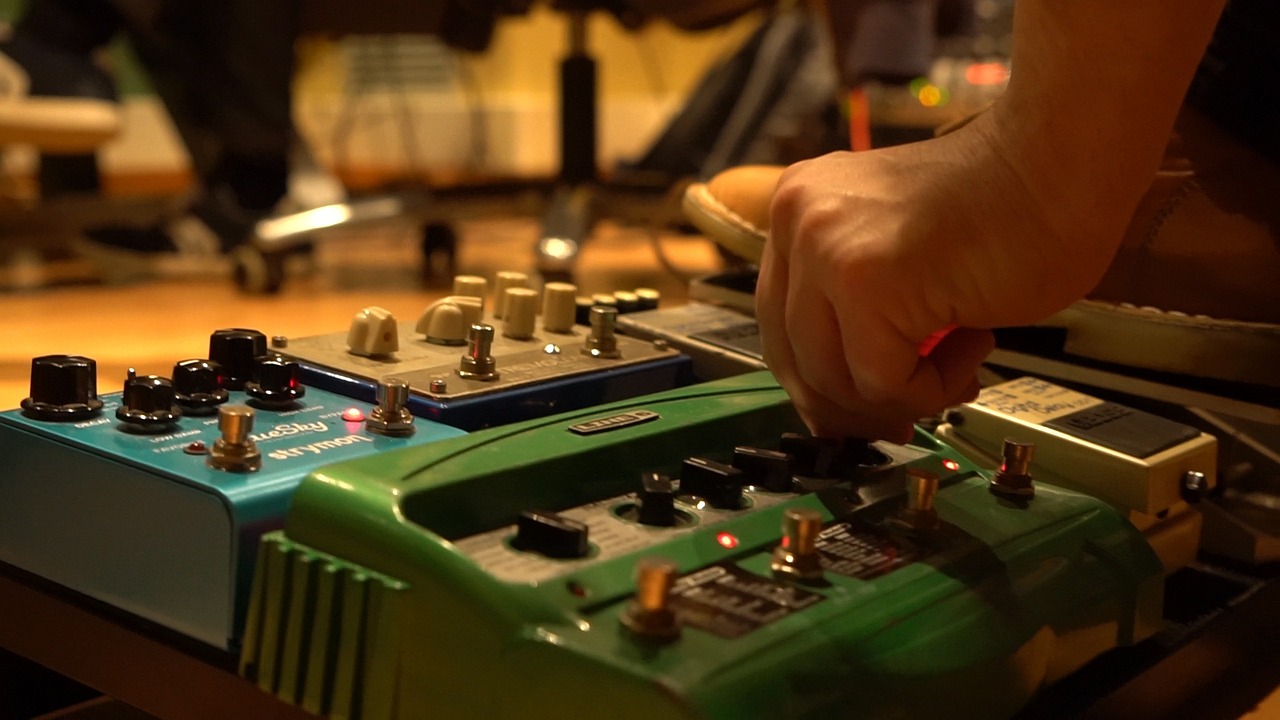
A boost effect pedal is important for many guitar players. This pedal works like a small amp. It makes the guitar’s signal stronger. When you use a boost effect pedal, it takes the weak signal from the guitar and boosts it before it goes to other pedals or the amp. The gain, measured in decibels, tells you how much louder the pedal makes the signal. For example, if a boost pedal has 15dB of gain, it can turn a 1V input into about 5.5V. This extra strength can change how the guitar works with other pedals and the amp.
Modern boost effect pedals, like Musontek The Shit Power, have high headroom. This means they can handle strong signals without making unwanted distortion. These pedals keep the sound clear and lively. The Shit Power also has special buffer options that help keep the guitar’s real tone. Old pedals, like the MXR Micro Amp, helped make boost pedals popular. But new pedals often sound clearer and respond better.
Typical Uses for Boost Pedals
Guitar players use boost effect pedals in different ways. Some want their solos to be louder so people can hear them in a band. Others use boost pedals to make their amp work harder, which can make the sound warmer or stronger. Many boost effect pedals can also change which notes stand out. For example, a treble boost can make high notes easier to hear in a mix.
Boost pedals can make certain notes, like treble or midrange, stand out.
A boost effect pedal can make loud notes louder and quiet notes clear.
Players put boost pedals in different places in their setup for new sounds.
Musontek The Shit Power is special because it keeps the sound clean and strong, even with long cables or lots of pedals. Boost effect pedals are still popular because they help guitarists control their volume and tone without changing the main sound of their guitar.
What Is Overdrive in Guitar Pedals?
Overdrive Pedal Function
Overdrive pedals help guitarists get a warm, smooth distortion. These pedals make the guitar signal stronger until it starts to clip. Clipping happens when the signal gets too strong for the pedal. The pedal cuts off the tops of the sound wave. This changes the tone and adds a gritty edge.
Overdrive pedals use soft-clipping circuits. They gently round off the signal peaks. This keeps the sound smooth and musical. Many players like this because it sounds like a loud tube amp.
Here is a table that shows how overdrive pedals and boost pedals are different:
Característica | Overdrive Pedals | Boost Pedals |
|---|---|---|
Clipping | Uses soft-clipping circuits for distortion | No clipping, just boosts volume |
Gain Handling | Makes moderate gain, like loud amps | Raises volume without adding gain |
Usage | Good for blues and rock sounds | Great for solos and stacking with other pedals |
Guitarists use overdrive pedals to make their playing more expressive. These pedals react to how hard you pick the strings. They also respond to changes in the guitar’s volume knob. This makes them popular for blues, rock, and country music.
Overdrive vs. Distortion
Overdrive and distortion pedals both change the guitar’s sound. But they do it in different ways. Overdrive pedals make a softer, warmer distortion. Distortion pedals make the sound much heavier and more aggressive.
Clipping happens when the input gain gets too high, causing distortion.
Soft clipping gently rounds the signal peaks. This gives a smooth, warm distortion and keeps the original dynamics.
Hard clipping cuts off the signal peaks quickly. This makes a stronger distortion with a square shape and more harmonics.
Soft clipping is found in classic tube amps and vintage overdrive pedals. It gives a lush tone.
Hard clipping is used in fuzz pedals and high-gain amps. It makes a raw sound for punk and metal.
The table below shows how overdrive and distortion pedals are different:
Produce High Levels of Distortion? | Change Your Tone A Lot? | React To Volume Controls? | React to Pick Attack? | |
|---|---|---|---|---|
Overdrive Pedals | No | No | Sí | Sí |
Distortion Pedals | Sí | Sí | No | No |
Guitarists pick overdrive pedals to add warmth and character. They want to keep the natural feel of their playing. Distortion pedals are better for heavy music styles. These need lots of gain and a stronger effect.
The Klon’s Circuit and Controls
Klon’s Unique Signal Path
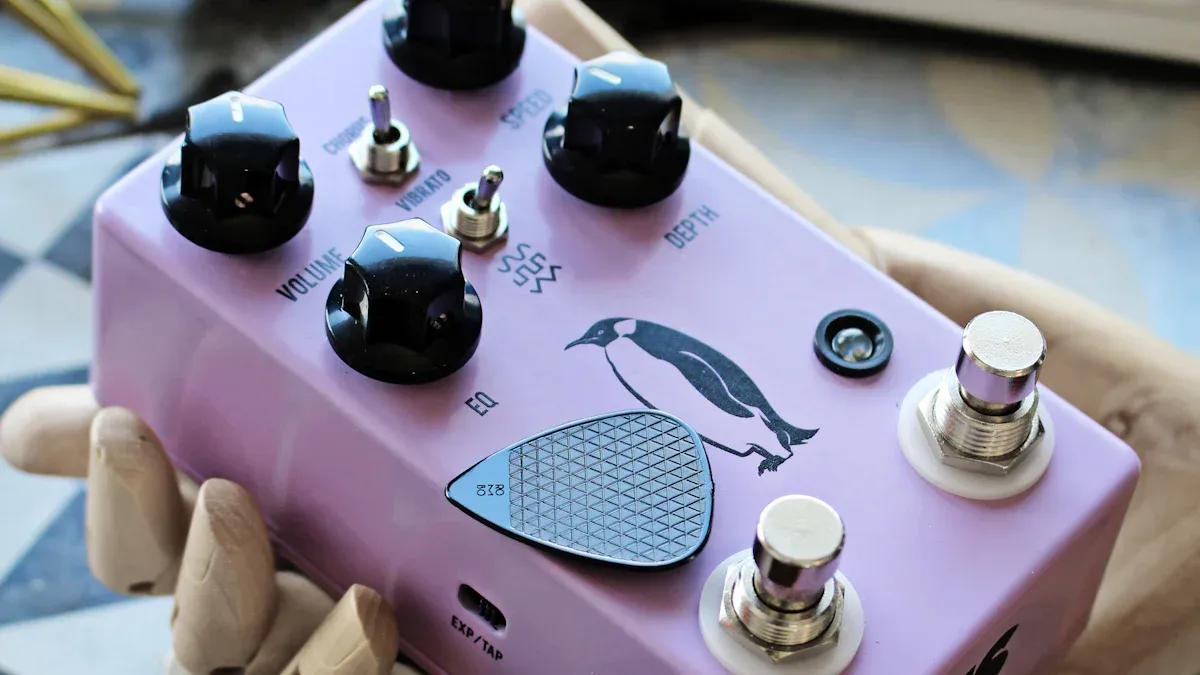
The Klon Centaur is special because of its circuit. Engineers made it to keep the guitar’s real sound. It also adds more power and character. The signal path has some unique parts that work together. These parts help make the sound clear and lively.
Here is a table that lists the main parts inside the Klon Centaur and what they do:
Componente | Función |
|---|---|
Innovative Power Supply | Gives a high headroom of 27V, so the sound has better dynamics and rich harmonics. |
Germanium Clipping Diodes | Makes a hard-clipping distortion sound, which is important for the overdrive effect. |
Feed-Forward Networks | Mixes clean and distorted signals, making the sound fuller and better in the low end. |
The Klon Centaur uses a high-voltage power supply. This gives the pedal more headroom. The sound stays clear even when you turn up the volume. Germanium diodes help make a strong and smooth distortion. The feed-forward network mixes clean and distorted sounds. This keeps the guitar’s real tone.
When you look at other pedals, the Klon Centaur is different. The Tube Screamer uses soft clipping and boosts the mid-range. The Klon Centaur keeps the sound clear and adds gain with hard clipping. Here is a table that shows how the signal paths are different:
Pedal | Signal Path Characteristics | EQ Effects |
|---|---|---|
Centauro de Klon | Transparent overdrive, keeps the tone, adds gain with hard clipping | Cuts a little bass, boosts upper mid-range |
Tube Screamer | Soft clipping, boosts mid-range for solos, tightens the sound | Cuts a lot of bass, makes mid-range stronger |
How Klon Blends Boost and Overdrive
The Klon Centaur mixes clean and clipped sounds in a special way. The pedal uses rare germanium diodes and a double ganged gain pot. The natural crossover circuit mixes the clean sound with the clipped sound. This lets the pedal work as a boost or an overdrive, depending on how you set the controls.
The Klon Centaur uses rare germanium diodes.
It has true buffered bypass.
There is a double ganged gain pot.
The pedal uses a ‘natural crossover’ circuit to mix overdrive and clean sound.
Players can change their sound with three main knobs:
Gain: This knob changes how much clean and clipped sound you get. At low settings, the pedal works as a clean boost. At high settings, it adds more overdrive and grit.
Treble: This knob changes how bright the sound is. Turning it up makes the guitar sound sharper. Turning it down makes the sound warmer.
Output: This knob sets the overall volume. Players use it to match the pedal’s level with the rest of their gear.
Many people change the Klon Centaur to get new sounds. Some make the C14 value bigger to add more bass. Others add a diode clipping switch to try different distortion types. Some use a bass switch or a bass contour mod for more control over the low end. Changing the operational amplifier can also change the sound.
Here is a table that shows common changes:
Modification | Descripción |
|---|---|
Increase C14 value | Adds more bass, so the sound is not thin. |
Separate dual gain potentiometer | Lets you control clean and overdrive sounds by themselves. |
Diode clipping switch | Lets you pick different diode types for new sounds. |
Bass switch | Changes how much bass goes through the pedal. |
Bass contour mod | Lets you blend the bass for higher gain settings. |
Using different OP amps | Lets you try different operational amplifiers for new tones. |
Increase gain | Changes a resistor to make the pedal louder. |
Adjustments for bass use | Changes some capacitors to work better with bass guitars. |
The Klon Centaur’s controls and circuit give players lots of choices. You can use the pedal for a clean boost or a strong overdrive. The special signal path and easy controls make it a favorite for guitarists who want to shape their own sound.
How Players Use the Klon Pedal
Klon as a Clean Boost
Many guitarists use the Klon pedal as a clear boost. They set the gain knob low and turn up the output. This setting makes the guitar signal louder without changing the original tone. Players often use this method to help their solos stand out in a live band. The Klon keeps the sound strong and natural. In country music, guitarists like this setting because it adds volume and keeps the twangy sound of their guitars. The pedal works well at the front of a pedalboard or before an amplifier. It helps the guitar cut through the mix while staying true to its natural voice.
Tip: Setting the gain low and the output high on the Klon gives a clean, powerful sound that works in many music styles.
Klon as a Transparent Overdrive
The Klon is famous for its transparent overdrive. When players turn up the gain, the pedal adds warmth and grit but keeps the guitar’s real tone. In blues music, the Klon gives a smooth overdrive that makes solos sound rich and full. The pedal does not change the EQ much, so the bass stays strong and the sound remains open. Rock guitarists often pair the Klon with other pedals, like the Tube Screamer, to get a more aggressive sound. The Klon stands out because it does not color the tone as much as other overdrives. This quality lets musicians use it in many setups and genres.
Players in different styles choose the Klon for its ability to enhance their sound without taking over. Blues players enjoy the added warmth. Rock musicians use it for stacking with other effects. Country artists rely on its subtle boost for clean, bright tones. The Klon’s flexibility makes it a favorite for many guitarists.
Klon vs. Other Boost and Overdrive Pedals
Comparing Klon to Boost Effect Pedals
The Klon Centaur and regular boost pedals do different things. The Klon Centaur changes the sound a little in the midrange. This helps the guitar be heard in a band. Most boost pedals just make the signal louder. They do not change the tone much. The table below shows how they are different:
Característica | Centauro de Klon | Standard Boost Pedal |
|---|---|---|
Tonal Neutrality | Mostly neutral with a midrange curve | Often less neutral |
Gain Boosting | Pushes tube amps for more gain | Gives a clean boost |
Midrange Emphasis | Small midrange curve helps guitar cut | Usually flat response |
Players pick the Klon when they want their guitar to stand out. Regular boost pedals are good for making the volume higher.
Comparing Klon to Overdrive Pedals
The Klon Centaur is different from other overdrive pedals. It adds warmth and sparkle but keeps the guitar’s real sound. Many overdrive pedals, like the Tube Screamer, change the tone more. They boost the midrange and cut the bass. The Klon’s clear overdrive is good for using with other pedals. People like the Klon’s sound but say it is big and costs a lot. Other pedals, like the Wampler Tumnus, have more features and options.
The Klon Centaur is liked but some think it is too big and expensive.
The Wampler Tumnus and Tumnus Deluxe have more features and can change the sound more, so many players like them.
Musontek The Shit Power as a Modern Boost Example
Musontek The Shit Power is a new kind of boost pedal. It has high headroom and a very clear sound. The pedal has one knob, so it is easy to use. Players can pick Vintage or Modern buffer modes to fit their style. The table below compares Musontek The Shit Power and the Klon Centaur:
Característica | Musontek El Poder de la Mierda | Centauro de Klon |
|---|---|---|
Headroom | Alta | Moderado |
Signal Clarity | Very clear | Warm with character |
Boost/Overdrive | Clean boost | Overdrive |
Knob Control | One knob | Many controls |
Sound Character | Pure and strong | Adds warmth and sparkle |
Musontek The Shit Power works for any music style. It is good for live shows and recording. Its strong, clear sound and simple design make it popular with players who want something easy and reliable.
The Klon Centaur works as a clean boost and an overdrive. Many players like it because it can change the sound and reacts to how you play. The table below shows how the Klon is different from Musontek The Shit Power:
Característica | Centauro de Klon | Musontek El Poder de la Mierda |
|---|---|---|
Versatilidad | Clean boost and overdrive | Clean boost |
Tonal Options | Wide range, dynamic response | Strong, clear sound |
Complexity | Multiple controls | Simple, one knob |
Sound Character | Enhances, keeps true tone | Pure power, no tonal shaping |
Player Experience | Expressive, dynamic | Reliable, fits any style |
When picking a gain pedal, players should think about what they need. Do they want more ways to change their sound? Do they want to shape their tone or save money? The Klon Centaur is still famous today. Its clear sound has helped make new pedals. Some Klon Centaurs cost thousands of dollars. This shows they are still wanted by many people.
PREGUNTAS FRECUENTES
What makes the Klon Centaur different from other overdrive pedals?
The Klon Centaur blends clean and overdriven signals. This design keeps the guitar’s natural tone. Many overdrive pedals change the sound more. The Klon uses special germanium diodes for a unique, clear overdrive.
Can the Klon Centaur work as a clean boost?
Yes. Players set the gain low and the output high. This setting increases volume without adding much distortion. The Klon keeps the sound clear and strong, making it useful for solos or boosting an amp.
How does Musontek The Shit Power compare to the Klon Centaur?
Característica | El poder de la mierda | Centauro de Klon |
|---|---|---|
Main Use | Clean boost | Boost & overdrive |
Controla | One knob | Three knobs |
Sound | Pure, transparent | Warm, dynamic |
Why do guitarists use boost pedals?
Guitarists use boost pedals to make their signal louder. Boost pedals help solos stand out. They also push amplifiers harder for more power. Some players use them to keep their tone clear with long cables or many pedals.
Is the Klon Centaur good for all music styles?
The Klon Centaur works well in many genres. Blues, rock, and country players use it for its clear boost and smooth overdrive. Its flexible controls let musicians shape their sound for different styles.