Most guitarists put a fuzz guitar pedal first in their pedal chain. This way, the fuzz works right with the guitar’s pickups. It changes the sound before it goes to other pedals. Studies show that pedal order changes the sound. If you put overdrive first, notes stay clear. If you put a fuzz guitar pedal first, the sound gets thick and full. The MusonTek FUR FUR Pedal Fuzz sounds good in many places. But it usually sounds best at the start. Players can try different orders to find the sound they like best.
Principales conclusiones
-
Most guitarists put fuzz pedals first in the chain. This gives a thick and bold sound. It also works well with the guitar’s pickups. Using fuzz before overdrive gives you more control over gain and dynamics. You can clean up the fuzz by turning down your guitar’s volume. Fuzz after overdrive makes a smoother and more controlled sound. This is good for modern rock and metal music. It is important to try different pedal orders. Try both ways to see which sound you like best. The MusonTek F2309 FUR FUR Fuzz Pedal is very flexible. It keeps your sound clear. It works well before or after overdrive.
Fuzz Guitar Pedal Order

Fuzz Before Overdrive
Most guitarists put a fuzz guitar pedal first. This way, the fuzz pedal works with the guitar’s pickups. If you turn down the guitar’s volume, the fuzz pedal gets cleaner. You can get many different sounds this way. Many professional guitarists like this setup. It gives them more control over gain and dynamics.
The MusonTek F2309 FUR FUR Fuzz Pedal works well here. It keeps the sound clear, even with lots of distortion. Players can use the pedal’s EQ to change their tone. This helps them find the right sound for any style. Putting the fuzz pedal first also makes harsh sounds softer. It keeps the guitar’s character strong.
Tip: Fuzz pedals with three or fewer transistors work best first in the chain. If you use buffered pedals before a fuzz pedal, the effect can sound weak or thin. Try to keep your fuzz pedal close to the guitar.
Tone and Character
Putting a fuzz guitar pedal before overdrive makes the sound thick and heavy. The fuzz pedal adds harmonic distortion. This makes the guitar sound bigger and stronger. This setup also gives the fuzz pedal natural compression. Leads sound bold and stand out. The overdrive pedal after the fuzz can make the tone softer and more controlled.
Players notice this order gives them:
-
A strong, exciting tone with lots of character
-
Sustain that helps solos stand out
-
The ability to clean up the fuzz by turning down the guitar’s volume knob
The MusonTek F2309 FUR FUR Fuzz Pedal is great here. Its design keeps every note clear, even when the sound is thick. The pedal’s three frequency settings let players go from vintage fuzz to modern distortion. They do not lose clarity.
Here is a quick look at how different fuzz pedal types work in different places:
|
Fuzz Type |
Best Placement |
Sensitivity to Placement |
|---|---|---|
|
Germanium |
First in the chain |
Alta |
|
Silicon |
Usually up front |
More forgiving |
When to Use This Order
Many music styles use fuzz-before-overdrive. Players in rock, metal, indie rock, psychedelic rock, and electronic music like this order. Bands with one guitarist often use a fuzz guitar pedal first. This fills out the mix and makes the tone heavier.
Some good tips for this setup are:
-
Put the fuzz pedal first to keep the effect strong and clear
-
Use an EQ pedal after the fuzz to boost mid frequencies. This helps the fuzz stand out in a band mix.
-
Try changing the guitar’s volume knob to find new sounds
The MusonTek F2309 FUR FUR Fuzz Pedal makes these options easy to try. Its strong build and flexible controls help players in any music style. If you want a fuzz guitar pedal that keeps its character and clarity, start your chain with a fuzz pedal.
Fuzz After Overdrive
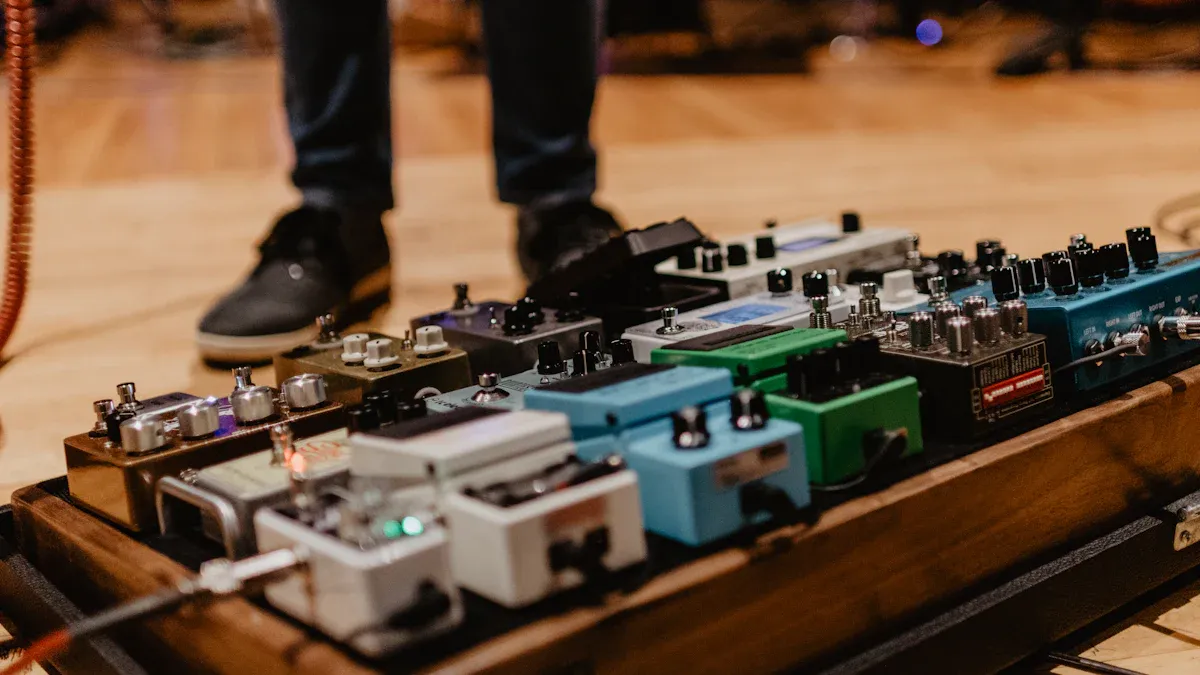
Sound Differences
Placing a fuzz pedal after an overdrive pedal changes the way the guitar sounds. The overdrive shapes the signal first. The fuzz then adds its own texture on top. This order can make the fuzz sound more controlled and less wild. Some players notice the fuzz gets smoother and less harsh. The overdrive pedal boosts the signal, so the fuzz reacts differently. The result is a unique blend of grit and sustain.
The MusonTek F2309 FUR FUR Fuzz Pedal stands out in this setup. Its design keeps the sound clear, even when the signal gets heavy. Players can use the pedal’s three frequency settings to dial in the right tone. The fuzz after overdrive can sound modern and tight. It works well for players who want a focused sound.
Note: Fuzz after overdrive can help tame aggressive fuzz tones. This order makes the effect easier to control during live shows.
Here’s a quick table to show how the sound changes:
|
Pedal Order |
Tone Quality |
Lo mejor para |
|---|---|---|
|
Fuzz before Overdrive |
Thick, raw, vintage |
Classic rock, blues |
|
Fuzz after Overdrive |
Smooth, tight, modern |
Alternative, metal |
When to Use This Order
Some guitarists like fuzz after overdrive for specific reasons. They want a sound that cuts through the mix but stays smooth. This order works well for modern rock, metal, and alternative styles. Players who use lots of effects often choose this setup. It helps keep the fuzz from getting lost in the chain.
Musicians who play in bands with two or more guitarists may prefer fuzz after overdrive. The sound stays clear and does not overpower other instruments. The MusonTek F2309 FUR FUR Fuzz Pedal makes it easy to experiment. Its strong build and flexible controls let players try different settings.
-
Try fuzz after overdrive for solos that need extra sustain.
-
Use this order to get a tighter, more focused fuzz sound.
-
Adjust the pedal’s frequency settings to match your style.
Tip: Players should test both orders with the MusonTek F2309 FUR FUR Fuzz Pedal. They can find the sound that fits their music best.
Choosing Your Order
Factors to Consider
Every guitarist wants their own sound. The order of pedals can change the music a lot. Players should think about their style and gear. They should also think about the tone they want. Some like classic rock. Others want modern or new sounds. The guitar and amplifier matter too. Single-coil pickups sound one way. Humbuckers sound different. Tube amps and solid-state amps react in their own ways.
Here is a table that explains why fuzz and overdrive pedals go in certain places:
|
Order |
Tipo de pedal |
Reason for Placement |
|---|---|---|
|
1 |
Fuzz and treble boosters |
These pedals should be placed first to shape tone before other effects. |
Most guitarists put fuzz pedals first. This stops problems with buffered pedals. Buffered pedals can change fuzz sounds. Overdrive pedals usually go after fuzz. This lets overdrive shape the fuzz tone and gives more control.
Here is another table that shows how gear changes pedal placement:
|
Tipo de pedal |
Placement Recommendation |
Reason for Placement |
|---|---|---|
|
Fuzz Pedals |
En primer lugar |
To avoid negative interactions with buffered pedals, ensuring optimal tone quality. |
|
Overdrive |
After Fuzz |
As a dynamic pedal, it can enhance the sound when placed after fuzz pedals. |
Personal taste matters a lot. Some players want thick, vintage fuzz. Others want tight, modern sounds. The MusonTek F2309 FUR FUR Fuzz Pedal works well in both spots. It keeps the sound clear and strong wherever it is in the chain.
Experimenting with Your Guitar Pedal Signal Chain
Trying different pedal orders helps you find your favorite sound. Players can start with fuzz first. This gives a bold, raw tone. Putting fuzz after overdrive makes the sound smoother and more focused.
Here are some tips for testing pedal order:
-
Learn how each pedal changes the signal chain. This helps every effect sound good.
-
Try different orders. Mixing fuzz and overdrive can make new tones.
-
Put fuzz pedals first to stop problems with buffered pedals.
-
Listen for changes in clarity and sustain. The last pedal often shapes the final sound.
Fuzz pedals usually go first because they do not work well with buffered pedals. Even buffered bypass pedals can change how fuzz sounds.
Players should not worry about mistakes. Many guitarists find great tones by trying new things. Using online guides and talking to other musicians helps. The MusonTek F2309 FUR FUR Fuzz Pedal makes it easy to test both orders. Its strong build and flexible controls let players try every option in their chain.
🎸 Pro Tip: Record short clips with different pedal orders. Listen and pick the one that fits your style best.
The order of pedals changes how a guitar sounds. Many players put fuzz before overdrive. Some try fuzz after to get a smoother sound. The MusonTek F2309 FUR FUR Fuzz Pedal works well in both spots. Moving pedals around changes the tone a lot. Gear and playing style are important too. Some guitarists use compression to make the sound even. Others add reverb or delay to make the guitar sound bigger. Modulation pedals can change the sound and help solos stand out.
|
Tipo de pedal |
Effect on Tone and Versatility |
|---|---|
|
Compresión |
Makes the sound more even, helps clean and crunch tones, works for many styles. |
|
Reverb |
Makes notes smooth and wide, has many settings, helps copy favorite sounds. |
|
Delay |
Adds echo, goes deeper than reverb, can mix with reverb for a bigger sound. |
|
Modulación |
Changes the sound all the time, helps solos be noticed. |
Guitarists should try both fuzz-before and fuzz-after setups. The best order depends on the guitar, amp, and what the player likes. Every setup is different. Trying new orders helps players find their favorite sound.
PREGUNTAS FRECUENTES
What is the best order for fuzz and overdrive pedals?
Most guitarists put the fuzz pedal before the overdrive pedal. This order gives a thick, bold sound. Players can try both ways to see which order fits their style best.
Does pedal order really change my tone?
Yes, pedal order changes the sound a lot. Fuzz first gives a raw, vintage tone. Overdrive first makes the fuzz smoother. Players should listen to both orders and pick what they like.
Can I use the MusonTek F2309 FUR FUR Fuzz Pedal in any order?
The MusonTek F2309 FUR FUR Fuzz Pedal works well in any order. Its design keeps the sound clear and strong. Players can experiment with pedal order to find their favorite tone.
How do I decide the right order for my pedals?
Players should think about their music style and gear. They can start with fuzz first, then try fuzz after overdrive. Recording short clips helps compare each order.
Will changing the order affect other pedals in my chain?
Yes, changing the order can change how all pedals sound together. Some effects react differently depending on their place in the order. Players should test different setups to find what works best.