No, a passive direct box does not need any external power—no batteries, no phantom power. It uses an internal transformer to convert an unbalanced instrument signal into a balanced, low-impedance signal. This makes it a simple and reliable tool for connecting guitars, basses, keyboards, and other instruments to mixing consoles, audio interfaces, or PA systems.
Many people assume a DI box needs power, but passive models work entirely through passive components. A high-quality example is the Musontek Passive DI Box PD1L, which delivers clean sound and dependable performance without any power source.
Key Takeaways
- A passive DI box works without external power, making it highly reliable for live and studio use.
- The internal transformer converts unbalanced signals to balanced, preserving sound clarity and reducing noise.
- Features like a ground lift switch help eliminate hum and buzz without needing power.
- Passive DI boxes are plug-and-play: no batteries, no power switches, no setup hassle.
- Use a passive DI box with instruments that have strong output signals (e.g., keyboards, active pickups); use an active DI box for weak signals (e.g., passive pickups, piezo transducers).
Why a Passive DI Box Doesn’t Need External Power

Transformer-Based Signal Conversion
A passive direct box uses a transformer to change the signal. The transformer converts the unbalanced, high-impedance signal from an instrument into a balanced, low-impedance signal suitable for long cable runs. It does this through electromagnetic induction—energy transfers between two coils without any external electricity. This design is simple, robust, and completely passive.
The Musontek PD1L features a specially designed large-core transformer that maintains signal clarity and rejects noise. Its passive circuit provides strong isolation and can handle loud signals without distortion, making it ideal for both live stages and recording studios.
Modern passive DI boxes also incorporate features like:
- Rugged aluminum chassis for durability during travel
- High-quality resistors and well-shielded transformers to preserve tone
- Ground lift and pad switches (explained below) that work without power
How It Breaks Ground Loops Without Electricity
Ground loops can cause hum or buzz in an audio system. A passive DI box solves this without any power. The ground lift switch disconnects the signal ground from the chassis ground, breaking the loop that causes unwanted noise. This gives you a cleaner signal instantly.
The PD1L also includes a pad switch to attenuate very loud signals, preventing distortion. Both switches are completely passive—no batteries or phantom power required.
No Power Needed: Why Passive Direct Boxes Are Different
No Batteries or Phantom Power Required
Because passive direct boxes have no active electronics, they never need batteries or phantom power. This makes them:
- More reliable – No dead batteries during a show or session.
- Easier to use – Just plug in and play.
- More environmentally friendly – No battery waste, lower energy consumption.
Passive direct boxes are also more environmentally friendly. They consume less energy, require no batteries, and therefore generate less waste. The table below compares some of their features:
| Feature | Passive DI Box | Active DI Box |
|---|---|---|
| Power requirement | None | Battery or phantom power |
| Dependability | High (no power failure) | Variable (battery can die) |
| Energy consumption | Lower | Higher |
Plug-and-Play Simplicity
passive direct box are truly plug-and-play. There are no power switches to flip, no batteries to check, no phantom power to engage. Sound engineers love them for live shows because they simply work every time. This simplicity reduces setup stress and eliminates a common point of failure.
Passive DI Box vs. Active DI Box

Power Requirements Compared
A passive direct box does not need any power. It uses a transformer inside to work. Musicians do not have to worry about batteries or phantom power. An active direct box needs power to run. It gets power from batteries or phantom power from a mixer. The table below shows how they are different in power and other features:
| Feature | Passive DI Box | Active DI Box |
|---|---|---|
| Power Requirement | No power needed | Needs batteries or phantom power |
| Simplicity | Simple, reliable design | More complex, extra electronics |
| Cost | Usually less expensive | Usually more expensive |
| Tone Preservation | Keeps the original sound clear | May add color or boost to the signal |
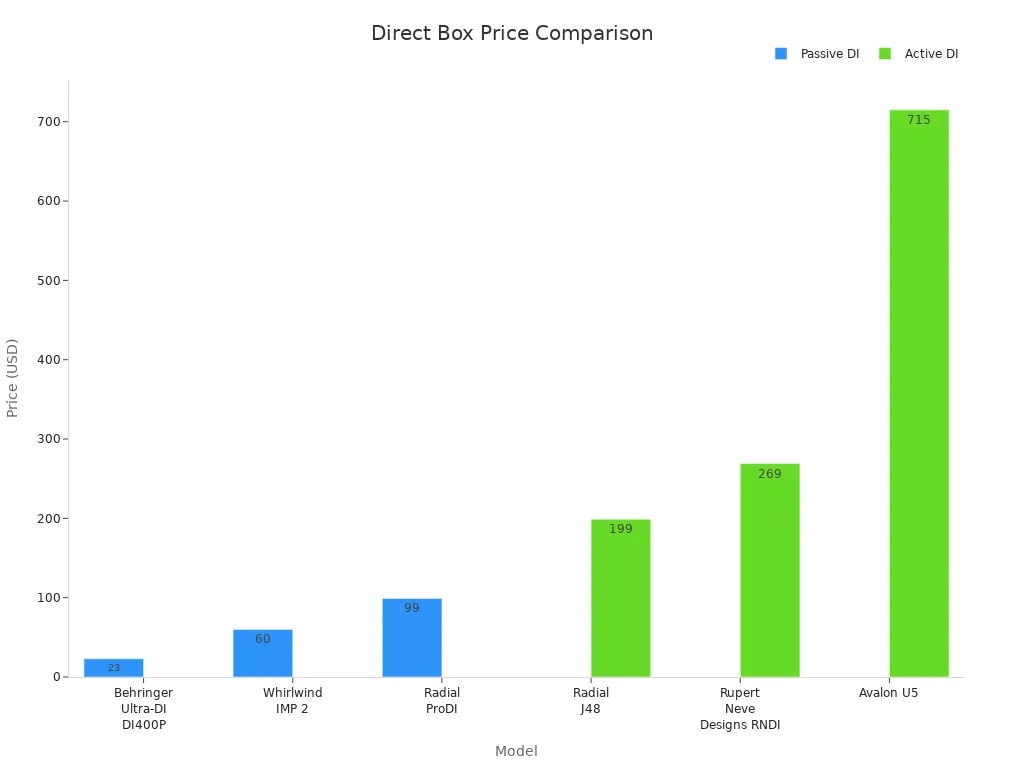
The chart shows passive direct boxes cost less than most active ones. Many musicians pick passive models because they are reliable and a good value.
Use Cases for Each Type
For instruments with strong output signals (active pickups, keyboards, electronic drums), choose a passive DI box. For instruments with weak output signals or passive sound sources (passive guitar/bass pickups, acoustic guitars with piezo pickups, vintage instruments), choose an active DI box.
The table below shows which box fits each instrument:
| Instrument Type | Recommended Direct Box Type | Reasoning |
|---|---|---|
| Instruments with active electronics | Passive DI Box | Maintains tone, no extra gain needed |
| Passive instruments | Active DI Box | Boosts weak signals, handles high impedance |
| Acoustic guitars with built-in pickups | Active DI Box | Handles higher signal levels |
| Piezo transducers | Active DI Box | Needs high input impedance |
| Keyboards | Passive DI Box | Reduces noise, works well with strong signals |
Tip: When you set up a live show or studio session, match the direct injection box to the instrument’s output type. This keeps the sound clean and strong.
A passive direct box works in many audio setups. It connects well with mixers, recording interfaces, and PA systems. Its simple design and no need for power make it a favorite for live shows and fast setups.
Practical Benefits of a Passive Direct Input Box
Reliability and Durability
A passive direct box stands out for its strong reliability. Many audio professionals trust passive direct boxes because they have fewer parts inside. This design means there are fewer things that can break. The Musontek PD1L uses a tough metal case, so it can handle the bumps and drops that happen during travel. The transformer inside the PD1L keeps the sound clear, even when the cables run long distances.
Passive direct boxes do not need batteries or outside power. This makes them simple to use and less likely to fail during a show or recording. The ground lift switch on the Musontek PD1L removes hum and buzz from the sound. The pad switch helps control loud signals, so the sound does not get distorted. These features work together to keep the sound clean and strong.
Many musicians and engineers pick a passive direct box for both live shows and studio work because it always delivers dependable sound.
Preserving Instrument Tone
A passive direct box helps keep the true sound of an instrument. When musicians play electric keyboards or guitars, they want the sound to stay smooth and full. Passive direct boxes can give a pleasant, warm sound when the signal gets stronger. This makes the music feel rich and alive.
Audio engineers say passive direct boxes work well with high-output instruments. The transformer inside the PD1L protects the sound from noise and keeps the tone natural. The ground lift switch and pad switch help remove unwanted sounds, so only the music comes through.
Passive direct boxes work in many places. In a live show, they keep the sound strong and free from hum. In the studio, they help record every detail of the sound. Musicians and engineers use them to make sure the sound stays true from the stage to the mixing board.
Here is a list of benefits for both live and studio use:
- Keeps sound quality clear, even with long cables.
- Removes unwanted noise, like hum and buzz.
- Works with many types of instruments and setups.
- Needs no power, so setup is easy and fast.
- Handles loud signals without losing sound quality.
Conclusion
A passive direct box does not need external power. It runs entirely on its internal transformer, making it a dependable, easy-to-use tool for musicians and sound engineers. Use a passive DI box with instruments that have strong signals (keyboards, active-pickup guitars/basses) for clean, balanced audio without any power worries.
The Musontek Passive DI Box PD1L offers a high-quality transformer, rugged build, and plug-and-play simplicity. Perfect for live shows and studio sessions.
FAQ
What instruments work best with a passive DI box?
Musicians use passive DI boxes with keyboards, electric guitars with active pickups, and electronic drums. These instruments send strong signals. A passive DI box like the Musontek PD1L keeps the sound clear and balanced.
Can a passive DI box improve sound quality?
Yes! A passive DI box reduces noise and hum. It balances the signal and helps prevent interference. The Musontek PD1L uses a transformer to keep the sound clean in both live and studio settings.
Does a passive DI box need any setup before use?
A passive DI box offers plug-and-play simplicity. Users connect the instrument and output cables. No batteries or power switches are needed. The ground lift and pad switches on the Musontek PD1L provide extra control.
How does the ground lift switch help?
The ground lift switch removes unwanted hum or buzz. It breaks the ground loop between the instrument and audio system. This feature helps musicians get a quiet, clear signal.