
Loop isolators help achieve clear sound. They eliminate hum and hiss in audio systems. Ground loop noise is often the cause of these problems. This occurs when equipment uses different power outlets. Many speakers and computers have safety ground wires. These ground wires can form loops.
- Ground loops often cause speakers to hum or hiss.
- Different ground levels can turn wires into antennas, exacerbating interference.
- Protective grounding connections in live equipment can introduce noisy currents.
Wichtigste Erkenntnisse
- Loop isolators eliminate ground loop noise. This helps improve the clarity of audio systems. They protect audio equipment from electrical faults. They do this by blocking dangerous current paths. Loop isolators are very easy to install. For best results, install the isolator between the noise source and the amplifier. Choosing a high-quality loop isolator, such as the Musontek ISO2C, can improve sound quality and ensure equipment safety. Loop isolators are widely used in home theaters, car audio systems, and professional audio systems.
Loop Isolator Purpose
Eliminating Ground Loop Noise
Ground loop isolators help eliminate noise in audio systems. Many people hear a low hum or hiss from their speakers, often caused by ground loop noise. Ground loop noise occurs when devices use different power outlets or unbalanced audio cables. These connections cause stray currents to flow between devices, producing a steady hum at 50 or 60 Hz, and sometimes even a higher hiss.
Loop isolators eliminate this noise by breaking the poor electrical connection between devices. They use a special transformer to transmit audio signals while blocking noise, keeping music and vocals clear and normal. Approximately 30% of home theater audio problems stem from ground loop issues. Using a loop isolator can quickly and easily resolve these problems.
Tipp: Loop isolators are most effective for hum and hiss caused by ground loops. While they cannot eliminate all types of noise, they are very effective for this common problem.
The following table lists the role of loop isolators in audio systems:
| Funktion | Beschreibung |
| Breaking ground loops | Gets rid of noise by cutting the ground in the signal cable. |
| Maintaining sound clarity | Keeps music and voices clear by stopping bad currents. |
| Protecting audio equipment | Helps protect against electrical problems that could hurt the equipment. |
Breaking Electrical Paths
Loop isolators do more than just eliminate noise. They protect audio equipment by cutting off potentially damaging circuits. When equipment has different ground levels, unwanted currents can flow through the cables. These currents can damage amplifiers, speakers, or other components of the system.
Ground loop isolators use an electromagnetic transformer to move the audio signal. This eliminates the direct electrical connection. The signal is moved from one side to the other by magnetic force. This breaks different ground levels and prevents unwanted currents from reaching the equipment.
- Ground loop isolators can break bad connections between different ground points.
- They can eliminate ground loops caused by different ground levels.
- This helps eliminate noise and improve sound quality.
In car audio systems, ground loop isolators are connected between the noise source and the amplifier. The transformer inside the isolator breaks the ground loop, ensuring a clean signal passes through and eliminating hum or hiss.
Loop isolators are used in many places, such as home theaters, car audio systems, and professional audio equipment. By breaking the ground loop, they ensure clear sound and protect the equipment.
Wie Erdschleifenisolatoren funktionieren
Isolation Transformer Principle
Loop isolators use a device called an isolation transformer. This transformer works on the principle of electromagnetic induction, transferring energy from one circuit to another. Current does not flow directly between the two circuits. The transformer has two coils. The first coil receives the audio signal. The second coil uses a magnetic field to pick up the signal. This isolates the two circuits from each other, preventing unwanted current from flowing between them.
- Isolation transformers use magnets to transmit power and isolate the circuits.
- The two coils do not touch each other, so current cannot flow directly between them.
- Each side of the transformer has its own ground terminal. This helps reduce ground loop noise in audio systems.
This method is crucial for eliminating ground loops. It eliminates the hum and hiss that plague audio systems. Utilizing this principle, ground loop noise isolators maintain the purity of the audio signal.
Signal Separation
Loop isolators block noise and keep audio signals away from harmful currents. This process is called electrical isolation. The transformer inside the loop isolator ensures that current does not flow directly from one device to another. Audio signals are transmitted through magnetic fields.
- Electrical isolation separates the circuits and blocks harmful currents.
- Transformers use magnets to transfer energy without direct connection.
- Loop isolators isolate input and output circuits. This eliminates ground loops that cause noise.
- Electromagnetic transformers allow audio signals to pass through but block harmful currents.
Ground loop noise isolators eliminate ground loops in the audio signal path. They transmit audio signals using electromagnetic transformers without direct electrical connections. This method protects equipment and improves sound quality. Many people use loop isolators in home theaters, car audio systems, and professional audio systems. These devices play a vital role by eliminating ground loops and maintaining clear sound.
Note: Loop isolators help protect equipment and ensure clear audio in any setup.
Loop Isolator Audio Quality & Compatibility
Maintaining Sound Integrity
Loop isolators help maintain the clarity of sound in audio systems. Many people hear a buzzing or hissing sound when subjected to ground loop noise interference. This noise makes music or speech sound terrible. Using a loop isolator eliminates this problem, thus improving sound quality.
- Ground loop isolators can eliminate ground loop hum, a common audio problem.
- People generally report clearer, more pleasant sound after using a loop isolator.
However, some experts point out that certain loop isolators can alter the sound. Sometimes, bass may be weakened, and sound quality may degrade. The lowest bass frequency may drop to around 46 Hz, resulting in weaker bass. This can happen with many loop isolators, making it crucial to choose a high-quality one for optimal sound quality.
Device Safety
Loop isolators do more than just improve sound quality. They also protect equipment. Electrical faults or surges can occur when equipment has different ground levels. These problems can damage speakers, amplifiers, or other equipment. A loop isolator acts as a barrier, preventing these problems from affecting your equipment.
| Merkmal | Beschreibung |
| Physical Isolation | Stops electrical problems or surges from moving between devices. |
| Prevents Damage | Important for systems with different ground levels or power. |
| Safety | Lowers the chance of shock or damage from ground loops or interference. |
Ground loop isolation does more than remove noise. It also keeps your equipment safe. This is important for anyone who wants good sound and gear that lasts a long time.
Loop Isolator Usage & Installation
Typische Anwendungen
Loop isolators are widely used in various audio devices. They help eliminate noise in home and professional audio systems. They can break ground loops, eliminating hum or hiss. The table below lists the most common application scenarios for loop isolators:
| Application Area | Beschreibung |
| Home Audio and Entertainment Systems | Used to remove hum from TVs, receivers, and powered speakers, keeping audio clear. |
| Car Audio and Mobile Electronics | Removes alternator noise and buzzing, improving sound quality in car audio systems. |
| Professional Audio and Recording | Essential for managing hum in studios and live sound systems, ensuring consistent signal quality. |
| Computer, DAC, and USB Audio Systems | Fixes noise from chargers and power supplies, giving cleaner output in digital audio systems. |
Choosing a Ground Loop Isolator
Choosing the right loop isolator depends on several factors. First, users should understand the type of signal they are using. They need to use a multimeter to check the ground voltage difference. Understanding the required level of isolation is also important. Additionally, space and cable length should be considered. An isolator must be matched to the bandwidth and dynamic headroom of the audio source. Try different models by listening and checking the sound.
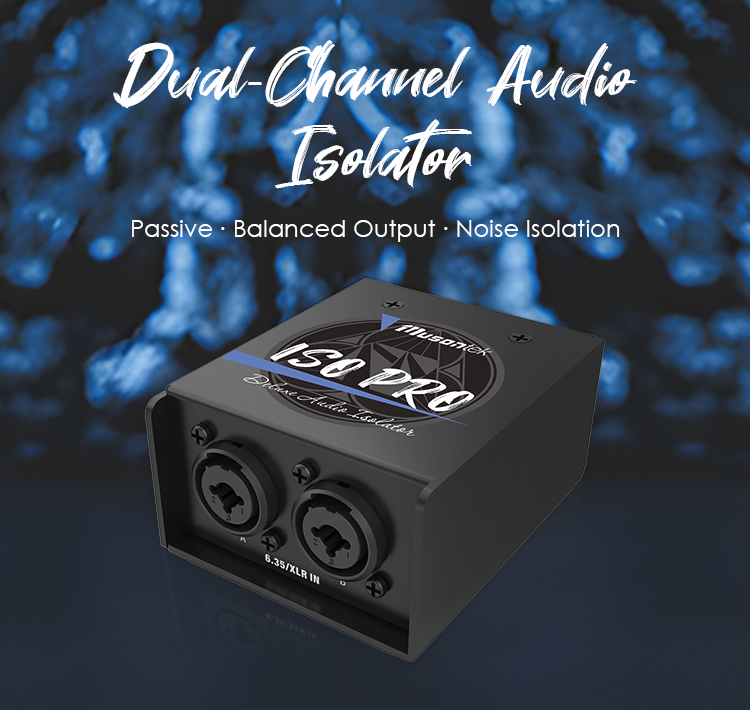
The Musontek ISO2C is a good choice for many reasons. It supports dual channels and is compatible with both balanced and unbalanced signals. It uses TRS, TS, and XLR connectors. No external power supply is required. It is easy to install in many systems.
Installation Steps
Good installation helps eliminate noise and ground loop problems. Follow these steps to install the loop isolator:
| Schritt | Beschreibung |
| 1 | Prepare the connectors and have an easily accessible area. |
| 2 | Connect one circuit for each audio channel. |
| 3 | Insert the loop isolator into the audio path before the amplifier or speaker. |
| 4 | Secure all connections and check for proper grounding. |
Tip: Always check the grounding and cables before installing the loop isolator. This helps eliminate noise and maintain clear sound.
Drawbacks & Limitations
Ground loop isolators are effective at suppressing ground loop noise. Some inexpensive isolators may degrade sound quality or completely block certain sounds. It’s best to choose a high-quality isolator like the Musontek ISO2C. Proper use can effectively suppress noise and protect your equipment.
Loop isolators are crucial in audio systems. They block noise and hum from reaching the speakers, thus maintaining clear sound and protecting the equipment. The Musontek ISO2C is easy to install and compatible with a variety of audio systems. Users experience better sound quality and proper equipment operation after using it.
- Loop isolators help suppress engine whistling and AC hum.
- They can improve sound quality and extend the life of your equipment.
- They can be easily installed using through-hole connectors.
If you would like to learn more, please see guides such as “Ground Loop Isolators Explained” and “Do Ground Loop Isolators Really Work?” These guides will explain how loop isolators work and their uses.
FAQ
What causes ground loop noise in an audio system?
Ground loop noise occurs when equipment uses different grounds. These different grounds generate unwanted current. This current can cause speakers to hum or hiss.
How do loop isolators improve sound quality?
Loop isolators eliminate noise by cutting off the circuit path. They use a transformer to move the signal through a magnet. This keeps the sound clear and eliminates interference.
Can the Musontek ISO2C handle balanced and unbalanced signals simultaneously?
Yes, the Musontek ISO2C can handle both balanced and unbalanced signals simultaneously. It uses TRS, TS, and XLR connectors. This allows it to be used with many audio devices.
Where should a loop isolator be installed in an audio system?
The loop isolator should be installed between the noise source and the amplifier or speaker. This prevents ground loop noise from reaching the output.
Can a loop isolator protect audio equipment from electrical faults?
| Merkmal | Nutzen Sie |
| Signal isolation | Stops electrical surges |
| Device safety | Lowers the chance of damage |
A loop isolator keeps devices safe by blocking bad currents.