An active di box lets musicians and audio engineers get clear sound from instruments. This device turns unbalanced, high-impedance signals into balanced, low-impedance signals. Many people use a di box at live shows or in studios to connect guitars, basses, or keyboards to mixers.
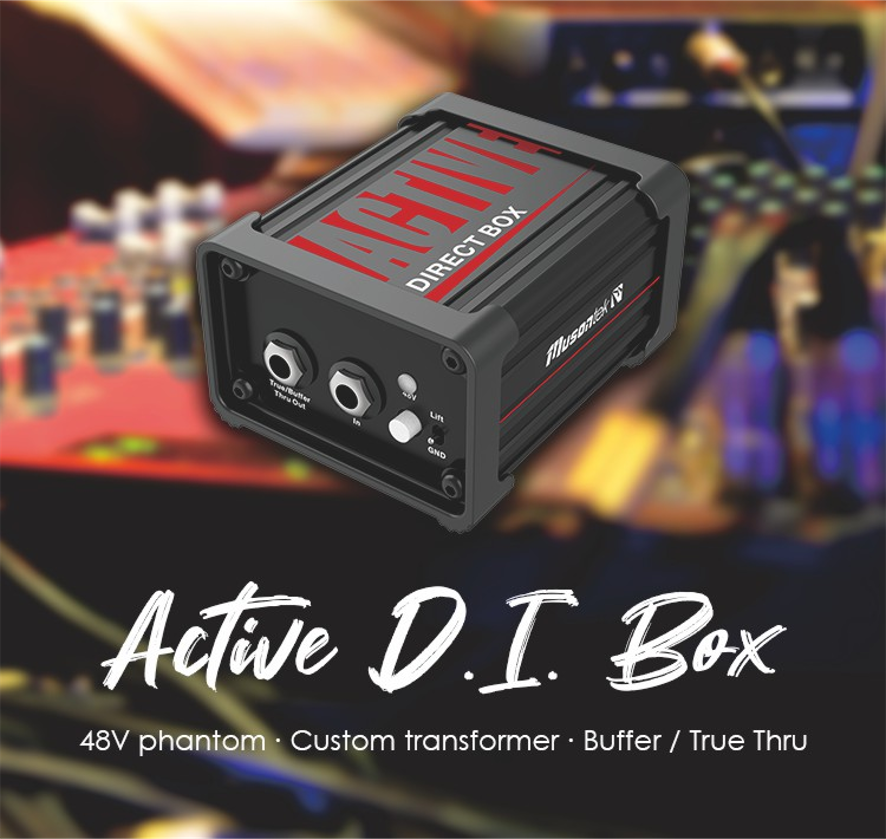
Die Musontek Aktive D.I. Box–AD1L is a direct box that gives steady performance and clear sound for any setup.
Wichtigste Erkenntnisse
-
Active DI boxes need power to work. They make weak signals sound better. This helps instruments sound clearer.
-
Active DI boxes have high input impedance. This keeps the instrument’s natural sound. They work well for electric guitars and basses.
-
Some features help remove noise and fix phase problems. Ground lift and phase reverse keep the sound clean during shows.
-
The Musontek AD1L is flexible. It has many output choices. You can use it for live shows or studio recordings.
-
Picking the right DI box for your instrument and space is important. It can make your sound much better.
How Active DI Boxes Work

Power and Circuit Design
Active di boxes need power to work. They can get power from 48V phantom power or batteries. Phantom power uses the same cable as the audio signal. This means you do not need extra cords. It helps keep things tidy on stage or in the studio.
The table below shows how active and passive di boxes need power:
|
Type of DI Box |
Leistungsbedarf |
|---|---|
|
Aktiv |
Needs power, like phantom power or a battery |
|
Passiv |
Does not need any power |
The Musontek Active D.I. Box-AD1L uses a special circuit design. It uses single electronic parts instead of chips. This helps make the sound better and lowers distortion. The AD1L has a custom audio transformer. This transformer keeps noise and hum away. The ground lift switch helps fix ground loop problems. It makes the signal cleaner.
Here is a table that shows how these features help with sound and noise:
|
Merkmal |
Impact on Signal Integrity and Noise Reduction |
|---|---|
|
Vollständig diskrete Schaltung |
Makes sound better and lowers distortion. |
|
High Input Impedance |
Keeps instrument’s tone clear and true. |
|
Kundenspezifischer Audio-Transformator |
Stops unwanted noise and hum. |
|
Ground Lift Schalter |
Helps stop ground loop problems. |
The AD1L’s chain port lets you send the signal to other devices. This gives you more ways to set up your gear.
Signal Conversion Process
An active di box changes the signal from an instrument. It turns an unbalanced, high-impedance signal into a balanced, low-impedance signal. This helps the signal go farther without losing quality or picking up noise. The built-in preamp boosts the signal and matches impedance. This keeps the sound strong and clear.
The table below compares how active and passive di boxes change signals:
|
Merkmal |
Aktive DI-Box |
Passive DI-Box |
|---|---|---|
|
Signal Amplification |
Yes, has built-in preamp circuits |
No, uses transformers |
|
Impedance |
Lower impedance for longer cables |
Higher impedance |
|
Frequenzgang |
Usually wider frequency response |
Limited frequency response |
|
Zusätzliche Merkmale |
Has ground-lift, pad, and EQ switches |
Few extra features |
|
Bester Anwendungsfall |
Good for low-output instruments, long cables |
Good for high-output, vintage sound |
Active circuits make the signal-to-noise ratio better. Matching impedance helps the signal move easily to the mixer. The transformer keeps input and output separate. This lowers interference and keeps the sound clean.
Tip: Using an active di box like the Musontek AD1L helps musicians and engineers get great sound from their instruments on stage or in the studio.
Key Features of an Active DI Box
High Impedance Handling
Musicians use electric guitars and basses with high-impedance outputs. An active di box can handle these signals easily. Most active DI boxes have high input impedance. This helps keep the instrument’s sound natural. The box works well with many types of gear. It keeps the tone clear and strong.
The Musontek AD1L has a 1MΩ input impedance. This high value gives many benefits:
-
High input impedance keeps the guitar’s tone safe.
-
It stops the signal from getting weak, which helps passive pickups.
-
It prevents loading effects that can hurt passive pickups and loud signals.
A high input impedance makes sure the instrument’s sound reaches the mixer or audio interface without losing quality.
Note: Active DI boxes have high input impedance. This helps them work with many instruments, especially those with passive pickups.
Ground Lift and Phase Reverse
Noise can mess up a show or recording. Ground loops often cause hum in audio setups. The ground lift switch on an active di box helps fix this. When you turn it on, it disconnects pin 1 of the XLR output. This breaks the ground loop and removes hum at 50Hz or 60Hz.
-
The ground lift switch disconnects pin 1 of the XLR output. This breaks ground loops.
-
This helps get rid of ground loop hum, which happens at 50Hz or 60Hz.
-
Switching the ground/lift toggle can help stop noise from ground loops.
The phase reverse feature is also important. Sometimes, signals from different sources do not match. This causes phase problems. The phase switch lets you fix this quickly. It helps blend sounds from old gear or many sources.
-
A phase switch on DI boxes lets you fix problems with old gear or other out-of-phase sources.
-
The polarity reverse feature helps when mixing sounds that are out of phase.
-
In studios, using the phase reverse feature on a DI box helps mix a miked signal and a DI signal well.
These features help musicians and engineers fix problems fast. They keep the sound clean and balanced.
Chain Port and Output Options
Flexibility is important in audio setups. The Musontek AD1L has a chain port with direct and buffered outputs. This lets users send the signal to amps, effects pedals, or other devices without losing quality. The chain port makes it easy to send signals in different ways. It helps with creative setups for live shows and studio use.
The AD1L also has a wide dynamic range. The table below shows how it compares to industry standards:
|
Spezifikation |
Value |
|---|---|
|
Dynamic range |
118dB |
|
Industry range |
100dB – 120dB |
A dynamic range of 118dB means the AD1L can handle loud and soft sounds without distortion. This works well for live shows and studio recordings.
Tip: The dual-transistor Class A buffer circuit in the Musontek AD1L keeps the signal strong. It captures every detail of the performance.
These features make the active di box a great tool for musicians and audio engineers who want reliable, high-quality sound.
Benefits of Using an Active Direct Box
Enhanced Sound Quality
Musicians and audio engineers use a direct box to make sound better. An active direct box has a preamplifier that boosts the signal from instruments. This makes the sound louder and clearer than plugging straight into a mixer. Low-output instruments, like old electric guitars and basses, can sound weak without a direct box. With an active di box, these instruments sound bright and full.
The Musontek AD1L keeps the instrument’s real tone safe. Its high input impedance of 1 megaohm protects the sound. The dual-transistor Class A buffer circuit catches every detail, so listeners hear all parts of the music. The custom audio transformer gives galvanic isolation, which removes noise and hum. The ground lift switch also helps stop ground loops, making the signal cleaner.
|
Merkmal |
Nutzen Sie |
|---|---|
|
Custom audio transformer |
Removes noise and hum for clear sound |
|
Ground lift switch |
Stops ground loops and unwanted noise |
|
Discrete circuit design |
Keeps the signal clean and true |
Tip: Using a direct box like the Musontek AD1L helps musicians sound their best on stage and in the studio.
Reliability and Flexibility
A direct box helps musicians and engineers set up gear in a reliable way. Buffering amplifiers in an active di box protect the signal from loading effects. This keeps the sound strong, even with long cables or lots of devices. The Musontek AD1L has many output options, so users can send the signal to amps or effects pedals.
The AD1L is built to last and works well for a long time. Its flat frequency response keeps the sound true at all levels. The wide dynamic range handles both loud and soft sounds without changing them. Very low distortion (0.002% THD) means the instrument’s real sound comes through. Balanced outputs lower hum and interference, making the direct box a good choice for live shows and studio work.
|
Merkmal |
Beschreibung |
|---|---|
|
Frequenzgang |
Flat sound at all frequencies |
|
Dynamischer Bereich |
Handles loud and soft sounds |
|
Harmonische Gesamtverzerrung |
Very low, keeps the real sound |
|
Rauschunterdrückung |
Balanced outputs stop hum and interference |
A direct box like the Musontek AD1L helps musicians and engineers fix problems fast. It works well for live concerts and home recording.
Active vs. Passive DI Box Comparison

Core Differences
Active and passive direct boxes do the same job, but they work differently. An active di box needs power to work. A passive di box does not need any power. This changes how each box handles sound and signals.
The table below shows the main differences:
|
Merkmal |
Active DI Boxes |
Passive DI Boxes |
|---|---|---|
|
Leistungsbedarf |
Needs power to work |
Does not need power |
|
Signalverarbeitung |
Good for weak instrument signals |
Not good for weak instrument signals |
|
Frequenzgang |
Has a wider frequency range |
Has a smaller range, adds some warm sound |
|
Distortion Characteristics |
Makes sound clean with less extra noise |
Makes sound smooth and warm |
Active direct boxes use powered parts to make weak signals stronger. This helps keep the instrument’s sound clear and full. It works well for instruments with passive pickups. Passive direct boxes are good for instruments that have strong signals. They can make the sound warmer.
Tip: Active circuits can be changed to cover more sounds. This makes them useful for many audio jobs.
Choosing the Right DI Box
Picking the right di box depends on what you play and where you play. Musicians should think about their instrument, where they play, and how much money they want to spend.
The table below can help you choose:
|
Faktor |
Passive DI-Box |
Aktive DI-Box |
|---|---|---|
|
Instrument Typ |
Best for strong-signal instruments |
Best for weak-signal instruments |
|
Live vs. Studio Environment |
Works well for live shows |
Great for studios and careful sound control |
|
Budget Constraints |
Costs less money |
Costs more, but works better |
Musicians often use passive direct boxes for electric guitars and basses with strong signals. These boxes give a smooth sound when played loud. Active direct boxes are better for acoustic guitars, keyboards, and old instruments with weak signals. They let you use longer cables and keep the sound quiet.
-
Passive direct boxes are best for strong-signal instruments.
-
Active direct boxes are better for weak-signal instruments and studio work.
-
Money and where you play also matter when choosing.
Musicians and engineers should pick the direct box that fits their needs. This helps them get the best sound and performance.
Direct Box Applications in Audio Setups
Instruments and Scenarios
Musicians use a direct box to connect instruments to mixers. Some instruments need help to sound clear and strong. The direct box sends a clean signal, even with long cables.
Common instruments that use a direct box are:
-
Electric guitars with active pickups
-
Keyboards with built-in electronics
-
Basses, both active and passive
-
Acoustic guitars with pickups
Keyboards often need a direct box because of their electronics. The direct box boosts the signal and keeps it strong. This works even if the cable is long. Electric guitars with active pickups also need a direct box. It helps with high-impedance signals. Musicians use a direct box for live shows, studio recordings, and home setups.
The Musontek AD1L works well for all these instruments. It gives clear sound and strong performance on stage, in the studio, or at home.
Live and Studio Use
Live and studio audio setups can be tricky. A direct box helps fix problems and makes sound better. The Musontek AD1L fits many situations and keeps audio clean.
|
Szenario |
Nutzen Sie |
|---|---|
|
Live Performances |
Active direct boxes send clear sound and lower noise. |
|
Recording Studios |
They keep the real tone of instruments and stop outside noise. |
|
Broadcasting Setups |
They keep sound good over long cables for broadcasts. |
|
Electric Instruments |
They help connect instruments to PA systems and make wiring easy. |
|
Weak Signal Instruments |
They stop hums and buzzes for clean sound. |
Musicians and engineers can have problems when using a direct box. They might see signal loss, weak output, hum, or distortion. The Musontek AD1L helps fix these issues.
|
Challenge |
Solution |
|---|---|
|
Signal loss |
Make sure cables are tight and use the right type. |
|
Weak output |
Use the pad switch if the instrument is too loud. |
|
Hum |
Use the ground lift switch to stop ground loops. |
|
Verzerrung |
Use the phase reverse switch to fix phase problems. |
A direct box like the Musontek AD1L helps musicians and engineers get great sound anywhere. It works for concerts, studio recordings, and home practice. It keeps the signal strong and clear so every performance sounds good.
A direct box helps make music sound better and more professional. Musicians and engineers use it to make weak signals stronger. It also helps lower noise and lets sound travel far through long cables. An active di box, like the Musontek AD1L, has more features and gives clear sound in many situations.
-
Needs power to work well
-
Works great with passive instruments
-
Makes the output strong and clear
|
Merkmal |
Musontek AD1L |
Passive Direct Box |
|---|---|---|
|
Signal Output |
Strong and clear |
Transparent |
|
Leistungsbedarf |
Needs phantom power |
Kein Strom erforderlich |
|
Best Use |
Studio and live sound |
High-output sources |
Picking the right direct box can make any audio setup much better.

FAQ
What does a DI box do in a live performance?
A DI box changes the signal from an instrument. It makes the sound clear and strong. Musicians use it to connect guitars, basses, or keyboards to mixers. The box helps reduce noise and keeps the music sounding professional.
Why does an active DI box need power?
Active DI boxes use powered circuits to boost weak signals. They need phantom power from a mixer or audio interface. This power helps the box work with low-output instruments and keeps the sound clean.
Can the Musontek AD1L work with electric guitars and keyboards?
The Musontek AD1L handles signals from electric guitars, basses, and keyboards. Its high input impedance protects the instrument’s tone. The box works well for both live shows and studio recordings.
What is the ground lift switch for?
The ground lift switch stops hum caused by ground loops. It disconnects the ground connection in the signal path. This feature helps musicians get a cleaner sound during performances or recordings.
How does a DI box improve recording quality?
A DI box sends a balanced signal to the mixer or audio interface. This reduces unwanted noise and interference. The box helps capture every detail of the instrument, making recordings sound clear and natural.