
Putting an equalizer guitar effect before or after a compressor changes how a guitar sounds. Changing the order makes the tone and dynamics different. Musontek Remeowdel gives exact control with its special features. It helps players get clear and deep sound in any setup.
Wichtigste Erkenntnisse
-
Putting EQ before compression changes the guitar’s sound. This helps you control tone and how loud or soft it is.
-
Using EQ after compression brings back clear and sharp sound. This is good for fixing sound that compression changed.
-
Trying both EQ orders can help you find new sounds. These sounds might match your music style.
-
Check your pedal setup often. Make sure bad sounds are gone before compression. This gives you a cleaner sound.
-
Listen to your guitar with the whole band. This helps you make better EQ and compression choices.
EQ Before Compression
Klangliche Wirkung
When you put an equalizer guitar effect before a compressor, it changes the guitar’s sound right away. The Musontek Remeowdel works well in this spot. It has three bands, so you can turn up or down the bass, mids, or treble before the compressor gets the signal. This way, the compressor works with a sound that already has the tone you want. For example, if you boost the mids, solos can be easier to hear. If you lower the harsh highs, the sound gets smoother. The Remeowdel’s analog parts and harmonic boost make the guitar sound warmer and more detailed. This helps the guitar tone feel fuller and more lively.
Dynamic Changes
Putting an eq before compression changes how the compressor acts on the guitar signal. The equalizer guitar effect can make some frequencies louder or softer, which changes how the compressor works.
-
Changing the EQ before compression can make soft and loud parts more even, so the sound is easier to control.
-
An eq before a compressor changes how much and where the compressor works, so it reacts differently to the guitar signal.
For example, if you boost the bass, the compressor will work harder on low notes, making the sound tighter. If you cut the highs, the compressor will not react as much to sharp sounds, so the output is smoother. This setup helps keep the guitar’s volume steady and balanced.
When to Use This Order
Many players put an equalizer guitar effect before compression when they want to change their sound first and let the compressor work with those changes. This order is good for:
-
Guitarists who want certain frequencies to stand out before making the sound smoother.
-
Musicians who need their tone to stay the same for rhythm or lead playing.
-
People with strong pickups who want to stop loud spikes.
The Musontek Remeowdel’s analog build and true bypass are great for this setup. It gives you exact control and keeps the guitar’s real sound clear, even after compression. This way, players can start with a solid base for their music.
EQ After Compression
Post-Compression Shaping
When you put eq after compression, you can fix the guitar sound. Compression can change how the frequencies sound and add new tones. Using eq after this step helps bring back the guitar’s real sound. The Musontek Remeowdel lets you control which frequencies to boost or cut. If compression makes the mids too loud, you can turn them down for a smoother sound. If the highs are not clear, you can make them brighter. This way, players get a clean and balanced tone.
Tip: Try using the Remeowdel’s three-band eq to change bass, mids, and treble after compression. This helps fix any sound changes and keeps the guitar’s true feel.
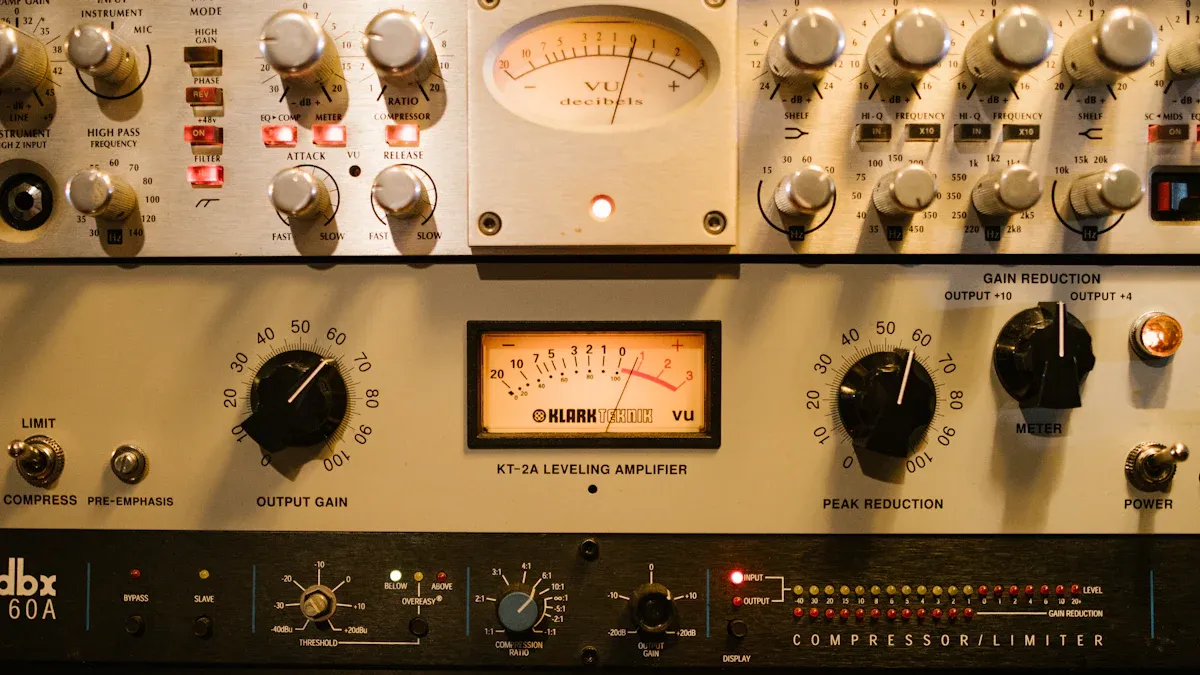
Control and Flexibility
Using eq after compression gives you more control over the sound. Compression already makes the signal even, so you can shape the sound better. The Remeowdel has easy knobs and an analog build for quick changes. You can boost some frequencies to make the sound stand out or cut noise you do not want. The eq is like a final tool to add clarity or warmth. Many pros use this order because it works well in studios and on stage.
-
Change frequencies that compression changed
-
Make the guitar sound clearer and more detailed
-
Take away harsh or muddy sounds from the mix
Best Situations for EQ After
Some guitar setups work best with eq after compression. Players who want a clean sound often use this way. It is good for lead parts that need to be heard or rhythm parts that must stay steady. The Remeowdel’s true bypass and high headroom are great for these uses. Musicians can use eq after compression to bring back lost detail or boost certain frequencies. This order is best for people who want to improve their sound after changing the dynamics.
-
Studio recordings that need exact tone shaping
-
Live shows where clear sound matters
-
Setups with many effects that need last changes
Comparing Approaches
Pro und Kontra
People often talk about which order is better for eq and compression. Each way has its own good and bad points. If you put eq before compression, you change the sound before it hits the compressor. This lets you boost or cut some frequencies, so the compressor acts in a new way. It can help stop loud peaks and make the sound smoother. But, if you boost too much before compression, the compressor might work too hard. This can make the sound feel less real.
If you use compression first and then eq, you get more control over the end sound. Compression makes the signal even, and then eq can fix the frequencies. This way, you do not change how the compressor works. It helps bring back clear sound and detail, especially if compression changes the mix. But, if you boost too much after compression, it can mess up what the compressor did. So, you need to be careful with your changes.
|
Approach |
Profis |
Nachteile |
|---|---|---|
|
EQ before compression |
Shapes compressor response, controls peaks |
May require further eq, can sound unnatural |
|
EQ after compression |
Precise frequency control, restores clarity |
Boosting can undo compression, needs care |
Real-World Scenarios
Studios and live shows use both orders, depending on what they need. In studios, engineers often use eq first to take out bad sounds before compression. This makes the guitar track cleaner and easier to mix. After compression, they use eq again to shape the sound and add style.
-
Compression helps acoustic guitar by making the sound even and stopping loud peaks.
-
Engineers like to use eq before compression to remove bad sounds, then use eq again to shape the tone.
-
Mixing two rhythm guitars with different eq can make the sound wider. One guitar might sound brighter, while the other is warmer.
Live sound workers also change the order for each place and music style. Sometimes, they use eq before compression to fix harsh sounds or make things clearer. After compression, they use eq to help the guitar fit with the band.
Häufige Fehler
Musicians sometimes make mistakes with eq and compression. One mistake is boosting too many frequencies before compression. This can make the compressor work too much and sound fake. Another mistake is only using eq after compression, which might not fix the real problem.
Tip: Always listen to the guitar with the whole band. Even small changes in eq or compression can change the sound a lot.
Players should not use extreme eq settings, especially before compression. They should also see how each effect works with other pedals. Trying different setups helps find the best sound for each song and place.
Practical Guide: Equalizer Guitar Effect & Compression Techniques
Assess Your Setup
Guitarists should first look at their pedal setup. They need to check how their pedals are arranged. Here are some steps to help get the best sound from the equalizer guitar effect and compressor:
-
Take away unwanted sounds with subtractive eq before compression. This stops harsh noises from making the compressor work too hard.
-
Change compressor settings to make loud and soft notes even. This helps the guitar sound smooth.
-
Play softly and loudly to test the dynamic range. Listen to how the compression techniques change the sound.
-
Try different chords and single notes. Make sure the volume and sustain stay the same.
-
Use different picking styles to see how the compressor reacts.
The Musontek Remeowdel has simple controls and lots of headroom. Players can set up their sound fast and hear changes right away.
Match to Musical Style
Different music styles need different eq and compression techniques. Here are some tips for matching your setup to your style:
-
Metal: Use strong compression and boost high-mids for a bold sound.
-
Rock: Set compression ratios from 4:1 to 6:1 with quick attack and release for energy.
-
Jazz: Use light compression to keep the guitar’s natural feel. Use soft equalization to keep the guitar’s true sound.
-
Pop: Boost highs and control mids with eq for a bright sound.
-
Heavy Metal: Make room for guitars and drums by boosting low mids and highs.
-
Recording sessions: Use eq to fix problems and compression techniques to shape the final sound.
The Remeowdel’s three-band eq helps players change their sound for any style, from smooth jazz to heavy metal.
Experiment Safely
Professional guitarists say to try different pedal orders to find the best sound. The order of eq and compression can change how the guitar fits in the mix.
Experts say, “Clean up sounds with eq before compression, but the order depends on what the mix needs. If the compressor is last, it makes each part clearer. If the sound needs fixing, put eq first.”
Players should try both ways. They can start with classic setups and then test new ones. The Musontek Remeowdel’s true bypass and analog design make it safe to switch pedal order without losing sound quality. Trying different setups helps players find new sounds and get better at playing.
Musontek Remeowdel is a very useful equalizer pedal for any setup. Players should try EQ before and after compression to see what sounds best. The table below shows why it is important to try different pedal orders:
|
Evidence |
Erläuterung |
|---|---|
|
The signal chain is very important for guitar sound. |
It is like how an artist uses tools to make a painting. |
|
A good signal chain helps you get the sound you want. |
The way pedals work together is key for making music. |
|
Trying different pedal orders is important for your sound. |
You need to test things yourself to find your own style. |
|
Trying new things helps you find your own sound. |
It lets you find new pedal setups that fit how you play. |
Players can use the Remeowdel before or after compression for different sounds. Try both ways and listen to how the sound and clarity change.
FAQ
What does an equalizer guitar effect pedal do?
An equalizer pedal lets you change bass, mids, and treble. You can make some sounds louder or softer. This helps shape how your guitar sounds. The Musontek Remeowdel has three bands for more control. You can use it to get many different sounds.
Should beginners use EQ before or after compression?
Most beginners start with EQ before compression. This way, they can fix bad sounds first. It gives the compressor a better signal to work with. Players should try both ways to see what works for them.
Can the Musontek Remeowdel work with other pedals?
Yes, the Remeowdel works well with other pedals. Its true bypass keeps your sound clear. The analog parts help keep the signal strong. You can use it before or after compression for different results.
Does pedal order affect live performance sound?
The order of pedals changes how your guitar sounds on stage. Musicians pick the order based on the place and music style. Trying both setups helps you get the best sound for live shows.
How do I avoid common EQ and compression mistakes?
Do not boost EQ too much before compression. Listen to the whole band when you play. Make small changes to keep your guitar sounding real. Test your setup often and change things slowly.