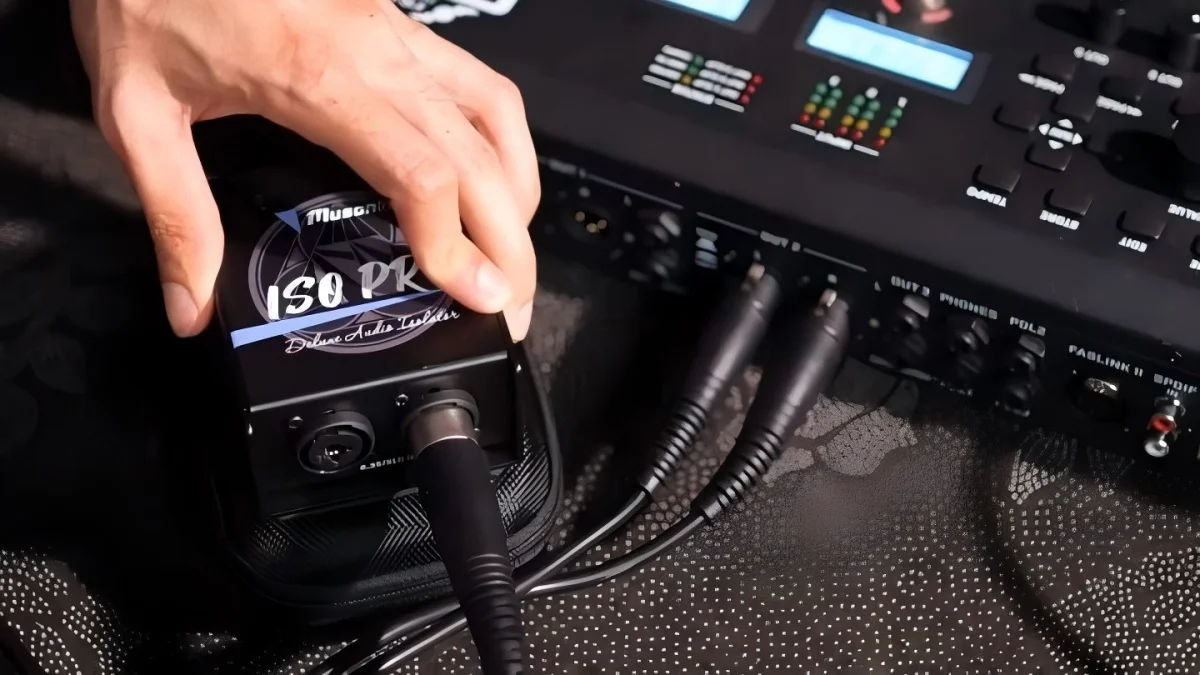
No, a passive DI-Box does not need a battery. This kind of passive DI box works without outside power. Musontek sells the Passive DI Box PD1L and the Passive DI Box PD1X. These models provide steady and excellent performance. You just plug them in and get clear sound right away.
Wichtigste Erkenntnisse
A passive DI box, such as the Musontek PD1L, does not need batteries or extra power. This makes it simple to use and very dependable.
The transformer in a passive DI box changes high-impedance signals to low-impedance signals. It keeps the instrument’s true sound and helps lower noise.
Passive DI boxes work well for live shows and studio recording. They give clear sound and you do not have to worry about power problems.
How does a passive DI box work?
Transformer-based signal conversion
A passive di box has a transformer inside. The transformer changes the signal from an instrument. It makes the signal work with audio equipment. The transformer uses electromagnetic induction. It lowers the voltage and raises the current. This gives a balanced output with low impedance. Balanced signals can travel far without getting noisy.
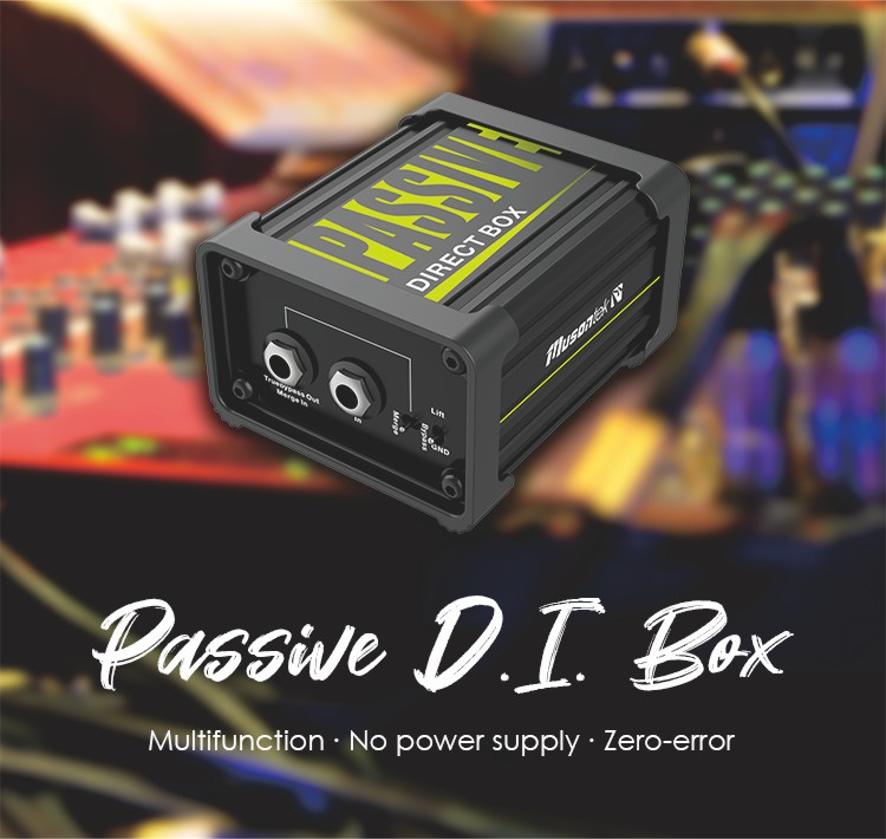
Musontek Passive DI Box PD1L uses a good transformer. The transformer keeps the instrument’s sound natural. It handles quick changes in sound and loud instruments well. The transformer also helps cut down on noise. It turns unbalanced signals into balanced ones. Balanced signals block noise, so the sound stays clean.
Tip: Balanced signals do not pick up hum or interference easily. This makes a passive di box great for stage and studio use.
The main parts inside a passive di box work together:
The transformer changes high-impedance signals to low-impedance signals.
This keeps the instrument’s tone sounding real.
The transformer stops distortion when the music gets loud.
Here is a table showing common impedance values for passive di boxes:
Impedance Type | Typical Value |
|---|---|
Eingangsimpedanz | ~150kΩ |
Ausgangsimpedanz | Low (good for mic preamps) |
Matching impedance is important. It helps keep the instrument’s sound the same when you connect it. The passive di box works with many instruments and audio systems.
Kein Strom für den Betrieb erforderlich
A passive di box does not need batteries or power from outside. The transformer gets energy from the signal that comes in. The passive di box works right when you plug it in. Musontek Passive DI Box PD1L is easy to use. You do not need to worry about batteries or power cords.
Passive di boxes do not have active electronics. This makes them tough and dependable. No battery or power cord means less chance of problems. Musontek PD1L keeps the signal strong in any situation.
Passive di boxes keep the signal good without power.
No active electronics means they last longer.
No power needed means fewer problems during shows.
Musicians and sound engineers like the Musontek Passive DI Box PD1L because it is simple. They trust it to give clear sound every time. No power needed makes setup fast and easy. The PD1L is a good choice for anyone who needs a passive di box.
Passive DI box vs active DI box
Leistungsbedarf im Vergleich
People who work with audio often look at passive and active direct boxes. They compare how each one gets power and handles signals. Active DI boxes need batteries or phantom power to work. Passive DI boxes do not need any power at all. Inside a passive direct box, a transformer changes the signal. It does this job without using any electronics. This makes passive direct boxes simple and easy to trust.
Here is a table that shows how they are different:
Merkmal | Active DI Boxes | Passive DI Boxes |
|---|---|---|
Leistungsbedarf | Needs batteries or phantom power | Does not need power |
Signal Processing Method | Uses electronic circuits | Uses transformers |
High-Frequency Signal Loss | Keeps the signal strong | Might lose some high sounds |
Signal Boosting Capability | Can make weak signals louder | Cannot make signals louder |
Passive direct boxes are good for things like electric guitars and basses. These instruments have high-impedance outputs. Passive DI boxes help match impedance and can stop hum with ground-lift. Active DI boxes have preamps inside. They can make weak signals stronger and keep more sound details.
Note: Passive DI boxes are simple and tough. Many people use them for live shows because they last a long time.
When to choose a passive direct box
Musicians and sound experts pick passive direct boxes in many cases. Passive direct boxes are best when you do not have batteries or phantom power. They work well for live shows, studio work, and recording when you need something you can count on.
You might use a passive direct box for these reasons:
Plugging in a bass guitar for clear sound.
Changing high-impedance signals from guitars or keyboards.
Using ground-lift to stop hum.
Making a mic-level signal from an instrument or line source.
Recording without changing the original sound.
Passive direct boxes like the Musontek PD1L can handle line-level signals and instruments with preamps. They also work with guitar amp modelers and active pickups. People like passive DI boxes because you just plug them in and they work. The Musontek PD1L is a great choice when you want something simple and that works well, especially if you cannot use batteries or phantom power.
Practical benefits of no power needed
Simplicity and reliability on stage
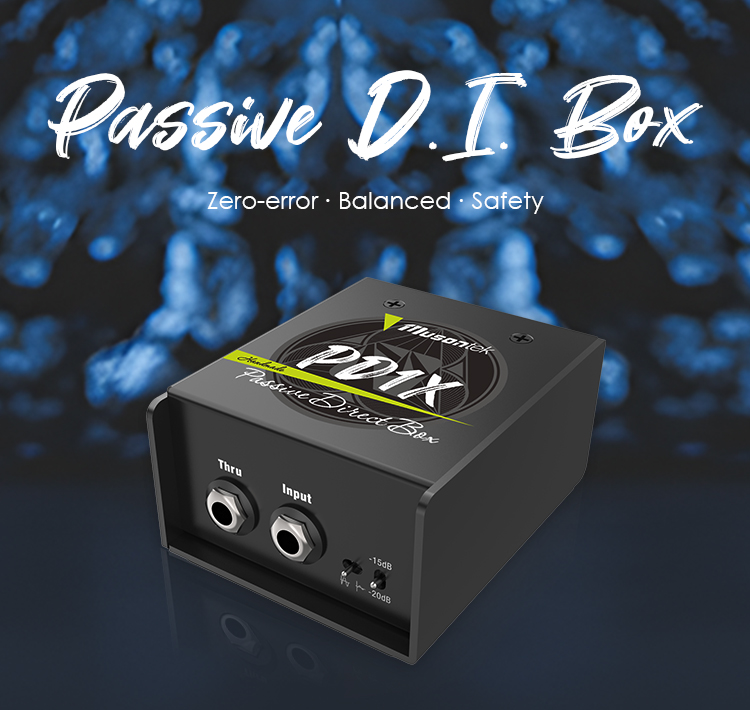
Musicians and sound engineers like how easy passive di boxes are. These di boxes do not need batteries or outside power. This makes setting up fast and simple. When musicians travel, they may not have power nearby. Passive di boxes always work, no matter where you play. Not having batteries means fewer problems during shows. The di box keeps the instrument’s sound natural. It can handle loud and quick sounds without messing up. It stops noise and hum, so the audio stays clean for live shows and recording.
Many people pick passive di boxes because you just plug them in. You do not need to change settings or install software. This saves time and helps you feel calm before performing.
Passive di boxes have a simple design.
They work without batteries or extra power.
Musicians like them because they are reliable and save money.
Features of Musontek PD1L passive DI box
The Musontek PD1L passive di box has features that help with sound and fixing problems. The ground lift switch gets rid of hum and keeps sound clear, even at big events. The pad switch makes strong signals softer, so the sound does not get rough. The phase reverse switch helps balance sound in hard setups.
Merkmal | Beschreibung |
|---|---|
Passive discrete circuitry | Keine Stromversorgung erforderlich, einfach einstecken |
Sound preservation | Keeps the instrument’s real sound |
Transient signal processing | Handles loud, quick sounds without messing up |
GND Hubumsetzer | Removes hum from ground loops |
Pad Shifter | Makes strong signals softer |
Merge mode | Works with line signal input |
Phasenumkehrschieber für Signale | Lets you flip the phase |
Designed for live performance | Makes sure live shows and broadcasts go smoothly |
The PD1L di box keeps bass sounding clear and strong. It blocks hum and buzz, so the original sound stays safe. Musicians trust the Musontek PD1L to work well every time.
A passive di box like the Musontek PD1L does not need batteries or outside power. Musicians do not have to spend money on batteries. They also do not have to worry about fixing power problems. The table below shows how passive and active di boxes are different for people who work with audio:
Typ | Stromquelle | Ideal Use Cases |
|---|---|---|
Passiv | Keine | High-output instruments |
Aktiv | Battery/Phantom | Low-output instruments |
FAQ
What is the main difference between a passive and active direct injection box?
A passive direct injection box has a transformer inside. An active box uses electronic circuits and needs power from batteries or phantom power.
Can a passive DI box handle direct input from a keyboard or electric guitar?
A passive DI box takes signals from keyboards, electric guitars, and other instruments. It changes the signal so mixers and recording devices can use it.
Does a passive DI box affect the sound quality?
A passive DI box keeps the instrument’s real sound. It lowers noise and stops interference, so the sound stays clear for live shows or studio work.