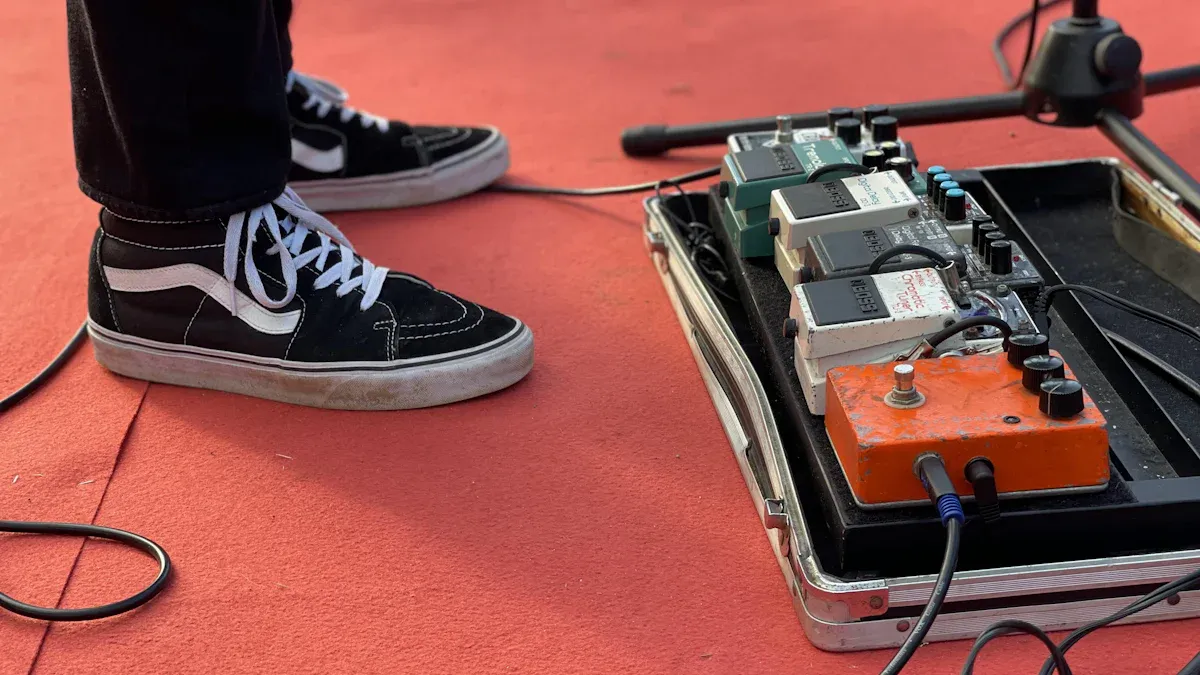
Are pedal switchers worth it? The answer depends on what you need and how complex your setup is. You might want to stop stepping on pedals all the time. You may want better sound or a neater pedalboard. Many guitarists like that a switcher can turn on many pedals at once. For example, you can use the MOD – Voyager Delay Pedal, Equalizer Effect: EQ – Remeowdel, FUR FUR Fuzz Pedal, Boost Effect Pedal: The Shit Powerund Dream Castle Overdrive Pedal with one click. Think about how you play and what setup is best for you.
Wichtigste Erkenntnisse
Pedal switchers make your setup easier. You can control many effects with one button. This helps you play more smoothly.
Loop switchers keep your sound clear. They lower noise and keep your signal path clean. They also let you use true bypass switching.
A loop switcher saves time when you play live. You can focus on your music, not on changing pedals.
Think about how you play and how many pedals you use. If you have lots of pedals or need fast changes, a loop switcher helps a lot.
If your setup is simple, you may not need a switcher. Check what you need so you do not spend extra money.
Was sind Pedalumschalter?
Basic functions
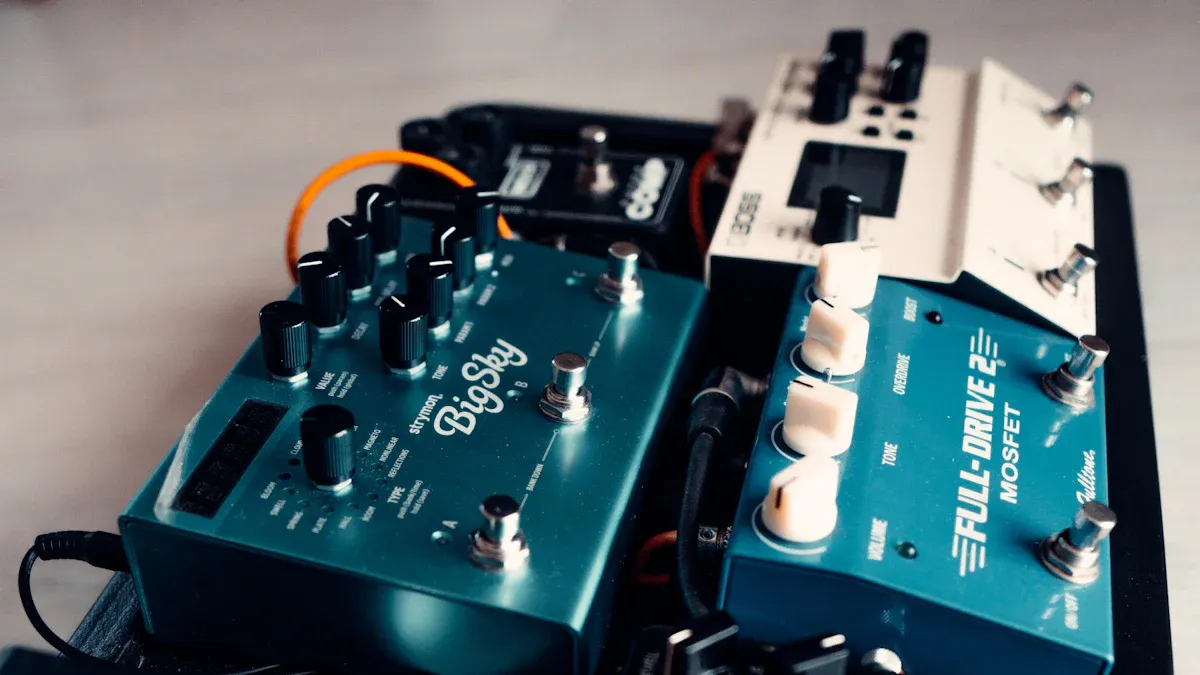
Pedal switchers help you control your effects pedals with ease. You can turn several pedals on or off at once by pressing just one button. This makes your playing smoother and helps you focus on your music. Many pedal switchers also let you save groups of effects as presets. You can recall these presets quickly during a song.
Here is a table that shows some main features you might find in a pedal switcher:
Funktion/Merkmal | Beschreibung |
|---|---|
Control of Pedals | Lets you turn on or off many pedals with one button. |
Preset Organization | Saves groups of effects for easy recall. |
True Bypass Loops | Keeps your signal clear by bypassing unused pedals. |
Boost Function | Adds extra volume when you need it. |
Tap Tempo | Sets the speed for delay or modulation effects. |
Tuner Function | Sends your signal to a tuner without noise. |
MIDI Integration | Connects with other gear for more control. |
A loop switcher is a special type of pedal switcher. It lets you place each pedal in its own loop. You can then add or remove any pedal from your signal path without unplugging cables. This keeps your sound clean and reduces unwanted noise.
How they work in a pedalboard
You place a loop switcher at the heart of your pedalboard setup. Each pedal connects to its own loop on the switcher. When you step on a footswitch, the loop switcher routes your signal through only the pedals you want. This setup makes your pedalboard setup neat and easy to use.
A loop switcher also helps you avoid long cable runs. Long cables can weaken your signal and add noise. By using a loop switcher, you keep your signal strong and your tone clear. Many guitarists use a loop switcher to organize their effects and make changes fast during a show.
Tip: If you play live or use many pedals, a loop switcher can save you time and keep your sound consistent.
Who should use pedal switchers?
Live performers
If you play live shows, you know how fast things can move on stage. A loop switcher can help you keep up. You can set up each loop for a different effect or group of effects. When you step on one button, you change your sound right away. This means you do not have to step on many pedals at once. You can focus on your music and your audience. A loop switcher also keeps your pedalboard neat. You avoid long cables and tangled wires. Your signal stays strong, and your tone stays clear. Many guitarists use a loop switcher to make their live setup simple and reliable. You can even use a loop to add a boost for solos, making sure your sound cuts through during a performance.
Tip: Try using a loop switcher if you want to switch between clean and distorted sounds quickly on stage.
Studio and home players
You do not need to play on stage to enjoy the benefits of a loop switcher. Many studio and home players find that a loop switcher makes their setup easier to use. You can program presets and save your favorite sounds. With one press, you can turn on several effects at once. This helps you move between different tones without stopping your playing. Some players use a loop switcher to control not just pedals, but also amp heads and rack gear. You can use MIDI to control many devices from one place. Here are some ways a loop switcher can help you at home or in the studio:
You can activate many effects with one button.
You can save and recall presets for different songs or styles.
You can control amps and rack gear, not just pedals.
You can avoid stepping on many pedals at once.
You can keep your signal path clean and your tone clear.
A loop switcher gives you more control and saves you time. You can focus on your music, not on your gear.
Pedal switchers: advantages
Simplified management
You want your pedalboard to help you, not make things harder. A big reason to use a loop switcher is that it makes things much easier. You do not have to step on lots of pedals to get your sound. You just press one button and your whole setup changes right away. This helps you play smoother and lets you pay attention to your music.
Here are some ways a loop switcher makes things easier:
A loop switcher lets you change many effects with one tap, so you do not need tricky foot moves.
You can make big sound changes with one tap, which helps you avoid mistakes when playing live.
Loop switchers help you think about your playing, not which pedal to press next.
You can put your effects in different loops, so your pedalboard stays neat and simple.
Loop switchers let you group pedals, so you can turn on or off a few effects at once.
If you use switchers with presets, you can save your favorite effect groups. This means you can get them back fast during a song. You do not have to remember which pedals to press or in what order. Your loop switcher does that for you.
Faster switching and presets
Being quick is important when you play live or record. Loop switchers let you change sounds fast. You can set up your own patches and use them with one press. This is a big reason people like switchers with presets.
Pedal switchers let you change between patches quickly, which makes playing easier.
You can use your pedals in new ways by putting them in different loops.
You can get your custom sounds right away, so you do not have to stop playing.
Some loop switchers, like the Crocodile Tail Loop, let you save up to 70 presets in seven banks. This gives you lots of control over your sound.
Devices like the BOSS MS-3 Multi Effects Switcher have built-in effects, a tuner, and a noise suppressor. This saves space and makes your setup better.
Switchers with presets help you stay ready for any song or style. You can go from clean to heavy sounds or add a boost for solos with one tap. This is great for both live shows and studio work.
Signal path and sound quality
Keeping your sound good is important. Loop switchers help keep your signal path clean and your sound clear. When you use a loop switcher, your signal only goes through the pedals you need. This cuts down on noise and keeps your sound strong.
Here is a table that shows how loop switchers help your sound:
Merkmal | Nutzen Sie |
|---|---|
True Bypass Switching | Makes sure your sound stays the same when bypassed. |
Ground Lift Feature | Gets rid of noise from ground loops, so your sound is clear. |
Improved Signal Clarity | Keeps your sound good when using many outputs. |
High-Fidelity Audio | Uses new tech to keep your sound high quality. |
Loop switchers help keep your signal path strong. They let you turn on or off groups of pedals with one switch. This means you can take out pedals you are not using, which lowers noise and keeps your sound pure. You can also try different pedal orders by moving your loops around.
New loop switchers use smart designs to stop signal loss. Active switchers and MIDI switchers help lower noise and keep your sound strong. Buffered bypass uses an electronic buffer to keep your signal strong when the pedal is off.
Buffered bypass: In these designs, the pedal’s input goes into an electronic buffer, and the output of that buffer is sent to the output jack when in bypass.
If you want your signal to stay strong, you can add a boost pedal like the Musontek The Shit Power to your loop switcher. This pedal gives you a clean boost and buffer, which helps keep your signal strong and clear. It uses good parts and a smart buffer to stop noise, so your sound stays clear even with long cables or lots of pedals.
Using a loop switcher is not just about making things easier. You get better sound, less noise, and more control over your effects. These reasons make loop switchers a good choice for any guitarist who wants a better setup.
Loop switcher and signal path
What is a loop switcher?
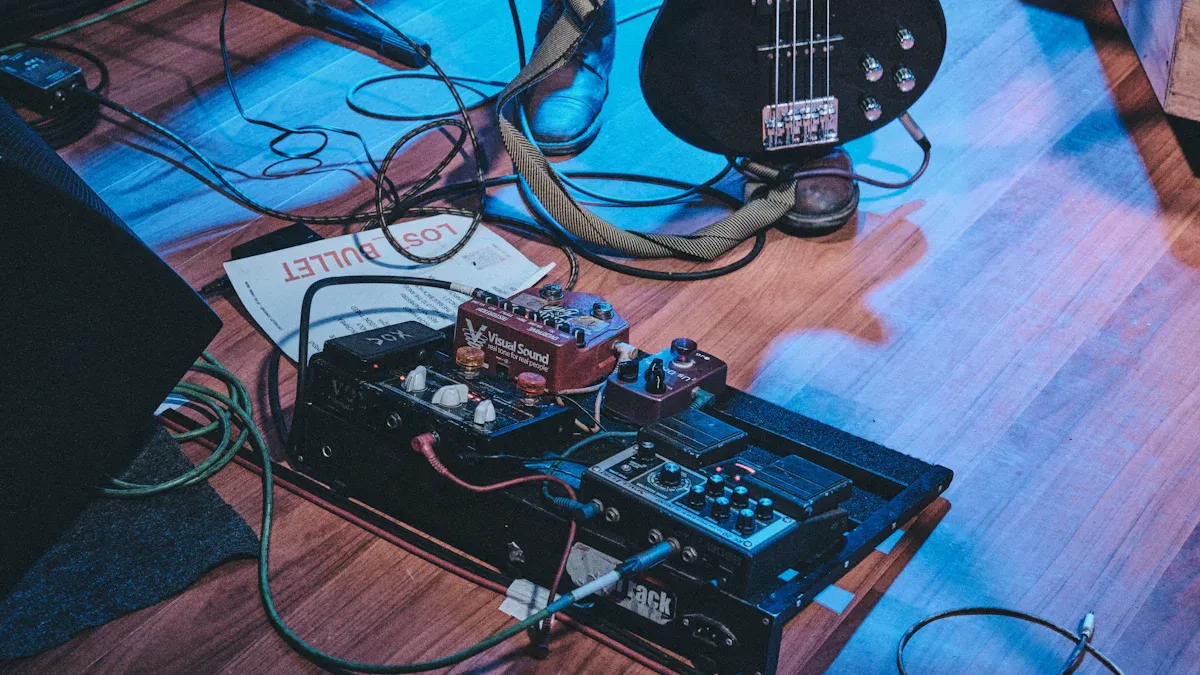
A loop switcher is a device that helps you control which effects pedals are active in your signal chain. You connect each pedal to its own loop on the loop switcher. When you press a button, the loop switcher adds or removes that loop from your signal path. This setup lets you use only the pedals you want at any time. You do not have to step on many pedals during a song. You can change your sound quickly and keep your workflow smooth.
A loop switcher gives you more control over your pedalboard. You can group pedals together in one loop or keep them separate. This makes your setup flexible and reliable. Many guitarists use a loop switcher to keep their sound clear and their pedalboard organized. You can trust a loop switcher to help you manage even a large number of pedals.
Managing noise and tone
Noise and tone loss can be big problems when you use many pedals or long cables. A loop switcher helps you solve these problems. When you use a loop switcher, you keep unwanted pedals out of your signal path. This means only the pedals you select affect your sound. You get less noise and a cleaner tone.
Loop switchers use different techniques to protect your sound:
True bypass keeps your signal pure by removing unused pedals from the path.
Buffered bypass protects your signal from losing strength, especially with long cable runs.
You can engage different effects while keeping other loops silent.
True bypass loop switchers maintain tone integrity by only including selected loops.
Buffered bypass helps your sound stay strong, even with many pedals.
A loop switcher maintains your tone by using true-bypass switching. This removes the impact of pedals that might degrade your sound. This is very helpful if you have long cables, as it reduces signal loss. You get a reliable sound every time you play.
Tip: If you want the best sound quality, use a loop switcher with both true bypass and buffered bypass options. This keeps your signal strong and your tone clear, no matter how many pedals or loops you use.
A loop switcher gives you a reliable way to manage your effects, reduce noise, and keep your tone just the way you like it.
Cost and considerations
Price of pedal switchers
You will find that the cost of pedal switchers can vary a lot. Simple ABY switchers usually have a lower cost. More advanced models, which let you control many loop effects and save presets, will cost much more. The price often depends on how many loops you need and what extra features you want. If you want a switcher that manages several pedals, gives you editing options, and works with MIDI, you should expect a higher cost. Always think about your budget and what features matter most for your setup.
Setup complexity
Setting up a loop switcher can feel tricky at first. You need to connect each pedal to its own loop. Some users report challenges with certain pedal designs or with routing in mixers. Here is a table that shows common setup challenges:
Challenge | Beschreibung |
|---|---|
Usability of Pedals | Some pedal switches, like silver peg-style, can be hard to use. |
Routing in Mixers | You need to route your signal correctly, often using send and return paths. |
Mono vs Stereo | Many mixers output in mono, so starting with mono effects is easier. |
You can make things easier by starting with a simple project. Use layouts that others have tested. Learn basic soldering skills if you want to build or repair your own loop switcher. Many kits come with guides and support, so you do not need to worry if you are new to this.
Tip: Take your time to learn each step. Practice with one loop before adding more.
When a switcher is unnecessary
You may not need a pedal switcher if your setup is simple. If you use only one or two pedals, or if you do not change effects often, a loop switcher might add more cost and complexity than you need. Small boards with just a few pedals work well without extra gear. You can save money and space by sticking to a basic setup. Think about your playing style and how many loops you really need. Sometimes, less is more.
Decide if pedal switchers are for you
Self-assessment checklist
You may wonder if a pedal switcher fits your needs. Use this checklist to help you decide. Think about each point and see if it matches your playing style or setup.
Do you want to make big changes to your sound with one press?
Do you play live and need reliable sound changes?
Would you like all your switches in one place for easy use?
Do you want to keep your signal strong by only using the pedals you need?
Do you want to swap out a broken pedal quickly during a gig?
Would you like to change the order of your pedals without moving cables?
Do you use MIDI gear and want more sound options?
Do you need features like buffering or boosting to keep your volume and tone clear?
If you answered “yes” to several of these, a loop switcher could help you. It can make your pedalboard easier to use and keep your sound strong.
Tip: Write down your answers. This helps you see if a loop switcher matches your needs.
Alternatives to switchers
You have options if a pedal switcher does not fit your setup. Some players use simple ABY boxes to switch between two signals. Others use pedals with built-in true bypass to keep their signal clean. You can also arrange your pedals in a way that makes switching easy by hand. Some multi-effects units offer many sounds in one box, so you do not need separate pedals. If you only use a few effects, you may not need extra gear at all.
A loop switcher works best for players with many pedals or complex setups. If your board is small, you might find that simple solutions work just as well.
You have learned that pedal switchers offer many benefits, but they also come with some challenges. Here is a quick look at what experts say:
Profis | Nachteile |
|---|---|
Flexible for different setups | Can feel complex or overwhelming |
Lets you create new sound combinations | May confuse with too many options |
Puts all tones in one place | Takes time to learn |
Customizable presets | Not needed for simple setups |
Reduces tap dancing | Can add extra cost |
Think about your own needs. Use the checklist to help you decide. The right gear will help you play your best.
FAQ
What does a pedal switcher do?
A pedal switcher lets you control many effects pedals with one button. You can turn on or off groups of pedals quickly. This helps you play smoother and keeps your sound clear.
Do pedal switchers affect my guitar tone?
Most pedal switchers keep your tone clean. True bypass switchers remove unused pedals from your signal path. Buffered switchers help your signal stay strong, even with long cables or many pedals.
Can I use a pedal switcher with any pedal?
You can use most pedals with a switcher. Make sure your pedals fit the switcher’s input and output jacks. Some special pedals may need extra setup.
Are pedal switchers hard to set up?
You may need some time to connect each pedal to the right loop. Start with a simple setup. Many switchers come with guides to help you.
Do I need a pedal switcher for a small pedalboard?
If you use only a few pedals, you may not need a switcher. You can switch pedals by hand. A switcher helps most when you have many pedals or need fast changes.