Yes, a guitarist can use an active DI box or passive DI box for guitar. This device takes the guitar’s signal and turns it into a balanced output. Many guitarists pick an active DI box because it gives clear sound and a strong signal. The device helps lower unwanted noise and works well with electric or acoustic guitars. Players who want the best sound often use it for live shows or in the studio.Musontek provides you with AD1L & AD1F
-
An active DI box makes guitar sound better. It changes unbalanced signals to balanced ones. This helps the sound stay clear and strong.
-
The MUSONTEK AD1L is a great pick for guitar players. It has low distortion and high input impedance. It also helps lower noise.
-
Using a DI box removes unwanted sounds like hums and buzzes. This makes it good for live shows and studio work.
-
Active DI boxes can be used with many kinds of guitars. They work well with electric and acoustic-electric guitars.
-
Setting up a DI box the right way can make sound much better. Always check for phantom power. Use good cables for best results.
Active DI Box Basics
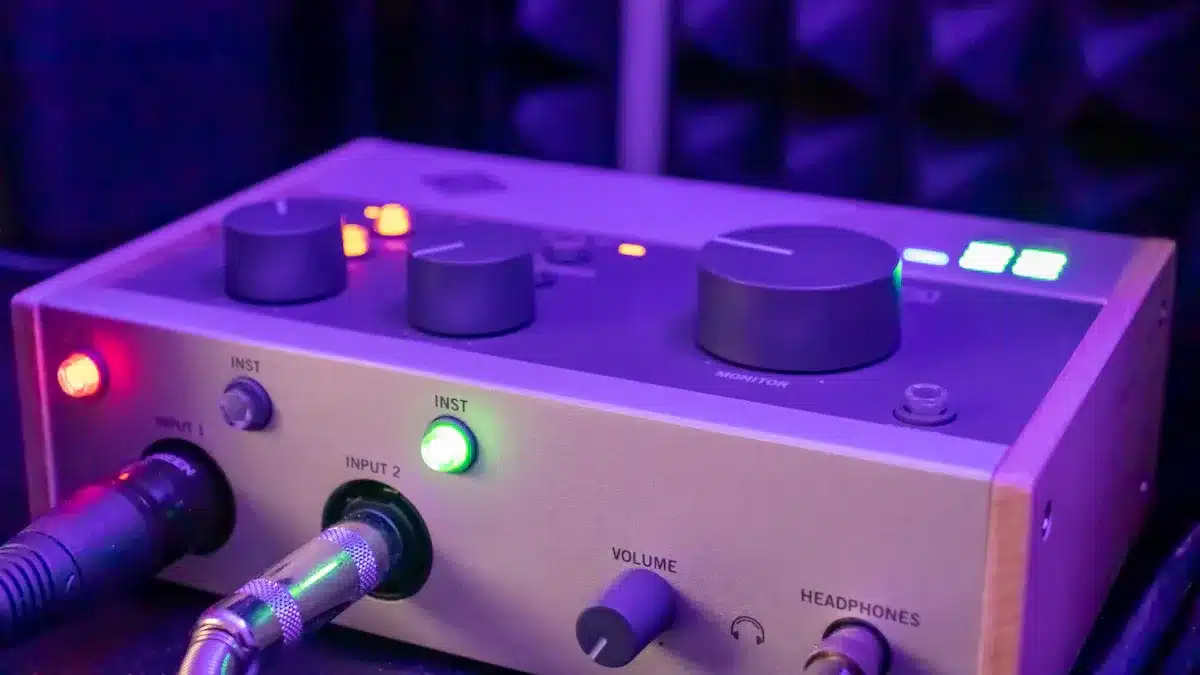
What Does a DI Box Do?
A DI box changes the guitar’s signal. It helps the signal work with mixers and audio interfaces. The box takes a high-impedance, unbalanced signal. It turns it into a low-impedance, balanced signal. This keeps the sound clean and strong. Long cables do not make the sound weak. DI boxes also keep the input and output separate. This stops noise and interference. Musicians use DI boxes for clear sound in live shows and recordings.
Tip: A DI box can stop buzzing and humming. These sounds can mess up a performance.
Active vs Passive DI Box
Active and passive DI boxes are different inside. The table below shows how they are not the same:
|
Feature |
Active DI Box |
Passive DI Box |
|---|---|---|
|
Internal Circuitry |
Has electronic parts and preamp circuits |
Uses transformers for matching and balancing |
|
Power Requirements |
Needs batteries or phantom power |
Does not need outside power |
An active DI box uses electronic parts. It needs power from batteries or phantom power. This helps it handle weak signals and make them stronger. A passive DI box uses only transformers. It does not need power. It works best with strong signals. It may not work as well with guitars that have passive pickups.
Why Use an Active DI Box for Guitar?
Guitarists like active DI boxes because they give more control. The MUSONTEK Active D.I. Box – AD1L is a top pick for guitar players. It has features that help musicians get great tone and dependability:
-
Sound Fidelity: The AD1L keeps the guitar’s sound rich and clear. It uses a Class A buffer and special circuit. Distortion is very low.
-
Input/Output Options: Players can connect the AD1L to mixers, amps, and pedals. This makes it useful for many setups.
-
Extra Functions: The ground lift switch and pad switch help lower noise and control signal levels.
-
Noise Reduction: The ground lift switch stops hum and buzz by breaking ground loops.
-
Compatibility: The AD1L works with mixers and audio interfaces. Guitarists can use it in studios or on stage.
The AD1L uses phantom power, so no batteries are needed. Its high input impedance works well with passive pickups and acoustic-electric guitars. The audio transformer keeps the signal clean and strong. Many guitarists trust active DI boxes like the AD1L for professional sound every time.
Benefits for Guitarists
Sound Quality and Signal Strength
Guitarists want their guitar to sound clear and strong. An active DI box helps make this happen. It makes the guitar signal louder and keeps the sound true. The MUSONTEK AD1L is special because it uses new technology for great sound. The device has very little distortion, high input impedance, and a wide frequency range. These things help the guitar sound real and full of detail.
|
Specification |
Active DI (AD1L) |
|---|---|
|
Total Harmonic Distortion |
0.002% @-5dBu |
|
Input Impedance |
1MΩ |
|
Frequency Response |
20Hz-20kHz (±0.2dB) |
The AD1L keeps the sound clean, even with long cables or in big places. The high input impedance works with many guitars and keeps the tone the same. The wide frequency range lets every note be heard clearly.
-
The AD1L has only 0.002% distortion, so the sound stays pure.
-
The 1MΩ input impedance lets it work with many guitars and pickups.
-
The frequency range covers all sounds people can hear, so nothing is missed.
Noise Reduction and Isolation
Noise can mess up a guitar show. Hums, buzzes, and ground loops can happen when you connect gear on stage or in a studio. An active DI box fixes these problems by matching impedance and keeping the signal safe. The AD1L uses transformer isolation to keep the guitar signal clean. This stops unwanted noise and interference.
An active DI box also changes unbalanced signals to balanced ones. Balanced signals fight noise from long cables, which is good for live shows. The AD1L has a ground lift switch. This switch breaks the ground link and gets rid of hum in the sound. Many players say a DI box removes ground noise and cuts hum during shows. The device works well in many places and keeps the sound the same.
Tip: Guitarists can use the ground lift switch to stop buzzing and humming, especially in new places.
-
Ground noise goes away when a DI box connects the guitar to the mixer.
-
The device helps stop hums during live shows.
-
Using a DI box often stops noise problems in different places.
Versatility for Different Guitars
Guitarists play many kinds of guitars, like electric, acoustic-electric, and bass. The MUSONTEK AD1L works with all these instruments. Its high input impedance is good for passive pickups, and its dynamic headroom handles loud sounds without distortion. The device has many features that make it useful for any setup.
|
Feature |
Description |
|---|---|
|
Input Impedance |
1 megaohm (1MΩ) – Good for passive pickups, keeps the sound clear. |
|
Dynamic Headroom |
118dB – Handles loud sounds without distortion, keeps details from hard playing. |
|
Ground Lift |
Stops hum by breaking the ground link, lowers noise in the sound. |
|
Phase Reverse Switch |
Fixes phase problems when mixing signals from more than one source. |
|
Chain Port |
Gives direct or buffered output for flexible signal paths. |
|
Audio Isolating Output Transformer |
Keeps the signal safe from noise and ground loops. |
|
48V Phantom Power Supply |
Uses standard power from pro gear, so no batteries needed. |
The AD1L works with electric and acoustic-electric guitars. Players can use the chain port for direct or buffered output. The phase reverse switch helps when mixing signals from more than one source. The device uses phantom power, so guitarists do not need batteries. The audio isolating transformer keeps the signal safe from noise.
Guitarists who want good sound in any place pick an active DI box like the AD1L. The device works with many guitars and setups, so it is a smart choice for live shows and studios.
Drawbacks and Considerations
When Not to Use an Active DI Box
Sometimes, guitarists should not use an active DI box. This device needs phantom power or batteries to work. If you send phantom power to the wrong gear, it can cause problems. Some setups do not need all the features of an active DI box. If your gear already has a strong, balanced signal, you may not need the extra frequency response. The table below shows when a guitarist might skip using an active DI box:
|
Characteristic |
Implication |
|---|---|
|
Requires phantom power or battery |
Can cause issues if phantom power is supplied to devices not designed for it |
|
No physical isolation |
Raises the risk of ground loops and noise |
|
More linear frequency response |
Not always needed if the source is already balanced |
|
Less prone to harmonic distortion |
May not matter for guitarists seeking a unique tonal character |
Possible Tone Changes
An active DI box changes the guitar signal in a few ways. It turns a high-impedance, unbalanced signal into a low-impedance, balanced signal. This helps keep the sound clean. A good DI box keeps the full frequency range of the guitar. Players can hear more detail and clear notes. If the DI box is not good, it can add noise and change the sound. The tone might get thin or lose important parts.
-
The DI box keeps the signal clean and balanced.
-
A good DI box keeps the sound clear and detailed.
-
A poor DI box can add noise and make the sound thin.
Compatibility Issues
Some guitarists think 48V phantom power always works well. But phantom power can cause ground loops and make live shows harder. Some people believe batteries fix all problems, but low batteries can cause distortion. Many players think active DI boxes are only for condenser microphones. In fact, these devices work with many instruments, like electric guitars. Some think active DI boxes do not work well on stage. High-quality models, like the MUSONTEK AD1L, work great in live shows.
-
Phantom power can cause ground loops.
-
Low batteries can make the sound distorted.
-
Active DI boxes work with many instruments, not just microphones.
-
Good DI boxes work well on stage.
How to Use an Active DI Box
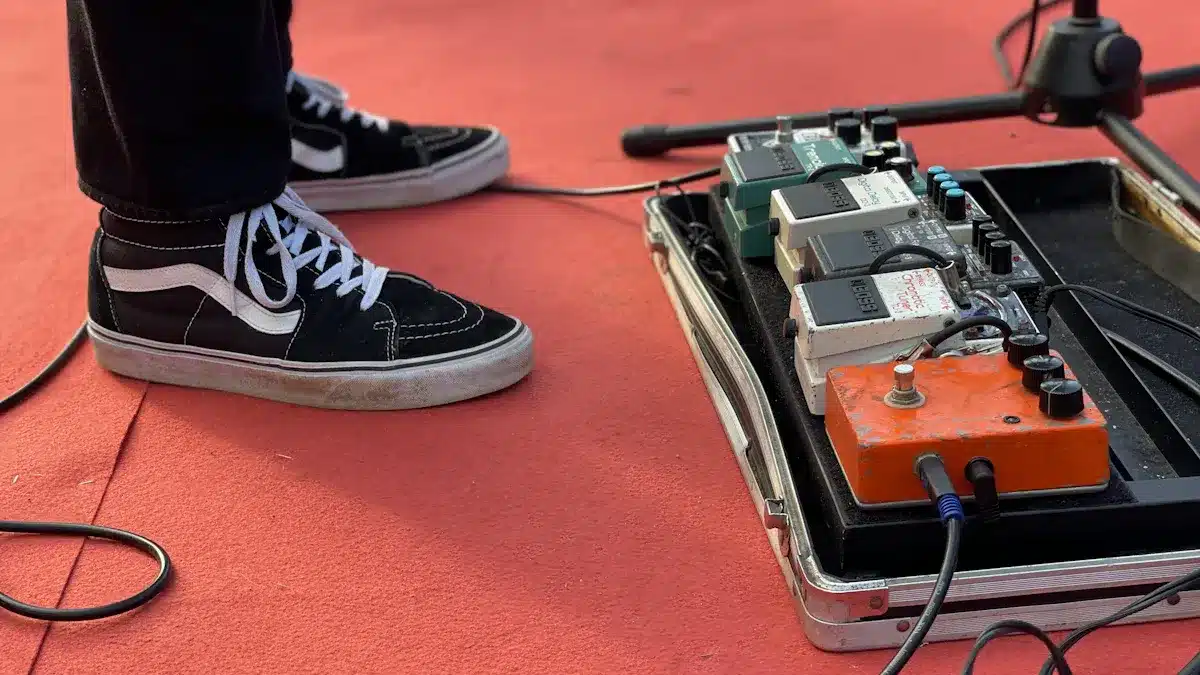
Setup Steps
Setting up an active DI box like the MUSONTEK AD1L helps guitarists get a clean and strong signal. Follow these steps for the best results:
-
Plug the guitar cable into the input jack of the DI box.
-
Connect the DI box’s output to the mixer or audio interface using a balanced XLR cable.
-
Make sure the mixer or interface provides 48V phantom power. The AD1L uses this power, so batteries are not needed.
-
Use the chain port if you want to send the guitar signal to an amp or other device while keeping the main signal going to the mixer.
-
Start with a flat EQ setting to hear the natural sound of the guitar.
-
Adjust EQ, focusing on midrange frequencies between 900 and 2 kHz to avoid a “can-like” sound.
-
Check low-end frequencies to prevent feedback and keep the sound full.
-
Use the notch filter if available to cut feedback without changing the overall tone.
-
Try the phase switch to improve sound quality, especially if EQ changes do not help.
Live and Studio Connections
Guitarists use active DI boxes in both live and studio settings. In live shows, the DI box keeps the signal strong over long cables and helps remove ground loop hum. The AD1L’s ground lift switch can solve noise problems quickly. On stage, players often use the chain port to send the signal to both the mixer and their amp, giving more control over their sound.
In the studio, the DI box captures a clean, “dry” guitar signal. Engineers can record this signal and also record the amp’s “wet” sound. This method gives more options during mixing. Power is easy to supply in studios, so the AD1L’s phantom power feature works well.
Tip: Use the ground lift switch during live performances to stop hum and buzzing.
Tips for Best Results
-
Choose a high-quality DI box with strong components for the clearest tone.
-
Use an active DI box for guitars with passive pickups to get extra headroom and flexibility.
-
Always check that phantom power is on before playing.
-
Keep cables short when possible to reduce noise.
-
Focus on getting the cleanest signal when using virtual guitar rigs.
A well-set DI box like the MUSONTEK AD1L helps guitarists sound their best in any situation.
A guitarist can make their sound better with an active DI box. This device keeps the signal clear and strong for live shows and recording. Many guitarists pick the MUSONTEK AD1L because it has special features. The high input impedance of 1MΩ works with lots of guitars. The Class A buffer helps the sound stay clear. A custom transformer cuts down on noise and distortion. Players who want easy setup and good sound can trust this tool. It helps them get better results every time.
FAQ
Can a DI box damage a guitar?
A DI box does not damage a guitar. It safely connects the guitar to mixers or audio interfaces. The device matches signal levels and keeps the instrument protected during use.
Does an active DI box need batteries?
Most active DI boxes need power. The MUSONTEK AD1L uses 48V phantom power from mixers or interfaces. This means players do not need batteries for operation.
Can you use a DI box with pedals?
Yes, a DI box works with pedals. Place the DI box after the last pedal in the signal chain. This setup sends the processed sound to the mixer or audio interface.
What is the chain port on the MUSONTEK AD1L for?
The chain port lets players send the guitar signal to an amp and a mixer at the same time. This feature gives more flexibility during live shows or recording.
Does a DI box improve sound quality?
A DI box improves sound quality by balancing the signal and reducing noise. It helps keep the guitar tone clear, especially with long cables or in noisy environments.