Yes, noise filters can often eliminate hum in audio systems. Musicians and music lovers know that hum can ruin a great performance. Some common causes of hum include:
- Ground loops caused by devices on different power outlets
- Line problems caused by power cords being too close to signal lines
- Metal casings help block radio frequency interference
Musontek is a brand dedicated to developing new methods to solve hum and noise problems.
Many people believe that noise reduction technology will degrade sound quality. But in fact, it can eliminate low-frequency hum without changing the sound you want to hear.
Key Takeaways
- Noise filters can eliminate hum in audio systems. This allows musicians and music lovers to hear clearer sound.
- Humming is usually caused by ground loops, line problems, or electromagnetic interference. Finding the root cause of the hum helps you solve the problem quickly.
- Appropriate noise filters, such as notch filters or high-pass filters, can significantly improve audio quality. These filters do not change the main sound.
What Causes Audio Hum?
Types of Hum in Audio Systems
Audio hum can sound different depending on its source. Some hums are deep and steady, while others are more whirring or fluctuate in pitch. Here are the main types of hum you might hear in your audio system:
| Type of Hum | Characterization |
| Mains Hum | This hum is steady and typically around 100 Hz or 120 Hz. It is often accompanied by additional humming sounds called harmonics. |
| Ground Loop Hum | This hum has the same frequency as the power supply hum. It is caused by an unwanted current path in the system. |
| Vacuum Tube Heater-Related | This hum occurs in older equipment that uses vacuum tubes. It is caused by filament current entering the audio signal. |
| Induction Hum | This hum occurs when nearby electrical equipment generates a magnetic field. These magnetic fields can enter the audio cables or circuitry. |
Common Sources of Hum
Humming in audio systems typically originates from the following main sources. Knowing the cause allows for quick fixes to hum and maintain clear sound quality.
- Ground loops occur when devices use different power outlets. This creates an extra current path, resulting in hum and hissing.
- Power issues, such as voltage fluctuations or line faults, can also generate noise.
- Electromagnetic interference from devices like lights or computers can enter audio cables.
- Old or damaged cables may introduce noise or fail to effectively block interference.
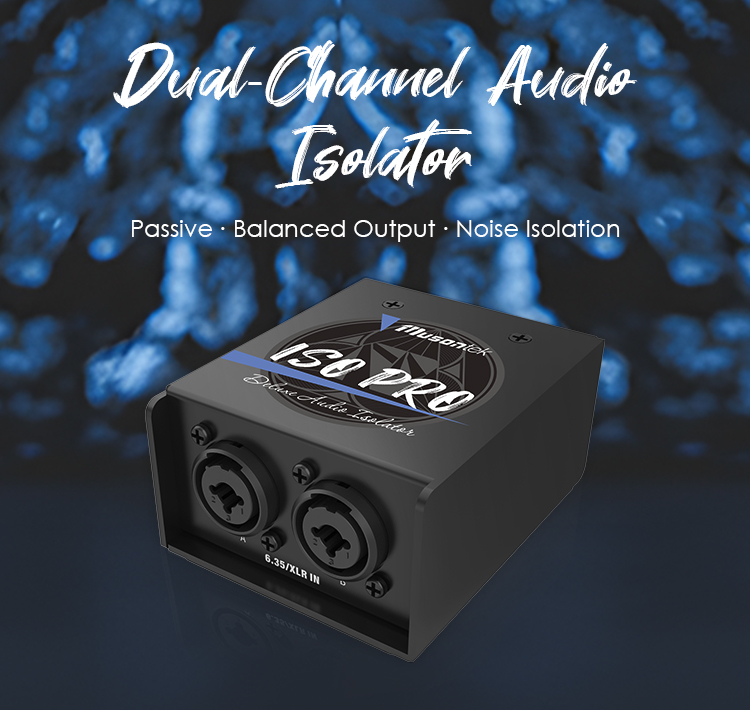
Ground loop isolators are used to block these unwanted connections and eliminate hum in the system. Musontek is unique in that they offer intelligent troubleshooting and professional solutions. Their products, such as ground loop isolators, help musicians and audiophiles get rid of hum and enjoy clear sound. The Musontek team uses innovative design and extensive expertise to solve these problems more effectively than many other brands.
How Noise Filters Get Rid of Hum
Types of Noise Filters
There are many types of noise filters, each eliminating hum and background noise in its own unique way. Some filters focus on specific frequencies, while others work across a wider audio range. Here are some of the most common types:
- Notch Filters: These filters target specific frequencies, such as the 60 Hz hum from power lines. They create a noticeable dip at that frequency. This eliminates unwanted sounds while keeping the rest of the audio undisturbed. Notch filters are good for steady hum but may not capture all harmonics.
- High-Pass Filters: These filters block low-frequency hum while allowing high-frequency sounds to pass through. High-pass filters help clean up recordings, eliminating rumble and other low-frequency background noise.
- Equalizer (EQ) Filters: Equalizer filters allow users to boost or attenuate a specific frequency range. By reducing the volume of hum frequencies, equalizer filters can mitigate their effects without altering the rest of the audio.
- Noise Gate Filters: Noise gates mute audio when the signal is below a set level. This helps eliminate background noise and hum in quiet environments.
- Dynamic Dehumming: This modern method uses multiple notch filters simultaneously, sometimes even more than a thousand. It can capture complex hum and background noise that don’t follow simple patterns.
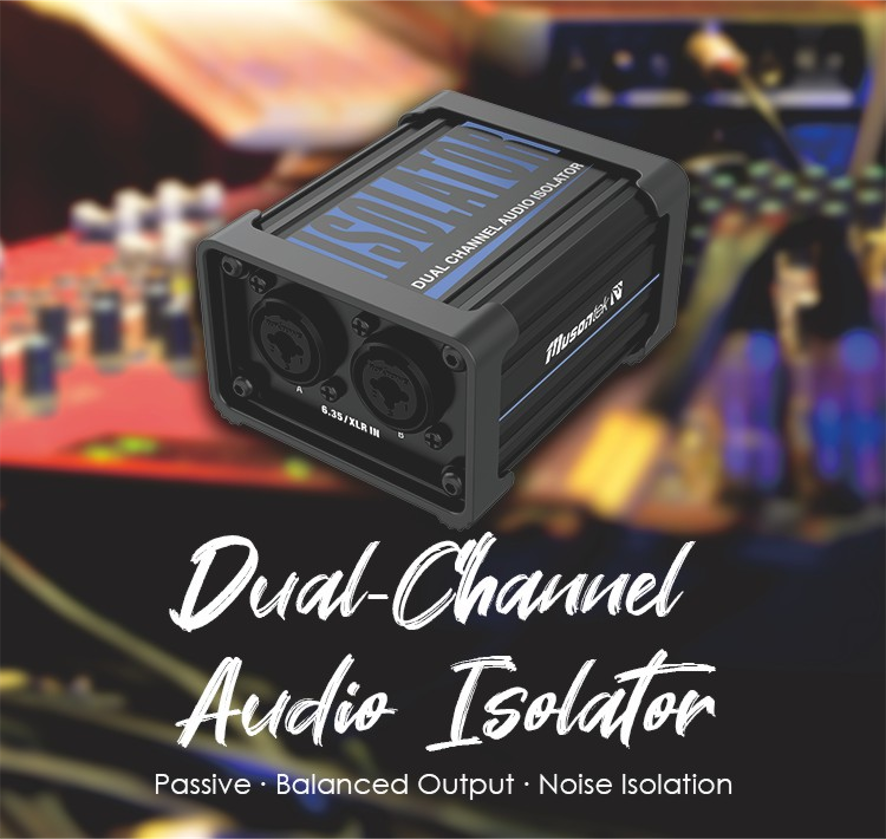
Musontek’s DI boxes and audio isolators, such as the PD1X and ISO PRO, utilize these techniques to deliver clean, hum-free sound. Their custom isolation transformers and grounding switches eliminate ground loops. They block noise before it reaches speakers or recording equipment.
Tip: Not all hums are the same. Sometimes, using different noise filters together works best.
Effectiveness of Filters
Noise filters help improve audio quality. They eliminate unwanted hum and background noise, making music and speech clearer. Here’s how they work:
- Notch filters eliminate specific frequencies of hum, such as the 60 Hz or 50 Hz hum produced by power lines. This is why musicians and audio engineers love using notch filters.
- High-pass filters perform exceptionally well in lab tests. They excel at eliminating low-frequency hum. Some studies suggest that high-pass filters can improve audio signal clarity by up to 50%.
- Equalizer filters and noise gates help fine-tune the sound. They can eliminate hum and background noise without affecting the main audio.
- Using noise filters, such as low-pass and notch filters, maintains the purity of the audio signal. This means less distortion and a better listening experience.
- Experts say that noise filters help maintain the professionalism of meetings and recordings. They can reduce interference and distortion from background noise.
Musontek’s DI boxes excel in this regard. They offer extremely low harmonic distortion (as low as 0.002%) and a wide dynamic range of up to 128dB. Their grounding switch and custom transformer make them the preferred choice for anyone wanting to eliminate hum and background noise.
| Feature | Musontek DI Boxes | Competing Products |
| Total Harmonic Distortion | 0.002% – 0.008% | ~0.01% |
| Dynamic Range | Up to 128dB | ~100dB or higher |
| Ground Lift Switch | Yes | Varies |
| Custom Isolation Transformers | Yes | Varies |
Limitations and Considerations
Noise filters are effective, but they also have limitations. Not all hum or background noise can be eliminated by a single filter. The following points should be noted:
- Some filters, such as notch filters, can slightly alter the sound if overused. This is called signal distortion.
- Notch filters are best suited for handling steady hum. They may not capture all harmonics or more complex noise.
- High-pass filters are excellent for handling low-frequency hum. However, if set too high, they may also filter out some desired bass.
- Sometimes, using multiple filters or combining filters with other methods (such as phase inversion) yields the best results. For example, spectral interpolation can eliminate hum more effectively than a standard notch filter with less distortion.
- Noise filters are very effective in most cases. However, persistent hum may require additional steps, such as checking the cables or using specialized equipment.
Note: Always start with the right filter for your problem. If the hum stays, try mixing filters or use tools like Musontek’s DI boxes and audio isolators for cleaner sound.
Remove Audio Hum: Practical Solutions
Choosing the Right Noise Filter
Choosing the right tool is crucial for eliminating hum. Musontek offers a variety of noise filters and DI boxes to meet diverse needs. Their products utilize passive circuitry, requiring no batteries or external power. Musontek’s DI boxes and isolators feature balanced outputs and ground switches. These features help musicians and audio engineers eliminate ground loop noise and maintain clear sound.
| Feature | Description |
| Passive Circuitry | Works without batteries or outside power |
| Balanced Output | Connects easily with pro audio gear |
| Sound Quality Preservation | Keeps the natural sound, even with big signals |
| Ground Lift Switch | Removes ground loop noise in tricky setups |
| Phase Reverse Switch | Fixes phase problems in multi-mic setups |
| Noise Reduction | Changes to balanced output and lowers unwanted noise |
Musontek’s products work in home studios and live shows. They remove hum without changing how the music sounds.
Installation Tips
Proper setup helps filters work better. Here are some tips:
- Place the filter close to the noise source. This blocks interference early.
- Use balanced cables. Connect all equipment to the same power outlet to prevent ground loop noise.
- Set an appropriate high-pass filter cutoff frequency for each instrument. For vocals, a cutoff frequency between 80 and 120 Hz works well.
- Carefully adjust the filter settings to maintain a natural sound.
- Check all connections and grounding wires. Good grounding prevents ground loop noise.
| Mistake | Why It Matters |
| Improper positioning | Filters miss noise if too far from the source |
| Inadequate grounding | Bad grounding makes ground loop noise worse |
| Incorrect filter choice | The wrong filter will not remove hum |
| Long cable runs | Long cables pick up more noise before filtering |
Tip: Build your system step by step. Test for hum at each stage. This helps you find problems early.
Alternatives If Filters Aren’t Enough
Sometimes, a filter alone cannot completely eliminate the hum. If the hum persists, try the following steps:
- Turn off the air conditioner or heater while recording. This can reduce interference.
- Move the noisy equipment to another room, or use an isolation box.
- Use a hum canceller to address severe ground loop noise problems.
- Check the antenna and coaxial cable for grounding issues.
- Use multiple filters or methods. Many audio professionals combine multiple methods to solve tricky hum problems.
- If the hum persists, seek professional help. They can check the wiring, power supply, and equipment for hidden problems.
Note: Using several solutions together often works better than just one. Musontek’s DI boxes and isolators help you remove hum and enjoy clean sound.
Noise filters fix most humming sounds, but some are harder to stop. Musontek is special because they use smart ideas and careful tests. Their team works hard to make audio gear better for clear sound.
| Musontek’s Strengths | Details |
| Product Innovation | Always making new ways to solve problems |
| Quality Management | Uses tough tests and ISO9001-2015 rules |
You can use these tips, check out Musontek products, or ask an expert if the hum does not go away.
FAQ
How can I best eliminate hum in my home recording studio?
Musontek recommends using a DI box with a grounding switch. This setup usually eliminates hum quickly and keeps the sound clear.
Will noise filters affect music quality?
Most filters can eliminate hum without altering the lead. Users should carefully adjust the settings to maintain a natural and pleasing sound.
Are Musontek products suitable for guitars and keyboards?
Yes, Musontek DI boxes and isolators can be easily connected to guitars, keyboards, and other instruments. They can help everyone achieve clean, noise-free audio.