A boost pedal can go before or after an overdrive. Both ways work and depend on what sound the guitarist wants. The order changes the tone and gain in different ways. Many players notice these changes:
If you put a boost pedal before a Distortion Overdrive Pedal, it makes the overdrive sound stronger but does not make it much louder.
If you put a boost after the overdrive, it makes the whole sound louder but does not add more distortion.
Guitarists should listen closely and choose the setup that matches their style. The Shit Power Boost Effect Pedal from Musontek lets players try different ways and find the sound they like best.
Key Takeaways
If you put a boost pedal before an overdrive, it makes the sound thicker and adds more gain. This is great for solos. If you put a boost pedal after an overdrive, it makes everything louder but does not add more distortion. This is good for making solos stand out. You can try different pedal orders to get new sounds. Test both ways to see what you like best. Putting a boost pedal in front of an amp can make the sound warmer. If you put it in the effects loop, it gives a clean volume boost. Using more than one overdrive pedal lets you get more sounds. It also helps you control tone and gain better.
Boost Pedal Placement Basics
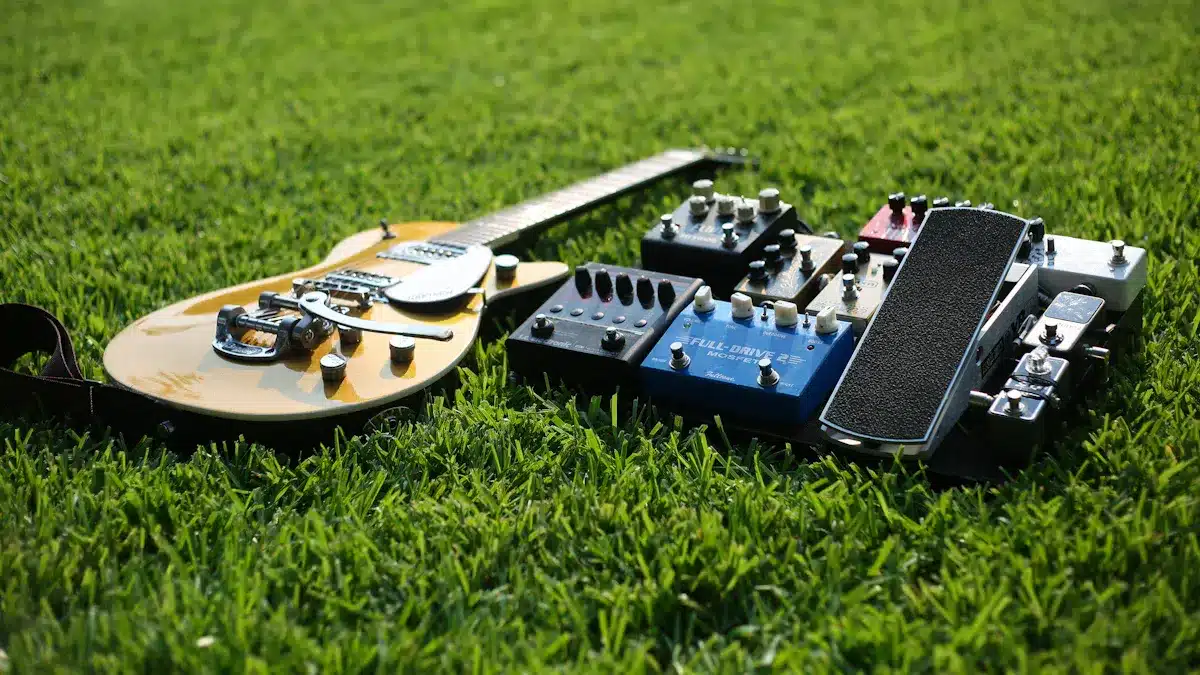
Before Overdrive
A lot of guitarists put the boost pedal before the overdrive. This is a simple way to set up pedals. The boost pedal goes close to the guitar, usually right after it. This spot makes the signal stronger and clearer before it hits other pedals or the amp. Players see that the boost pedal gives more gain to the overdrive pedal. This setup changes how the overdrive sounds. It makes the sound thicker and more full. Notes last longer, so sustain gets better. Musicians who want a heavier and richer tone often pick this way.
Putting the boost pedal before the overdrive pedal:
Makes the signal stronger and clearer.
Adds more gain, sustain, and fullness.
Changes the overdrive’s sound for a richer tone.
Tip: Use this setup if you want your overdrive pedal to sound stronger and give you a bold lead tone.
After Overdrive
Some guitarists like to put the boost pedal after the overdrive. This changes what happens to the sound. The boost pedal now makes everything louder but does not add more distortion. The overdrive’s sound stays the same, just gets louder. This is good for solos or parts where the guitar needs to be heard more. The boost pedal makes the signal stronger and helps the guitar stand out. Musicians who want a clean volume boost without more distortion use this way.
Putting the boost pedal after the overdrive:
Makes everything louder.
Keeps the overdrive’s sound the same.
Does not add more distortion.
Pedal Order | Result | Best For |
|---|---|---|
Boost before Overdrive | More gain, thicker sound | Heavy riffs, lead lines |
Boost after Overdrive | Louder, clean boost | Solos, volume jumps |
Note: Try both ways to see which sound works best for you.
How Boost Pedal Affects Overdrive Tone

Thicker, More Saturated Sound
A boost pedal can change how an overdrive sounds. If you put the boost before the overdrive, the signal gets stronger first. This makes the sound thicker and more saturated. Notes feel heavier and last longer. Many guitarists notice their tone is richer and fuller.
The controls on an overdrive pedal shape the sound. Each control does something different:
Control | Function |
|---|---|
Gain / Drive | Changes how strong the overdrive is. Higher gain makes the sound more gritty and saturated. |
Tone | Adjusts bass and treble. It changes how warm or bright the sound is. |
Level | Sets how loud the pedal is. It can make the sound richer without changing the overdrive. |
When the boost pedal makes the signal stronger, the gain control adds more grit and thickness. The tone control lets you pick if the sound is warm or bright. The level control helps set the right volume for your playing.
Tip: Put the boost before the overdrive pedal if you want a strong, saturated sound for solos.
Clean Volume Increase
Some guitarists want to be louder but keep their overdrive the same. If you put the boost pedal after the overdrive, it makes everything louder. The overdrive sound does not change. This helps the guitar stand out in solos or important parts.
Where you put the boost pedal changes the output level:
If you put the boost before the overdrive, the volume stays about the same but the overdrive gets stronger.
If you put the boost after the overdrive, the sound gets louder but the overdrive stays the same.
This way gives players more options for switching between rhythm and lead.
Players can use this setup to go from rhythm to lead without changing their tone. The boost pedal gives more volume, so solos are easier to hear. This works well for musicians who want a clean volume boost and do not want extra distortion.
Note: Try different pedal orders to find the best sound for your style.
Stacking Overdrive Pedals and Boost
Combining Multiple Pedals
Many guitarists use more than one overdrive pedal in their setup. This method, called stacking overdrive pedals, helps them create a wide range of sounds. Players can mix different pedals to find unique tones. Stacking gives them control over how much gain and saturation they want. It also lets them adjust the sound for different songs or styles.
Stacking overdrives gives access to many tones.
Players can tweak and adjust each pedal for the best sound.
This method helps control tone and gain levels, which is important during live shows.
Stacking can create rich blues tones at lower volumes.
Musontek The Shit Power works well in these setups. It offers a simple one-knob design, so players can set the boost level quickly. The pedal keeps the sound clean and strong. It also has Vintage and Modern buffer modes for different styles. Musicians can use it to add up to 21dB of clean boost without changing the guitar’s natural tone.
Advantage | Description |
|---|---|
Simple Operation | One knob makes it easy to use. |
High-Quality Sound | Keeps the signal clear and powerful. |
Versatile Modes | Vintage and Modern settings for different tones. |
Clean Boost | Up to 21dB boost with no loss of tone. |
Low Noise | Works well on stage and in the studio. |
Dynamic Control | Helps solos stand out and adds expression. |
Tip: Place the last pedal in the signal chain to have the biggest impact on your tone.
Creative Signal Chains
Players often experiment with the order of their pedals. The signal chain affects how each pedal shapes the sound. Some musicians put a boost pedal before an overdrive pedal to increase gain. This method keeps the overall tone but adds more drive, which works well for solos in many genres. Others place the overdrive pedal before the boost. This setup gives a clean volume increase, which is useful when a player wants to be louder without changing the tone.
Use a tweakable overdrive to adjust EQ and balance.
Add a boost pedal to enhance the overdrive sound.
Try different orders to find the best setup for your music.
Stacking gives guitarists more control over their sound. They can create a dynamic and less compressed tone compared to using one pedal at high gain. The second pedal in the chain shapes the final sound, so experimenting with order is important.
Note: Creative stacking helps players find their own voice and adapt to any genre.
Choosing the Right Setup
Experimenting with Placement
Guitarists like to try different spots for their boost pedal. They move it before or after overdrive to see how the sound changes. Each spot gives a new sound. Some players put the boost pedal before overdrive pedals. This adds more gain and lets them shape their tone. It works well for solos and songs that need more drive. Other players put the boost pedal after overdrive pedals. This makes the guitar louder but does not change the tone. It helps the guitar stand out in live shows.
Some players put the boost pedal in front of an amp that is a little overdriven. This makes the sound warmer and thicker. Others use the effects loop to make the guitar louder without changing the amp’s tone. These ways help guitarists find what works best for them.
Tip: Try each spot and listen closely. Small changes in pedal order can really change your sound.
Common methods for experimenting:
Put the boost pedal before overdrive pedals for more drive.
Place the boost pedal after overdrive pedals for a clean volume boost.
Use the boost pedal in front of an amp that is just starting to break up.
Try the boost pedal in the effects loop for a pure volume boost.
Factors to Consider
Many things affect where a guitarist puts the boost pedal. The kind of amplifier matters. If the amp cannot get any louder, the boost pedal might add distortion instead of volume. The whole guitar setup, including other effects, changes the sound. The style of music also matters. Players who want a strong drive sound put the boost pedal before overdrive. Players who want a clean boost put it at the end of the signal chain.
A table can help compare these things:
Factor | Impact on Placement |
|---|---|
Amplifier Type | Changes how boost affects volume and distortion |
Musical Style | Influences need for gain or clean boost |
Pedalboard Setup | Affects signal chain and tonal results |
Player Preference | Decides final pedal order |
Guitarists should try different setups and listen to what happens. They can use pedals like Musontek The Shit Power to find new sounds and see what fits their music.
Note: The best setup depends on what the player wants, their gear, and their style. Trying new things helps you find what works.
Real-World Scenarios
Classic Rock Lead Example
Classic rock guitarists want their solos to be heard. They use a boost pedal to make lead parts louder and more clear. Musontek The Shit Power helps with this job. It gives a clean boost and lets the guitar stand out in the band. The pedal can handle strong signals without making unwanted distortion. Players can pick Vintage or Modern buffer modes. Vintage mode makes the sound warmer. Modern mode keeps the sound clear. The pedal acts like a tube amplifier, so players keep their style.
Feature | Description |
|---|---|
Clean Boost | Gives up to 21dB gain, good for solos and making the guitar louder. |
High Headroom | Handles strong signals without causing distortion. |
Tube-Like Dynamics | Acts like a tube amp and keeps playing expressive. |
Two Buffer Modes | Vintage mode is warm; Modern mode is clear. |
Extremely Low Noise | Works quietly, which is good for live shows and recording. |
Players in jazz, blues, and indie rock use overdrive pedals for a dynamic sound. Hard rock and metal guitarists use distortion pedals for a stronger sound.
Clean Boost for Solos
A clean boost pedal makes solos louder but does not change the tone. Musontek The Shit Power lets players do this. They can put the pedal after overdrive to get more volume for solos. This works for many music styles. Blues and classic rock players get more sustain and grit. Country and Americana players add twang and presence. Funk and R&B players make their guitar sound more percussive. Ambient and post-rock players build textured sounds. Jazz and fusion players get clear notes and fast solos. Metal and hard rock players keep notes clear even with lots of distortion. Experimental players use the pedal for special effects.
Genre | Benefits of Clean Boost Pedal |
|---|---|
Blues and Classic Rock | Adds sustain and grit to solos, making them stand out. |
Country and Americana | Gives a clean boost for chicken-picking and adds twang to rhythm. |
Funk and R&B | Makes percussive sounds stronger and helps guitar be heard. |
Ambient and Post-Rock | Adds sustain and builds textured sounds, pushing the signal into overdrive. |
Jazz and Fusion | Makes notes clear and helps with fast solos and chords. |
Metal and Hard Rock | Keeps notes clear even with heavy distortion. |
Experimental and Avant-Garde | Used for feedback loops and creative sound effects. |
Overdrive pedals work well for jazz, blues, Americana, and indie rock because they react to how you play.
Distortion pedals are best for hard rock and metal, giving a stronger and heavier sound.
Tip: Players should try different pedal orders to fit their music style.
Guitarists can hear big changes when they move the boost pedal before or after overdrive.
If the boost pedal goes before, it gives more gain and a thicker sound, but the volume does not change much.
If the boost pedal goes after, it makes everything louder, but the overdrive sound stays the same.
Musontek The Shit Power lets players try out different pedal orders and sounds. Many players test new setups to find the best mix of boost and overdrive. Trying new signal chains helps players get creative and make their own sound.
FAQ
What does a boost pedal do?
A boost pedal increases the guitar’s signal strength. It helps the guitar sound louder or adds more gain. Players use it to make solos stand out or to push other pedals for a thicker tone.
Can you use a boost pedal with any overdrive?
Yes, a boost pedal works with most overdrive pedals. Players can use it with different brands and models. The sound may change based on the pedal’s features and settings.
Where should beginners place a boost pedal?
Most beginners start by placing the boost pedal before the overdrive. This setup gives more gain and a fuller sound. Players can move the pedal after the overdrive for a clean volume boost.
Does Musontek The Shit Power work for all music styles?
Musontek The Shit Power fits many genres. Rock, blues, jazz, and metal players use it for clean boosts or thicker tones. Its Vintage and Modern modes help match different styles and setups.