For gigging bassists who play across different venues and styles, a bass EQ pedal can be a powerful tool. For beginners or home players using a single consistent setup, it may not be essential right away.
A bass EQ pedal gives you precise, hands-on control over your tone. It helps you adapt to different room acoustics, cut through a live mix, and shape your sound with more flexibility than onboard EQ alone.
We’ll look at how bass EQ pedals work, when they’re worth using, how they compare to other options, and what to keep in mind when deciding if you actually need one.
Key Takeaways
- Bass EQ pedals let you precisely shape your tone for different venues and music styles
- They are essential for gigging musicians who need to adapt to changing room acoustics
- Graphic EQs are easiest to use, while parametric EQs offer the most precise control
- EQ pedals provide more flexibility than built-in amp EQs and work with any bass/amp setup
- Beginners usually don’t need an EQ pedal right away – start with your amp’s built-in controls
- The Musontek Remeowdel offers a perfect balance of simplicity, tone, and value
Do You Need a Bass EQ Pedal?
Gigging Musicians: Yes, Absolutely
If you play live shows regularly, an EQ pedal is one of the most valuable tools you can own. Every venue has different acoustics that can completely change your sound:
- Small clubs with low ceilings often make high frequencies sound harsh and boomy
- Large halls with high ceilings can make your bass sound weak and lost in the mix
- Outdoor shows have almost no natural bass reinforcement
An EQ pedal lets you make quick adjustments on the fly to compensate for these issues. You can also switch between different tones for different songs and styles:
| EQ Setup | Ideal For |
|---|---|
| Slight mid boost + treble cut | Classic P-bass rock tone |
| Deep bass boost + mid cut | Reggae, R&B, and dance music |
| Midrange boost + slight treble increase | Bass solos and lead parts |
| Balanced pickups + mild mid scoop | Modern slap bass tone |
💡 PRO TIP: Place your EQ pedal at the end of your effects chain for final tone shaping before it goes to the amp. This gives you full control over your entire sound.
Studio and Home Recording: Very Useful
In the studio, an EQ pedal lets you shape your tone before it hits the recording interface. This can:
- Reduce unwanted noise and hum
- Fix muddy or boomy low end
- Add clarity and definition to your bass lines
- Match the tone of different basses or pickups
Many home recordists also use EQ pedals to experiment with different sounds without buying multiple amps or instruments. They are especially useful for fixing room acoustics issues in home studios.
Beginners: Probably Not Yet
If you’re just starting out, your amp’s built-in EQ controls are more than enough. Focus on learning your instrument and developing your ear before investing in additional effects. Once you start playing with other musicians or playing live, you’ll know when you need more control over your tone.
How Bass EQ Pedals Work
Frequency Basics
Every bass sound is made up of different frequencies. Adjusting these frequencies changes how your bass sounds and feels:
| Frequency Range | Effect on Bass Tone |
|---|---|
| 30Hz – 80Hz | Deep sub-bass; adds rumble but too much can damage speakers |
| 80Hz – 150Hz | Body and punch; makes the bass feel physical |
| 150Hz – 500Hz | Thickness and warmth; too much causes muddiness |
| 500Hz – 900Hz | Clarity and definition; helps the bass cut through the mix |
| 900Hz – 3kHz | Attack and string noise; adds sharpness to plucks |
| Above 3kHz | Brightness and presence; makes finger noise more noticeable |
⚠️ IMPORTANT: The golden rule of EQ is “cut first, boost later.” It’s almost always better to cut unwanted frequencies than to boost the ones you want. This keeps your signal clean and avoids distortion.
Types of Bass EQ Pedals
There are three main types of EQ pedals, each with different levels of control:
| Type of EQ | Functionality | Best For |
|---|---|---|
| Graphic EQ | Boost/cut fixed frequency bands using sliders | Beginners and live players who need quick adjustments |
| Semi-Parametric EQ | Control boost/cut and center frequency for each band | Intermediate players who want more flexibility |
| Parametric EQ | Full control over frequency, bandwidth (Q), and boost/cut | Professional players and studio engineers |
Most bass EQ pedals also include useful features like:
- True bypass: Completely bypasses the pedal when off to preserve your natural tone
- Amp simulation: Makes direct connections to PA systems sound like a real bass amp
- Preset storage: Save your favorite settings for different songs or venues
Pros, Cons, and Alternatives of Bass EQ Pedals
Advantages of Bass EQ Pedals
- Precise tone control: Shape your sound exactly how you want it
- Quick adjustments: Change your tone in seconds during live shows
- Portability: Works with any bass and amp setup
- Problem solving: Fix muddy sound, boomy low end, or harsh highs
- Consistency: Keep your tone the same across different venues and amps
Limitations to Consider
| Drawback | Description |
|---|---|
| Learning curve | Can be overwhelming for beginners who don’t understand frequencies |
| Higher upfront cost | More expensive than relying on your amp’s built-in EQ |
| Power supply requirement | Needs a separate 9V center-negative power supply |
| Slider drift | Graphic EQ sliders can move accidentally during transport |
| Pedalboard space | Takes up valuable real estate on crowded boards |
Alternatives to EQ Pedals
Built-in Amp EQ
All bass amps have basic EQ controls (bass, mid, treble). Many modern amps also include mid-scoop switches or multi-band graphic EQs. These are great for basic tone shaping but lack the precision and portability of a dedicated pedal.
Software EQ
Digital audio workstations (DAWs) have powerful EQ plugins that offer almost unlimited control. These are perfect for studio recording but are not practical for live use.
Onboard Bass EQ
Some high-end basses have built-in preamps with EQ controls. These let you adjust your tone directly from the instrument but are fixed to that specific bass.
Cost and Real-World Value
Price vs. Performance
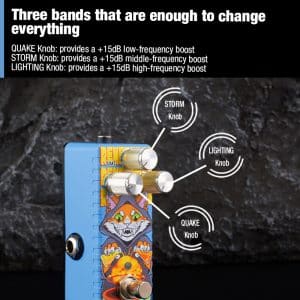
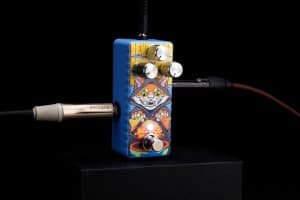
Bass EQ pedals range in price from $50 for basic models to $300+ for professional parametric EQs. The Musontek Remeowdel offers an excellent balance of price and performance with its warm analog sound and simple three-knob design.
| Feature | Musontek Remeowdel | Amp Built-in EQ | Software EQ |
|---|---|---|---|
| Tone | Warm analog tone shaping | Depends on amp design | Clean digital processing |
| Control | 3-band (bass / mid / treble, up to ±15dB) | Usually 2–5 band EQ | Fully parametric / flexible |
| Live Usability | Excellent | Good | Limited |
| Portability | Excellent | N/A | None |
| Signal Clarity | High transparency with analog enhancement | Good | High (studio use) |
When EQ Pedals Are Worth the Investment
EQ pedals are worth every penny if:
- You play live shows in different venues
- You play multiple styles of music
- You use multiple basses or amps
- You want consistent tone across all setups
- You need to fix room acoustics issues quickly
They are probably not worth it if:
- You only play at home
- You are a beginner still learning the basics
- Your amp already has a great multi-band EQ
- You only play one style of music
Conclusion
So, are bass EQ pedals worth it? For gigging bassists, they can be an extremely useful and versatile tool, helping you quickly adapt to different venues, rooms, and playing styles.
For beginners and home players, it’s often better to start with your amp’s built-in EQ and get comfortable shaping your tone before adding extra gear.
When you’re ready to refine your sound further, a bass EQ pedal like the Musontek Remeowdel can be a simple and effective upgrade. Its analog tone shaping and intuitive 3-band control make it a practical option for a wide range of playing situations.
FAQ
What does a bass EQ pedal do?
A bass EQ pedal lets you boost or cut specific frequency ranges to shape your bass tone. This helps your bass fit better in a band mix, fixes room acoustics issues, and lets you create different sounds for different songs.
Can a bass EQ pedal fix a muddy sound?
Yes. Muddy bass is almost always caused by too much energy in the 150-500Hz range. Cutting these frequencies with an EQ pedal will instantly make your bass sound clearer and more defined.
Is an EQ pedal better than my amp’s EQ?
An EQ pedal offers more flexibility and portability than your amp’s built-in EQ. You can use it with any amp, make quick adjustments on stage, and place it anywhere in your effects chain. Most bassists use both their amp EQ and a pedal EQ for the best results.
Do beginners need a bass EQ pedal?
Most beginners do not need an EQ pedal right away. Start with your amp’s built-in controls and focus on learning your instrument. Once you start playing with other musicians or playing live, you’ll know when you need more control.
Will an EQ pedal make my bass louder?
No, EQ pedals are not designed to make your bass significantly louder. They shape the tone by boosting or cutting different frequencies, but they do not provide much overall volume gain.
Can I use a guitar EQ pedal for bass?
While you can technically use a guitar EQ pedal for bass, most are not designed to handle the low frequencies that bass produces. A dedicated bass EQ pedal will give you much better results and won’t muddy up your low end.