Most audio power conditioners do not stop ground loops. Ground loops make a humming sound in guitar and bass setups. This happens when you connect amplifiers or pedalboards to recording gear. Many people think power conditioners can fix this problem. But this idea is not true.
-Power conditioners almost never fix the main cause of ground loop noise.
-Doing regular grounding and safety checks helps stop electrical problems.
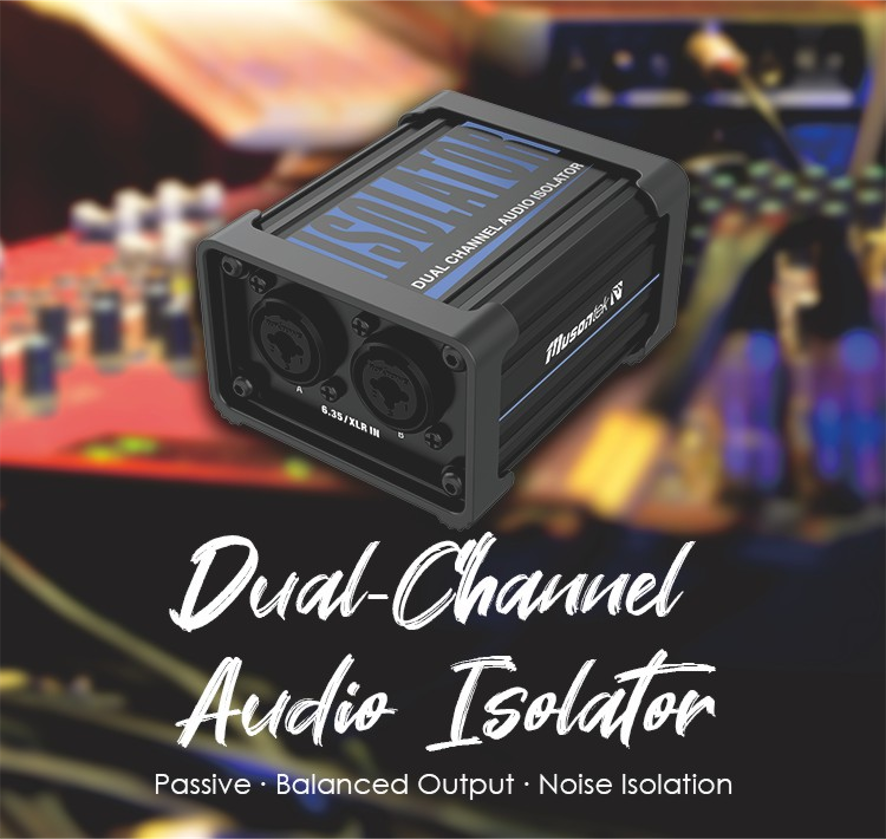
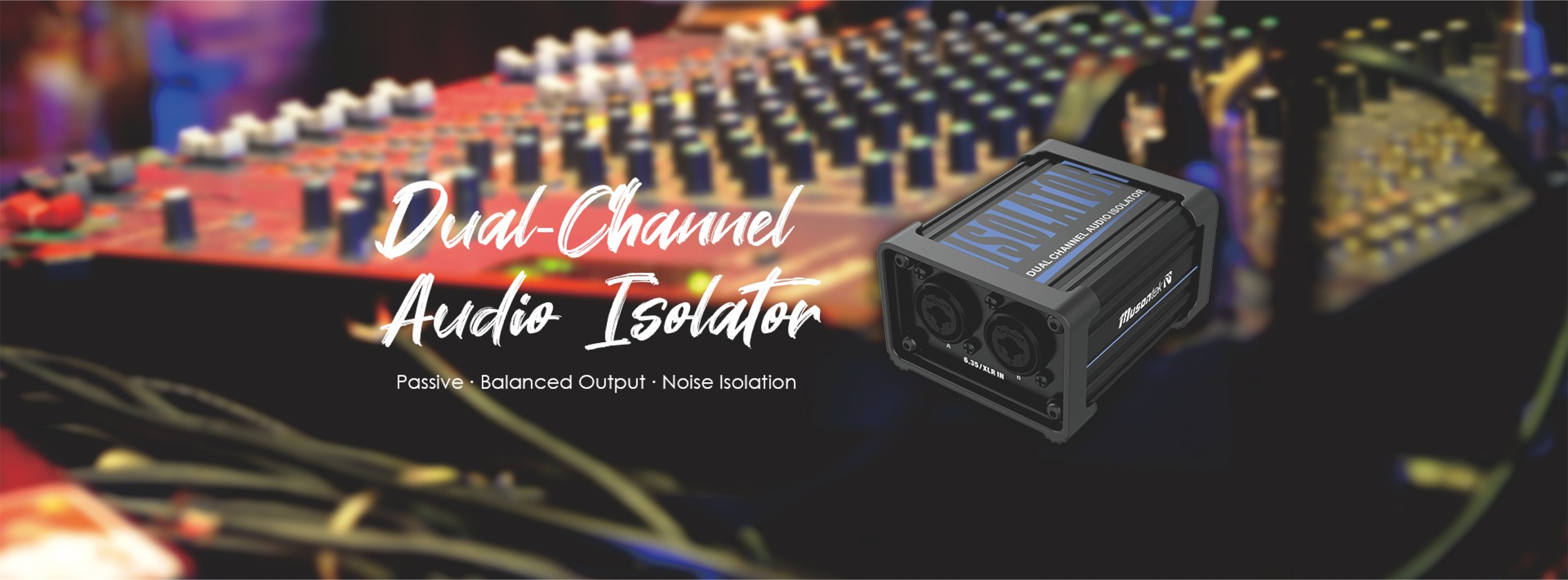
موسونتك ISO2C & آيزو برو gives Ground Loop Audio Isolation. It breaks the unwanted loop and takes away hum from your sound system.
الوجبات الرئيسية
- Power conditioners do not fix ground loops. They only clean the power supply. They do not stop the electrical link that causes the hum.
- Ground loops happen when audio devices use different ground spots. This can make unwanted noise. Finding where the problem starts is important to fix it.
- Using ground loop isolators, like Musontek ISO2C, can remove hum and buzz. They break the ground loop and help keep the sound clean.
- Balanced cables help lower noise in audio setups. They carry two copies of the signal. This cancels out any noise picked up.
- Checking cables and connections often can stop ground loop problems. Simple wiring mistakes can cause unwanted sounds.
Why Power Conditioners Don’t Fix Ground Loops

Power Conditioner Functions
A power conditioner helps audio gear by making the electricity cleaner. It can block spikes, surges, and some electrical noise from the power source. Many guitar and bass players use power conditioners to keep their amplifiers, pedalboards, and recording gear safe. Some power conditioners also protect against sudden voltage changes. These features help equipment work well and stay safe.
But power conditioners do not break the link between devices. They do not change how ground wires connect in your setup. When you plug your amplifier and pedalboard into a recording interface, the power conditioner only controls the power. It does not split up the ground wires that cause hum or buzzing sounds.
Ground Loop Problems Explained
Ground loops happen when audio gear connects to more than one ground spot. This makes a loop that lets unwanted current move through the audio cables. Guitar and bass setups often have this problem when amps, pedalboards, and recording interfaces use different ground connections.
-A ground loop is made by having more than one path to ground, which forms a closed loop.
-Magnetic fields from nearby electric wires can make currents in the ground loop.
-Ground wires have low resistance, so even weak magnetic fields can make strong currents. This causes problems in audio signals.
Ground loops happen when there are two or more grounds at different levels, and a circuit forms between them. This is common in audio setups and can mess up signals and cause annoying hums.
A ground loop works like an antenna and picks up electromagnetic energy. This causes noise that messes up the sound quality. It happens when two devices share the same ground cable, making more than one path for current.
Players often hear a steady hum or buzz in their guitar or bass setup when a ground loop is there. Power conditioners cannot stop this noise because they do not give Ground Loop Audio Isolation. Only devices that break the ground loop, like audio isolators, can fix this problem.
Ground Loop Audio Isolation Solutions

استخدام عوازل الحلقة الأرضية
Guitar and bass players often hear hum and buzz. These sounds usually come from ground loops. Ground Loop Audio Isolation devices help fix this problem. They break the electrical path that causes noise between gear.
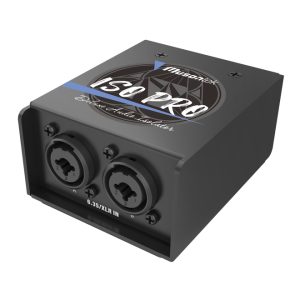
Musontek ISO2C and ISO PRO are good ground loop isolators. These devices use special transformers to move audio signals. They do this without a direct electrical link. This stops ground currents from going through audio cables. Players can connect their gear and get clean sound. These products work in home studios and live shows.
Ground loop isolators and isolation transformers both help sound. The table below shows how they work:
|
الميزة |
محولات العزل |
عوازل الحلقة الأرضية |
|---|---|---|
|
Method of Isolation |
Use magnetic coupling to move signals and block electrical links. |
Physically break the ground path of signal cables to disconnect ground points. |
|
منع التدفق الحالي |
Stops current flow from ground voltage differences. |
Stops noise from getting into the signal side of an amplifier. |
|
التصميم |
Passive, strong, and tough, not affected by sudden changes. |
Usually uses two transformers to break the ground link. |
Players who use ground loop isolators see big changes. Some hear less hum and clearer sound. Others say bass sounds tighter and floor shakes go away. These changes help in practice and recording.
Tip: Put the ground loop isolator between your pedalboard and amp or between your audio interface and speakers. This setup gives the best Ground Loop Audio Isolation for guitar and bass.
Balanced Connections and Proper Wiring
Balanced connections and good wiring help stop ground loops. Many guitar and bass players use unbalanced cables. These cables pick up more noise. Balanced cables, like XLR or TRS, carry two copies of the signal. One copy is flipped. At the end, the system flips it back. Any noise picked up cancels out.
Good wiring is important too. The shield in a cable should connect at one end, usually the output. This helps stop ground loops. If two devices plug into different outlets, their ground levels may not match. Connecting them with a cable can make a loop. This loop lets unwanted current flow and causes hum.
-
Ways to stop ground loops with wiring:
-
Use balanced cables for all gear.
-
Connect the cable shield at the output end only.
-
Tie the cable screen to the metal case at both ends for extra protection.
-
Make sure all gear shares the same ground.
-
Balanced connections and careful wiring do not always fix every ground loop. Sometimes, ground differences still cause problems. In these cases, Ground Loop Audio Isolation devices like Musontek ISO2C help.
Note: Always check your cables and connections first. Many ground loop problems in guitar and bass setups come from simple wiring mistakes.
Players who do these steps get cleaner sound and fewer problems. Ground Loop Audio Isolation is the best way to stop hum and buzz in tricky setups.
Troubleshooting Ground Loops
Identifying Ground Loop Sources
Guitar and bass players sometimes hear hum or buzz in their sound. These noises can mean there is a ground loop problem. You might hear a steady low hum, buzzing when it is quiet, or a whining sound that changes when you use your gear. Sometimes, the noise stops if you touch or move a ground wire.
To find where the problem starts, check every device you use. Unplug all cables from your amplifier, pedalboard, or recording interface. Turn up the volume and listen for any noise. Plug each cable back in one at a time. If the hum comes back, the last thing you plugged in probably causes the ground loop.
The easiest way to check for a ground loop is to use a DI box with a ground-lift switch. Never take away the ground from the power cable, because it keeps you safe.
You can also use a ground loop noise isolator to see if the problem goes away. Keeping signal and power wires apart and not letting cables get messy helps stop ground loops.
Applying Solutions
After you find the source, you can fix it with simple steps. First, make sure all your audio gear connects to the same ground spot. This stops extra currents from making loops. Using balanced cables like XLR or TRS helps block outside noise.
Here are steps to fix ground loops:
-
Remove one ground path so there is only one ground spot.
-
Use an isolation transformer or ground loop isolator, like Musontek ISO2C, to break the loop and get Ground Loop Audio Isolation.
-
Keep signal and power cables away from each other.
-
Do not use factory wiring for power or ground if it does not work well.
-
Check your sound often and look at connections for any changes.
Tip: Never remove the ground from the main power cable. It keeps you safe from electric shock.
Players who do these things often hear cleaner sound and have fewer problems with hum or buzz. Keeping cables neat and using the right isolation tools helps guitar and bass setups work well.
When Power Conditioners Might Help
Rare Scenarios
Most guitar and bass players do not see power conditioners fix ground loop problems. Sometimes, power conditioners help in special cases. For example, one player heard popping sounds in speakers when bathroom lights turned on or off. A simple power filter stopped the popping sound. This shows power conditioners can help with some ground loop issues. Another player found a hum in the subwoofer when a projector turned on. Unplugging HDMI or RCA cables fixed the hum. Using a power conditioner also helped when many grounded devices were used together.
-
Power conditioners might help when:
-
Electrical noise comes from switching lights or appliances.
-
Many grounded devices use the same power source.
-
Audio gear shares outlets with home electronics.
-
Some advanced power conditioners have features for ground loop problems. The table below shows two features that help in special cases:
|
الميزة |
الوصف |
|---|---|
|
High-rejection RF Interference Filter |
Removes unwanted noise from power lines that can affect audio signals. |
|
Smart Ground Technology |
Protects against ground loop problems and lowers data errors and equipment failures. |
Limitations
Power conditioners do not fix most ground loop problems in guitar and bass setups. They focus on stopping voltage surges, waveform changes, and power line noise. They do not use isolation methods needed to break ground loops.
-
Limits of power conditioners:
-
Do not give true ground loop isolation.
-
May not stop hum or buzz from ground loops in audio cables.
-
Often cost more than ground loop isolators.
-
Work best for protecting gear, not for removing audio noise.
-
The table below compares power conditioners and ground loop isolators:
|
أسبكت |
Power Conditioners |
عوازل الحلقة الأرضية |
|---|---|---|
|
Voltage Regulation |
Limited; may not regulate voltage well |
Not applicable |
|
Noise Filtering |
Basic; may not help sensitive guitar gear |
Removes ground loop noise completely |
|
سياق التطبيق |
Depends on quality and setup |
Depends on quality and setup |
|
التأثير على جودة الصوت |
Improves by providing clean voltage |
Keeps audio signal clear and noise-free |
|
Cost |
Can be expensive |
Usually less expensive |
Guitar and bass players should use ground loop isolators for hum and buzz. Power conditioners protect equipment but do not often fix ground loop noise.
Most guitar and bass players see that power conditioners do not stop ground loop hum. Ground loop isolators like Musontek ISO2C help get cleaner sound. The table below lists important points from new studies:
|
Key Takeaway |
الوصف |
|---|---|
|
Causes of Ground Loops |
Devices use different ground spots, which makes hums and buzzes. |
|
Importance of Ground Loop Isolators |
Isolators take away unwanted sounds and keep gear safe. |
|
Practical Solutions |
Plugging all gear into one outlet and using isolators makes sound clearer. |
|
Benefits of Isolation |
Isolators break loops and keep signals clean for better listening. |
-
Musontek ISO PRO has studio-grade transformers that remove ground loops well.
-
Players should use troubleshooting steps and isolation methods for the best sound.
الأسئلة الشائعة
What causes ground loop hum in guitar and bass setups?
Ground loop hum happens when devices use different ground spots. This makes a loop. The loop lets unwanted current move through audio cables. Players hear a steady hum or buzz in their amps or recording gear.
Can a power conditioner remove ground loop noise from my pedalboard?
A power conditioner cannot get rid of ground loop noise in a pedalboard. It only cleans up the power supply. The ground loop stays because the conditioner does not break the link between devices.
How does a ground loop isolator like Musontek ISO2C work?
A ground loop isolator uses special transformers to move audio signals without a direct electrical link. This breaks the ground loop. Musontek ISO2C gives clean sound by stopping unwanted current from moving between gear.
Should guitar and bass players use balanced cables to prevent ground loops?
Balanced cables help lower noise in guitar and bass setups. They carry two versions of the signal. Any noise picked up cancels out. Players get cleaner sound and fewer problems with hum or buzz.
Is it safe to remove the ground pin from my amplifier’s power cable?
Never take off the ground pin from any power cable. The ground pin keeps you safe from electric shock. Removing it can hurt you or damage your equipment.