Audio systems can have noise that you do not want. عزل الحلقة الأرضية is a quick way to fix this problem. Many people use a ground loop isolator. It stops the electrical link between input and output grounds. Devices like the موسونتك ISO2C use isolation transformers. These help keep sound quality good. This way works better than passive ways in hard setups.
Tip: Listen for humming or buzzing in speakers. Using the right device fast can keep your equipment safe and make sound clearer.
الوجبات الرئيسية
-
Ground loop noise can mess up sound quality. Watch for humming or buzzing to spot problems early.
-
A ground loop isolator, like the Musontek ISO2C, can remove unwanted noise. You do not need extra power for it.
-
Make sure all audio devices use the same ground point. This lowers the chance of ground loop issues and makes sound clearer.
-
Check cables and connections often to keep your audio system clean. Clean gear and tight connections help stop noise.
-
Try using balanced connections and isolated power sources. These help control noise in big audio setups.
Identifying Ground Loop Noise

Symptoms of Ground Loop Issues
Lots of audio systems can have noise that bothers listeners. Ground loop issues are a common reason for this noise. People notice some signs when ground loop noise happens:
-
Whining sounds get louder when the engine goes faster, especially in car audio.
-
A steady, low hum stays on when the system is turned on.
-
Buzzing or static noise is easy to hear between songs or during quiet times.
-
The noise might go away for a bit if someone touches or moves ground wires.
These signs help people find ground loop problems early. The noise can mess with speakers, amplifiers, and other audio gear. Finding the problem fast means you can fix it sooner and get better sound.
Tip: If the noise changes when you move wires or touch metal parts, you might have ground loop issues.
Confirming Ground Loop Problems
Ground loop noise usually sounds like a buzz or hum in the background. This happens because connected devices have different ground levels. These differences make unwanted currents that mess up the audio signal and cause noise.
To check for ground loop problems, people can try a few things:
-
Listen for buzzing or humming from speakers when no music is playing.
-
See if the noise gets louder or changes when the engine speeds up.
-
Check if only some parts, like the amplifier or subwoofer, have the noise.
-
Unplug the RCA cables from the amplifier to see if the noise stops.
Connecting all audio and video devices to the same ground point helps stop ground loop problems. Doing this lowers the chance of noise and makes the sound better. Ground loop isolation is still the best way to fix noise that will not go away.
Ground Loop Isolation Devices

كيفية عمل عوازل الحلقة الأرضية
عوازل الحلقة الأرضية fix ground loop problems by stopping electrical connections between different ground levels. These devices use special transformers to move audio signals. The transformers send the signal from one side to the other using magnetic fields made by copper wires. This keeps noise away from speakers and amplifiers.
After installing a عازل الحلقة الأرضية, people often hear less noise. The isolator breaks the loop current that causes problems. This helps keep the audio signal clear and makes sound better. عزل الحلقة الأرضية works well in home, car, and professional audio systems.
نصيحة: عوازل الحلقة الأرضية do not need extra power. They work on their own and give quick results.
Installing a Ground Loop Isolator
Putting in a عازل الحلقة الأرضية needs careful steps. Here is how you can install one in a home audio system:
-
Get all the parts you need, like connectors and a box.
-
Make holes in the box so you can reach the plugs.
-
Learn how the circuit works for each audio channel.
-
Solder each transformer by following the circuit diagram.
-
Glue the transformers inside the box to keep them safe.
-
Put the عازل الحلقة الأرضية in the audio cables before the stereo.
If you make mistakes, the عزل الحلقة الأرضية may not work. Common mistakes are using more than one ground source, not checking if ground points have the same voltage, and using adapters that are not certified. Do not lift ground pins because this can be dangerous.
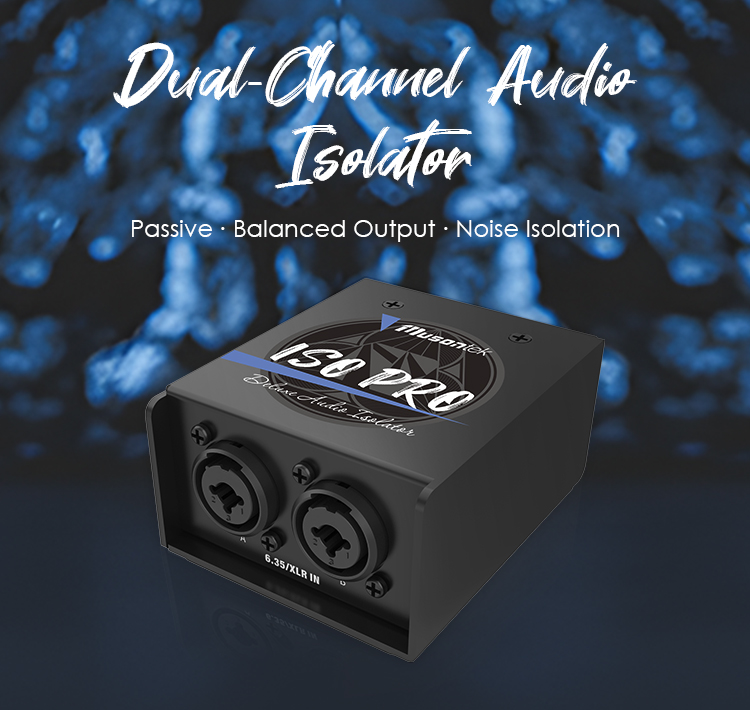
The Musontek ISO2C عازل الحلقة الأرضية is easy to use. You do not need extra power or hard wiring. Just connect it between the audio source and the amplifier or speakers.
Placement in Audio Systems
Putting a عازل الحلقة الأرضية in the right spot is important. The device should go at the end of the audio signal path where noise is loudest. This lets the isolator stop the loop current and block interference.
عزل الحلقة الأرضية works best when the isolator is near the amplifier or speakers. This keeps ground loop noise from getting to the output. Audio channel isolators help lower noise and make sound better in professional audio systems.
ملاحظة: عوازل الحلقة الأرضية keep the audio signal clear and improve sound by breaking ground loops.
Musontek ISO2C: Features and Benefits
The Musontek ISO2C عازل الحلقة الأرضية has many good features. The table below shows its main features and benefits:
|
Feature/Benefit |
الوصف |
|---|---|
|
Dual-channel support |
Works with stereo or two microphones. |
|
Compatibility with signals |
Handles balanced and unbalanced signals. |
|
Combo sockets |
Fits TRS, TS, and XLR connectors for many uses. |
|
Studio-grade transformers |
Gives clear sound and less distortion. |
|
Galvanic isolation |
Blocks bad current and noise. |
|
Passive operation |
Needs no extra power to work. |
|
High-fidelity design |
Keeps sound quality high for different setups. |
The ISO2C gives strong isolation and great sound. It works with stereo systems and two microphones. The device handles both balanced and unbalanced signals, so it fits many audio setups.
Other Types of Isolation Devices
People can pick from different kinds of ground loop isolators and ways to fix ground loop problems:
-
Transformer Isolators: These use special transformers to break ground loops. They lower noise and work well in professional audio systems.
-
DI Boxes: These boxes change unbalanced signals to balanced ones. This lowers noise and makes sound better.
-
DIY Ground Loop Isolator: Some people build their own isolators with transformers and simple parts. DIY isolators can save money but may not work as well or last as long as store-bought ones.
Each way has good and bad points. Transformer isolators and DI boxes work well and are easy to set up. DIY ground loop isolators need skill and may not give the same level of isolation as commercial devices.
Tip: Pick a عازل الحلقة الأرضية that fits your audio system for the best results.
Additional Ground Loop Isolation Techniques
Balanced Connections
Balanced connections help stop noise in audio systems. They use three wires. Two wires carry the signal. One wire acts as a shield. This setup cancels out noise picked up by the cable. Audio engineers use balanced connections when there are many devices. How well balanced connections and ground loop isolators work depends on the gear and setup.
To stop ground loop problems, technicians do some steps:
-
Tie the cable screen to the metal box at both ends. This helps block radio signals.
-
Disconnect one end of the cable screen, usually at the input. This lowers interference.
-
Keep safety grounds, signal returns, and shields for low-level cables apart.
-
Use a star shape for grounding. Bring all grounds to one spot.
-
Do not connect the shield of a cable to ground at both ends.
Balanced connections work with ground loop isolation. They keep audio signals clean and lower ground loop problems.
Isolated Power Sources
Isolated power sources, like USB isolators, make a break between the audio interface and computer. This break stops current from moving between different grounds. That often causes ground loop noise. Isolated systems also make things safer. They stop high voltages from crossing to the output. These systems are good at stopping ground loops and lowering noise in sensitive setups.
The table below shows how isolated and non-isolated power supplies compare:
|
الميزة |
Isolated Power Supplies |
Non-Isolated Power Supplies |
|---|---|---|
|
Cost |
More expensive because of transformers and extra parts |
Cheaper, uses normal parts |
|
Efficiency |
Less efficient because transformers lose power |
More efficient, better control |
|
Size |
Bigger because of extra parts |
Smaller, fits in tight spaces |
|
تقليل الضوضاء |
Cuts noise by breaking ground loops |
Needs more steps to control noise |
Non-isolated systems are smaller and work well in small places. Isolated systems are best for ground loop isolation in sensitive audio setups.
Using DI Boxes
DI boxes help break ground loops in live sound and recording. They give electrical isolation between the instrument and the mixing board. Passive DI boxes use a transformer inside to block ground voltages. This gets rid of ground loop noise. The transformer gives galvanic isolation. There is no direct electrical link between input and output.
DI boxes can handle high voltages. They protect gear from electrical problems. Musicians and sound engineers use DI boxes to fix ground loop issues and keep sound clear. Some people build a diy ground loop isolator with transformers. But store-bought DI boxes work better and last longer.
Tip: Check your devices and move things around to stop ground loop noise. These tricks work well with ground loop isolators for full noise control.
Troubleshooting Ground Loop Issues
Diagnosing Remaining Noise
Audio systems can still make noise after using isolation devices. People can use a checklist to find where the noise comes from. These signs often show ground loop problems:
-
A hum or buzzing sound that will not stop.
-
Noise that comes and goes or gets louder and softer.
-
Volume levels that are not the same on different devices.
-
Hissing or static mixed with the music or sound.
-
Electrical problems, like lights flickering or other devices acting up.
-
Noise that changes when you move equipment or cables.
-
Noise you hear even when nothing is playing.
-
More noise when you turn on your equipment.
-
Hum that gets louder when you add more devices.
-
Noise that changes with different cables or cable quality.
People should listen closely and watch for these signs. If you notice any of them, your audio system might still have ground loop problems. Checking everything carefully helps you find what is causing the noise.
Tip: Move cables and devices to see if the noise changes. This can help you find which part of the system needs fixing.
Ensuring Complete Isolation
People can do a few things to get rid of all ground loop noise in their audio systems:
-
Plug all your audio and video devices into the same ground point. This stops ground differences.
-
Put a wooden or plastic piece between your equipment and metal parts. This helps keep the ground loop away.
-
Unplug and plug in each device one at a time. This helps you find which device is making the noise.
-
Use a ground loop noise isolator to break the loop and lower the noise.
People should check all ground wires and connections often. Make sure all connections are tight and not rusty. Checking your system often keeps ground loop noise away.
Note: Taking care of your system and setting it up right keeps your audio clear and free from noise.
Ground loop noise can mess up any audio system. Devices like the Musontek ISO2C help by breaking bad ground connections. Many people say ground loop isolators lower hum and noise if you put them in right. To get the best sound, check all wires, use the same ground, and add an isolator if noise comes back. Doing regular checks helps too:
-
Cleaning keeps dust away from your gear.
-
Looking at cables makes sure signals stay strong.
-
Checking your system finds problems early.
|
Installation Mistake |
Consequence |
|---|---|
|
Improper grounding |
High voltage on metal parts, bad noise control |
|
Incorrect signal path use |
More noise in your audio |
|
Using ungrounded equipment |
Voltage problems, isolator might not work right |
If you stay careful, your sound stays clear and your gear stays safe.
الأسئلة الشائعة
ما الذي يسبب ضوضاء الحلقة الأرضية في الأنظمة الصوتية؟
Ground loop noise starts when two devices use different ground points. This makes unwanted electrical currents. These currents move through audio cables. They cause humming or buzzing in speakers.
How does a ground loop isolator remove noise?
A ground loop isolator uses transformers to move audio signals. There is no direct electrical link. This breaks the ground loop. The isolator stops unwanted currents. It keeps the audio signal clean.
Can the Musontek ISO2C work with both home and car audio systems?
The Musontek ISO2C works in home and car audio systems. It handles both balanced and unbalanced signals. You can connect it to stereos, amplifiers, or microphones. The device does not need extra power.
Is it safe to use a ground loop isolator with expensive audio equipment?
Ground loop isolators like the Musontek ISO2C keep audio equipment safe. They stop electrical faults from reaching speakers or amplifiers. The device uses studio-grade transformers for safe use.
What should users do if ground loop noise remains after installing an isolator?
Users should check all cables and ground connections. Plug all devices into the same ground point. Move cables to see if the noise changes. Checking your system often helps keep it free from ground loop noise.