Bass players use different tools to change their sound. An effect pedal gives a new feel to a bass guitar. Some musicians use a دواسة مؤثر التعزيز for louder solos. Others prefer a دواسة التشويه الزائد for a rough sound. A دواسة الضغط helps keep the volume even, making each note clear. Players choose pedals based on their style, needs, and budget.
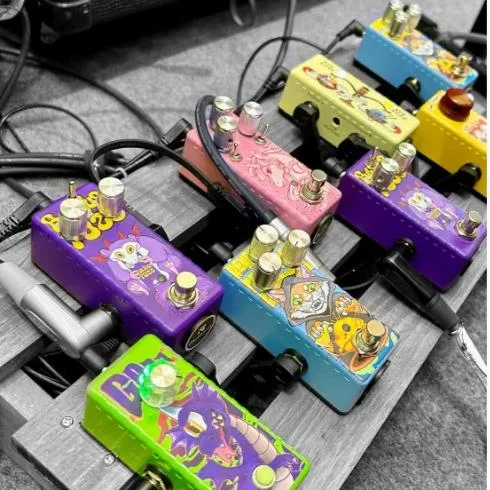
Tip: Trying out different pedals can help a bassist find their own sound.
الوجبات الرئيسية
Effect pedals can change how a bass guitar sounds. They help players show their own style. Compression and EQ pedals keep the sound clear and even during shows. Different music styles need different pedals. For example, rock bassists use distortion. Funk players like envelope filters. You should try pedals before you buy them. This helps you pick what works best for you. Beginners should start with simple pedals like a tuner and compressor. This helps them build a strong base for their sound.
Essential Effect Pedal Types
Compression, EQ, and Tuner Pedals
Compression pedals help bassists keep their volume steady. They make soft notes louder and loud notes softer. This helps the sound stay even in shows and recordings. EQ pedals let players change the bass, mid, and treble sounds. With an EQ pedal, a bassist can change their tone for each song or style. Tuner pedals help musicians tune their instrument fast. Most bassists think a tuner pedal is very important because it makes tuning easy on stage.
Tip: A tuner pedal saves time when practicing or playing live. It helps players stay in tune and not play wrong notes.
Overdrive, Distortion, and Envelope Effects
Overdrive pedals make the bass sound warmer and rougher. These pedals push the sound to make it stronger. Distortion pedals give a heavier and fuzzier sound. Many rock and metal bassists use distortion to stand out. Envelope filter pedals change the sound when the player hits the strings hard or soft. These pedals make cool, sweeping sounds that are great for funk and electronic music.
Overdrive and distortion pedals help bassists make their sound special.
Envelope filters give the bass a moving and different sound.
Chorus and Octave Pedal Essentials
Chorus pedals make the bass sound bigger and wider. They split the sound and change the pitch a little, making a shiny effect. Octave pedals add a note higher or lower than the main note. This pedal makes the bass sound richer and fuller. Newer octave pedals can play more than one note at once, so bassists can try new sounds and ideas.
Note: Chorus and octave pedals help bassists try new sounds and make their music deeper.
Effect Pedal Impact
تشكيل النغمة
Bassists use pedals to change how their bass sounds. Distortion and overdrive pedals make the bass louder and stronger. These pedals help the bass stand out in punk and metal music. Drive pedals keep the main sound but add something special. This works for many types of music. Chorus pedals split the sound and make it thicker. They make the bass tone more interesting. Octave pedals add notes higher or lower than the main note. This makes the bass sound fuller. Envelope filters change the sound every time you pluck a string. They can make the bass sound rough or like a synth.
Tip: A tuner pedal helps bassists keep their instrument in tune. Staying in tune is important for good sound.
Dynamics and Presence
Pedals help bassists control how loud and clear their bass is. Compressor pedals keep the volume even. Every note is easy to hear. Preamp pedals set the main sound before other effects. These pedals help the bass stand out in live shows. New technology gives bassists more ways to change their sound. Many players pick pedals that fit their style. This helps them play with confidence.
More musicians want pedals for better sound.
New pedal designs help bassists control their volume and tone.
Creative Sound Options
Musicians use many pedals to make new sounds. Some multi-effects units give lots of choices for tone and style. The Zoom B1X FOUR has over 70 effects and an expression pedal. Players can make their own sound with it. The Fender Downtown Express lets players shape their tone fully. The Zoom B2 Four copies amps and effects for old and new sounds. The B6 lets bassists try different DI models and cool effects. The Zoom MS60B Plus has famous amp sounds and many effects for creative playing.
Product Name | الميزات |
|---|---|
B6 | Four DI models and many effects for new sounds |
Zoom B1X FOUR | Over 70 effects and an expression pedal for special sounds |
Fender Downtown Express | Full control for shaping bass tone |
Zoom B2 Four | Amp and effect emulator with Multi-Layer IR and 6 DI models |
Zoom MS60B Plus | Famous amp sounds, preamps, and lots of effects |
Note: Using more than one pedal helps bassists find their own style. It helps them stand out in any band.
Choosing Pedals for Your Style
Genre Considerations
Music styles need different pedals. Rock bassists use overdrive and distortion for a rough sound. Funk players like envelope filters and phasers for lively tones. Jazz musicians want pedals that keep the sound smooth and warm. The M169 Carbon Copy gives a soft delay that jazz players like. The MXR Phase 90 works in rock, funk, and jazz. It adds a rich phasing effect. The Boss CH-1 Super Chorus fits many styles. It adds depth to jazz and pop. The DigiTech Whammy lets players shift pitch for cool effects. Each genre has favorite pedals. Bassists should listen to their style and pick pedals that match.
Tip: Try pedals used by musicians in your favorite genre. This helps you find sounds that fit your music.
Playing Technique
How you play changes which pedals work best. Slap and pop players need pedals that react fast. Envelope filters and compressors are good for this. Fingerstyle players use EQ pedals to shape their tone. Pick players may want distortion or chorus for extra bite. Some musicians stack pedals to make new effects. They use budget pedals to get unique sounds. Changing pedal order can also change the sound. Trying different pedal setups helps bassists find what works for them.
Technique | Recommended Pedals |
|---|---|
Slap & Pop | Envelope Filter, Compressor |
Fingerstyle | EQ, Chorus |
Pick Playing | Distortion, Chorus |
Experience Level
Beginners should start with simple pedals. A tuner and compressor help new players keep their sound clean. As bassists get better, they can add more pedals. Chorus, octave, or delay are good next steps. Experts use multi-effects units for more choices. They try different amp settings and stack pedals to make new sounds. Budget is important too. Players can use cheap pedals to get creative effects. Learning how each pedal works helps bassists build a pedalboard that fits their skills.
Note: Start with basic pedals and add more as you learn. This keeps your setup easy to use and helps you grow as a musician.
Recommended Bass Effect Pedals
Top Compression and EQ Pedals for Bass
Compression and EQ pedals help bassists change their sound. The MXR M87 Bass Compressor is easy to use and gives clear sound. Many people like the Boss BC-1X Bass Compressor because it is strong and uses smart tech. The Aguilar TLC Compressor is smooth and has many settings. For EQ, the Source Audio EQ2 Programmable Equalizer lets you save sounds and change your tone. The Boss GEB-7 Bass Equalizer is simple and works well. These pedals cost between $100 and $250. Each one helps bassists control how loud and clear they sound.
Tip: Using compression and EQ pedals helps bassists sound good in any band.
Best Overdrive, Filter, and Octave Options
Overdrive pedals make the bass sound warmer and rougher. The Darkglass Microtubes B3K is liked for its strong and modern sound. The Electro-Harmonix Bass Soul Food gives a softer sound that fits many styles. Envelope filter pedals like the MXR M82 Bass Envelope Filter make fun and moving sounds. The Electro-Harmonix Q-Tron is also popular for its many filter effects.
Octave pedals make the bass sound bigger by adding higher or lower notes. The table below lists some top choices:
نموذج الدواسة | نطاق السعر | الميزات الرئيسية |
|---|---|---|
MXR M288 Bass Octave Deluxe | $150-$200 | Analog, true hardwire bypass, constant headroom, adjustable mid frequencies |
Boss OC-3 | $150-$200 | Digital, true bypass, polyphonic, original OC-2 function, low residual noise |
EBS Sweden AB OctaBass | $150-$200 | Analog, true bypass, over voltage protection, max octaver gain of 12 dB |
General Price Range for Octave | $50-$300 | Low-priced pedals perform well, some expensive ones may not meet expectations |
Players should pick pedals that fit their style and what they can spend.
Multi-Effects and Boost Pedal Recommendations
Multi-effects units give bassists lots of sounds in one box. The Zoom B1X FOUR has over 70 effects and a pedal for more control. The Fender Downtown Express lets you change your sound with compression, EQ, and drive. The Zoom B2 Four copies old and new amp sounds. The Zoom MS60B Plus has many effects and famous amp sounds. Multi-effects units save space and money. The table below shows their good and bad points:
Pros | Cons |
|---|---|
Compact size | Potential sound quality issues |
Variety of effects | Ease of use concerns |
Cost-effectiveness | Need for manual reading |
Memory features |
Musontek’s The Shit Power Boost Effect Pedal is great for bassists who want a louder sound. This pedal can boost the sound by up to 21dB without changing the main tone. It has one knob, so it is simple to use. Players can pick Vintage or Modern buffer modes for different sounds. The pedal works with 9V to 18V power, so it has lots of headroom and tube-like feel. Class A parts keep the sound clear, even with long cables. The Shit Power Boost Effect Pedal helps bassists be heard in live shows or recordings. It works for many music styles and ways of playing.
Note: Multi-effects units and boost pedals help bassists try new sounds and play better.
Building Your Effects Chain
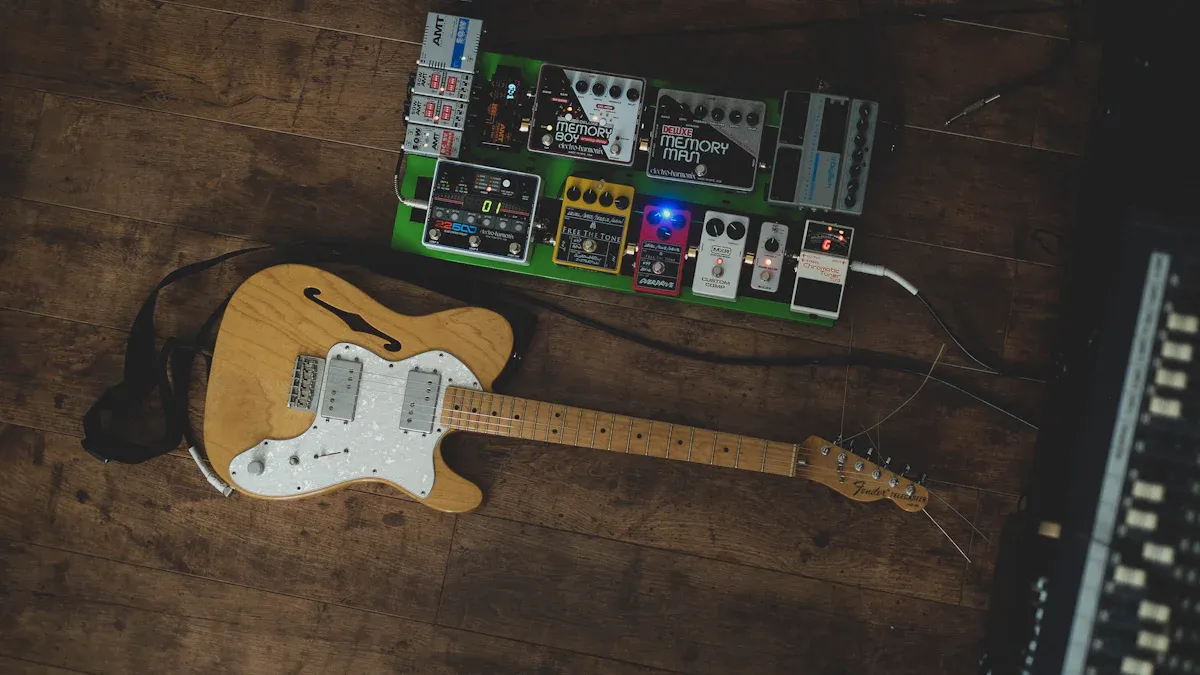
Arranging Your Bass Pedal Order
Bassists get better sound by putting pedals in a smart order. The right order helps each pedal do its job well. The table below shows a usual order for bass pedals and what they do:
Order | نوع الدواسة | الوظيفة |
|---|---|---|
1 | موالف | Makes sure the bass is in tune by being first. |
2 | Dynamics (Compressors) | Levels out the sound and gets it ready for other pedals. |
3 | Wah/Filters | Changes the bass tone with a clean signal. |
4 | Octaves | Adds higher or lower notes while keeping the sound clear. |
5 | Overdrive/Distortion/Fuzz | Changes the sound for special effects, before modulation. |
6 | Noise Suppressor | Removes hiss from distortion or fuzz pedals. |
7 | المكافئ | Changes the sound after distortion to keep the low end. |
8 | التحوير | Adds effects like chorus after the main tone is set. |
9 | Volume | Sets how loud the bass is before delay and reverb. |
10 | Delay/Echo/Reverb | Adds space and echo, and should be last in the chain. |
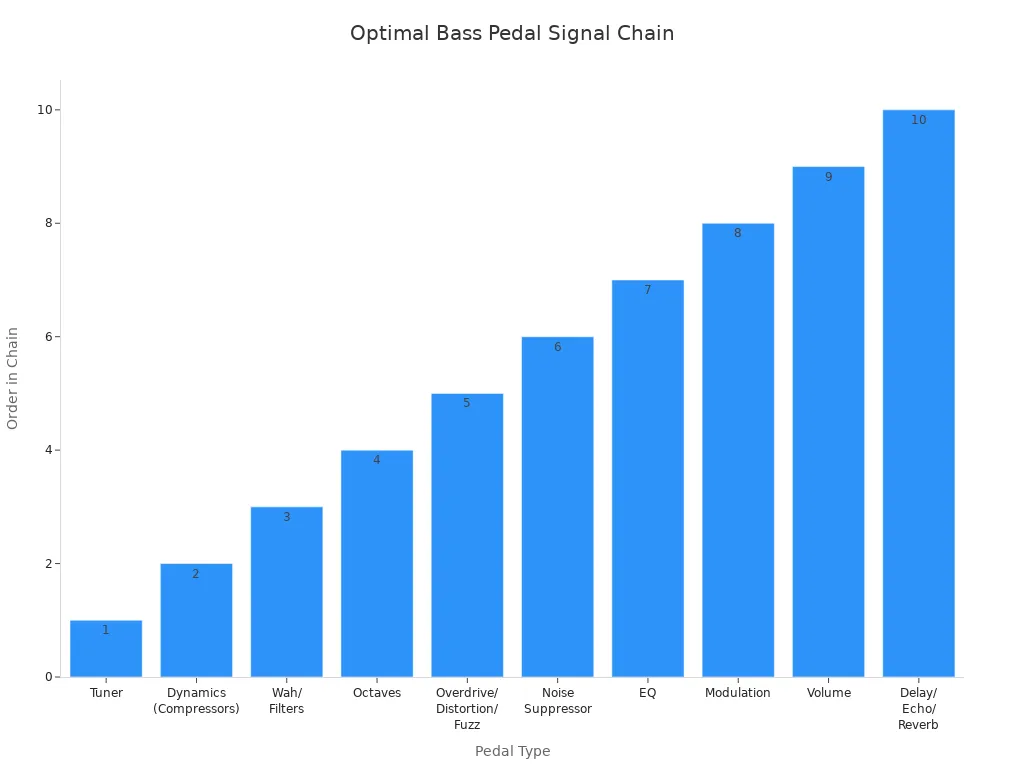
Tip: Put the tuner first to keep tuning easy and the sound clean.
Power and Noise Management
Good power and cable setup keeps the pedalboard quiet and working well. Bassists use special power supplies to stop noise and buzzing. They run cables under the board to avoid problems with electric signals. Velcro or strong tape is better than zip ties for holding pedals. This makes it easy to move pedals around. Keep power and signal cables apart, and cross them at right angles to cut down on noise.
Special power supplies stop hum and buzz.
Neat cables keep the board tidy and quiet.
Velcro makes it easy to change pedals fast.
Clean Signal Tips
A clean signal helps every pedal sound its best. Bassists can follow these steps for a clear sound:
Put a buffer first to keep the signal strong.
Use a special power supply for each pedal.
Put noisy pedals in a true bypass loop to stop them from hurting the sound.
Add a noise gate to stop hiss from loud pedals.
Use an isolator to fix ground noise.
Note: Clean signals help bassists sound clear and pro on stage or in the studio.
Beginner Tips
Start With Basic Essential Pedals
A new bassist often feels excited to try many pedals. Starting with basic essential pedals helps them learn how each one changes the sound. Most beginners choose a tuner pedal first. This pedal keeps the bass in tune and makes practice easier. A compressor pedal comes next. It helps every note sound clear and even. EQ pedals let players adjust the bass, mid, and treble. These three pedals form a strong foundation for any pedalboard.
Tip: Learning how each pedal works gives beginners more control over their sound.
Test Different Pedals Before Buying
Testing pedals before buying helps beginners find what fits their style. Many music stores let players try pedals in person. They can listen to how each pedal changes the bass sound. Some players borrow pedals from friends or use demo videos online. Trying pedals with their own bass and amp gives the best results. This way, they avoid spending money on pedals they do not like.
Players should listen for changes in tone, volume, and effects.
They should test pedals with different playing techniques.
Affordable and Reliable Pedal Options
Beginners often look for pedals that cost less but still work well. The Zoom pedal stands out for its low price and many features. It includes a tuner, drum machine, and looper. These tools help players practice and improve. The Zoom B3n model costs around $160, making it easy for new bassists to start building their pedalboard. Many beginners choose multi-effects units because they offer many sounds in one box.
اسم الدواسة | الميزات | السعر |
|---|---|---|
Zoom B3n | Tuner, drum machine, looper | $160 |
Note: Affordable pedals help beginners explore new sounds without spending too much money.
Effects pedals can change how a bass guitar sounds. They help players show their style in new ways. Many bassists use multi-effects units first to learn about tones. Later, they add single pedals that fit their own style. Building a pedalboard is easier if you go step by step:
Pick the bass tone you want.
Choose effects that match your music.
Plan how much money you can spend.
What you like and your music style affect which pedals you pick. The table below shows how different music styles use certain effects:
نوع التأثير | Genre Influence |
|---|---|
تشويه | Metal, rock |
أوفردرايف | Heavy tones |
زغب | Punchy sound |
Chorus | Richness |
Tip: Begin with basic pedals. Try new ones as you get better.
الأسئلة الشائعة
What is the first pedal a beginner should buy for bass?
Most bassists say to get a tuner pedal first. This pedal helps you keep your bass in tune. It makes practice and shows easier for new players.
Can bassists use guitar pedals?
Bassists can use guitar pedals too. Some pedals might lower the deep bass sound. Many brands make pedals for both guitar and bass. Players should try pedals to see if they sound good with bass.
How does a compressor pedal help bass sound?
A compressor pedal keeps each note at the same volume. It makes quiet notes louder and loud notes softer. Bassists use compressors for a clear and even sound.
Where should a boost pedal go in the effects chain?
Most players put a boost pedal after distortion. It goes before modulation effects. This spot lets the boost pedal make the bass louder but keeps the main sound the same.
Do multi-effects units work well for bass?
Multi-effects units give bassists lots of sounds in one box. These units help players try many effects. Beginners and experts use them for practice and shows.