Yes, you can use a guitar delay pedal with bass. Many bass players worry about losing clear sound or getting a muddy tone. The table below lists two common worries and easy ways to fix them:
Concern | Solution |
|---|---|
Clarity in sound | Change settings like feedback and delay time to keep the sound clear. |
Muddiness in low end | Set feedback low (1-2 repeats) to stop muddiness and keep the sound sharp. |
A Buffer Pedal, like the تأثير الغيتار العازل from موسونتك called the المحكّم, helps keep your sound strong and clear. Trying different settings can help each player find the best sound for them.
الوجبات الرئيسية
You can use a guitar delay pedal with bass. Change settings like feedback and delay time. This helps your sound stay clear. It stops your music from getting muddy.
A buffer pedal like the Musontek Adjudicator helps your sound. It keeps your music strong and clear. This is important if you use long cables. It also helps when you use many pedals.
Set delay times between 10 and 60 milliseconds. This makes your sound thicker but not muddy. Keep feedback low so your sound stays sharp.
Try different places for your pedal in your signal chain. If you put delay at the end, it repeats the whole sound. This makes your music better.
Using delay in fun ways adds depth and excitement to bass lines. Mix delay with other effects for cool and new sounds.
Delay Pedals and Bass Sound
How Delay Works on Bass
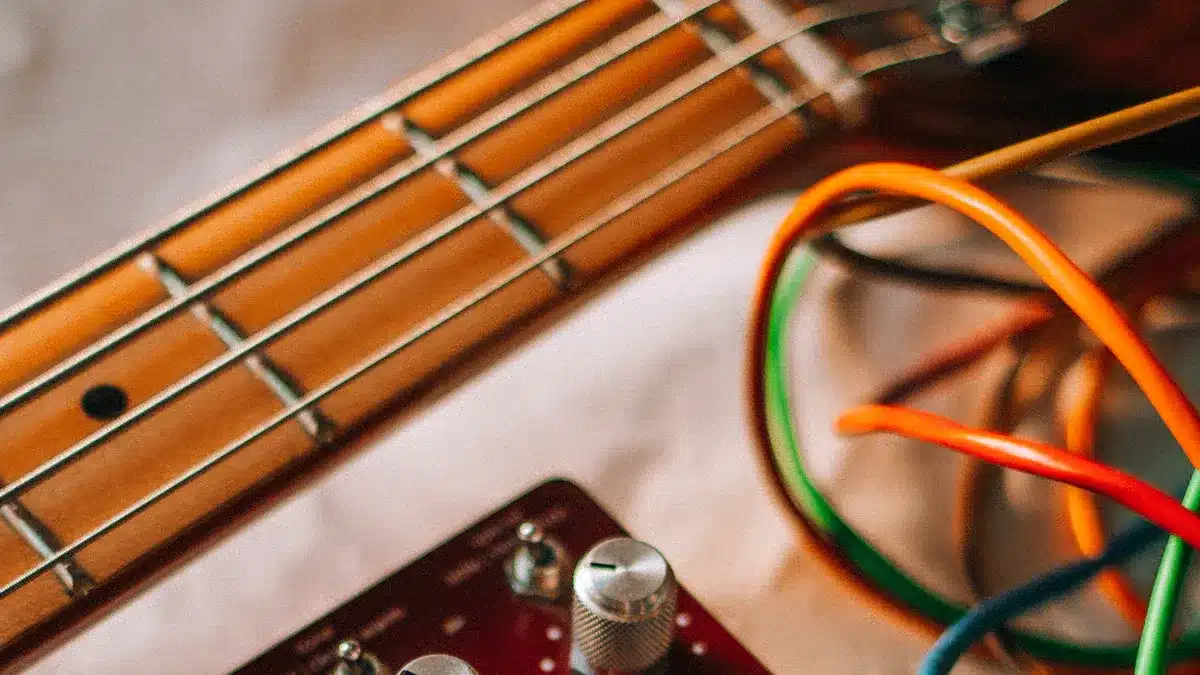
Delay pedals make echoes by repeating your sound after a short time. When you use delay with bass, it can make your music sound bigger. The repeats from delay can make simple bass lines sound more full. You can change the timing and feedback on the pedal. This controls how many times you hear the echo and how long each one lasts. Pedals made for bass help stop bad distortion and keep your sound clear. It is important to keep your sound strong and not lose the feel when you add delay.
Tip: If you use short delay times, like 10 to 60 milliseconds, your bass can sound thicker but not muddy.
Analog vs Digital Delay for Bass
Analog and digital delay pedals sound different and have different controls. The table below shows how they are different when you use them with bass:
الميزة | التأخير التناظري | التأخير الرقمي |
|---|---|---|
جودة الصوت | Warmer and darker as it degrades | Can sound clinical and precise |
Unique Sound | Adds unique flavor to each repeat | Exact snapshot of the signal |
Delay Time | Shorter maximum delay times | Longer delay times |
Signal Change | Slightly changes the sound of the signal | Retains the original sound without alteration |
Control | Less control over delay effects | Greater control with dynamic delay options |
حالة الاستخدام | Good for adding warmth and character | Ideal for precise and accurate repeats |
Some delay pedals, like the Fender Bassman Delay Pedal, are made for bass. These pedals keep the low notes clear and give both warm and sharp repeats. The low switch lets you pick how the delay works with your bass. You can keep your sound clear or make cool rhythms.
Managing Bass Tone with Delay
There are ways to keep your bass sound clear when you use delay. Put your delay and reverb pedals at the end of your pedal chain. This helps you control your sound better. Many delay pedals let you mix your normal bass sound with the delayed sound. This keeps your main bass tone strong and adds space to your music.
Delay pedals with a dry blend keep your bass tone clear.
Using a buffer pedal before delay stops your sound from getting weak.
Changing delay time and feedback can stop muddiness.
Delay can make a simple bass line sound more fun. Try different delay settings to see what works best for you.
Buffer Pedal for Bass Delay
Why Use a Buffer Pedal?
A buffer pedal helps your sound stay strong and clear. Many players use long cables and lots of pedals. This can make the signal weak, especially in high notes. Cables can also make the sound dull. A buffer pedal changes the signal from high impedance to low impedance. This helps bring back the signal and keeps the tone bright.
Note: Buffer circuits with high input impedance and low output impedance help keep your tone safe, even with many pedals or long cables.
The table below shows how a buffer pedal helps:
Benefit Description |
|---|
Keeps high notes clear when using long cables. |
Makes your tone steady when turning effects on or off. |
Helps your signal stay strong in big pedal setups. |
Can stop problems between pedals with different impedance. |
Musontek Adjudicator Overview
The Musontek Adjudicator is a top buffer pedal. It changes the high-impedance signal to low-impedance. This is important for keeping bass clear with delay effects. The Adjudicator uses a Class A design for great sound and low noise. It has two buffers and uses field-effect transistors. This keeps the sound true and the signal strong. The pedal works well with long cables and many pedals. It also has a signal splitter and lets you adjust input levels for more control.
Preserving Clarity in Your Signal
A buffer pedal keeps your sound clear and strong. It stops your tone from getting weak or dull. Players notice their sound stays bright and full, even with lots of pedals or long cables. The buffer pedal also helps when you turn effects on or off. The tone does not change and stays the same. For bassists who use delay pedals, a buffer pedal is very helpful. It keeps the low notes powerful and the high notes sharp. Many players put a buffer pedal first in their pedal chain to protect their sound.
Delay Pedal Setup for Bass
Connecting Your Bass and Pedals
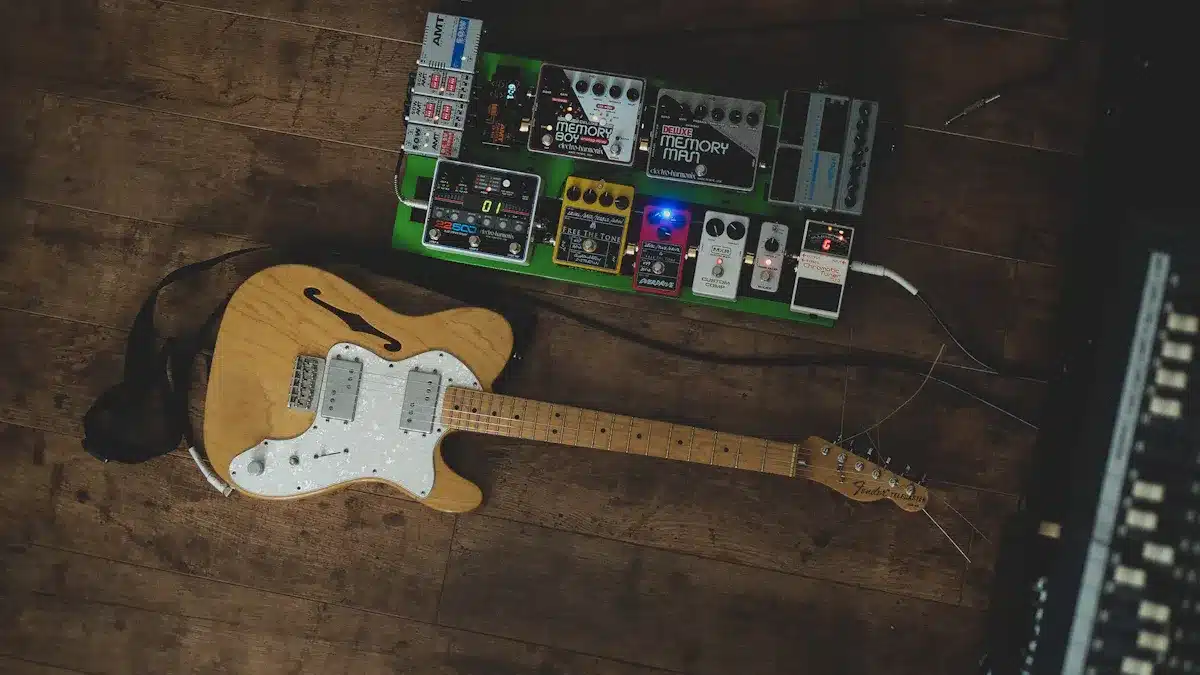
Setting up a delay pedal for your instrument starts with the right connections. Begin by plugging your instrument into the input of the buffer pedal. This step helps keep your signal strong and clear, especially if you use long cables or several pedals. Next, connect the output of the buffer pedal to the input of the delay pedal. Finally, run a cable from the output of the delay pedal to your amplifier.
Many players place the delay pedal at the end of their effects chain. This position lets the delay repeat the full sound, including any effects added earlier. Some musicians experiment by placing the delay pedal before modulation or distortion pedals. This setup can create unique echoes and textures. Each placement changes how the repeats sound, so try different orders to find what works best for your music.
Tip: Always use good-quality cables to avoid unwanted noise in your signal.
Key Delay Settings for Bass
Getting the right delay settings is important for a clear and musical sound. Here are some practical tips:
Set the delay time between 10 and 60 milliseconds to thicken your sound without making it muddy.
Keep the mix level around 40-50%. This balance helps the effect support your playing without taking over.
Use low feedback settings, usually one or two repeats. This keeps the sound sharp and avoids clutter.
Try using a high-pass filter on the delay effect. This filter removes some low frequencies from the repeats, helping the main notes stay clear.
Match the delay time to the tempo of your song. For slow songs, use quarter note delays. For faster songs, try eighth note delays.
A delay pedal can make your instrument stand out in quiet parts of a song. It can also add excitement to slap techniques. However, using too much delay on deep or sub notes may cause muddiness. Adjust the settings until you hear a clear and strong sound.
Delay can enhance presence in softer sections, making the instrument more noticeable.
Delay on slap techniques creates dynamic and interesting effects.
Heavy effects can reduce clarity and power, so use them with care.
High-pass filtering the effect return helps keep the low end clean.
Avoiding Muddiness and Tone Loss
Muddiness and tone loss are common problems when using delay pedals. Here is a table showing some issues and solutions:
Problem Area | Solution |
|---|---|
Low-End Loss | Use a blend knob or bass-specific pedals to keep low notes. |
Muddiness | Adjust EQ and use high-pass filters to reduce clutter. |
To avoid muddiness, keep the feedback low and the mix moderate. Avoid using long delay times, as they can blur the rhythm and punch of your playing. Always check that the delay matches the tempo of your music. If the repeats do not line up, the groove can become messy.
Improper mix levels can overwhelm the sound. Keep the mix at a musical level.
Badly timed delays can distract from the rhythm. Adjust the timing to fit the song.
Excessive feedback causes sound buildup. Use just enough repeats to support the music.
A buffer pedal, like the Musontek Adjudicator, helps maintain clarity by keeping the signal strong. Placing the buffer first in the chain protects your tone from loss, even with many pedals or long cables. High-pass filtering the delay effect also helps keep the low end clean and powerful.
Note: Delay pedals can add space and depth, but careful setup ensures the sound stays clear and musical.
Creative Bass Delay Effects
Rhythmic and Ambient Uses
Musicians use delay to make cool rhythms and background sounds on bass. If you set the delay to match the song’s speed, each note repeats in time. This adds movement and groove to the music. Some players pick short delay times for a slapback sound. This makes the bass feel punchier. Others use longer delay times to fill space and create atmosphere. Delay can turn simple bass lines into fun patterns, especially with other effects. Many artists use delay on bass to add depth in solos or quiet parts.
Tip: Try using a dotted eighth note delay for a bouncy rhythm that stands out in the mix.
Layering Delay with Other Effects
Professional bassists mix delay with other pedals to make new sounds. The table below shows some favorite combos and what they do:
Combination | الوصف |
|---|---|
Delay + Overdrive | Makes overdriven sounds fit better and adds character. |
Delay + Reverb | Creates dreamy sounds, with delay before reverb for more options. |
Stacked Delay Pedals | Two delays with different times make cool rhythmic patterns. |
Delay + Tremolo | Needs careful timing; can make classic sounds when done right. |
Delay + Expression Pedal | Makes a swell effect, hiding volume drops and making a big, synth-like sound. |
Using two delays or adding reverb can make the bass sound bigger. Putting delay before reverb gives a smoother, blended sound. An expression pedal with delay lets you change the sound while playing.
Tips for Unique Bass Delay Sounds
Players can try many creative things with bass delay. Here are some ideas you can use:
Set delay at 600ms with 45% feedback and slowly change the delay time for a warm sound.
Use two delays in a row, one at 400ms and one at 220ms, and change both with triangle waves for special echoes.
Add a low-pass filter and soft distortion to the feedback path for changing tones with each repeat.
Put a reverb after the delay to make the sound bigger and more dreamy.
Change modulation settings in a DAW to make the sound different in each part of a song.
Trying out delay settings like time, feedback, and mix helps you find new sounds. Using delay on bass can give you new ideas and make playing more fun. Bass delay lets every player be creative and try new things.
Players can use guitar delay pedals with bass to make cool and clear sounds. Experts say to pick pedals that work well with bass and not use too many effects. Setting up your pedals the right way is important. Buffer pedals help your sound stay strong and bright. The table below shows how buffer pedals keep your tone safe:
المزايا | الشرح |
|---|---|
Buffers lower capacitance | This keeps your main sound clear, even with lots of effects. |
Buffered pedals keep circuits working | They stop your tone from changing, even when pedals are turned off. |
Delay pedals make music sound bigger and add space. They help you keep your main sound and try new things. Changing settings lets each player find what they like best.
الأسئلة الشائعة
Can a guitar delay pedal damage a bass amp?
A guitar delay pedal will not damage a bass amp. The pedal only changes the signal before it reaches the amp. Players can use delay pedals safely with bass amps.
Does a buffer pedal change the sound of a bass?
A buffer pedal keeps the sound clear and strong. It does not add effects or change the tone. Players notice less loss of high notes and better clarity.
Where should a buffer pedal go in the signal chain?
Most players put the buffer pedal first. This spot protects the signal from the start. It helps keep the sound bright, even with many pedals or long cables.
What delay settings work best for slap bass?
Setting | Suggestion |
|---|---|
Delay Time | 10–40 ms |
Mix Level | 30–40% |
Feedback | 1–2 repeats |
Short delay times and low mix levels keep slap bass clear and punchy.