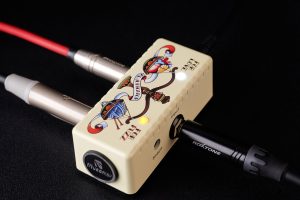
You might wonder if a buffer pedal belongs on your pedalboard. The answer depends on your gear and playing style. Some setups need a تأثير الغيتار العازل to keep the sound clear and strong. Brands like MusonTek offer reliable options, such as the Buffer-Adjudicator, which help maintain tone integrity. If you notice your guitar’s sound getting dull or losing volume, a buffer pedal could make a noticeable difference, ensuring every note comes through with clarity.
الوجبات الرئيسية
-
Buffer pedals help your guitar sound stay strong and clear. They stop your tone from getting weak when you use long cables or many pedals. A buffer pedal can make high notes sound better. This helps your guitar stay bright and full of life. You should put your buffer pedal in a smart spot. Try it at the start or end of your pedalboard. You can also put it after fuzz pedals to keep your sound rich. If your guitar sounds dull, try using a buffer pedal. It can protect your sound and make it clearer. Not all buffered pedals make your tone worse. Good ones like the Musontek Adjudicator can make your sound even better.
أساسيات تأثير الجيتار العازلة
ما هو المخزن المؤقت؟
You might see many pedals on a guitar board, but not all of them shape your sound in the same way. A buffer is a special type of pedal. It does not add effects like distortion or delay. Instead, it keeps your guitar signal strong and clear. When you use a Buffer Guitar Effect, you protect your tone from getting weak or muddy.
A buffer pedal sits quietly in your signal chain. It works behind the scenes to make sure your guitar’s sound stays bright and full. Here are some main jobs of a buffer pedal:
-
It boosts high frequency response, so your notes sound crisp.
-
It helps when you use long cables, which can make your tone dull.
-
It supports pedals like fuzz, which sometimes cause tone loss.
If you play with many pedals or long cables, you might notice your sound changes. A Buffer Guitar Effect helps you keep your original tone.
How Buffer Pedals Work
You can think of a buffer pedal as a signal protector. It uses science to keep your guitar’s sound safe. Here is how it works step by step:
-
Your guitar sends a high-impedance signal. This signal can lose strength over long cables.
-
The buffer pedal changes this signal into a low-impedance one. Low-impedance signals travel better and do not lose quality.
-
The buffer keeps the signal’s strength the same. It does not make it louder or softer.
-
The pedal sends the strong, clear signal to the next device. Your tone stays true and does not degrade.
Buffer pedals are different from other effects. They lower the output impedance, which helps your sound stay clean. Even if you turn the pedal off, the buffer keeps working to protect your signal. Using a Buffer Guitar Effect can stop tone loss and keep your music sounding great.
Tip: If you notice your guitar sounds dull after using many pedals or long cables, try adding a buffer pedal. You might hear a big improvement.
Buffer and Tone
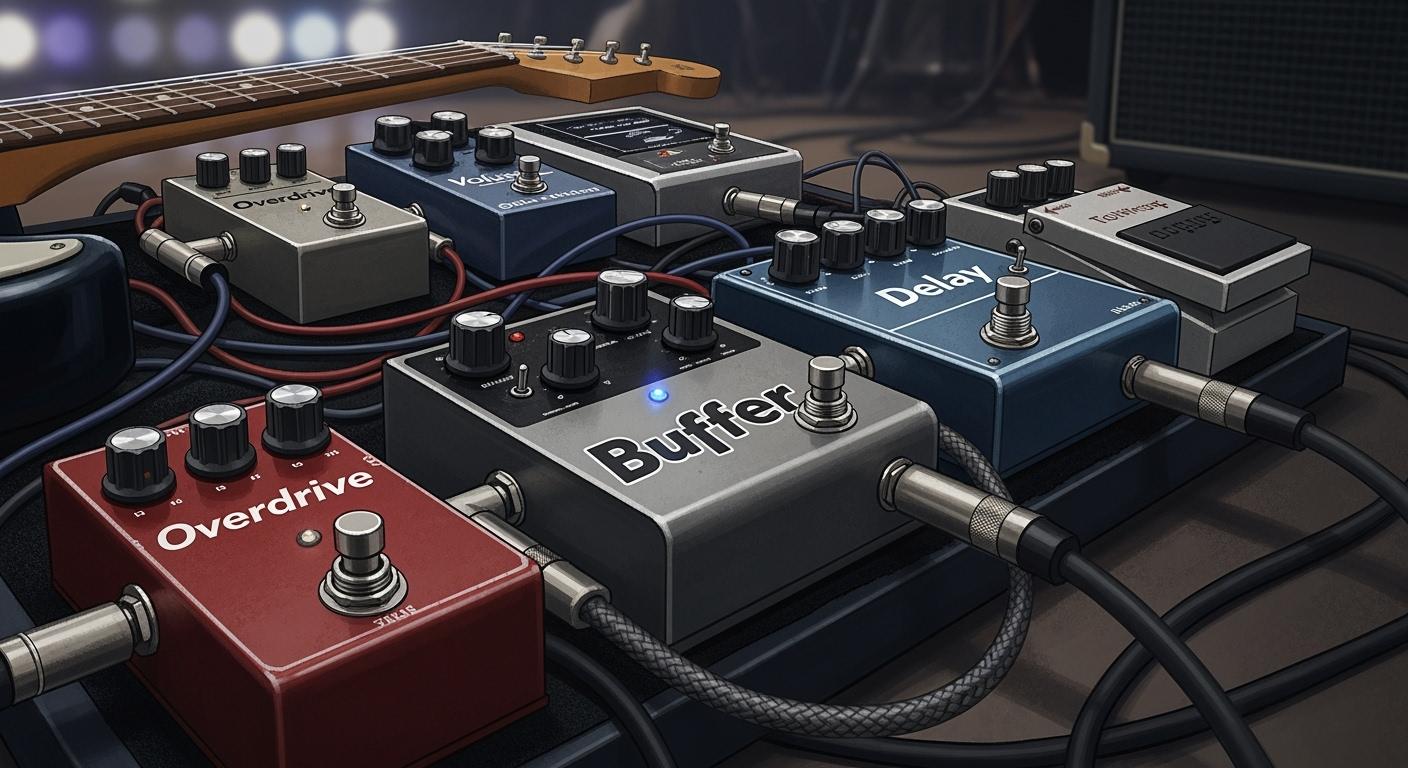
Preventing Signal Loss
You want your guitar to sound clear each time you play. Signal loss can make your music sound dull. Long cables or lots of pedals can weaken your guitar signal. This often causes your tone to lose brightness and volume. You might notice your sound is not as lively. A Buffer Guitar Effect helps keep your signal strong from start to finish.
Here are some problems guitarists face without a buffer pedal:
|
Issue |
الوصف |
|---|---|
|
Tone degradation |
Without a buffer, your tone can get weak and less vibrant. |
|
High-end loss |
You may lose high frequencies, making your sound duller. |
|
Impedance mismatches |
Wrong impedance can cause signal loss and affect your pedals. |
A buffer pedal protects your sound. It matches the impedance and keeps your signal strong. You get a lively tone, even with many pedals.
High Frequencies and Volume
High frequencies make your guitar sound bright. Volume makes your music strong. Using many pedals or long cables can make you lose both. A buffer pedal keeps your high frequencies and volume safe. It changes your guitar’s signal so it travels better through cables and pedals.
See how buffer pedals help with high frequencies and volume:
|
وصف الدليل |
Impact on High-Frequency Retention and Volume |
|---|---|
|
A buffer keeps the original signal strong and clear. |
High frequencies stay clear and bright. |
|
A buffer at the start of the chain stops ‘tone suck.’ |
Signal stays strong when you use many pedals. |
|
Buffers keep your tone good by stopping signal loss. |
Proper impedance matching helps keep your sound clear over long cables. |
You also get a cleaner sound. Buffer pedals make your signal stronger and cut down on noise. Here are some benefits you will notice:
-
Buffer pedals make your guitar signal stronger and clearer.
-
They lower impedance, which keeps your signal clean.
-
By boosting the signal, they help reduce noise, especially with high-gain setups.
If you want your guitar to sound bright and strong, try a buffer pedal. You will hear the difference in every note.
When to Use a Buffer
Long Cables and Pedalboards
You might notice your guitar sound gets weaker when you use long cables or a big pedalboard. Signal loss often happens when your cable runs stretch from 21 to 40 feet. Treble can fade, and your tone may lose its sparkle. You want every note to sound clear, even if your setup is complex.
-
Cable lengths around 21-40 feet may cause treble loss.
-
A buffer pedal helps keep your signal strong for longer cable runs.
-
The need for a buffer depends on your gear and your ears.
A Buffer Guitar Effect can protect your sound from dullness. If you play with many pedals or long cables, you should consider adding a buffer pedal. The Musontek Adjudicator Buffer Pedal stands out because it transforms high-impedance signals into low-impedance ones. This change keeps your tone clear and lively, even with lots of gear in your chain.
True Bypass and Buffer Order
Many guitar pedals use true bypass. True bypass lets your signal pass through the pedal without changing it when the pedal is off. If you use many true bypass pedals, your signal can get weak. You may hear less brightness and volume.
You can follow these tips to keep your tone strong:
-
Place a buffer at the start of your pedalboard, after vintage fuzz pedals, or at the end to restore signal strength.
-
If you use ten or more true bypass pedals, add more than one buffer to keep your signal clear.
-
Mix true bypass and buffered bypass pedals to prevent tone loss.
-
Be careful with buffer placement before fuzz pedals. Buffers before fuzz can thin out your sound. It is usually better to put buffers after fuzz pedals.
The Musontek Adjudicator Buffer Pedal gives you flexibility. You can use its dual buffer structure to split your signal and keep it strong. The pedal’s adjustable input signal level lets you fine-tune your setup. You can place the buffer where you need it most.
Fuzz Pedals and Buffer Interaction
Fuzz pedals can be tricky with buffers. If you put a buffer before a fuzz pedal, your sound might get thin. You want your fuzz to sound rich and full. Most guitarists place buffers after fuzz pedals to keep the fuzz effect strong.
The Musontek Adjudicator Buffer Pedal helps you get the best fuzz sound. It has a special fuzz mode that simulates standard cable lengths. This feature lets your fuzz pedal perform at its best. You can adjust the input signal level to match your fuzz pedal’s needs.
Here is a table that shows how the Musontek Adjudicator compares to other buffer pedals:
|
الميزة |
محكم موسونتك |
Other Buffer Pedals |
|---|---|---|
|
One-to-two channel design |
نعم |
لا يوجد |
|
Simulated cable lengths |
نعم |
لا يوجد |
|
Adjustable signal levels |
نعم |
لا يوجد |
|
Fuzz effect compatibility |
نعم |
Limited |
The Class A design of the Musontek Adjudicator Buffer Pedal gives you high fidelity and low noise. Your guitar’s natural tone stays clear and strong. This design helps your effects pedals work better.
You want a buffer pedal with high input impedance and very low output impedance. The Musontek Adjudicator meets these standards. Most buffers use a simple opamp circuit with unity gain, but the Adjudicator uses a fully discrete Class A circuit for pure sound.
-
Input impedance: 1M ohms
-
Output impedance: less than 100 ohms
-
Very low output impedance in the tens of ohms
-
High input impedance keeps your signal clean
-
Low output impedance drives your signal strongly
A Buffer Guitar Effect like the Musontek Adjudicator solves common problems. It keeps your tone bright, even with long cables, many pedals, or tricky fuzz effects. You can trust your sound to stay strong and clear.
Tip: Try placing your buffer pedal after your fuzz pedal for the best results. Adjust the signal level to match your setup. You will hear a difference in your tone.
Myths and Misconceptions
Many guitarists hear stories about buffer pedals that are not true. You might worry that a buffer will ruin your tone or that only true bypass pedals keep your sound pure. Let’s clear up these myths so you can make smart choices for your pedalboard.
Will Buffers Change My Tone?
You may think that buffer pedals always change your tone in a bad way. This idea is common, but it does not match reality. Buffer pedals help your signal stay strong and clear. They do not add effects or color your sound. If you use a high-quality buffer, like the Musontek Adjudicator, your tone stays true to your guitar.
Some players believe all buffered pedals degrade tone. In fact, many pedals that seem to suck tone use hardwire switching, not buffering. Buffered pedals can actually protect your sound from getting weak, especially when you use long cables or many pedals.
Note: A buffer pedal does not make your guitar sound different. It keeps your signal healthy and helps you avoid tone loss.
Here is a table showing common myths and the facts:
|
Myth Description |
الشرح |
|---|---|
|
True bypass is the only way to avoid tone loss. |
Mixing true bypass and buffered pedals can give you better signal integrity. |
|
All buffered pedals degrade tone. |
Many tone problems come from hardwire switching, not buffering. |
|
True bypass means no signal loss at all. |
True bypass pedals can still affect tone because of impedance interactions. |
Buffer Placement Myths
You might hear that buffer pedals work best only in one spot on your board. This is not true. The placement of a buffer depends on your setup. For example, fuzz pedals need a high impedance signal. If you put a buffer before a fuzz pedal, your fuzz may sound thin. Most guitarists place buffers after fuzz pedals to keep the fuzz effect rich.
Here are some common misconceptions:
-
True bypass does not guarantee no tone loss; impedance can still affect your signal.
-
Buffered pedals are not bad; they help keep your sound strong.
-
Many players think true bypass is the only option, but other bypass types work well too.
You should think about your pedal order and your gear. Buffers help you keep your tone clear, but you need to place them where they work best for your setup. Try different positions and listen to your sound. You will find what works for you.
You want your guitar to sound clear and bright. Buffer pedals help keep high frequencies and volume strong. This is important if you use long cables or many pedals. Check your setup to see if your tone is weak or missing. If you think you need a buffer, look for these features:
|
الميزة |
الوصف |
|---|---|
|
One-to-two splitter |
Lets you use two outputs separately |
|
Fuzz mode |
Gives you two fuzz effect sounds |
|
Cable simulation |
Acts like 3m, 6m, or 12m cables |
|
Input adjustment |
Lets you change the signal strength |
|
Class A circuit |
Gives you clear and strong sound |
|
Wide voltage range |
Works with 9-18V power |
A buffer pedal like the Musontek Adjudicator keeps your sound strong for a long time. Try one if you want to keep your tone safe.
الأسئلة الشائعة
What does a buffer pedal do for my guitar signal?
A buffer pedal keeps your guitar signal strong. It stops your tone from getting dull or weak. You get clear sound, even with long cables or many pedals.
Do I need a buffer if I only use a few pedals?
You might not need a buffer with a simple setup. If your cables are short and you use only a few pedals, your tone usually stays clear. Listen for any loss in brightness.
Where should I place a buffer pedal on my pedalboard?
Most players put a buffer at the start or end of the pedalboard. If you use fuzz pedals, place the buffer after them. This keeps your fuzz sound rich.
Will a buffer pedal change the sound of my fuzz pedal?
Yes, if you put a buffer before a fuzz pedal, it can make the fuzz sound thin. Place the buffer after the fuzz pedal. Some buffers, like the Musontek Adjudicator, have a fuzz mode to help with this.